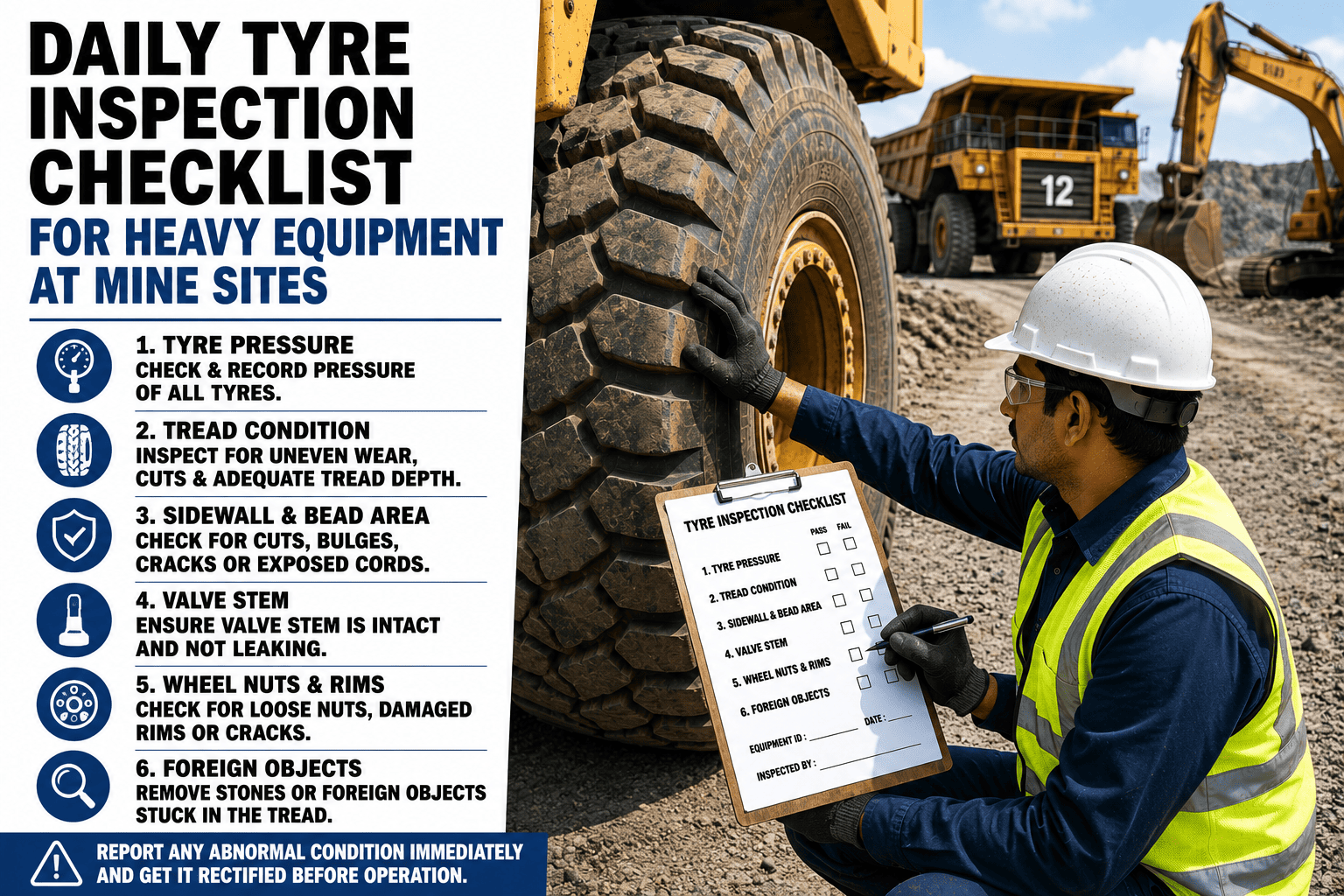
Every morning, across thousands of Bharatmala highway sites, mining patches in Odisha, and metro corridors in Hyderabad and Pune, a Tata Hitachi EX 200 fires up before the sun fully rises. India's most popular 20-tonne hydraulic excavator — trusted by H.G. Infra, Afcons, GR Infraprojects, and thousands of independent contractors — works 10 to 14 hours a day in dust, heat, and rain. But here is the hard truth: most EX 200 breakdowns that cost ₹2–6 lakh in repairs were preventable. A proper Tata Hitachi EX 200 daily inspection checklist done every morning — in under 25 minutes — is the single highest-ROI habit a site manager or fleet supervisor can build. This guide gives you that checklist, station by station, with the exact points that matter most on Indian sites in 2026. See how HVI digitizes this entire checklist with photo proof,and operator sign-off in Hindi.
Tata Hitachi EX 200 Daily Inspection Checklist for Indian Sites
India's most popular 20-tonne excavator deserves a daily check that matches its workload. 6 inspection zones. 40+ points. Catch faults before they cost you ₹4 lakh in breakdown repairs.
Why the EX 200 Daily Inspection Checklist Saves Lakhs — Not Just Hours
India's excavator segment grew to ₹3.37 billion in 2024 and is projected to reach ₹9.13 billion by 2033 (IMARC Group). With Bharatmala Pariyojana alone requiring thousands of machine-hours daily, unplanned downtime is not just an inconvenience — it is a contract penalty trigger. Industry estimates suggest equipment breakdown on a highway project can cost ₹15,000–40,000 per idle hour including idle labour, lost output, and crane mobilisation for recovery. Three systems cause 80% of EX 200 unplanned breakdowns on Indian sites.
Every one of these failure categories has visible daily warning signs — unusual sounds, small leaks, slow hydraulic response — that a trained operator can catch in 25 minutes each morning. The problem on most Indian sites? No structured checklist, no proof, no accountability. That is where a digital daily inspection system like HVI's construction equipment inspection module changes the game.
Tata Hitachi EX 200 — Quick Specs You Inspect Against
Tata Hitachi EX 200 Pre-Start Daily Inspection Checklist — 6 Zones, 25 Minutes
Walk the machine in this exact zone order every morning before the key turns. Each zone has specific danger points for Indian site conditions — dusty quarries, waterlogged highway cuts, rocky mining patches. Tick each point; if anything fails, tag the machine and report before starting. Use HVI's free digital checklist to capture photo proof for every zone.
Engine Bay & Fluid Levels
CriticalUndercarriage — Track, Rollers & Sprockets
CriticalHydraulic System — Hoses, Cylinders & Connections
High PriorityBoom, Arm & Bucket — Structural & Pin Checks
High PriorityCold Start & Instrument Panel Check
CriticalCabin Safety & Operator Checks
SafetyOperator Daily Check vs Scheduled Mechanic Inspection — Know the Difference
- Every working day — before first start
- Done by trained operator or site supervisor
- Covers fluids, leaks, visible damage, startup behaviour
- Takes 20–25 minutes
- Catches 80% of pre-failure warning signs
- Documented in HVI with photo proof & sign-off
- Triggers mechanic review when fault found
- Every 250 / 500 / 1000 hours per OEM schedule
- Done by certified Tata Hitachi service technician
- Covers filters, oil analysis, undercarriage measurement
- Takes 3–6 hours full inspection
- Covers wear measurement, torque checks, telematics data
- Generates full Tata Connect service record
- Required for OEM warranty compliance
Both are needed. Neither replaces the other. Skipping the operator daily check is where most Indian site managers lose money — because a mechanic visit every 250 hours cannot catch a hose that started weeping on Day 3. See how HVI connects operator daily checks to your mechanic's maintenance calendar in one live dashboard.
From the Ground — A Fleet Supervisor's View
We run 14 EX 200s across two NHAI highway packages in Madhya Pradesh. Earlier, the operator's daily inspection was just a signature on a paper sheet that nobody actually read. One machine blew a hydraulic hose at 11 AM because the operator saw it weeping at 6 AM and thought it was not serious enough to report. The machine was down for 3 days, we lost ₹4.2 lakh in downtime and repair. After we moved to HVI, operators click a photo of every suspect item in the morning. I get it on my dashboard in Bhopal before the machine even starts work. We have not had an unplanned breakdown in the last 6 months. That is the ROI I can show to my project director without any calculation.
Run the EX 200 Checklist on Your Phone — With Photo Proof
Operators tap, tick, and photo. Supervisors see live. Mechanics get flagged alerts. All from one platform built for Indian infrastructure sites.
Tata Hitachi EX 200 Operator Daily Inspection — Common Faults & What to Do
| What You See / Hear | Likely Cause | Urgency | Action |
|---|---|---|---|
| Blue exhaust smoke at start | Worn piston rings / valve seals — oil burning | Stop | Do not run. Call mechanic immediately |
| Black exhaust smoke under load | Fuel injector fault or clogged air filter | Today | Check air filter first, then injector test |
| Hydraulic response slow on boom | Low hyd. oil, worn pump, or relief valve fault | Today | Check hyd. oil level first, report to mechanic |
| Oil drops below machine on ground | Active hose or seal leak | Stop | Identify source, do not start until fixed |
| Track sagging visibly | Low track tension (loose) | Before work | Adjust via front idler grease zerk |
| Knocking sound at idle | Bearing wear, injector knock, or loose engine mount | Stop | Do not operate. Mechanic inspection required |
| Warning light stays on after start | Sensor fault, low fluid, or electrical issue | Today | Note code from TFT monitor, report to supervisor |
| Bucket teeth worn to adaptor | Normal wear — missed on inspection | Schedule | Replace teeth before next shift to protect adaptor |
Conclusion — A 25-Minute Morning Habit That Protects Your ₹63 Lakh Machine
The Tata Hitachi EX 200 daily inspection checklist is not paperwork — it is protection. India's construction equipment market is at ₹25 billion and growing at 5.27% CAGR (Market Research Future 2026). With Bharatmala and PM Gati Shakti driving unprecedented machine utilisation, a single avoidable breakdown on your EX 200 can cascade into project penalties, idle labour costs, and contractor reputation damage. Six inspection zones, 40+ check points, 25 minutes — that is all it takes every morning. The key is making it structured, photographic, and accountable. Paper checklists get lost or signed without being done. A digital system like HVI's daily inspection platform ensures every check is timestamped, photo-proven, and visible to your fleet supervisor — even if you are 500 km away in Delhi managing 12 machines across two states.
Run Your EX 200 Daily Inspection on HVI — Free to Start
Indian EPC, mining, highway, and metro fleets use HVI for daily inspections, fuel control, maintenance scheduling, and CMVR compliance documentation. One platform from the first morning check to the machine's full asset history.