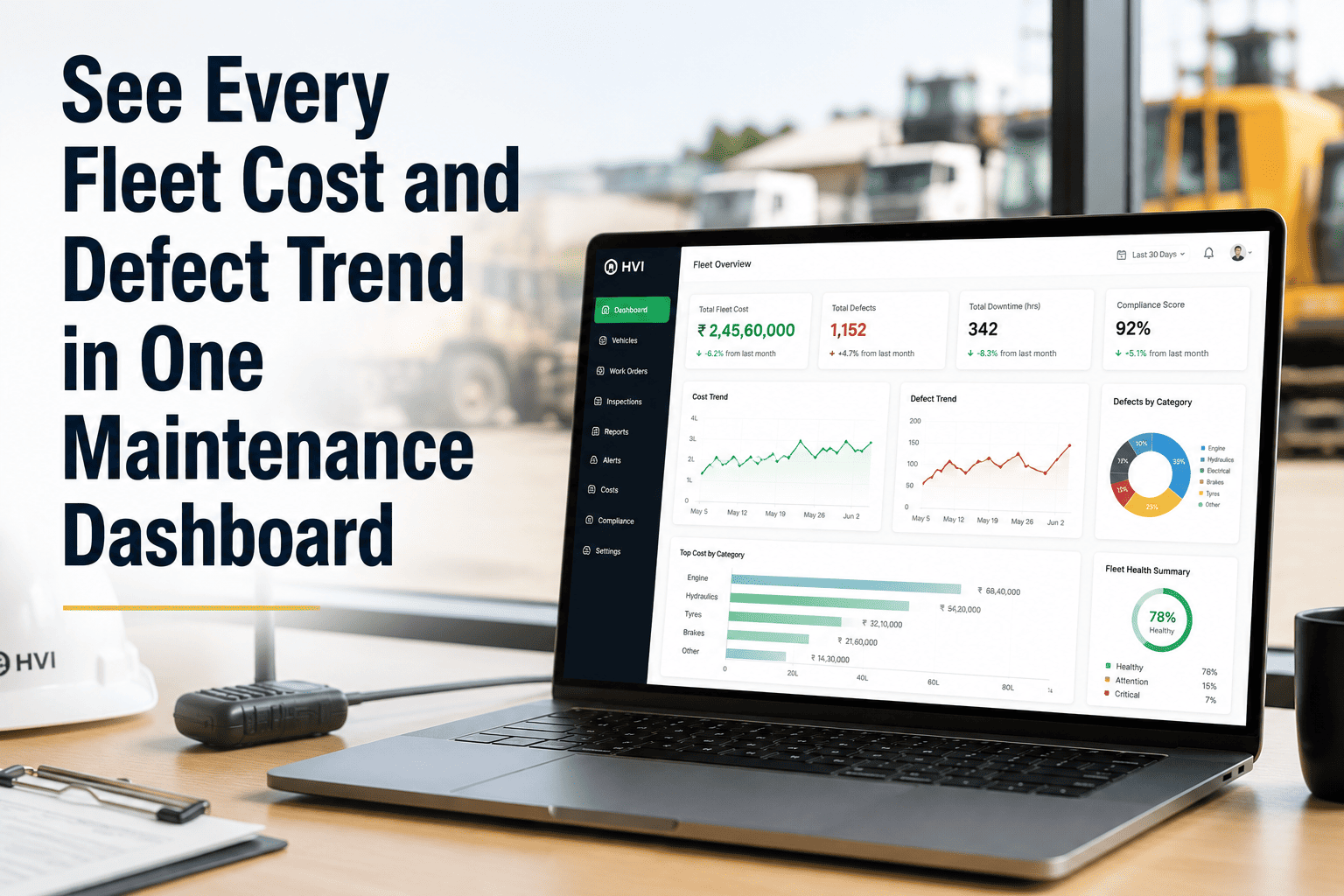
Fleet managers across India are drowning in mismatched data. One yard runs Geotab, another runs Samsara, a third has Verizon Connect boxes fitted by an OEM, and every AIS-140 mandated vehicle adds its own VLTD feed on top. Maintenance heads end up copying numbers between four different portals into one shared Excel sheet before a single PM schedule can be built, and nobody trusts the sheet once two devices disagree on the same odometer reading. This is exactly the mess HVI's unified maintenance dashboard was built to remove, and you can see it working on your own fleet data inside a free 30-minute walkthrough.
One Maintenance View, Regardless of Which Device Sits on the Vehicle
HVI pulls telemetry from Geotab, Samsara, Verizon Connect, and AIS-140 VLTD units into a single normalised feed, so a fault code from a Volvo tipper and an engine-hour reading from a JCB excavator land on the same maintenance timeline instead of four separate logins.
Why Mixed Telematics Quietly Costs You Every Month
Duplicate Data Entry
Supervisors re-key odometer and engine-hour readings from each portal into a master sheet, and every manual entry is a chance for a scheduled service to slip past its due date.
Conflicting Fault Alerts
The same hydraulic fault can show up worded differently on two platforms, so maintenance teams triage the same issue twice and lose the time they needed for the actual repair.
Audit Gaps
When inspection records live in one system and telematics logs in another, DGMS and Factories Act auditors get an incomplete trail, and that gap is what turns a routine audit into a penalty.
Blind Spots at Handover
A machine transferred between sites often keeps its old telematics box, and if the receiving site runs a different platform, its service history effectively disappears on arrival.
What Each Telematics Source Actually Reports
| Data Source | Odometer / Engine Hours | Fault Codes | Location Trail | Offline Sync |
|---|---|---|---|---|
| Geotab | Yes | Yes | Yes | Limited |
| Samsara | Yes | Yes | Yes | Limited |
| Verizon Connect | Yes | Partial | Yes | No |
| AIS-140 VLTD | No | No | Yes | Yes |
| HVI Unified View | Yes | Yes | Yes | Yes |
How HVI Normalises Four Feeds Into One Maintenance Timeline
Connect Every Source
Geotab, Samsara, Verizon Connect, and AIS-140 VLTD feeds are linked once per vehicle, regardless of who installed the hardware.
Normalise the Readings
Odometer units, fault-code formats, and timestamps are converted into one consistent structure across every device type.
Trigger Work Orders
Meter-based and fault-based thresholds generate a single work order, even if two devices reported the same fault differently.
Sync Offline Sites
Remote mine and highway sites keep logging locally and sync automatically the moment signal returns.
See Your Own Mixed Fleet on One Screen
Bring your Geotab, Samsara, Verizon Connect, and AIS-140 data together and watch duplicate entries disappear in a single working session with our team.
What Fleets See After Unifying Their Telematics
Telematics sources merged into a single dashboard view
Setup time instead of the weeks a custom integration usually takes
Manual re-entry once every device feed is linked and normalised
Records mapped for DGMS, Factories Act, CMV Rules, and AIS-140
Frequently Asked Questions
Can HVI read data from a telematics device we did not choose ourselves?
Yes. Many Indian fleets inherit whatever device an OEM or a previous contractor installed, and HVI is built to read Geotab, Samsara, Verizon Connect, and AIS-140 VLTD feeds regardless of who fitted them. You can confirm your specific device list on a quick call with our team before you commit to anything.
Does normalising the data change the original readings from each device?
No. HVI standardises formatting, units, and timestamps for display and work-order triggers, but the original readings from each source remain intact and traceable back to the originating device for audit purposes.
What happens at remote sites with no signal?
Inspections and readings continue to log locally on-site. Once signal returns, everything syncs automatically into the same unified dashboard, so mine and highway crews are never blocked by connectivity.
How long does it take to connect all four telematics sources?
Most fleets are fully connected within hours, not weeks, because HVI handles the mapping between each provider's format internally. You can see the exact setup steps for your device mix by starting a free trial directly.
Will this replace our existing SAP, Oracle, or Tally records?
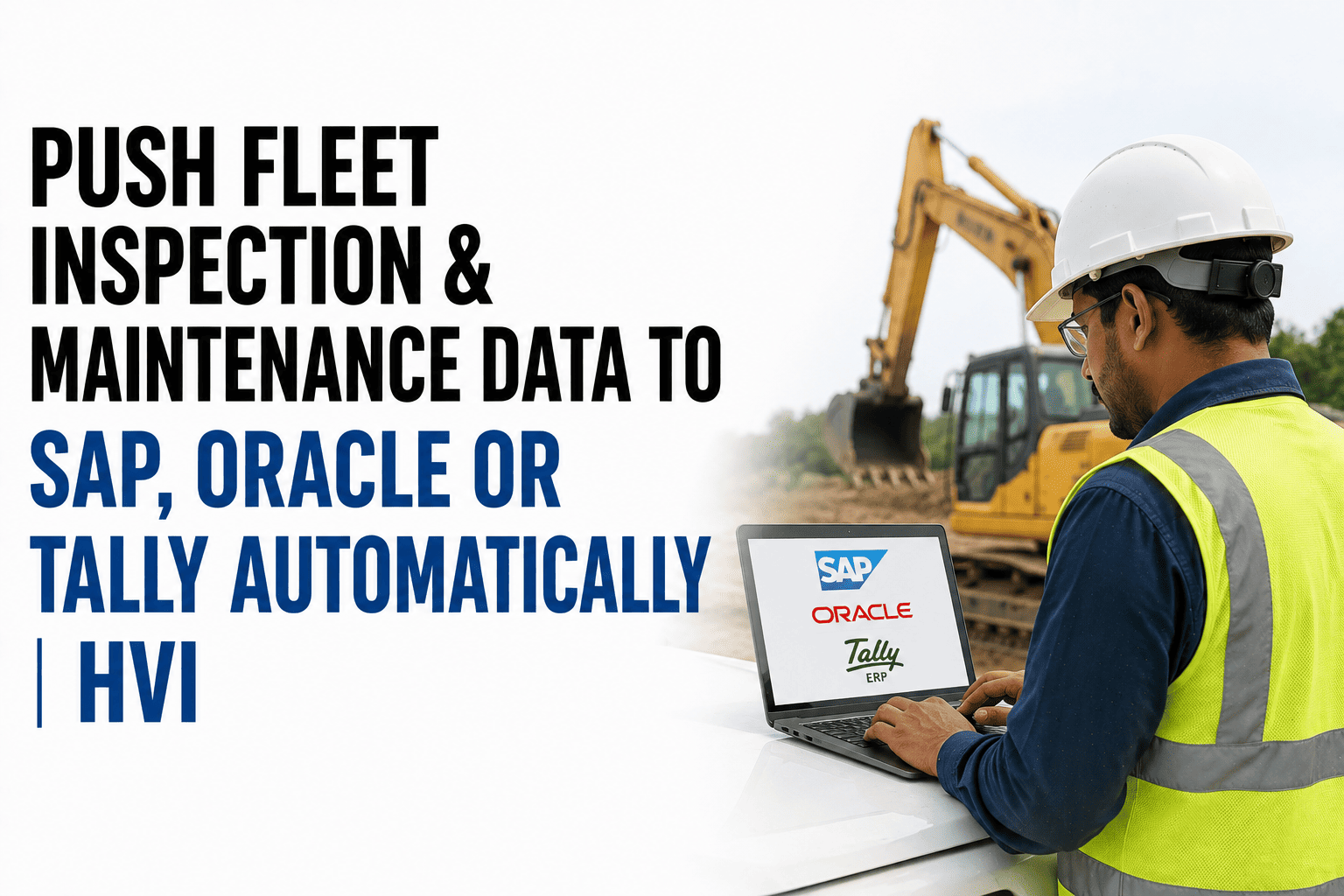
No, it complements them. HVI integrates with SAP, Oracle, and Tally so maintenance and compliance data flows into your existing finance and ERP systems rather than living in a separate silo.
Stop Reconciling Four Telematics Portals by Hand
Bring every device feed into one maintenance view built for Indian fleets, and let your team spend that reconciliation time on actual repairs instead.