Every vehicle type entering an HPCL, BPCL, or IOCL refinery premises carries its own mix of permit-to-work and CMVR requirements, and treating them as one generic checklist is exactly how a specific gap gets missed. A mobile crane needs a different work-area clearance than a vacuum tanker, even though both need the same CMVR documents current on the vehicle itself. HVI keeps both layers — the job-specific permit and the vehicle's own compliance record — attached to each vehicle type separately, so nothing gets treated as generic when it shouldn't be. See how it maps to your own fleet in a free 30-minute session.
Gate Clearance Built Around What Each Vehicle Actually Needs
Permit-to-work and CMVR compliance tracked separately for tank farm trucks, vacuum tankers, mobile cranes, and maintenance vehicles, so each vehicle type clears the gate against the requirements that actually apply to it.
What Each Vehicle Type Needs at the Gate
Tank Farm Trucks
Tank integrity and valve checks alongside a work-area permit for the specific loading bay.
Vacuum Tankers
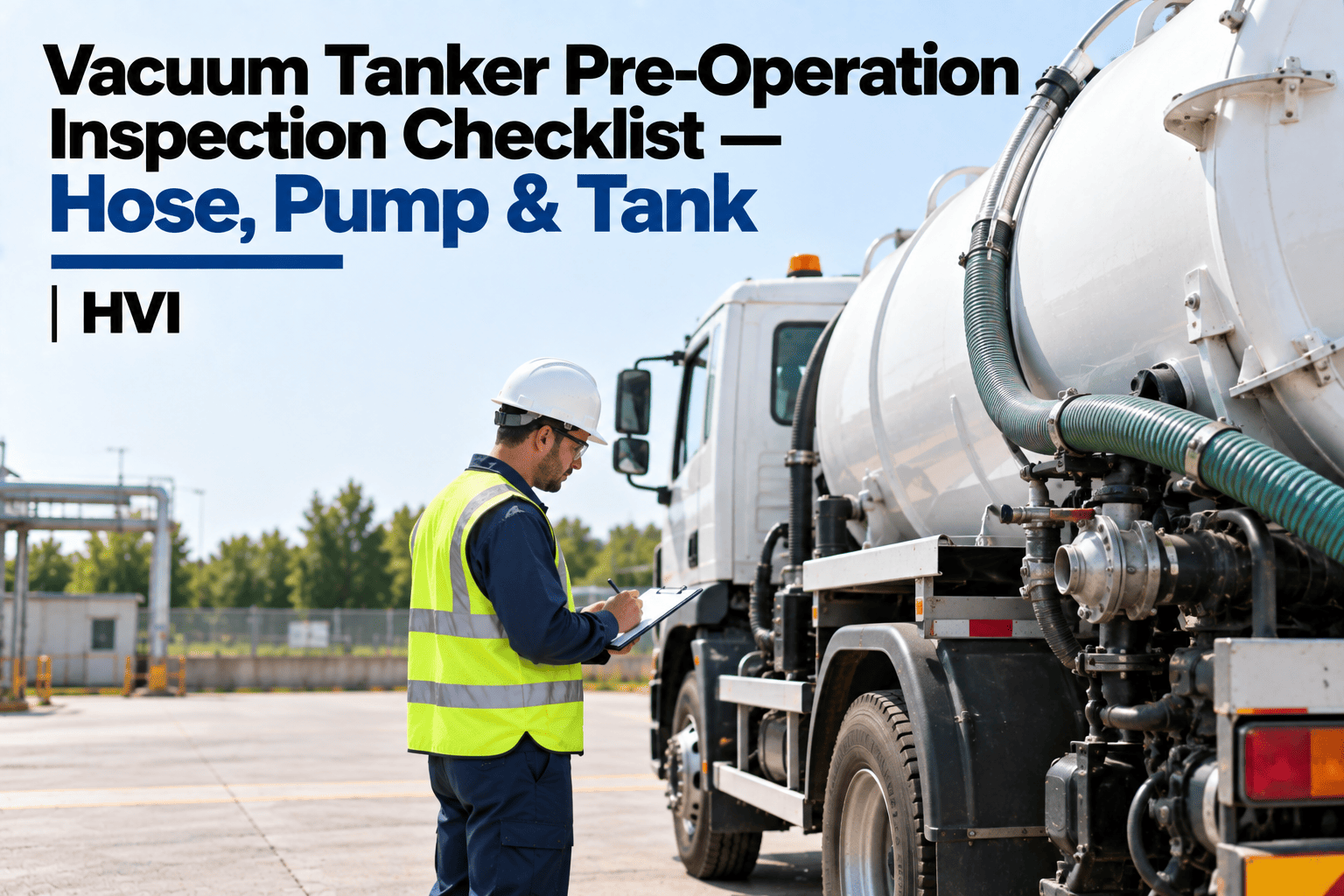
Hose, pump, and pressure relief checks paired with confined-space or hot-work approval where required.
Mobile Cranes
Lift plan approval and rigging checks in addition to standard CMVR fitness documents.
Maintenance Vehicles
General work permit and a standard vehicle inspection record kept current together.
The Gate Clearance Sequence
Vehicle arrives at the checkpoint with its ID ready for lookup.
CMVR documents pulled up against that vehicle's record.
Permit-to-work status matched against the job it's entering for.
Vehicle cleared through the gate with both checks confirmed.
Clear Every Vehicle Type Against the Right Requirements
See how permit-to-work and CMVR compliance track separately for each vehicle type in your refinery fleet.
A generic checklist treats a mobile crane and a maintenance van the same way. A gate that actually works treats each vehicle type by what it specifically needs, and keeps both layers of compliance current at once.
Frequently Asked Questions
Can requirements really differ by vehicle type in the same system?
Yes. Each vehicle type can have its own set of permit-to-work and CMVR requirements tracked against it, rather than one generic checklist applied to every vehicle. You can see this set up on a call with our team.
Does a mobile crane's lift plan get tracked alongside its CMVR documents?
Yes. Lift plan approval and rigging checks sit alongside the crane's standard fitness, insurance, and inspection records in the same vehicle record.
What happens if a vehicle type's permit expires mid-shift?
An alert surfaces as the permit nears expiry, so it can be renewed or the job re-scoped before the vehicle is affected mid-shift.
Can new vehicle types be added to the system as our fleet changes?
Yes. New vehicle types and their specific requirement sets can be added at any time as your fleet or refinery scope changes.
How quickly can our refinery fleet get this structure running?
Most fleets have their vehicle types configured within hours of setup. Start with a free trial to set up your own fleet.
Stop Applying One Checklist to Every Vehicle Type
Give each vehicle type the permit-to-work and CMVR tracking it actually needs, in one connected system. Tank farm trucks, vacuum tankers, mobile cranes, and maintenance vehicles each carry their own requirement set, so a lift plan, a confined-space approval, or a routine fitness renewal is never mistaken for a generic checklist item that applies to everything the same way.