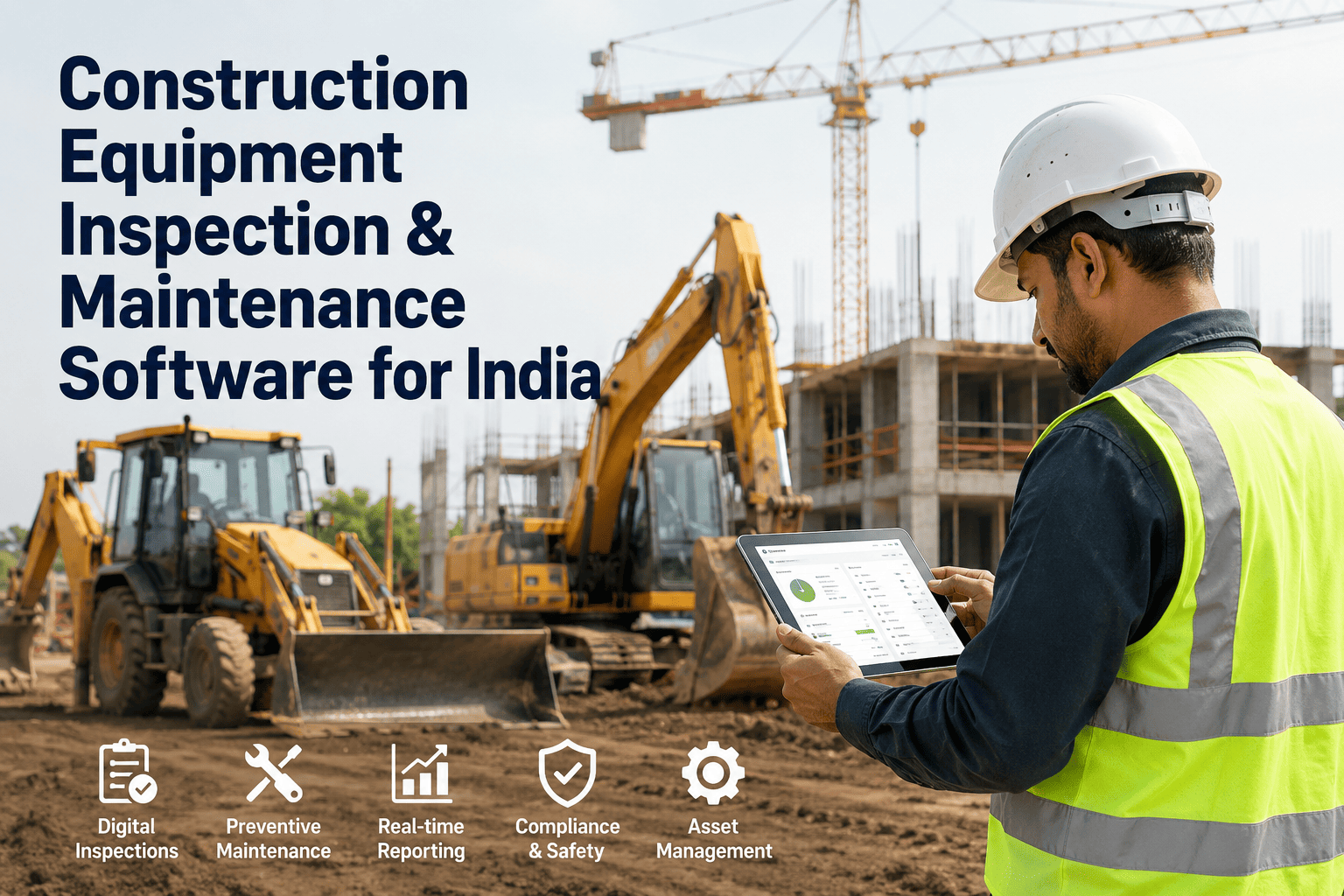
Infrastructure companies in 2026 are moving hundreds of tippers, cranes, transit mixers, boom lifts, water tankers and heavy trailers across scattered project sites every single day, and losing lakhs each month to unplanned breakdowns, idle assets, missing driver logs and paper based inspections that never reach the head office. The right fleet management software turns this chaos into a live dashboard where every vehicle, driver, fitness certificate and PM schedule is visible in real time, and cost per kilometer finally starts falling. This guide breaks down the top 10 platforms for EPC, roads, power, mining and metro contractors, comparing what actually matters on Indian project sites, and if you run a mixed heavy fleet you can start a free trial to see how digital inspections plug straight into your existing operations.
Top 10 Best Fleet Management Software for Infrastructure Companies in 2026
A no-nonsense comparison of the 10 platforms EPC contractors, road builders, power utilities and mining fleets are actually shortlisting this year, mapped against real infrastructure workflows, not generic logistics use cases.
Why Infrastructure Fleets Need Purpose-Built Software
Infrastructure fleets are nothing like city delivery vans. You have mixed asset classes, remote sites without stable network, dust, vibration, night shifts and compliance obligations from RTO, PESO, mining lease authorities and lender banks. A generic tracker will not survive that reality. Below are the seven pressure points that make purpose built fleet software non-negotiable in 2026.
Mixed Asset Complexity
Excavators, tippers, cranes, DG sets and light vehicles all need different maintenance triggers, engine hours logic and inspection checklists on one platform.
Remote Site Reality
Highway, mining and transmission line projects operate where cellular coverage drops for hours. Offline first mobile apps are mandatory, not a bonus feature.
Multi-Statutory Compliance
Fitness, PUC, permit, driver license, PESO and mining lease documents expire on different dates and must be produced during surprise inspections without delay.
Cost-Per-KM Pressure
Diesel, tyres and hired vehicles eat 40 to 55 percent of project margins. Without per asset costing you cannot renegotiate hires or catch pilferage in time.
Predictive Maintenance
Machine learning on sensor data now catches failing water pumps and starter motors weeks in advance, reducing emergency repairs and stranded assets.
Driver Safety Scoring
Harsh braking, over-speeding and fatigue events on hilly ghats or open cast mines translate directly to insurance premium reductions when tracked systematically.
How We Ranked The Top 10
Every platform below was scored against six criteria that infrastructure project heads say matter most during vendor evaluation.
The 10 Best Fleet Management Software Platforms
HVI - Heavy Vehicle Inspection
Best for Indian infrastructure and mixed heavy fleets
HVI is built ground up for tippers, transit mixers, cranes, DG sets and yellow-goods used on EPC, road, metro and mining projects. Digital DVIR, engine-hours based PM, fitness and permit vault, driver behaviour scoring and cost-per-km reporting all live in one workspace, with an offline mobile app that syncs the moment your site regains signal.
FleetRabbit
Best for AI-powered maintenance and digital DVIR
FleetRabbit is built ground up around maintenance and inspections, the two functions that most directly hit downtime and cost on infrastructure fleets. Photo verified DVIR, time and meter based PM schedules, parts inventory, work order priority routing and automated Samsara telematics sync every 15 minutes make it a strong fit for contractors who want AI depth without enterprise lock-in.
Samsara
Best for large mixed fleets needing unified telematics
Samsara is widely deployed across construction, transit and field services, pairing hardwired GPS on trucks and solar asset trackers on non-powered equipment such as excavators, generators and scissor lifts. Job-site geofences report entry and exit for billing verification and engine-hours PM triggers prevent high-cost breakdowns on heavy equipment.
Motive
Best for driver safety and ELD-style compliance
Motive combines telematics with AI safety cameras and driver coaching workflows, making it popular where safety KPIs sit in the boardroom. Fleets running highway logistics for cement, steel and long haul aggregate movement value the real time event detection and driver scoring that plugs into insurance renewal cycles.
Fleetio
Best for maintenance-first fleet operations
Fleetio is a maintenance and operations platform valued for work order management, preventive maintenance scheduling and a clean interface that reduces admin load on lean teams. Native GPS is not a Fleetio product, so most infrastructure buyers pair it with Samsara or Geotab, which means two invoices and two integrations to keep alive.
Verizon Connect
Best for large enterprises with rural coverage needs
Verizon Connect wins evaluations at 50+ vehicle contractors that prize network reliability on remote job sites where cellular coverage is patchy. The platform includes GPS, asset trackers, job-site geofencing, driver behaviour scoring and maintenance scheduling, though setup is vendor-led rather than self-service.
Geotab
Best for open platforms and custom reporting
Geotab is known for its open architecture, marketplace add-ons and highly configurable reporting, which appeals to infrastructure IT teams that want to feed telematics into an existing SAP or Oracle stack. Geotab Ace AI adds a natural language layer over the fleet data for quick answers during review meetings.
HCSS
Best for heavy civil and infrastructure contractors
HCSS is a construction focused fleet and equipment platform highly rated for job costing integration, equipment tracking and maintenance workflows purpose built for heavy civil work. Mid-market contractors especially like how HCSS ties equipment usage back to project profitability without needing a separate BI tool.
Fleetx
Best for India-first GPS and logistics workflow
Fleetx is one of the most widely deployed India built platforms, focused on GPS tracking, trip management and AI led suggestions for logistics and mid-sized commercial fleets. Strong dealer network across tier-2 and tier-3 cities makes hardware rollout and driver handholding faster than importing global brands.
Tenna
Best for equipment-heavy construction fleets
Tenna is a direct construction competitor with strong tracking of skid steers, loaders, generators and small tools alongside on-road vehicles. Fleets with a big yellow-goods population find its rugged tracker range and equipment first workflows a better fit than telematics platforms built for OTR trucking.
Side-By-Side Comparison Snapshot
Use this quick reference during vendor shortlisting. Actual pricing varies by geography, fleet size and hardware bundle.
| Platform | Best For | Heavy Equipment | Digital Inspection | Offline Mobile | Pricing Signal |
|---|---|---|---|---|---|
| HVI | Indian infrastructure fleets | Deep native | Native DVIR | Full offline sync | Custom by fleet size |
| FleetRabbit | AI maintenance and DVIR | Strong | Photo-verified DVIR | Yes | $29-79 per vehicle |
| Samsara | Mixed asset visibility | Strong | Via workflows | Partial | $27-45 per vehicle |
| Motive | Safety and driver coaching | Moderate | Basic | Partial | Custom quote |
| Fleetio | Maintenance workflows | Via integrations | Strong | Yes | From $4 per vehicle |
| Verizon Connect | Rural, large fleets | Strong | Basic | Yes | $28-45 per vehicle |
| Geotab | Open platform IT teams | Add-on partners | Marketplace | Partial | Custom quote |
| HCSS | Heavy civil contractors | Strong | Native | Yes | Enterprise tier |
| Fleetx | India logistics | Moderate | Basic | Yes | Local packaged |
| Tenna | Equipment heavy fleets | Deep | Moderate | Yes | Custom quote |
See How HVI Compares On Your Own Fleet
Run a 15 minute walkthrough with our team using a live sample of tippers, cranes and transit mixers, and see exactly where digital inspections replace paper checklists on your project sites.
A 5-Step Framework To Pick The Right Platform
Instead of chasing feature checklists, walk through these five decisions with your project head, workshop in-charge, safety officer and IT lead in the same room.
Map Your Asset Mix
List every category — trucks, tippers, tankers, cranes, DGs, small tools. Anything more than 30 percent yellow goods rules out pure OTR trucking platforms.
Define The Site Reality
Do drivers work in dead network zones? If yes, the mobile app must sync offline, capture photos and record checklist times without dropping data on reconnect.
Pin The Compliance Load
Count fitness, PUC, permit, insurance, PESO, mining lease and driver licenses across your fleet. The right platform stores every document with expiry alerts, not spreadsheets.
Pressure-Test Integrations
Ask the vendor to demo a fuel-slip flow from mobile capture to your ERP. If they only talk about generic APIs, expect three months of custom integration work.
Run A Real Pilot
Pick 20 assets across one hot project and one calm project. Track cost per km, PM adherence and inspection completion for 30 days before signing a multi-year deal.
The Business Case In Numbers
Data from infrastructure fleets running structured fleet management platforms shows measurable improvement across four financial levers within the first year.
Through route optimisation, idling alerts and driver behaviour scoring across long haul aggregate and cement movement.
Predictive maintenance cuts total spend versus scheduled-only approaches by catching failing components before breakdown.
AI dashcams and driver scoring measurably reduce harsh braking, over-speeding and fatigue events on hilly and open cast routes.
Cloud dominance keeps rising as infrastructure operators prioritise scalability, remote access and real time data sync.
Red Flags To Reject A Platform Immediately
If your shortlisted vendor shows any of these five signals during evaluation, keep looking.
Vendor demos only on their sample fleet and refuses to model your specific skid steer with engine-hours PM.
Mobile app requires constant network. On real infrastructure sites, no offline mode means data loss every single day.
Long lock-in with no exit clause. Three year contracts kill leverage if the product fails to deliver by month six.
Support ticket SLAs measured in business days, not hours. Infrastructure downtime cannot wait for a Monday response.
No India based implementation partner or field team. Remote onboarding rarely survives Indian project site realities.
Weak or missing document expiry workflow. Fitness and permit lapses cost more than the software itself in penalties.
Frequently Asked Questions
Bring Every Tipper, Crane and Truck Onto One Dashboard
HVI powers infrastructure fleets across India with digital inspections, engine hours based PM, compliance vaults and driver scoring, built for real Indian project sites, not generic logistics use cases. Start with a free trial or block 30 minutes with our team to see it on your own fleet data.