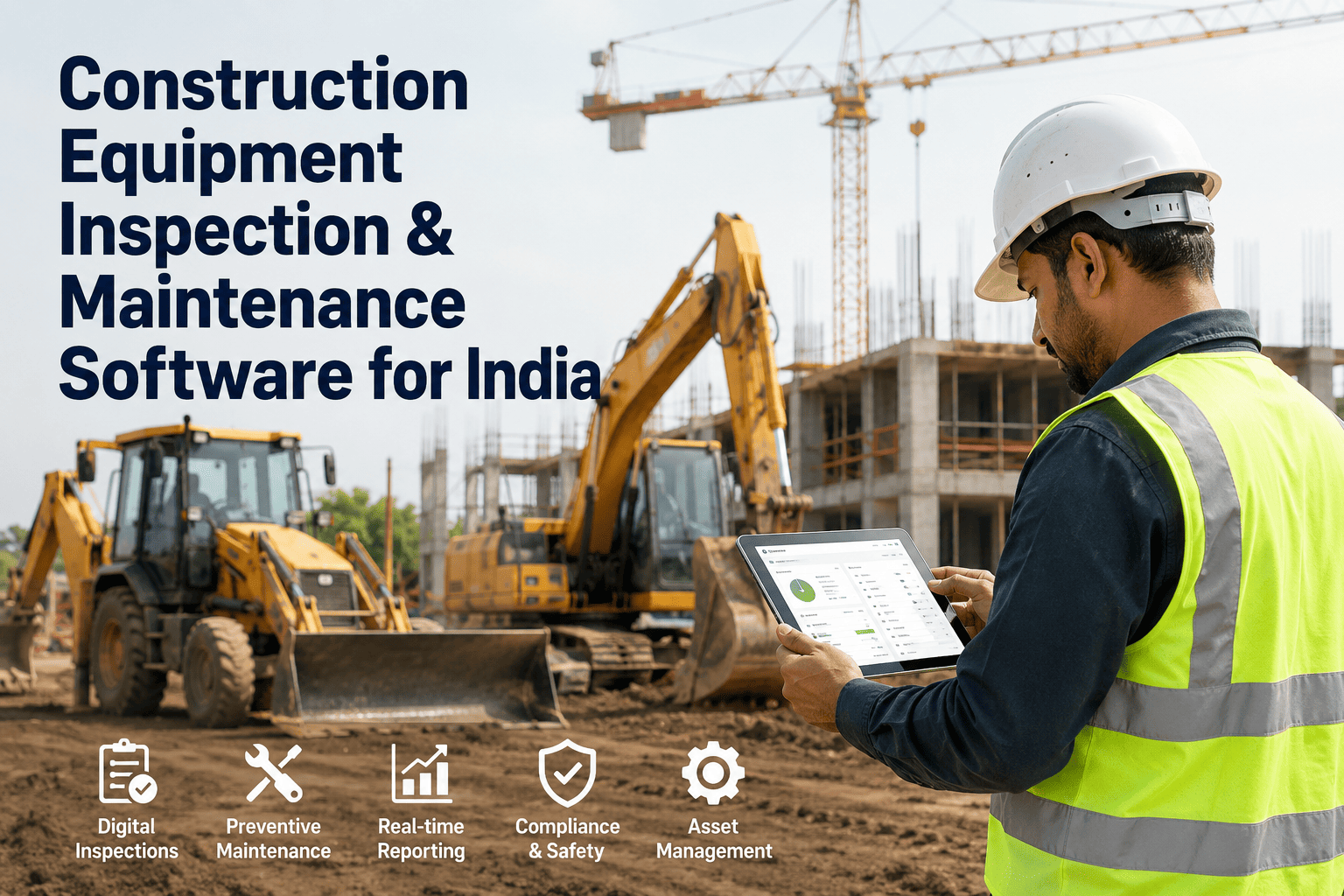
If you manage construction equipment or infrastructure fleet in India, you already know the pain — a machine breaks down on a highway project site, the driver says he "checked" it that morning, but there is no record, no photo, no report. Just a breakdown that costs your project hours and lakhs. The right equipment inspection app for construction and infrastructure can completely change this story. In 2026, mobile inspection apps have become essential tools for Indian EPC companies, highway contractors, and mining fleet managers. This review covers the top 5 equipment inspection apps for construction and infrastructure, comparing offline capability, reporting quality, and how well they fit the real conditions on Indian project sites. Start your free HVI trial and see how inspection-first software works in practice.
Updated for 2026 — India Edition
Top 5 Equipment Inspection Apps for Construction & Infrastructure in 2026
We reviewed every major inspection app against five real criteria that matter on Indian project sites: offline performance, report quality, ease of use for operators, integration with maintenance workflows, and deployment speed. Here is what we found.
Why Indian Construction Sites Need a Digital Inspection App in 2026
India's infrastructure sector is in the middle of its biggest-ever expansion. The Bharatmala Pariyojana programme alone covers over 34,800 km of national highway corridors. According to the Ministry of Road Transport and Highways, India's national highway network crossed 1,46,000 km in 2024, up from 91,287 km in 2014. Equipment fleets supporting these projects have grown equally fast — ICRA estimates that India's construction equipment industry crossed 1,10,000 units sold in 2024, driven largely by EPC contractors, mining companies, and state highway agencies.
The problem is that most of these machines are still inspected using paper registers, WhatsApp photos, or nothing at all. A single equipment breakdown on a highway project can cost anywhere from Rs 25,000 to Rs 2 lakh in lost productivity per day, depending on the machine and project phase. For large EPC companies like L&T, H.G. Infra, Afcons, and GR Infraprojects, even one missed inspection that leads to a site accident can result in regulatory penalties, project delays, and reputational damage.
Digital inspection apps solve this problem by replacing paper registers with structured mobile checklists, GPS-tagged photos, and instant digital reports that managers can see from their phones in real time. The best field inspection apps for construction work even when there is no internet, which is critical for remote highway alignments, tunnel projects, and mining sites in areas like Rajasthan, Odisha, Jharkhand, and the Northeast.
1,46,000+
km of national highways in India (MoRTH, 2024)
1,10,000+
construction equipment units sold in India (ICRA, 2024)
Rs 34,800 Cr+
annual equipment repair and maintenance cost for Indian infra fleets
68%
of Indian construction sites still rely on paper-based inspection records (CII, 2023)
How We Evaluated the Top 5 Equipment Inspection Apps
We looked at every major digital inspection tool available to Indian infrastructure companies in 2026. The evaluation was based on five criteria that Indian site managers and fleet supervisors actually care about: how well the app works offline in areas with poor network, how readable and complete the inspection reports are, how easy it is for an equipment operator or driver to complete a checklist without training, how tightly the app connects to maintenance workflows, and how quickly a company can roll it out across sites. Apps that required expensive hardware, weeks of setup, or IT support teams were rated down for Indian market fit.
Top 5 Equipment Inspection Apps for Construction and Infrastructure — Full Comparison
HVI — Heavy Vehicle Inspection
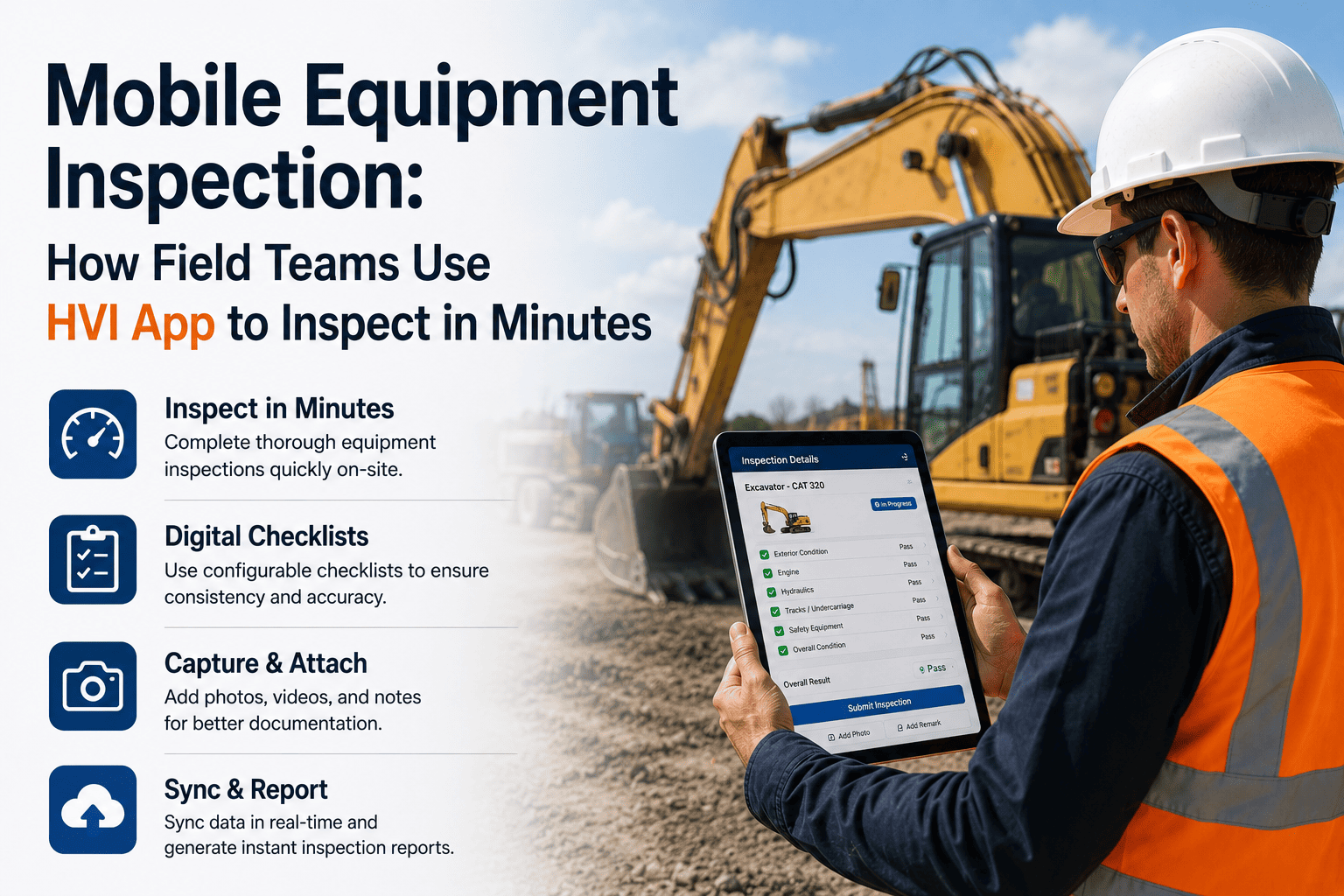
Best equipment inspection app for Indian construction and infrastructure fleetsHVI is built specifically for heavy equipment fleets in construction, highway, and mining operations. It is not a general-purpose form builder adapted to inspection — it is an inspection-first platform designed around how machines actually get checked before shifts start on Indian project sites. The app works completely offline, which means operators on a Rajasthan highway project or a Jharkhand coal mine can complete their pre-shift checklist without any network. Photos get GPS-tagged and time-stamped, and everything syncs the moment connectivity returns. HVI supports every major equipment category used on Indian infra sites — motor graders, transit mixers, tippers, pavers, excavators, cranes, backhoe loaders, and more. Inspection checklists are customisable by asset type, so a TATA tipper and a JCB 3DX get different checklist points relevant to their specific components. Any defect flagged during inspection automatically creates a maintenance work order — the workshop supervisor gets notified instantly without the driver needing to call or message anyone. Try HVI free for your fleet and run your first digital inspection within ten minutes.
Full offline mode — no network needed on site
GPS + timestamp on every photo
Defect-to-work-order automation
Custom checklists per asset type
Audit-ready PDF reports with one tap
Android and iOS, deploy in under 10 min
SafetyCulture (iAuditor)
Best for teams that need highly customisable digital formsSafetyCulture, formerly known as iAuditor, is a well-established inspection and audit platform used globally. It has a large template library covering safety audits, quality checks, and equipment inspections. The platform is flexible — you can build almost any checklist using its form builder. It works offline and syncs when network is available. However, its strength is in general-purpose forms rather than construction equipment inspection specifically. For Indian fleets running TATA, Ashok Leyland, or L&T Komatsu machines, you will need to build your own templates from scratch, and connecting inspection defects to maintenance workflows requires additional integration steps. Reporting is strong for compliance audits but not as tightly linked to maintenance work orders as a purpose-built fleet inspection app. Pricing is also significantly higher than Indian-market alternatives, with per-seat costs that can be difficult to justify for large operator pools on highway projects.
Fleetio
Best for mid-size fleets that want maintenance and inspection togetherFleetio is a popular fleet management platform with a mobile inspection feature built in. Operators can complete vehicle condition reports from the app, and these connect to the Fleetio maintenance module. It works well for on-road vehicle fleets — particularly trucks, light commercial vehicles, and support vehicles. For construction equipment like excavators, pavers, motor graders, and concrete equipment, the inspection templates are less detailed and customisation options are more limited. Offline capability exists but is not as robust as pure inspection apps. For Indian EPC companies managing mixed fleets of on-road and off-road equipment, Fleetio covers the basics well but may require supplementary tools for deep equipment inspection.
GoAudits
Best for simple, low-cost digital checklists on construction sitesGoAudits is an affordable checklist and audit app that is popular with small to mid-size Indian companies looking to digitise their inspection processes without a large budget. It covers inspections, safety audits, and quality checks with a straightforward mobile interface. The app works offline and produces clean PDF reports that can be shared immediately. The limitation for construction fleet managers is that GoAudits is a generic form tool — it has no native maintenance module, no defect-to-work-order workflow, and no equipment-specific templates. You build everything yourself. For a site safety audit or a one-time equipment condition check, GoAudits is perfectly adequate. For ongoing, repeatable equipment inspection with maintenance integration, it will leave gaps that a dedicated site inspection app fills automatically.
Zoho FSM / Zoho Forms
Best for companies already using the Zoho ecosystemZoho offers a suite of tools — including Zoho FSM (Field Service Management) and Zoho Forms — that Indian companies frequently consider for inspection digitisation because of existing Zoho relationships. The advantage is tight integration with Zoho CRM, Zoho Books, and other modules, making it appealing for larger organisations running the full Zoho stack. However, Zoho FSM is designed for field service teams rather than construction fleet inspection, and the inspection workflows require significant configuration to match the needs of an equipment-heavy project site. Offline capability on Zoho Forms is limited compared to purpose-built inspection apps. For companies already invested in Zoho infrastructure, it can serve as a starting point, but those managing 20 or more pieces of construction equipment will likely outgrow it quickly.
What to Look For in an Equipment Inspection App for Indian Construction Sites
Not every inspection app is built for the realities of an Indian infrastructure project site. Here are the features that genuinely separate good apps from great ones when you are managing a fleet of machines on an NH highway project, a NHAI BOT corridor, or a coal mine in Odisha.
Many apps claim offline support but fail when there is genuinely no data signal. A real offline inspection app stores completed checklists and photos on the device and syncs them automatically once network returns. This is non-negotiable for remote project sites.
A motor grader checklist and a tower crane checklist are very different. Look for an app that either provides templates for major Indian OEM equipment or lets you build them by asset type without needing a software developer.
An inspection is only useful if defects get fixed. The best construction equipment apps automatically raise a repair ticket or work order when a defect is flagged, so the workshop team knows about it instantly without the operator having to call or message anyone.
Photos are what make inspection reports credible. The app should allow multiple photos per checklist item, tag them with GPS coordinates automatically, and embed them in the final report. This is critical for insurance claims and NHAI compliance documentation.
Your equipment operators are not software users. The app needs to work in the local language or at least with visual cues, large tap targets, and a flow simple enough that a driver with a basic Android phone can complete a 30-point checklist in under five minutes.
When a client, NHAI auditor, or insurance inspector visits your site, you need to produce complete inspection records with one click. Look for apps that generate dated, signed PDF reports that include photos, defect notes, and operator details automatically.
Before vs After: Paper Inspections vs Digital Inspection App on Indian Construction Sites
Before — Paper Register
Operator fills register at gate — often after the shift, not before
No photos — defect descriptions are vague or missing
Site manager has no visibility until someone physically brings the register
Defect found — workshop notified by phone call, then forgotten
Audit preparation takes days — registers get lost or damaged
Breakdown liability unclear — no proof machine was inspected
After — HVI Digital Inspection App
Operator opens app, completes checklist before machine moves — GPS and time logged
Photos attached per checklist point — visible to manager instantly on dashboard
Site manager sees all inspections in real time from phone, anywhere
Defect flagged — work order raised automatically, workshop notified by app
Full inspection history for any machine downloadable as PDF in seconds
Time-stamped, GPS-verified proof protects the company in any audit or dispute
Expert View: What Indian Site Managers Actually Need from a Field Inspection App
We were running paper checksheets for 68 machines across four highway packages — two in Rajasthan, two in Madhya Pradesh. Every month, the project manager would find three or four machines that had no inspection records for weeks. Nobody was lying, the registers just got lost or left at the site office. When we moved to a digital inspection app, the first thing that changed was visibility. I could see on my phone which machines had been inspected that morning and which had not, without making a single call. The second thing was defect tracking — when an operator flags a hydraulic issue, the workshop supervisor gets it immediately. We reduced breakdown-related downtime by stopping repairs that happened too late. An inspection app is not a luxury. For an EPC company running more than 30 machines, it is as basic as having a project schedule.
Comparison Table: Top 5 Equipment Inspection Apps at a Glance
| App | Offline Mode | Report Quality | Maintenance Link | Best For | India Fit |
|---|---|---|---|---|---|
| HVI | Full offline | GPS + photo PDF | Auto work orders | Construction & infra fleets | Excellent |
| SafetyCulture | Good offline | Strong audit PDF | Manual integration | Safety audits | Moderate |
| Fleetio | Partial offline | Standard report | Built-in CMMS | On-road fleets | Good |
| GoAudits | Good offline | Clean PDF | None built-in | Simple checklists | Good for small teams |
| Zoho FSM | Limited offline | Basic report | Zoho ecosystem only | Zoho users | Limited for field ops |
Start Inspecting Your Construction Fleet Digitally
Switch from paper registers to a mobile inspection app built for Indian infrastructure and construction fleets. No IT team needed. Operational within 10 minutes.
How to Roll Out a Digital Inspection App Across Multiple Project Sites
Rolling out a new inspection app across an Indian EPC company's project sites is simpler than most fleet managers expect, especially with a cloud-native platform. Here is a practical step-by-step approach that works for companies with 5 machines on a single site or 500 machines across 20 NH packages.
List all your asset types
Before you set up any inspection templates, make a list of every machine type in your fleet — excavators, motor graders, transit mixers, dumpers, tippers, cranes, compactors, pavers, and so on. This ensures every machine gets the right checklist rather than a generic one that misses critical components.
Set up inspection checklists per asset type
With HVI, you can use pre-built templates for common construction equipment categories and customise them to add your company's specific inspection points — such as hydraulic oil levels, undercarriage condition, boom pin integrity, or tyre pressure specs per machine.
Assign operators to machines and sites
Each operator gets a login tied to the machines they are responsible for. When they open the app, they see only their assigned machines. This keeps the process clean and prevents confusion on multi-machine project sites.
Run one pilot shift with your team
Pick one site, one shift, and five machines. Walk the operators through completing their first digital inspection. Most operators complete their first app-based inspection in under five minutes. Use this pilot to catch any template gaps before you roll out across all sites.
Review your first dashboard report
After the pilot shift, your site manager can review all inspection results, flagged defects, and photo evidence from a single dashboard. This is the moment that makes the value immediately visible — for the first time, a manager can see the condition status of every machine in one view without visiting the site.
Conclusion: The Right Equipment Inspection App Makes Every Site Safer and Every Fleet Cheaper to Run
India's construction and infrastructure sector is moving fast. With Bharatmala packages being executed simultaneously across dozens of states, EPC companies like H.G. Infra, KEC International, and Afcons cannot afford to manage their equipment fleets on paper. A digital equipment inspection app is no longer a technology experiment — it is a practical tool that directly reduces breakdowns, lowers repair costs, improves safety records, and makes audit compliance straightforward rather than stressful.
Among the top 5 equipment inspection apps reviewed here, HVI stands out as the strongest choice for Indian construction and infrastructure fleets specifically because it is built for heavy equipment rather than adapted from a general form tool. It works offline everywhere, connects defects to maintenance automatically, and can be deployed across an entire project site in less than a day. For teams running machines from TATA, JCB, Schwing Stetter, Ashok Leyland, or L&T Komatsu, HVI provides inspection templates that match real machine categories rather than forcing you to build everything from scratch.
If you are still running paper inspection registers on your sites, the cost of switching is near zero and the payoff in reduced downtime and better compliance is immediate. Sign up for HVI and run your first inspection today.
Frequently Asked Questions
Ready to Digitise Equipment Inspection on Your Sites?
Join Indian EPC contractors, highway project teams, and mining fleet managers who have moved from paper inspection registers to HVI's digital inspection platform. No hardware. No IT setup. Operational today.
No credit card required. No hardware needed. Run your first inspection in under 10 minutes.