India's construction equipment industry sold over 1.36 lakh machines in FY26 alone, and the sector is racing to become the world's second-largest construction equipment market by 2030. Every one of those machines — a JCB backhoe loader, an L&T Komatsu or SANY excavator, a Tata Hitachi dumper, a tower crane, a concrete batching plant — needs a daily inspection, timed maintenance, and a paper trail that satisfies clients, insurers and safety inspectors. Most Indian contractors still run this mixed, multi-brand fleet on WhatsApp photos, paper logbooks and a site engineer's memory, and it shows up as missed services and disputed bills. This page looks at how construction equipment inspection and maintenance software is changing that in 2026, and how one dashboard for JCB, L&T, SANY and every other machine on site actually works. Start free with HVI to bring your fleet onto one system.
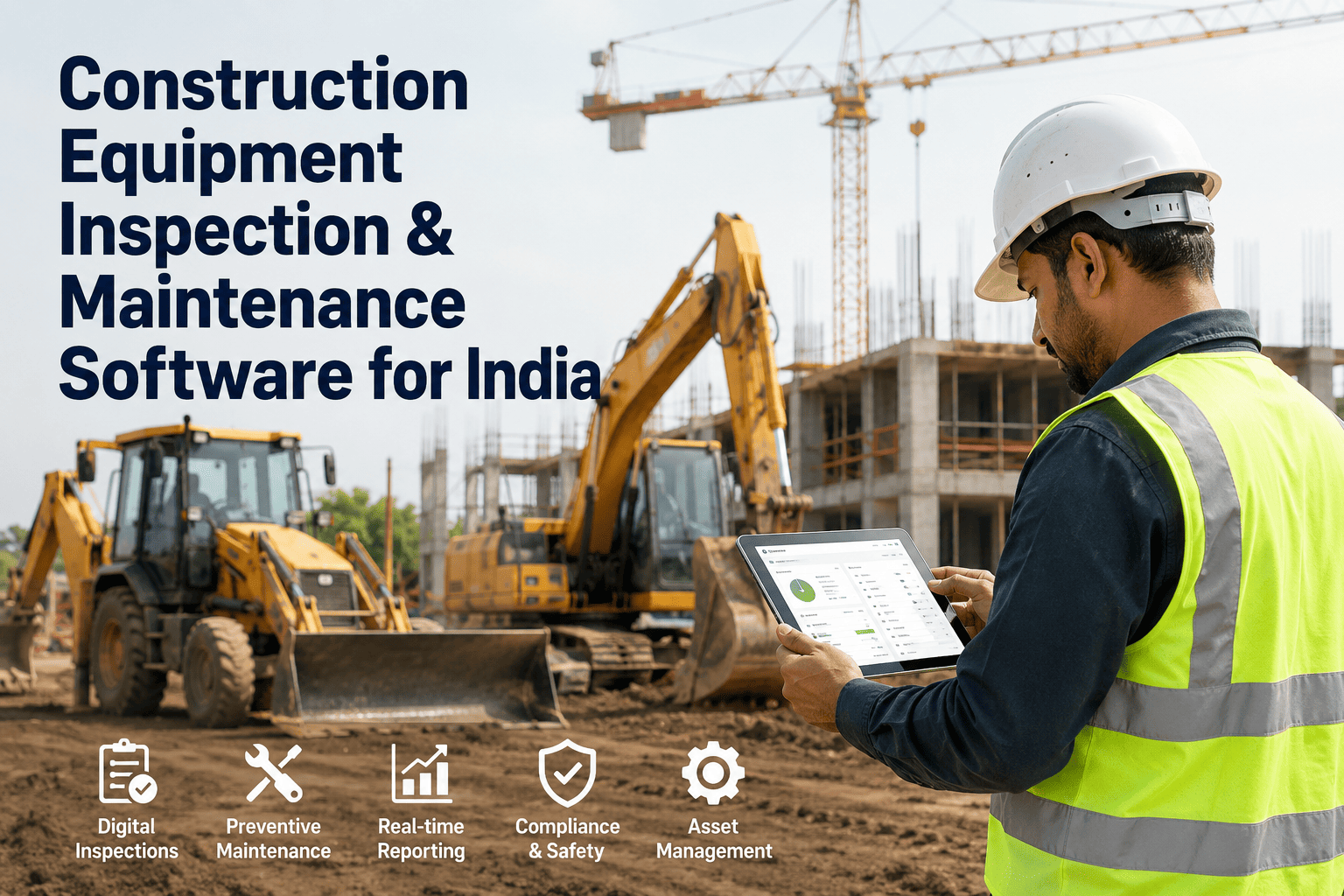
Construction Equipment Inspection & Maintenance Software for India
One mobile platform for daily inspections, hour-based maintenance, work orders and compliance records — built for India's mixed JCB, L&T Komatsu, SANY and Tata Hitachi fleets, on any site, in any state.
Construction equipment units sold across India in FY26
ICEMA FY26 industry dataShare of earthmoving machines — excavators, loaders — in India's CE fleet
ICEMA FY26 category dataGlobal rank India's CE market is targeting by 2030
ICEMA industry outlookGrowth in India's CE exports in FY26, raising the build-quality bar
ICEMA / NBM&CW FY26 dataWhy a Mixed Construction Fleet Is Hard to Manage
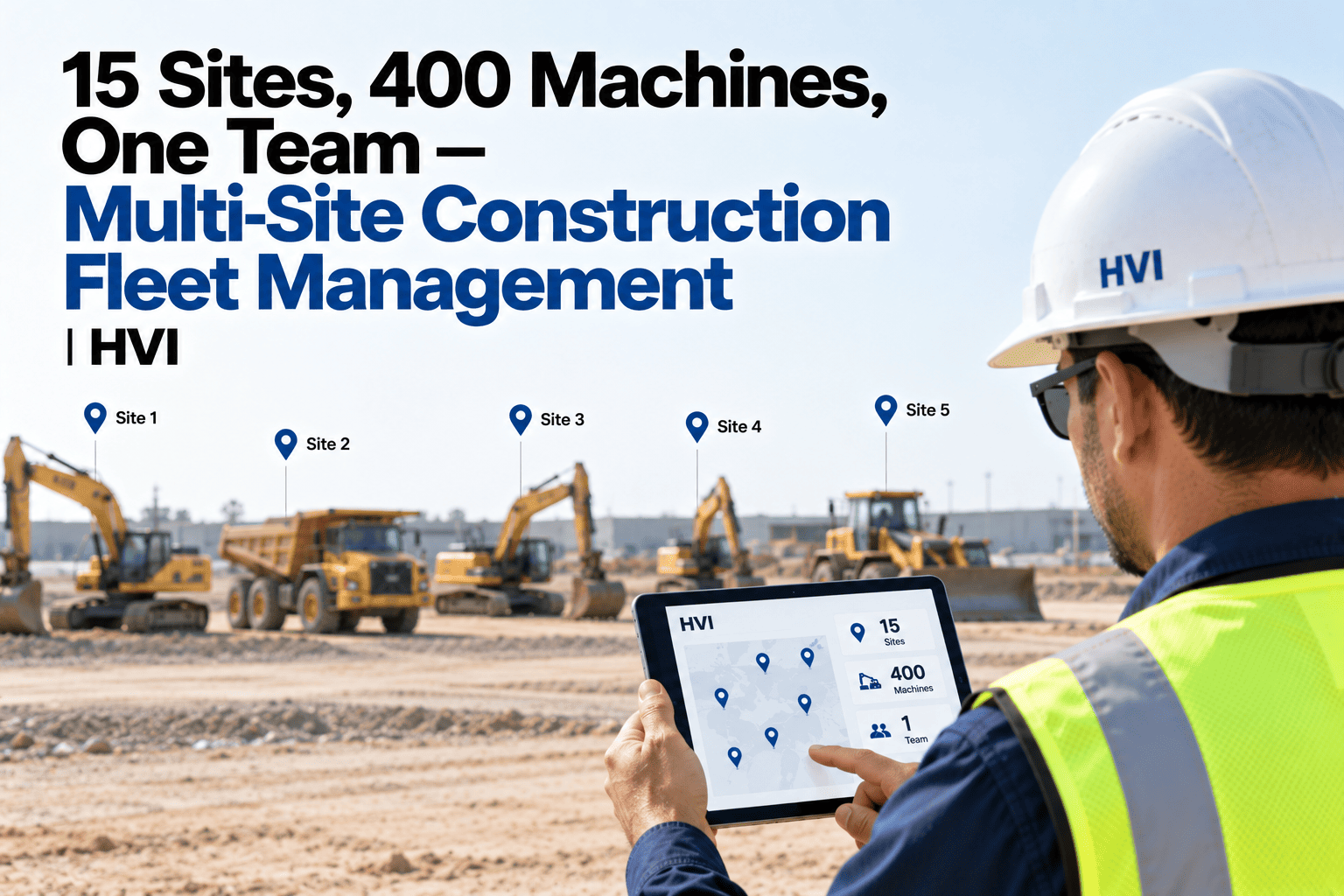
A typical Indian contractor doesn't run one brand or one site. A single fleet can mix JCB backhoe loaders, an SANY or L&T Komatsu excavator, a Tata Hitachi dumper and a rented crane, spread across two or three live sites, often bought at different times from different dealers. That mix is exactly where paper-based management breaks down, and it usually stays hidden until a machine actually stops working on a live pour or lift.
Multi-Brand Complexity
JCB, L&T Komatsu, SANY and Tata Hitachi machines each ship with their own service manuals and hour intervals. Juggling several systems on paper means a service always slips through.
Fleet Spread Across Sites
Machines move between sites, sometimes states, as projects demand. No single site engineer can walk every yard every morning and know what is really running.
Compliance & Audit Pressure
Clients, consultants and safety inspectors expect documented daily checks and maintenance history. Paper logbooks are slow to produce and easy for anyone to dispute.
Breakdown Cost Under Deadline
A crane or excavator down mid-pour or mid-lift does not just cost repair money — it stops the crew, the pour and the milestone sitting behind it.
Paper Logbook vs Digital Fleet Platform
Here is what actually changes when a mixed construction fleet moves from paper and phone calls onto one digital platform. The difference is not cosmetic — it shows up in how fast a defect gets fixed, how few services get missed, and how quickly a client question gets answered.
Built for Every Machine, Every Brand, Every Site
HVI does not care which showroom a machine came from. Whatever is parked on your site today, or gets added next quarter, goes onto the same dashboard, on the same schedule, with its own inspection checklist and service intervals set correctly from day one.
| Equipment Type | Typical Job on Site | Key Inspection Focus |
|---|---|---|
| Excavator | Earthwork, trenching, demolition | Hydraulics, undercarriage, bucket pins |
| Backhoe Loader | Digging, loading, utility work | Boom pins, brakes, loader arm |
| Tower / Mobile Crane | Lifting and material placement | Wire ropes, load limiters, brakes |
| Concrete Batching / Pump | Mixing and placing concrete | Pump pressure, drum, hopper seals |
| Motor Grader / Dozer | Grading, levelling, earthmoving | Blade wear, transmission, tracks |
| Tipper / Dumper | Material haulage on and off site | Tipping hydraulics, brakes, tyres |
Add a new machine on any package, any brand, and it is inspection-ready the same day. Book a demo to see your full mixed fleet on one screen.
How Digital Fleet Management Works, Step by Step
None of this needs new hardware or a telematics upgrade. It runs on the phones your operators and site engineers already carry, from the first inspection to the final compliance export.
Daily Digital Inspection
The operator inspects the machine before every shift on a phone, with photo, GPS and timestamp attached, even offline on a remote site.
Hour-Based Maintenance Alerts
Engine hours are tracked per machine and service alerts fire before they are due, whether the machine is a JCB, SANY or Tata Hitachi.
Defect-to-Work-Order
A defect flagged on inspection becomes a tracked work order in one tap, assigned to a mechanic with parts and cost recorded against that machine.
Compliance Documentation
Every inspection and service is logged and rolls into an audit-ready record set that a client, consultant or inspector can review on demand.
Utilisation & Cost Dashboard
One screen shows hours, idle time and cost per machine across every site, so an idle excavator on one job can be moved to another the same day.
From the Field
Our fleet is a mix of brands bought over eight years, spread across three sites in two states. Every brand had its own service card, and half of them lived in a site office drawer. I found out about breakdowns when a crew called to say a machine had stopped, not before.
Moving everything onto one platform meant every machine, whatever badge it carries, gets the same daily inspection and the same hour-based service reminder. When our client's consultant asked for six months of inspection records last quarter, we sent a clean export the same afternoon instead of digging through a site office for a week.
Frequently Asked Questions
What is construction equipment inspection software?
It replaces the paper logbook with a mobile app: operators run a daily inspection with photo and GPS proof, hours are tracked automatically, and defects turn into work orders. It works across brands, so a JCB, an L&T Komatsu and a SANY machine sit on the same screen. Start free with HVI to see your own fleet on it.
Does it work across JCB, L&T Komatsu, SANY and other brands together?
Yes. The platform is built brand-agnostic, so every machine type and make is added the same way, with its own service intervals and inspection checklist. Most Indian contractors run at least four or five brands in one fleet, and that mix is exactly what it is designed for.
How does hour-based maintenance cut down breakdowns?
Every machine's engine hours are tracked continuously, and the system alerts the fleet manager before a service is due rather than after it is missed. Since unplanned breakdowns are far costlier than scheduled service, closing that gap protects both the machine and the site schedule. Book a demo to see it against your service cards.
Can this help with client and safety audits on Indian sites?
Yes. Every inspection, service and defect is logged with photo, GPS and timestamp, and can be exported per machine or per site in minutes. That turns a week of searching paper files into a same-day response for a client, consultant or safety audit.
How fast can a construction fleet get started?
Most fleets are inspecting their first machines within a day of signup, with no hardware to install and no telematics dependency required. Onboarding a full mixed fleet across sites typically takes days, not months. Sign up free to start with your own machines today.
Manage Your Mixed Construction Fleet on One Platform
HVI brings digital inspections, hour-based preventive maintenance, defect-to-work-order, utilisation tracking and compliance records into one platform built for India's JCB, L&T, SANY and Tata Hitachi fleets. Mobile-first, offline-ready, live in days.
No credit card. No hardware. Built for Indian construction fleets.