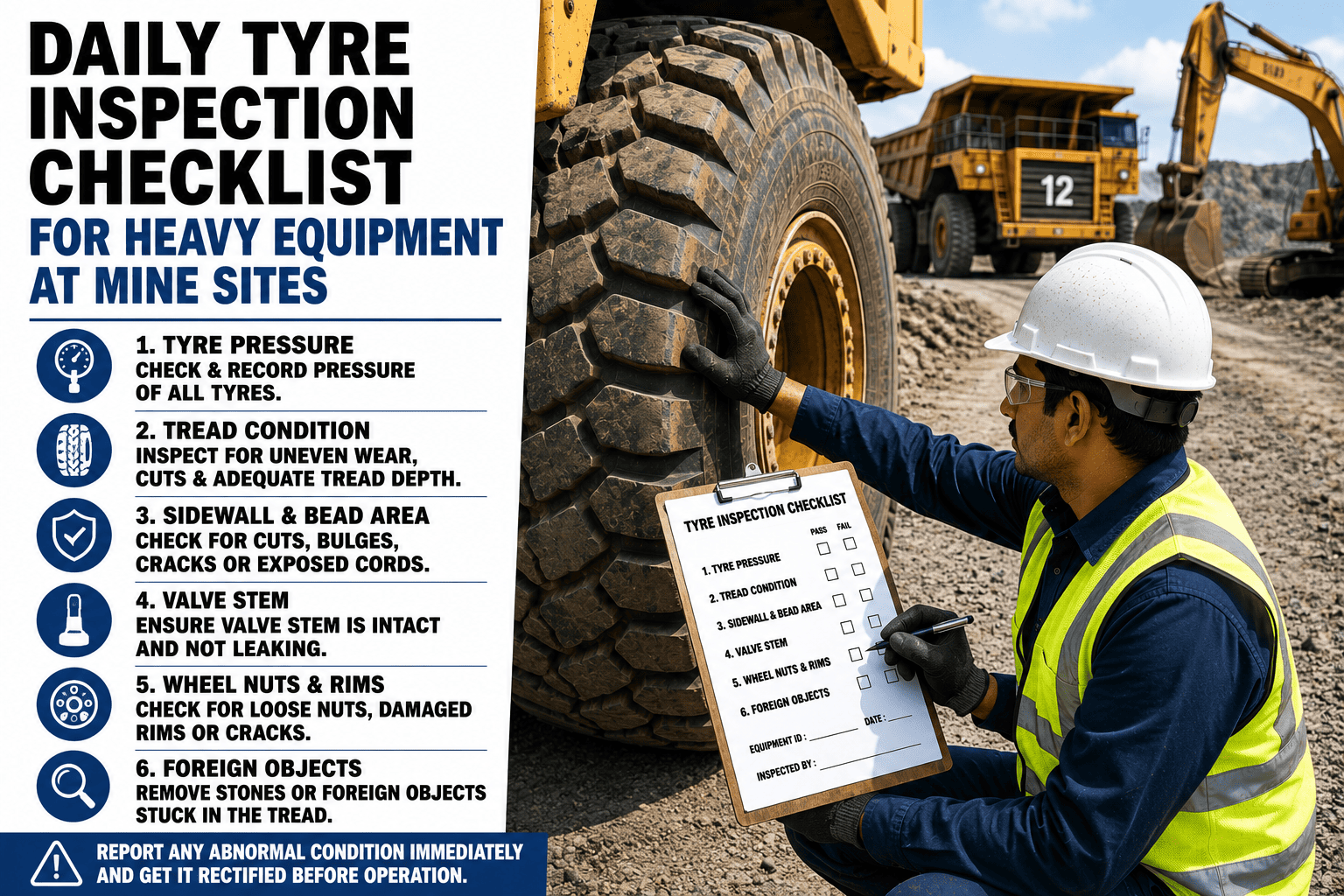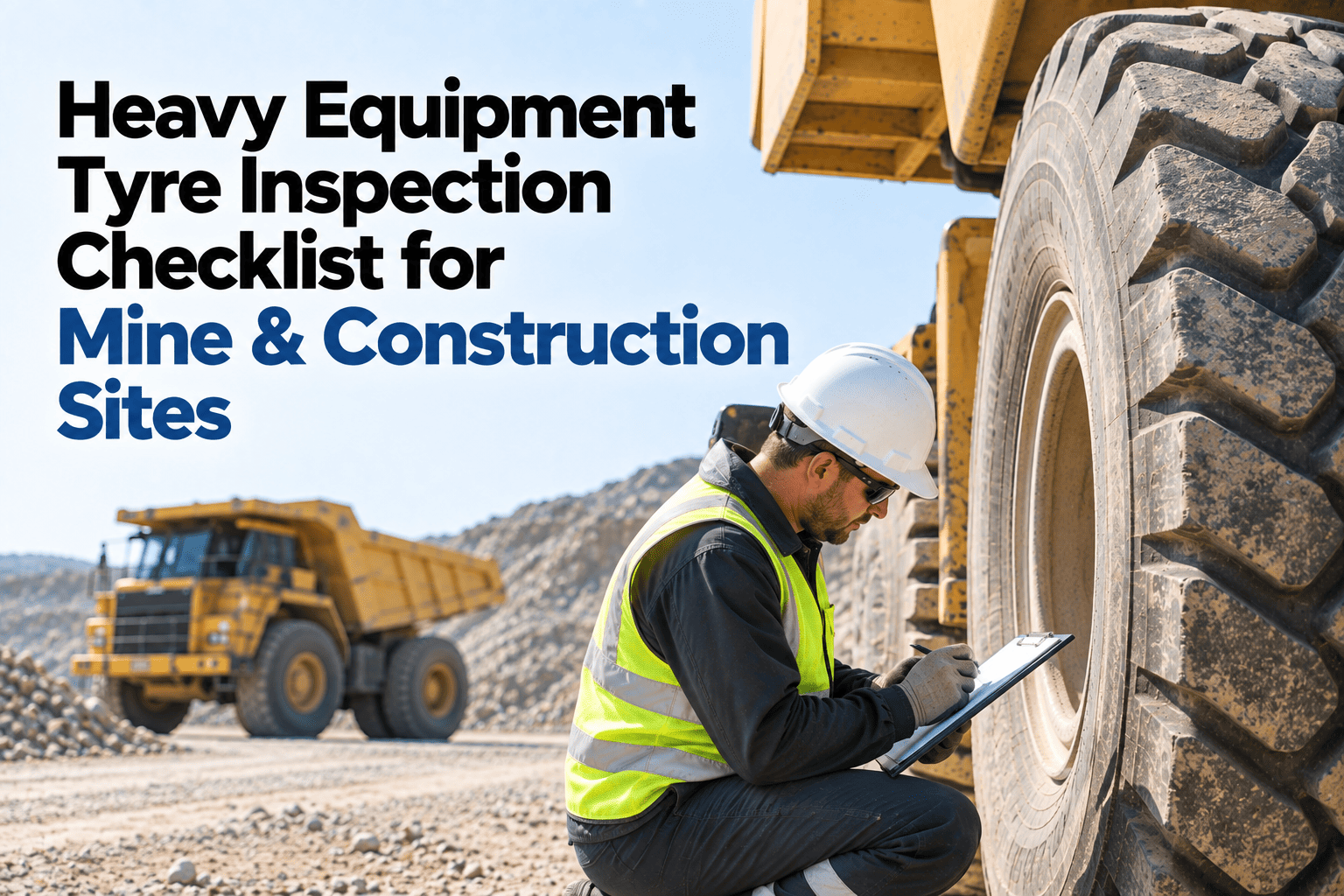
Tyre inspection fails when it is treated as one activity. An operator glancing at a wheel before a shift and a technician measuring tread depth with a gauge are doing completely different jobs, and collapsing them into a single checklist means the quick check becomes too long to complete and the detailed one never gets done properly. Separating them by depth and cadence solves both problems: the operator gets something achievable in a minute, and the measured checks get the time and the right person. What follows is that structure, and you can adapt it to your own machines in a free 30-minute session.
Tyre Inspection at Three Depths, Not One Long Form
A pre-shift visual the operator can actually finish, a weekly closer look, and a monthly measured check — each with its own items and its own person.
The Three Levels
Check It or Record It — They Are Not the Same
Anything you want to see a trend in has to be a number. Pass and fail tells you the state today and nothing about direction.
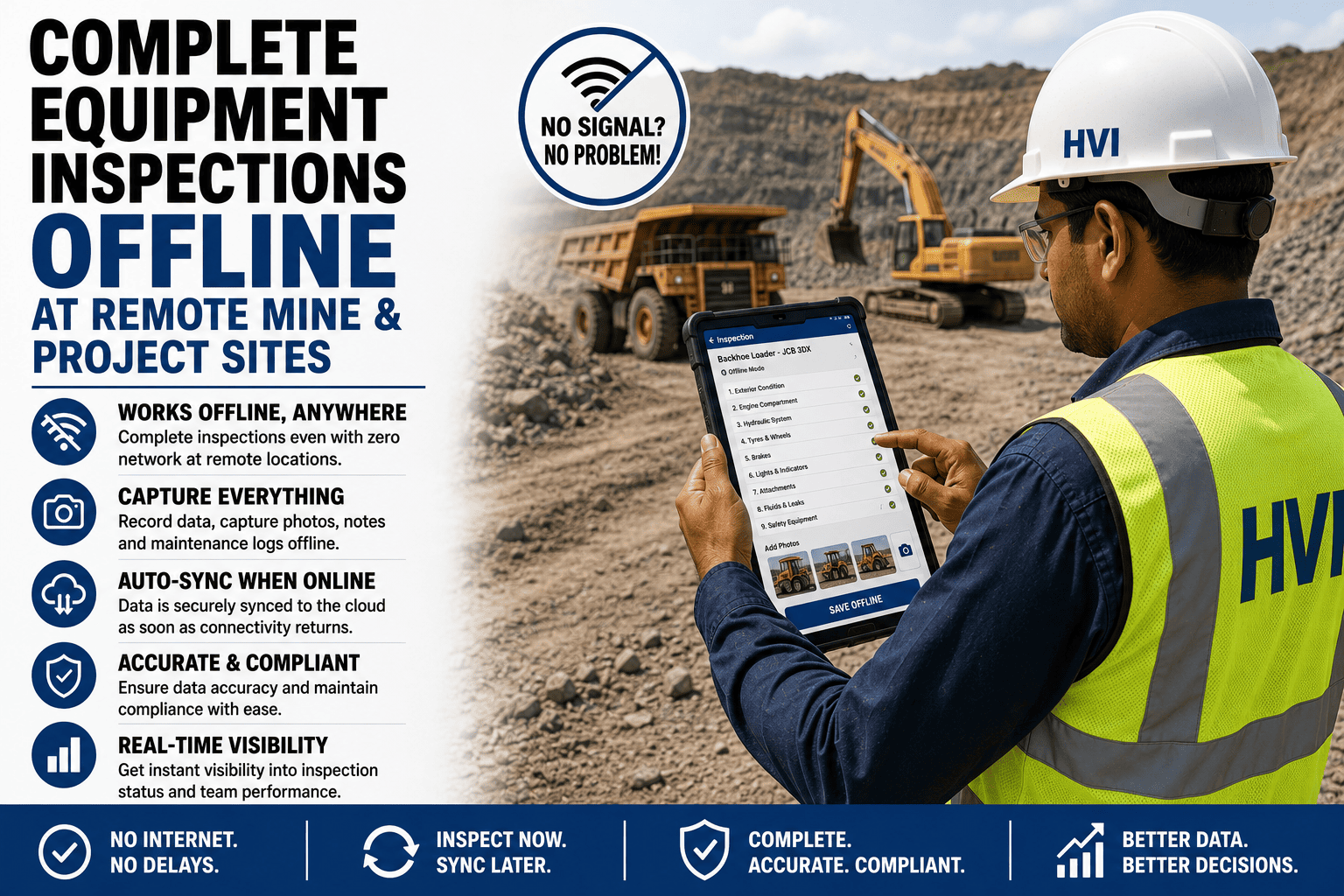
Run All Three From One System
Different checklists, different intervals, different roles, with the measured values building a wear history per position.
Conditions That Should Change the Checklist
Monsoon and soft ground
Soft surfaces hide embedded debris and encourage running under-inflated for traction. Both increase sidewall stress, so pressure checks matter more, not less, in the wet.
Rocky and blasted material
Cut and impact damage dominates. The useful response is haul road and loading area housekeeping rather than a tighter inspection interval.
High ambient heat
Operating pressure rises with temperature, so cold readings and hot readings are not comparable. Record which you took.
Long haul cycles
Heat accumulation becomes the limiting factor. If removals are heat-related, the inspection is not the problem and the cycle or specification needs review.
Frequently Asked Questions
Can the pre-shift check really be done in a minute?
Yes, if it stays visual and the operator is walking the machine anyway for other checks. The moment it requires a gauge or a measurement it belongs in the weekly tier instead. You can see how the tiers are configured on a call with our team.
Should pressure be checked cold or hot?
Cold is the standard reference and gives comparable readings. Hot checks are still useful for spotting a sudden loss, provided the record notes the condition so the numbers are not compared against cold ones.
Is a weekly pressure check frequent enough?
For many operations yes, but severe conditions or a history of pressure-related removals justify more often. Let your own removal reasons decide rather than a generic interval.
Who should do the monthly measured check?
Someone with the gauge, the time, and the responsibility for acting on what they find. It does not work as an additional task for an operator already mid-shift.
What if our machines have different tyre configurations?
Checklists are set per equipment type, so a dump truck and a wheel loader carry different position counts and items. Start with a free trial to configure your own.
Short Check Daily, Real Numbers Monthly
Keep the pre-shift check visual and quick so it gets completed, put the gauge work weekly, record measured tread and pressure monthly per position, and let your own removal reasons tell you where to tighten the intervals.