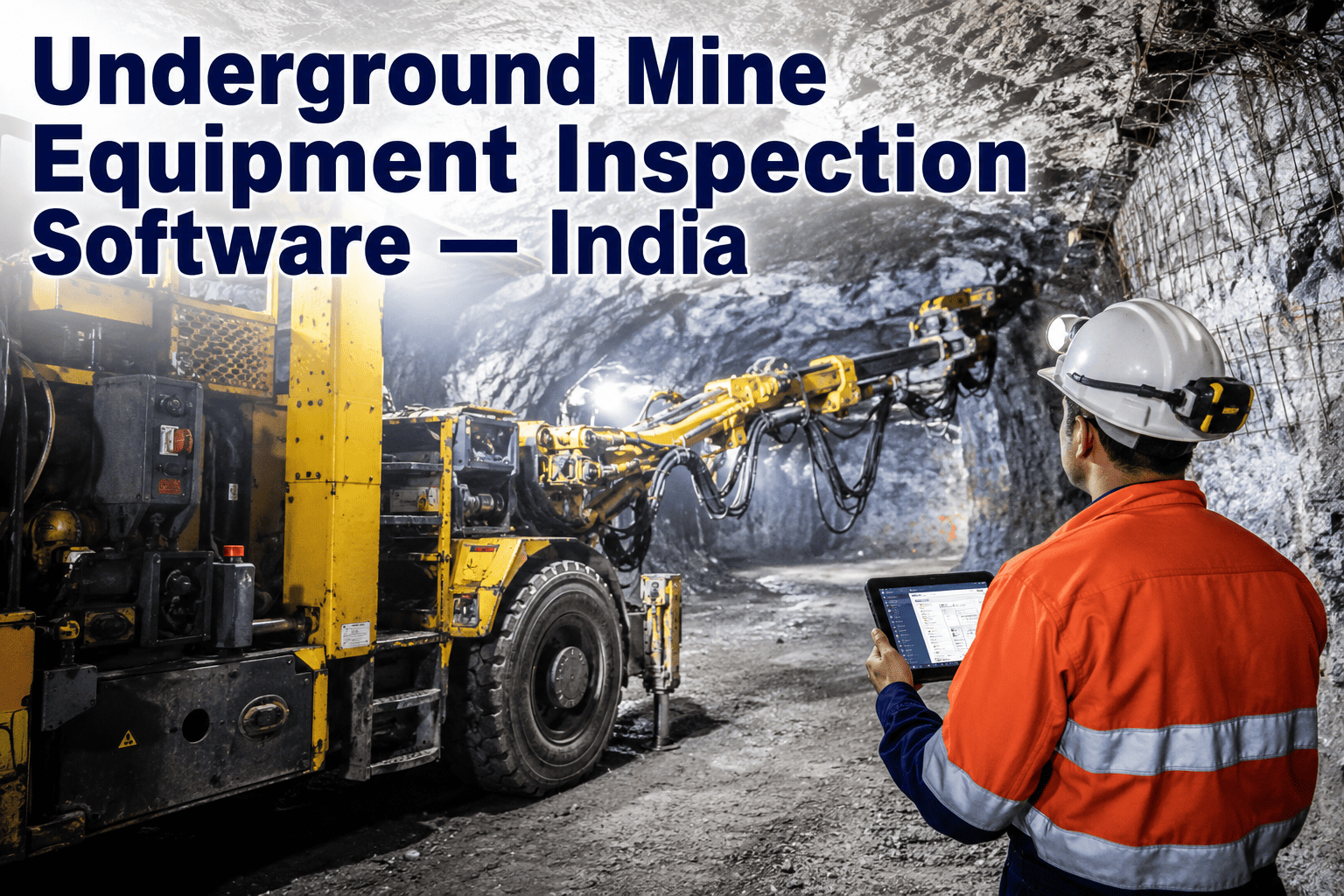
Underground coal and metal mines in India run some of the hardest equipment fleets in the country — side discharge loaders, load haul dumpers, mine locomotives, and gas monitoring instruments working hundreds of metres below surface where signal drops to zero and paper registers get wet, torn, or simply never filled at the face. DGMS data shows underground operations remain one of the most closely audited segments of Indian mining, and a single missed gas reading or unreported hydraulic leak on an LHD can end a shift, a machine, or a life. Most mines still rely on shift-end paperwork that nobody can verify happened at the actual heading. Start a free HVI account and put every underground inspection on record from the first shift.
Underground Mining — Equipment Inspection Software
Underground Mine Equipment Inspection Software for Indian Mines
Digitise pre-shift checks, gas monitoring logs, and PM schedules for SDLs, LHDs, and mine locomotives — built to work at 200 metres underground with zero network signal, and to hand your DGMS inspector a complete record in minutes.
Zero
Network dependency underground
4+
Underground equipment classes covered
2 min
To pull a DGMS-ready record
Why Underground Inspection Fails on Paper
Underground equipment inspection carries a different set of failure points than open-cast fleets — depth, darkness, gas risk, and travelling distances that can run 3 to 5 kilometres from the pit bottom to the working face. These are the four failure patterns that show up again and again in underground mine safety reviews.
01
Gas Readings Logged at the Surface, Not the FaceMethane and CO readings on combustible gas testing registers are meant to be taken at the working face before machine start-up. In practice, many are filled in bulk at the shift office once the shift is already underway, leaving no real record of conditions at the actual heading.
02
SDL and LHD Defects Reported VerballyHydraulic leaks, brake drag, and bucket pin wear on side discharge loaders and load haul dumpers are frequently mentioned to a shift supervisor in passing rather than logged. Reliability studies on Indian LHD fleets consistently point to managerial and reporting gaps, not just mechanical wear, as a leading cause of breakdown hours.
03
Locomotive and Tub Haulage Checks Skipped Under Time PressureMine locomotive brake tests, coupling checks, and track condition checks are statutory requirements, but when haulage distance is long and production targets are tight, these checks are the first to be rushed or skipped on a busy shift.
04
No Underground Visibility for the Mine ManagerOnce a machine goes underground, the surface control room has no reliable way of knowing whether its pre-shift inspection was actually completed until the operator resurfaces and the paper register is physically read — often hours after the machine has already been running.
Built for the Conditions Underground Mines Actually Work In
India produces close to a tenth of its coal output from underground mines, and underground fleets like SDLs and LHDs are used in the large majority of mechanised underground operations worldwide. A tool built for open-cast haul trucks or road fleets simply does not map onto how these machines are checked, maintained, and reported against in an Indian underground section. HVI's underground module is built around that reality rather than adapted from a generic template.
Offline-First
Every checklist, photo, and GPS tag is captured and stored on the operator's phone the moment it is completed — no mobile network, no Wi-Fi, no underground repeater required. Records queue locally and sync automatically the instant the device resurfaces or reaches a signal point, so nothing is lost between the heading and the pit bottom.
Equipment-Specific
Generic vehicle-inspection apps are built around road trucks, not underground mining machines. HVI ships with pre-built checklist templates for side discharge loaders, load haul dumpers, mine locomotives, shuttle cars, and continuous miner support equipment, with examination points mapped to how these machines are actually maintained in Indian coal and metal mines.
Gas Monitoring
Methane, carbon monoxide, and oxygen readings can be logged directly against the machine or the working section at the point of testing, timestamped and GPS-tagged, replacing the loose-leaf gas testing register that is easy to backdate and hard to audit.
Defect Escalation
A hydraulic leak flagged on an LHD or a brake concern flagged on a locomotive is pushed straight to the workshop supervisor's dashboard with a status lock on the machine, removing the verbal-report step that is the most common point of failure in underground fleets.
Compliance Ready
Inspection history, gas readings, and defect closure records for any machine or shift can be exported as a single audit-ready PDF, giving the safety officer a complete underground fleet record to hand a DGMS inspector without digging through multiple paper registers.
Equipment Coverage for Underground Fleets
HVI's underground templates are built around the machine classes that make up most Indian underground coal and metal mine fleets, from indigenous side discharge loaders to imported hard-rock LHDs.
| Equipment Type | Typical Inspection Frequency | Key Checkpoints in HVI | Statutory Relevance |
|---|---|---|---|
| Side Discharge Loader (SDL) | Every shift, pre-start | Bucket and push-plate condition, hydraulic hoses, crawler track tension, operator cabin guards | Coal Mines Regulations examination requirement |
| Load Haul Dumper (LHD) | Every shift, pre-start | Brake system, tyre condition, hydraulic pressure, bucket pins, reverse alarm and lighting | DGMS machinery examination register |
| Mine Locomotive | Every shift, pre-haulage | Brake test, coupling and drawgear, headlight and signal lamps, rail wheel condition | Statutory haulage inspection record |
| Continuous Miner Support Equipment | Daily, per production shift | Cutting drum guards, conveyor interface, dust suppression spray, electrical isolation points | Ventilation and dust control compliance |
| Gas Monitoring Instruments | Before every entry to a working section | Methane, carbon monoxide, oxygen calibration status, battery charge, sensor response check | Combustible gas testing register |
Checklists for each of these machine classes can be edited to match a specific OEM model, seam height, or section-specific safety rule without needing HVI's support team involved — the safety officer controls the templates directly from the compliance dashboard.
Bring Every Underground Machine Onto One Inspection Record
No hardware to install, no underground repeater to configure — HVI runs on the Android phones your operators already carry, above and below ground.
How an Underground Fleet Goes Digital
1
The safety officer registers every SDL, LHD, and locomotive against its site and section, and selects the pre-built underground checklist template for each machine type.
2
Operators and shift supervisors are added and linked to their machines. Nothing needs installing beyond the HVI app on the phones already in use underground.
3
Operators complete the pre-shift checklist and gas readings at the actual machine location, with GPS and photo capture confirming where and when the inspection happened.
4
Records stored offline during the shift sync automatically the moment the device reaches signal, updating the surface dashboard in real time.
5
Any machine's full inspection and defect history can be pulled as a single PDF whenever an internal audit or a DGMS visit requires it.
Why Mines Choose a Purpose-Built Underground Tool
Safety officers evaluating a digital inspection tool for an underground fleet usually start with a generic vehicle-inspection app already used elsewhere in the company, then run into the same gaps once they try to configure it for an SDL or an LHD working below ground.
Generic Inspection Apps
Built for road vehicles and open fleets, not SDLs or LHDs
Assume constant network connectivity to save data
No pre-built gas monitoring log format
Requires heavy template-building before first use
HVI Underground Module
Pre-built templates for SDL, LHD, locomotive, and continuous miner support equipment
True offline-first design, tested for zero-signal underground sections
Gas testing log built into the machine inspection flow
Ready to configure and run within a single shift
Frequently Asked Questions
Does HVI actually work underground with no mobile signal?
Yes. HVI is built offline-first, so pre-shift inspections, gas readings, and photo capture are stored directly on the operator's phone with no network required. Records sync automatically once the device reaches signal on resurfacing. You can confirm this on your own fleet by starting a free trial and testing a checklist in airplane mode.
Which underground machines does HVI support out of the box?
Side discharge loaders, load haul dumpers, mine locomotives, shuttle cars, and continuous miner support equipment all have pre-built checklist templates covering the examination points used across Indian underground coal and metal mines. Checklists can be customised further for a specific machine model or section.
Can gas monitoring readings be recorded inside HVI instead of a separate register?
Yes, methane, carbon monoxide, and oxygen readings can be logged against the machine or working section at the point of testing, with a timestamp and GPS tag attached automatically. This gives the safety officer one digital record instead of a separate paper gas testing register to reconcile.
How long does it take to get an underground fleet running on HVI?
Most mines load their machine list and checklist templates within a single day, run a short parallel period alongside existing paper registers, and move to digital-only inspection within one to two weeks. You can see the setup flow directly by booking a short demo with the HVI team.
Does HVI replace statutory registers required under DGMS regulations?
HVI is designed to produce a digital record equivalent to statutory machinery and gas testing registers, with timestamped, GPS-verified, and photo-backed entries that are typically easier for an inspecting officer to review than handwritten pages. Mines should confirm their specific documentation requirements with their regional DGMS office.
Get Your Underground Fleet Inspection-Ready
From side discharge loaders to mine locomotives, HVI gives your underground fleet a single, offline-ready inspection record that is built for the conditions your operators actually work in — and ready for review the moment a DGMS officer asks for it.
No credit card required. No hardware to install. Works with zero signal underground.