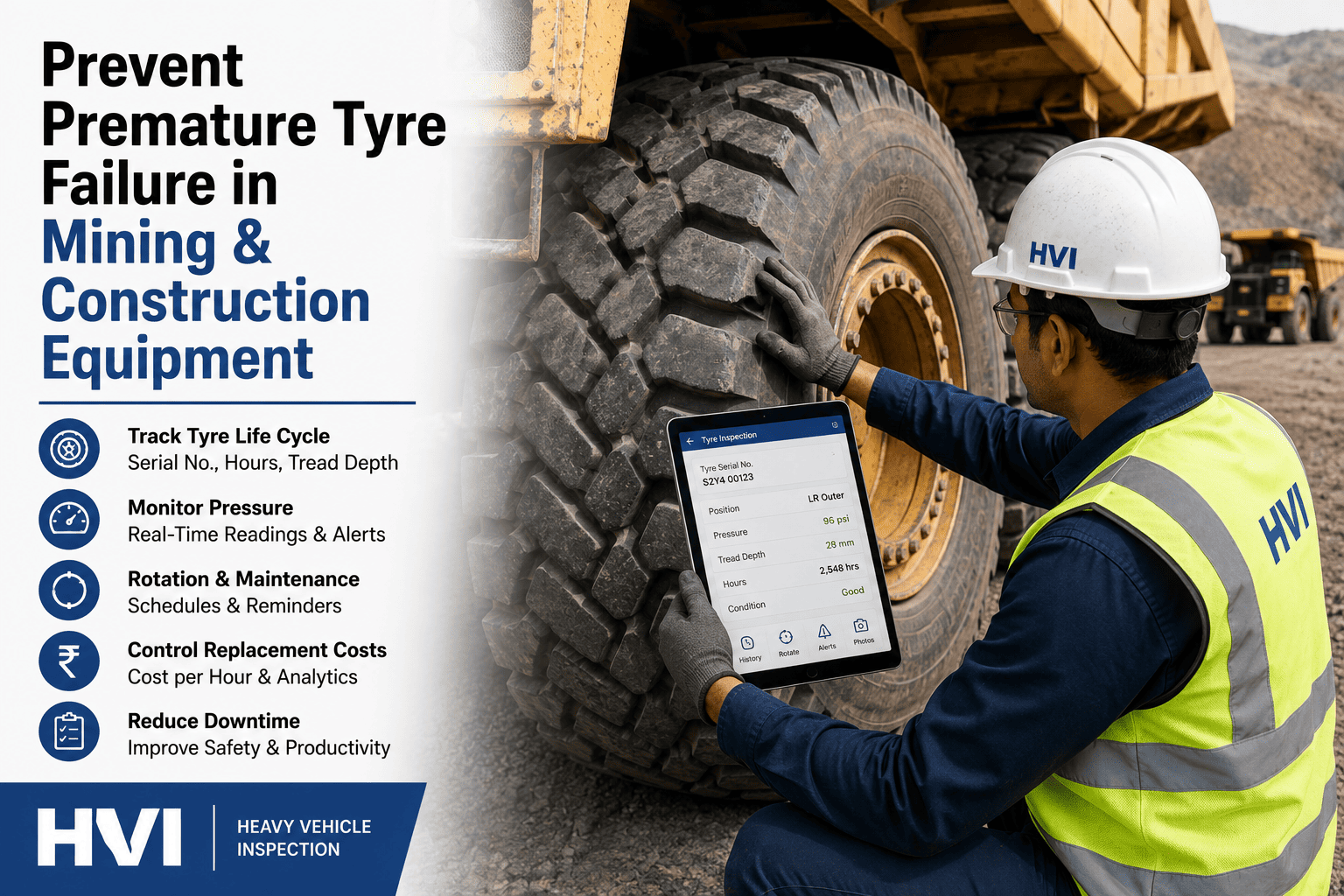
Most premature tyre failure is not premature. The tyre did exactly what the operating conditions required of it and reached the end of what it could sustain, which is a different problem from a defective product or careless operation. A cut from site debris, heat separation on a long haul, and irregular wear from a mechanical fault all look like early failure on a cost report and have almost nothing in common. Separating them is the difference between replacing tyres faster and replacing fewer of them. You can look at what your own failure pattern suggests in a free 30-minute session.
Premature Tyre Failure Is Usually a Symptom of Something Else
Track tyres by position, record why each one came off, and the pattern behind the cost becomes visible.
What the Wear Pattern Is Telling You
Every removed tyre carries a diagnosis. Recording it turns a cost line into a maintenance signal.
The tyre did its job. This is what you want the majority of removals to look like.
Action: none needed, other than confirming the hours or distance achieved matched expectations.
A site condition problem rather than a tyre problem. Haul road surface, spillage, and loading area housekeeping are the usual sources.
Action: the fix is on the ground, not in the tyre specification or the operator's technique.
The tyre was worked beyond its thermal capacity. Long hauls, high loads, or sustained speed generated more heat than the casing could dissipate.
Action: check the TKPH calculation below. This is usually a specification or cycle problem.
Mechanical. Alignment, suspension, or a loading imbalance is wearing the tyre unevenly regardless of its quality.
Action: the machine needs attention, and replacing the tyre without it repeats the outcome.
Inflation pressure. Under-inflation flexes the sidewall and wears shoulders; over-inflation concentrates load on the centre.
Action: pressure checks belong in the daily inspection, because this is both the most common and most preventable cause.
TKPH: Whether the Tyre Was Ever Suitable
TKPH — tonne kilometre per hour — expresses how hard a haul works a tyre. It combines the average load the tyre carries with the average speed it travels, which together determine how much heat builds in the casing over a shift.
Every OTR tyre carries a TKPH rating from the manufacturer. Your site generates its own TKPH figure from the actual payload, cycle distance, and speed. When the site figure exceeds the tyre's rating, heat accumulates faster than it dissipates and the tyre fails early. No amount of inspection discipline changes that, because the tyre is being asked to do something outside what it was built for.
This matters because it reframes the problem. If your removals are dominated by heat-related failure, the question is not which brand to buy next. It is whether the cycle, the payload, or the tyre specification needs to change.
Record Why Each Tyre Came Off
Removal reason captured against the position it occupied, so patterns emerge instead of a monthly spend figure.
Track by Position, Not Just by Machine
A tyre is not an attribute of a machine. It is an asset that occupies a position for a period, and tracking it that way is what makes the data useful.
Serial or identifier, so a tyre can be followed across machines and rotations.
Position fitted, since front and rear positions on the same machine wear completely differently.
Hours or distance accumulated in that position, which is the denominator for any life comparison.
Pressure readings over time, recorded during inspection rather than checked informally.
Removal reason and remaining tread, which is what converts the whole record into a diagnosis.
Repair and retread history, since a casing's life extends well beyond its first fitment.
Frequently Asked Questions
How do we calculate our site TKPH?
It comes from average tyre load and average speed over the cycle, and the exact method should follow your tyre supplier's guidance since conventions vary slightly. Your supplier will usually run it with you against their rating. We can show how the underlying cycle data is captured on a call with our team.
Is under-inflation really that significant?
It is consistently one of the largest preventable causes of early removal, because running under-inflated generates heat and flexes the sidewall continuously. Daily pressure checks cost minutes and are the highest-return tyre practice available.
Should tyres be rotated between positions?
Often yes, since positions wear at different rates, but the right pattern depends on machine type and application. It only works if you know which tyre is in which position, which is the argument for position-level tracking.
Why record removal reason if the tyre is already scrap?
Because the reason is the only thing that prevents the next one. A spend figure tells you tyres are expensive; a removal reason tells you why.
Where should a fleet start?
Pressure checks in the daily inspection and removal reason recorded at every change. Both are cheap, and together they explain most of what your tyre spend is doing. Start with a free trial.
Diagnose the Failure, Then Fix What Caused It
Record pressure daily, track each tyre by serial and position, capture why every removal happened, and check heat-related failures against TKPH before assuming the tyre or the operator was at fault.