After diesel, tyres are the biggest consumable bill an Indian HEMM fleet pays — a single rear dumper tyre runs into lakhs, a tipper set into a serious annual budget — and yet most sites cannot say where any given tyre is, how long it has run, or why its predecessor died. Tyres fail early for reasons that are almost entirely preventable: underinflation quietly cooking casings from inside, overloading past TKPH ratings, brutal haul roads nobody grades, and rotations that never happen because no one tracks positions. The waste hides in plain sight — tread burned unused at half-life, retreadable casings scrapped for want of a pressure record, and purchase orders negotiated with no idea which brand actually lasts on your roads. HVI gives every tyre a serial-numbered file from fitment to scrap: pressure and tread checks riding inside the daily inspections your operators already do, hours and kilometres accruing automatically from meter readings, rotations firing on schedule, and every removal carrying a reason code that teaches the fleet something — offline at remote sites, with costs flowing to SAP, Oracle, or Tally. Sign up free and start your tyre register this week.
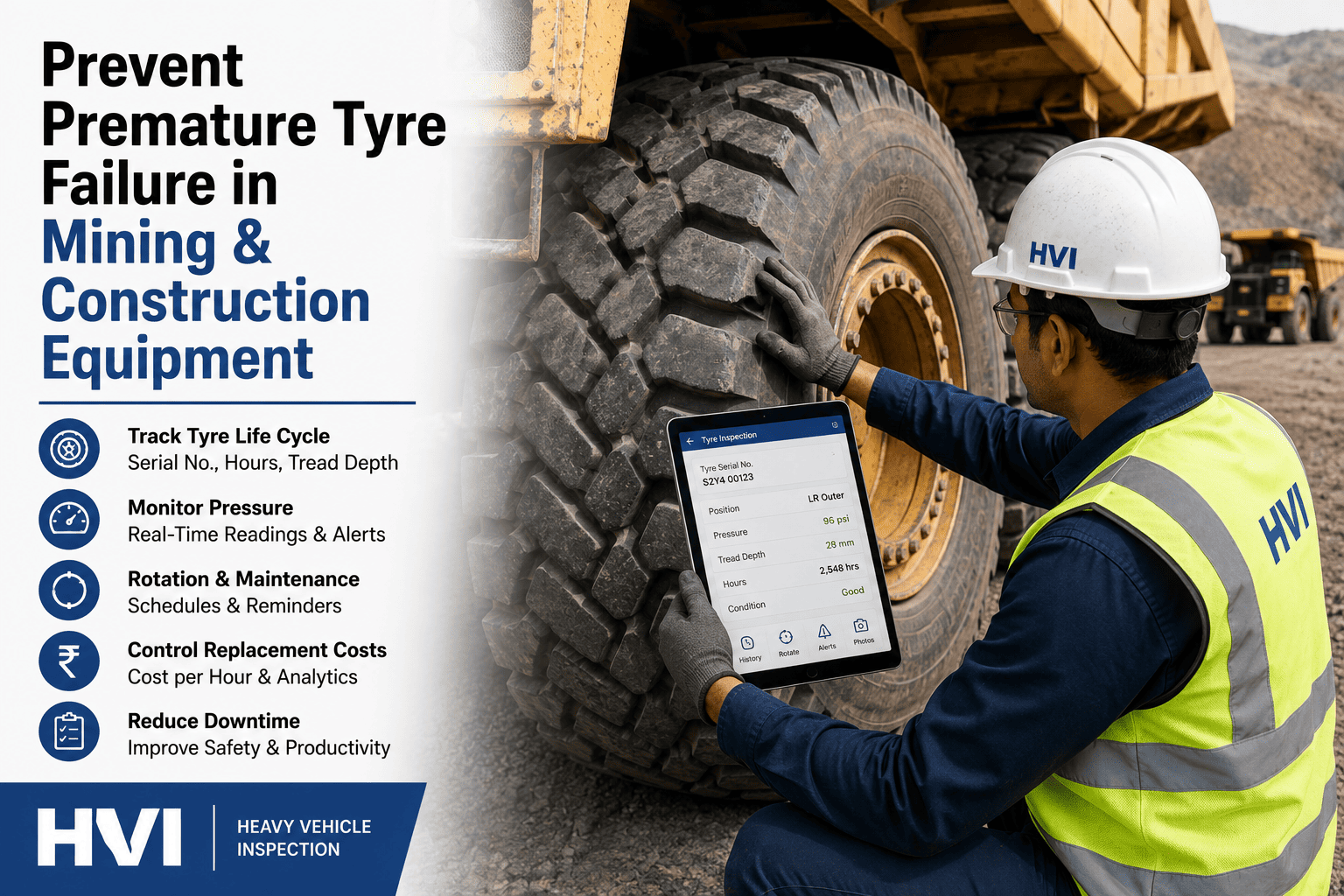
Prevent Premature Tyre Failure in Mining & Construction Equipment
Serial-number tracking, pressure and tread checks inside daily inspections, rotation schedules that actually fire, and scrap-reason analysis — so every tyre delivers its full life and every failure teaches the fleet something.
What One Early Death Actually Costs
Multiply across a fleet running dozens of tyres and premature failure quietly costs more than most sites' entire maintenance budget overruns. The frustrating part: unlike rock cuts, the biggest killers are process failures — and process failures are fixable.
Why Tyres Die Before Their Time
Inflation leads every failure study for a reason: running just 15–20% under pressure builds heat that can cut tyre life by a quarter or more — and it is invisible to the eye on an OTR tyre. A 30-second pressure entry in the daily inspection, with the system flagging out-of-band readings, removes the single biggest killer. Scrap-reason codes on every dead tyre then show which of the other causes your site actually suffers from — ending the guesswork about roads versus loads versus habits.
Five Stages, One Unbroken Record
Fitment
Serial number, brand, size, cost, machine, and wheel position logged the day it goes on — the file opens with everything.
In Service
Pressure and tread-depth entries ride along in daily and weekly inspections; hours and kilometres accrue from meter readings automatically.
Rotation
Position swaps fire on schedule by hours or kilometres — with wear evening out instead of one shoulder dying young while three others coast.
Retread Decision
Casings hit the retread gate with full history attached — tread trend, repairs, pressure record — so the call is data, not a glance in the yard.
Scrap & Learn
Every tyre exits with a reason code and final cost per hour or kilometre — feeding brand comparisons and the fixes that save its successors.
Put Your Next Ten Tyres on the System and Watch the Difference
Start with this month’s tyres: log serials at fitment, capture pressure during routine inspections, and automate rotations by hours or kilometres. Within one quarter, you’ll have tyre history, wear trends, cost per kilometre, and clear data on which brands and practices reduce scrap.
One Tyre, One File — What the Serial Number Unlocks
Ask this about any tyre on a paper system and the answer is a shrug. With serialised files, brand-versus-brand, position-versus-position, and site-versus-site comparisons become one report — and your next purchase order gets negotiated with evidence.
What to Track on Every Tyre — and the Decision It Feeds
| Data Point | Captured How | Decision It Feeds |
|---|---|---|
| Serial, brand, size, cost | Once, at fitment, from the invoice and sidewall | Brand-wise life and cost-per-km comparisons at purchase time |
| Pressure readings | 30-second entry in the daily inspection, out-of-band flagged | Kills the number-one failure cause before heat does its damage |
| Tread depth | Weekly or fortnightly gauge reading per position | Rotation timing, retread window, and wear-pattern diagnosis |
| Hours & kilometres | Automatic, from the machine's meter readings | Life benchmarking and TKPH-aware deployment on hot, long hauls |
| Rotations & repairs | Work-order linked, with positions before and after | Even wear across positions; repair history for the retread gate |
| Scrap reason code | One tap at removal — cut, separation, worn out, impact | The fleet's real killer ranking, and the fix worth funding first |
Frequently Asked Questions
What is TKPH and why does it matter for tyre life?
Tonne-kilometre per hour is the work rating a tyre can sustain without overheating — load carried times average speed. Run a tyre above its TKPH on long, fast, loaded hauls and heat destroys it from inside regardless of tread left. Tracking loads and cycle speeds against tyre ratings tells you whether to change operating practice or buy a higher-rated tyre.
Is retreading OTR and truck tyres worth it?
A sound casing typically retreads for a fraction of new-tyre cost and returns a large share of original life — often the cheapest kilometres a fleet buys. The catch is casing condition, which depends on pressure discipline and repair history; serialised files tell you instantly which casings qualify instead of gambling at the retreader's yard.
Can we start mid-life, or only with new tyres?
Start with the fleet as it stands — a one-day exercise logs every running tyre's serial, position, and current tread, and history builds from there. Life and cost figures become fully accurate for tyres fitted after go-live, while the running stock still gains pressure discipline, rotations, and scrap codes immediately.
How do tyres in stores connect to tyres on machines?
New and retreaded tyres sit as serialised inventory until issued against a fitment work order, which moves them onto a machine and position in one step — so stores, fitment, and service history share one record. Stock-outs on fast-moving sizes get reorder alerts like any critical spare; sign up free and load your tyre store first.
Do we need TPMS sensors, or do manual checks suffice?
Manual gauge checks inside daily inspections deliver most of the benefit — the discipline matters more than the sensor. TPMS adds live alerts on high-value OTR tyres and hard-to-reach inner duals, and integrates into the same tyre file where fitted. Start manual, add sensors where the tyre price justifies them: see both flows in a 30-minute demo.
Every Tyre Has a Full Life in It. Collect It.
Extend tyre life with daily pressure checks, timely rotations, proper loading, and complete digital records. Track wear, retreads, cost per kilometre, and scrap reasons across every site from one dashboard.