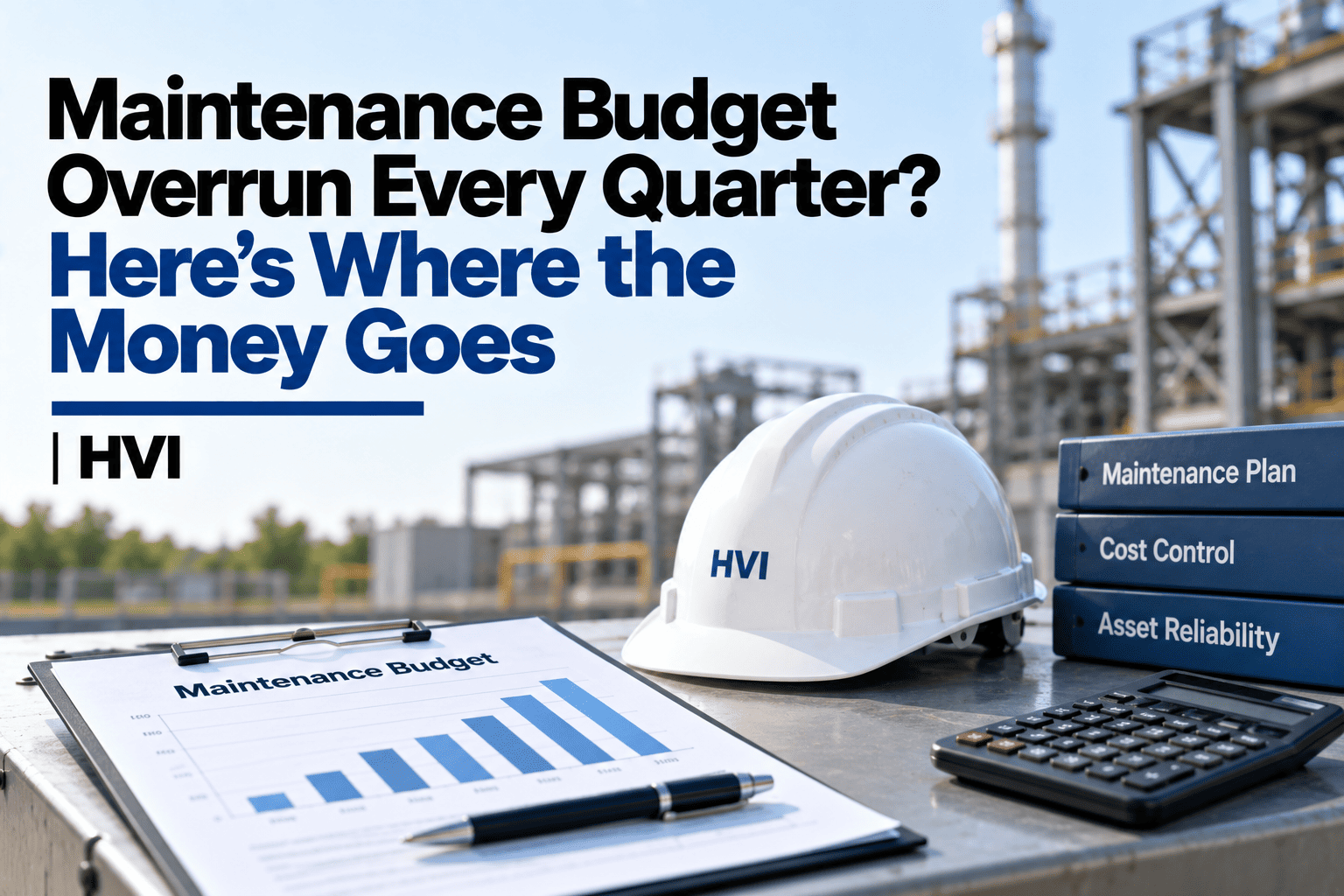
Ask most Indian construction fleet managers where the maintenance budget goes and the answer is usually "spare parts" — which is understandable, because parts are the line everyone sees on an invoice. The categories that actually move a fleet's annual number are often the ones that never appear as a bill at all, particularly downtime, which costs the project in idle crew and missed milestones rather than in anything the accounts team can point at. Understanding the real distribution across labour, parts, downtime, and emergency work is what separates a budget you can control from one you can only report on afterwards. HVI tracks all four categories against each asset as the work happens, and you can see the breakdown on your own fleet in a free 30-minute session.
Where Construction Fleet Maintenance Budget Actually Goes
A category-by-category breakdown of how maintenance spend distributes across labour, parts, downtime, and emergency repairs — and which levers actually reduce each one.
The Typical Distribution
Across construction and mining operators running HEMM at scale, maintenance spend tends to concentrate in four categories that behave very differently from one another.
The category you can see on an invoice is rarely the category costing you most. Downtime bills the project, not the maintenance department, which is exactly why it survives every budget review.
The Levers That Move Each Category
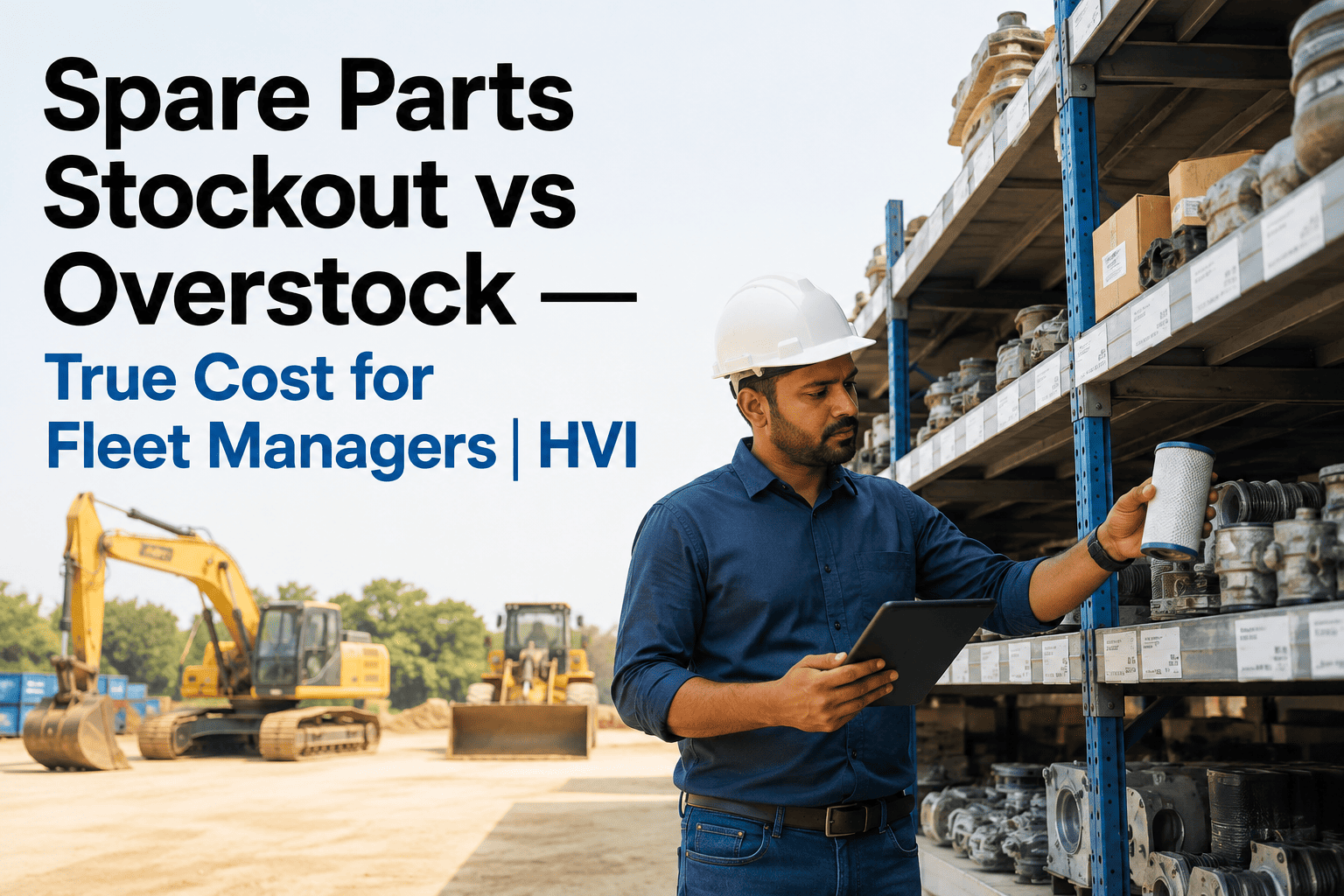
Spare parts reorder points stop both stockouts and the overstocking that ties up working capital on the shelf.
Meter-based PM scheduling services machines on actual hours run, so failures happen less often mid-project.
Inspection-to-work-order automation removes the coordination time between finding a fault and assigning the fix.
Catching developing faults during routine inspection converts premium-rate emergency work into planned work.
Fuel reconciliation against hours run exposes leakage and inefficient machines hiding inside a monthly total.
TKPH tracking extends tyre life by matching replacement to actual load and terrain rather than a fixed date.
See Your Own Fleet's Actual Breakdown
Get labour, parts, downtime, and emergency spend attributed per asset and per site, instead of estimated at quarter end.
What Changes When the Mix Shifts
Reactive Fleet
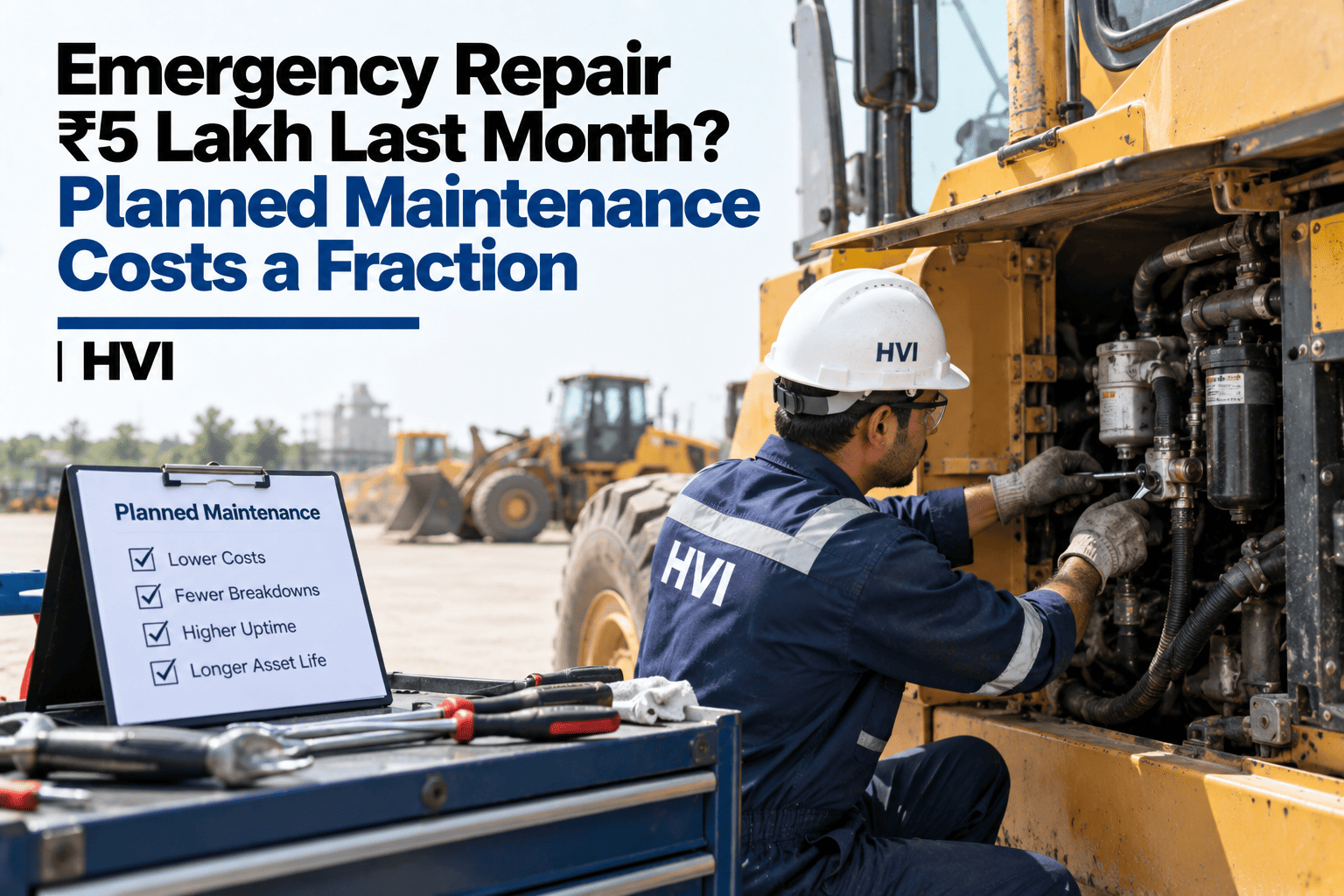
Emergency repairs and downtime carry a heavy share, and spend is unpredictable quarter to quarter.
Parts are ordered under pressure at whatever price is available that day.
Planned Fleet
Spend shifts toward scheduled labour and planned parts, which are both cheaper and forecastable.
Downtime drops because failures are caught during inspection rather than during a shift.
Frequently Asked Questions
Why is downtime so often left out of maintenance cost analysis?
Because it does not generate an invoice. The cost lands on the project in idle crew, extended timelines, and missed milestones rather than in the maintenance ledger, so it survives reviews that only examine billed spend. You can see how it gets captured on a call with our team.
Does this work for fleets running mixed equipment brands?
Yes. Fleets running JCB, Tata Hitachi, BEML, Komatsu, Volvo, and SANY equipment track the same cost categories, with each machine carrying its own spend history regardless of make.
How is emergency spend separated from planned spend?
Work orders carry their origin, so a job raised from a breakdown is distinguishable from one raised by a PM schedule, and the ratio between them becomes a trackable number.
Can this data flow into our existing finance system?
Yes. HVI integrates with SAP, Oracle, and Tally, so cost data reaches the systems your finance team already reports from.
How long before the breakdown is meaningful for our fleet?
Category attribution starts with the first work orders logged, and a representative picture usually forms within a quarter of consistent tracking. Start with a free trial to begin.
Stop Budgeting Against a Category Mix You Can't See
Track labour, parts, downtime, and emergency spend as it happens, so the shift from reactive to planned maintenance shows up as a number rather than a claim.