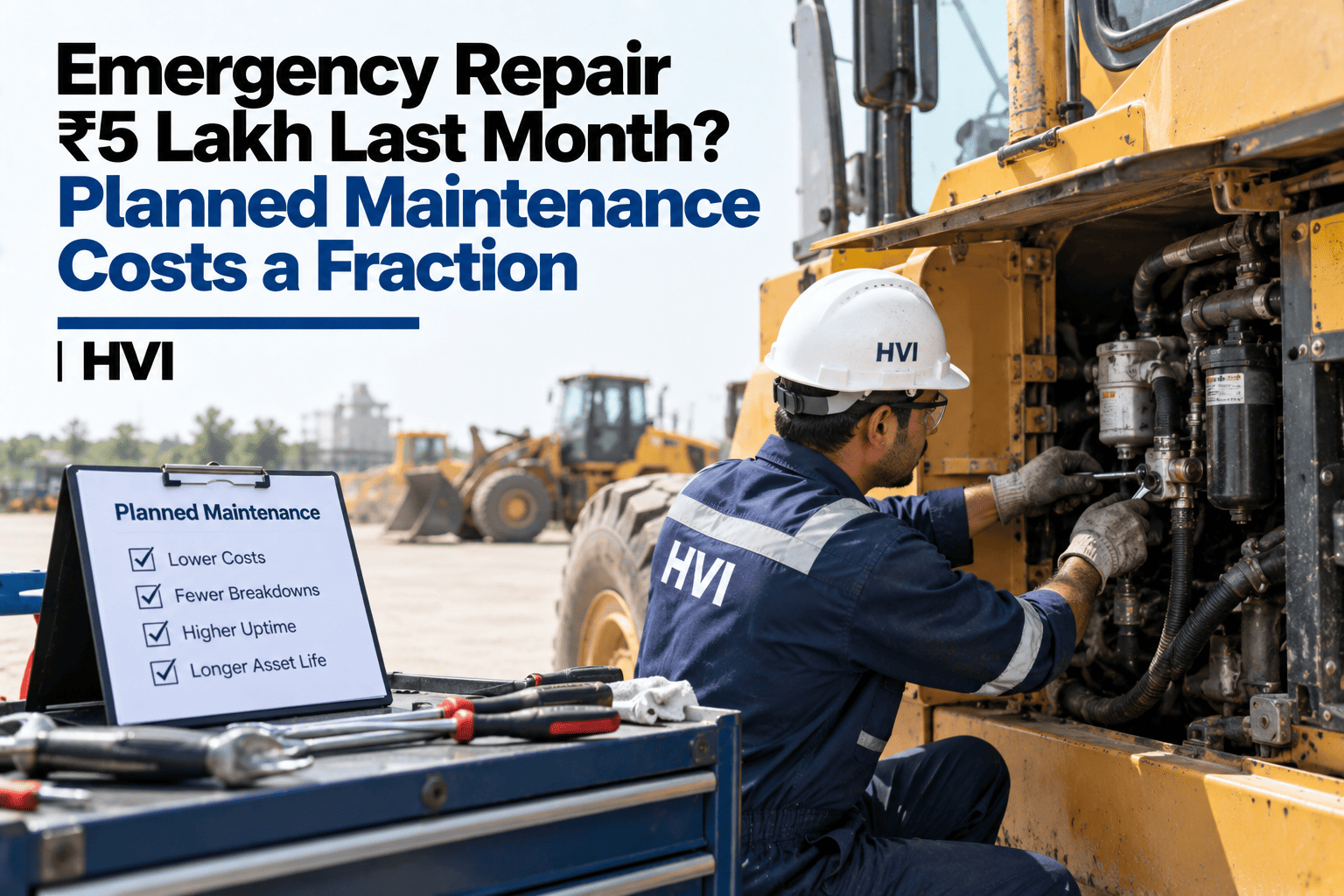
The same worn hydraulic hose costs two completely different amounts depending on when you find it. Caught during a scheduled inspection, it is a part, a technician, and twenty minutes on a machine that was already stopped. Caught when it bursts mid-shift, it becomes a callout at premium rates, a part sourced at whatever price is available that day, a crew standing idle, and often collateral damage to whatever the lost pressure affected. Industry estimates commonly put emergency repairs at three to nine times the cost of the same work planned, and the gap is not the part — it is everything that attaches itself to an unplanned failure. HVI shifts that ratio by catching faults during inspection, and you can see it applied to your fleet in a free 30-minute session.
Emergency Repairs Cost a Multiple of the Same Job Planned
The part is rarely what makes an emergency repair expensive. Understand what actually multiplies the bill, and which of those costs disappear entirely when the same fault is caught during inspection.
The Same Failure, Two Paths
What Actually Multiplies the Bill
These costs exist only on the emergency path. None of them appear when the same fault is found on a scheduled check.
External technicians called at short notice bill above their scheduled rate, often with travel and after-hours loading on top.
A part needed today comes at today's price from whoever has it, with no room to compare vendors or use a negotiated rate.
Operators and support staff continue to draw cost while the machine they depend on is out of action mid-shift.
A component failing under load frequently takes something else with it, turning one repair into two or three.
Milestones slip, and the cost of catching up lands on the project rather than on the maintenance ledger.
Find Out What Your Own Ratio Looks Like
See how much of your maintenance spend is emergency work, and how much of it a routine inspection would have caught first.
How the Ratio Actually Shifts
Inspections run on a fixed schedule so faults get found while machines are stopped anyway.
Failed items raise work orders automatically instead of waiting for someone to report them.
Repairs are scheduled into planned downtime, at standard labour and part rates.
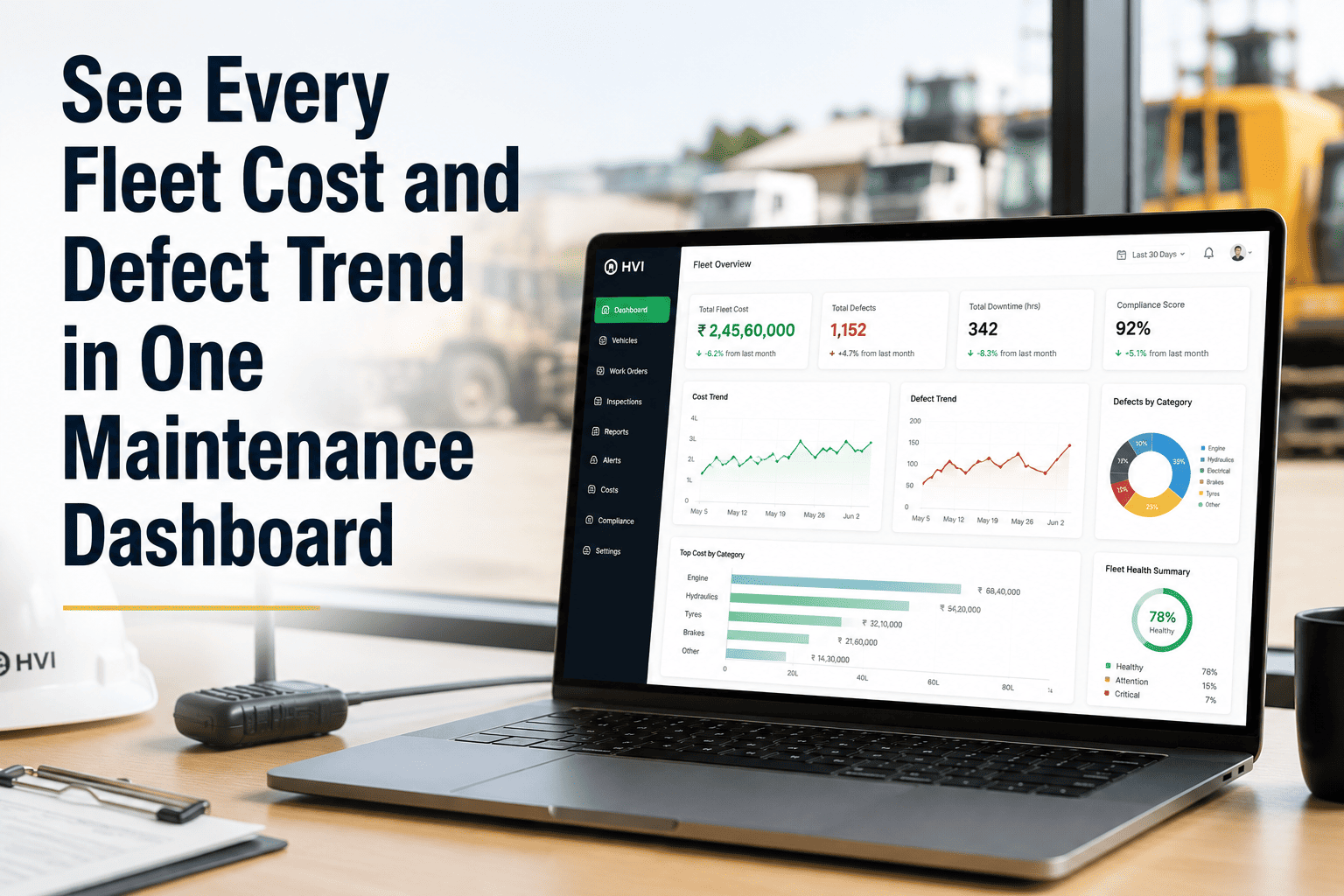
The emergency share of total spend becomes a number you can watch fall quarter to quarter.
Frequently Asked Questions
Is the emergency-to-planned cost ratio really that large?
Commonly cited industry estimates put emergency repairs at roughly three to nine times the cost of the same job planned, though the exact multiple depends on your labour rates, part availability, and how much downtime costs your project. You can work through your own numbers on a call with our team.
How do we know which repairs were genuinely preventable?
Work orders carry their origin, so breakdown-triggered jobs are separable from PM-triggered ones, and recurring failure types show which were catchable on inspection.
Won't more inspections just add labour cost?
Inspection time is real, but it is scheduled, in-house, and at standard rates, which is precisely the cost structure that emergency work escapes.
Does this work for fleets running mixed equipment brands?
Yes. Fleets running JCB, Tata Hitachi, BEML, Volvo, and SANY equipment use the same inspection and work order structure, with each machine carrying its own repair history.
How quickly does the emergency share start dropping?
The shift is gradual rather than immediate, since it depends on inspections catching faults before they mature, but the ratio usually becomes measurable within a quarter. Start with a free trial to begin tracking it.
Pay for the Part, Not for Everything That Follows a Failure
Catch faults on a scheduled inspection so repairs happen at standard rates during planned downtime, and the costs that only attach themselves to emergencies never enter the bill at all.