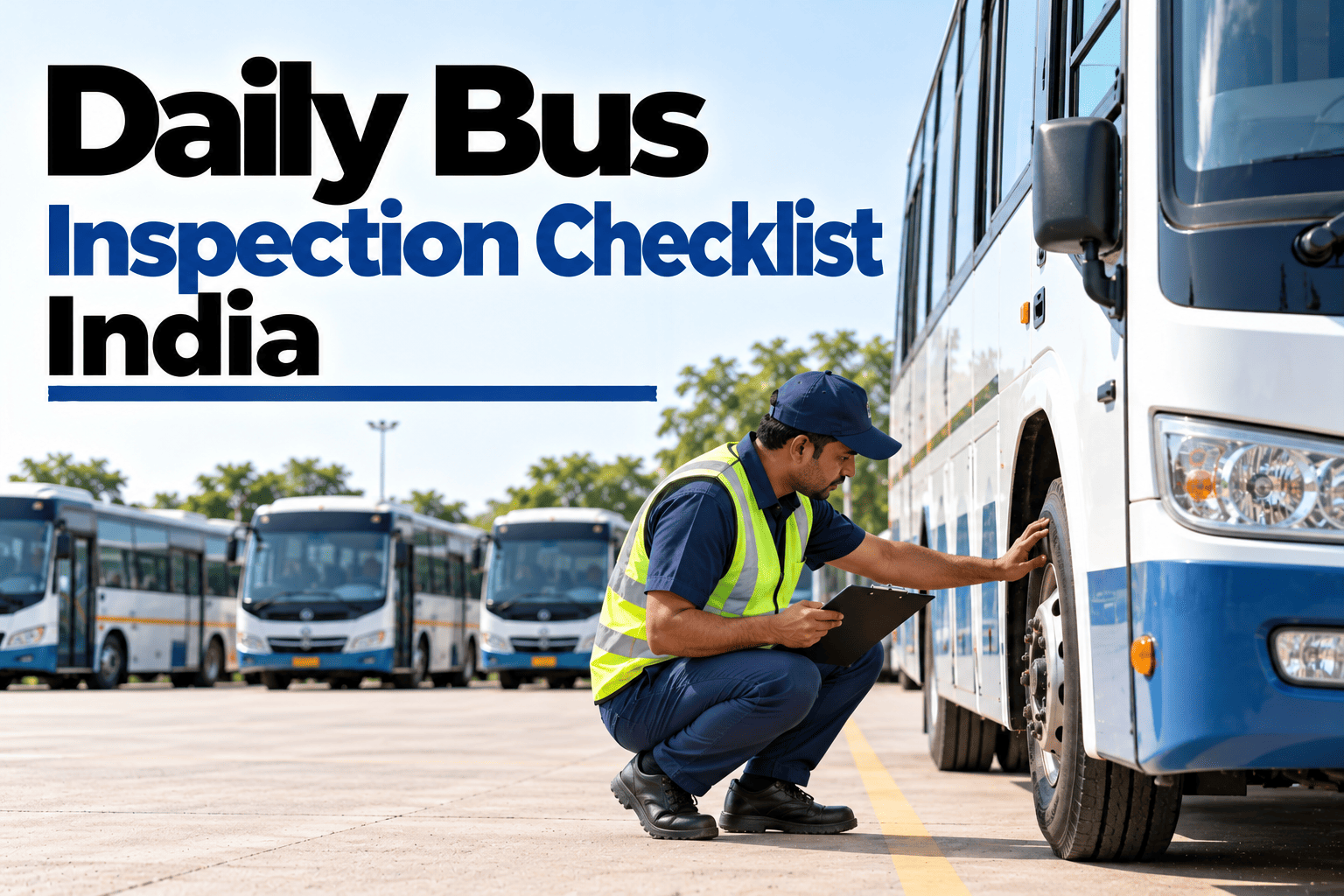
Every bus that leaves the depot carries dozens of lives, and some accidents start with a defect that a five-minute check would have caught. Worn tyres, weak brakes, jammed emergency exits or an empty fire extinguisher rarely show until the moment they are needed. A consistent daily inspection, done the same way by every driver at every depot, is the simplest way to keep passengers safe and buses on the road. This checklist works for state transport, private intercity and staff buses, and runs as a digital daily checklist in HVI.
Daily Bus Inspection Checklist for Indian Bus Operators
Brakes, tyres, doors and emergency exits, fire extinguisher and first aid, lights, seats, panic buttons and tracking devices, checked before every departure.
The Daily Checklist, Area by Area
Check every item before the first trip of the day. Record defects straight away, with a photo where possible.
Brakes and air
- Air pressure builds to normal
- No air leaks with engine off
- Service and parking brakes hold
Tyres and wheels
- Pressure correct on all tyres
- No cuts, bulges or worn tread
- Wheel nuts present and tight
Doors and exits
- Passenger doors open and close properly
- Emergency exits open and are not blocked
- Exit signs and hammers in place
Safety equipment
- Fire extinguisher charged and in date
- First aid box stocked
- Fire detection system healthy, where fitted
Lights and visibility
- Head, tail, brake and indicator lights
- Wipers and washers working
- Mirrors clean and adjusted
Passenger area
- Seats and handrails secure
- Floor free of trip hazards
- Interior lights working
Tracking and panic buttons
- Tracking device powered and online
- Panic buttons in place and working
- Cameras recording, where fitted
Engine and fluids
- Oil and coolant levels
- No fuel or oil leaks
- Warning lights clear after start
Defects That Must Stop the Bus
If any of these are found, the bus should not carry passengers until the defect is fixed.
| Defect | Why it matters | Action |
|---|---|---|
| Brakes weak or air leaking | Risk of failing to stop with a full load | Do not run |
| Tyre damaged or tread worn out | Risk of a blowout at speed | Do not run |
| Emergency exit jammed or blocked | Passengers cannot escape in a fire or crash | Do not run |
| Fire extinguisher missing or empty | No way to control a small fire | Do not run |
| Headlights or brake lights failed | Bus cannot be seen or warn others | Do not run |
| Torn seat cover or minor body damage | Comfort and appearance | Fix soon |
Every Bus Checked Before Every Departure
HVI gives drivers this checklist on their phone, records photos of defects, alerts the depot instantly and shows which buses are cleared to run.
Who Checks What
Sharing the checks makes them faster and harder to skip.
- Walk-around and tyres
- Brakes, air pressure and gauges
- Lights, wipers and mirrors
- Doors and emergency exits
- Seats, floor and interior
- Fire extinguisher and first aid
- Fix reported defects
- Clear the bus to run
- Plan scheduled maintenance
Moving From Paper to Digital Checks
Paper checklists are easy to tick without looking. Digital checks with photos and timestamps make each inspection count.
Set the checklist
Use the same items for every bus type.
Train the crew
Show drivers and conductors how to use it.
Report with photos
Every defect goes straight to the depot.
Review daily
Check completion and open defects each morning.
Depot Departure Status in HVI
A sample morning view. Only buses with a completed check and no critical defects are cleared.
| Bus | Route | Daily check | Defects | Status |
|---|---|---|---|---|
| BUS-104 | City route 12 | Done at 5:40 am | None | Cleared |
| BUS-117 | Intercity 3 | Done at 5:55 am | Torn seat cover | Cleared, fix soon |
| BUS-122 | Staff shuttle | Done at 6:05 am | Emergency exit jammed | Held at depot |
Daily Bus Inspection FAQs
What should a daily bus inspection checklist include?
Brakes and air pressure, tyres and wheel nuts, doors and emergency exits, fire extinguisher and first aid, lights, wipers and mirrors, seats and interior, tracking device and panic buttons, and engine fluids and leaks.
Who should do the daily bus inspection?
Usually the driver checks the walk-around, tyres, brakes and lights, the conductor or attendant checks doors, exits and safety equipment, and the depot mechanic fixes defects and clears the bus.
Which defects should stop a bus from running?
Weak brakes or air leaks, damaged or worn tyres, jammed emergency exits, a missing or empty fire extinguisher and failed headlights or brake lights should keep a bus off the road until fixed.
How long does a daily bus check take?
A practised crew can usually complete it in a few minutes per bus. Following the same walk-around order every day keeps it quick and thorough. Teams that run checks in HVI can see completion times.
Can bus inspections be done on a phone?
Yes. A digital checklist with photos and timestamps sends defects straight to the depot and shows which buses are cleared to run. Book a demo to see bus checklists in HVI.
Safer Buses Start With Daily Checks
Give every driver and conductor a clear daily checklist, report defects with photos and clear buses for departure in HVI. Safer passengers, fewer breakdowns and full records for every bus.