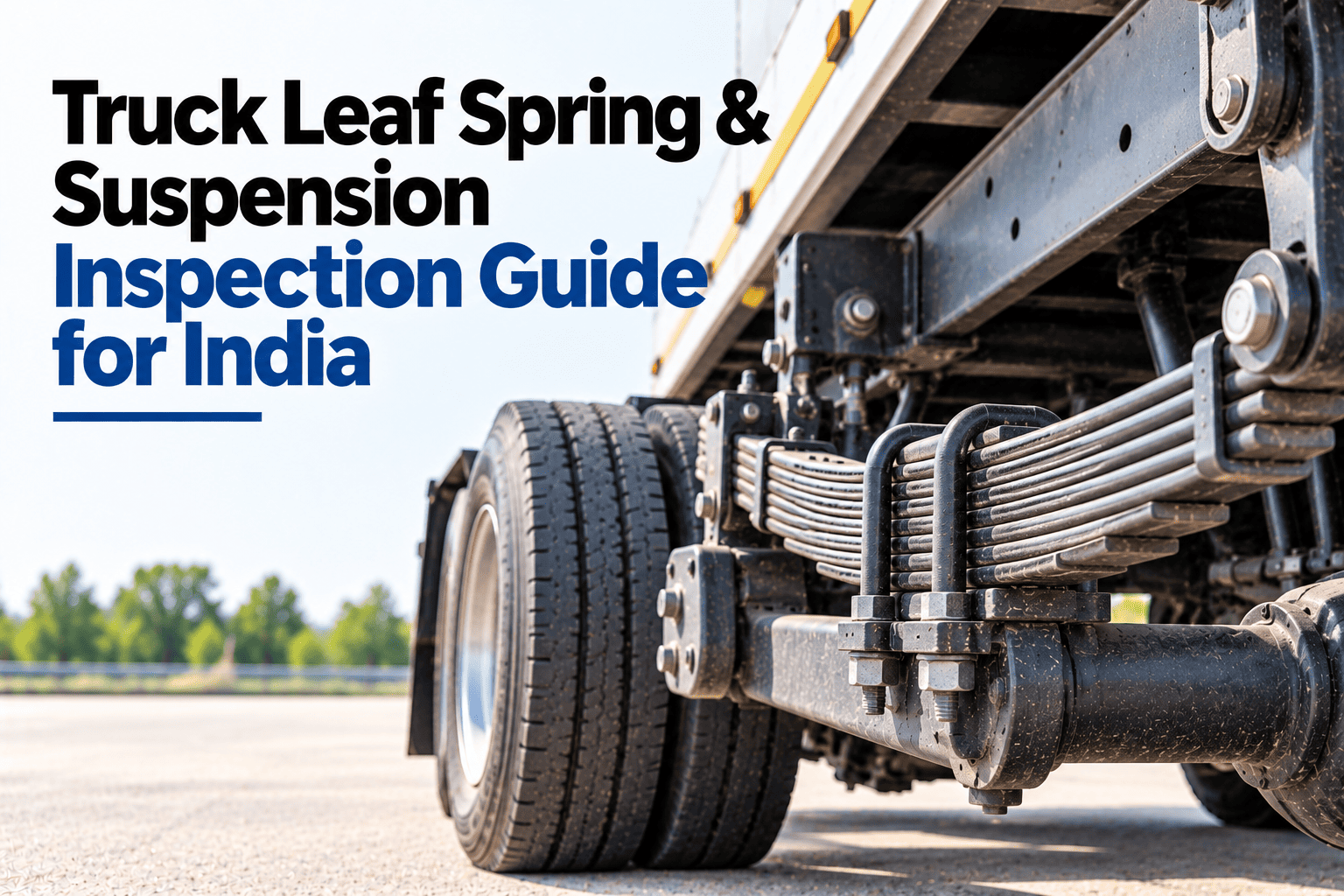
On Indian roads, a truck's suspension works harder than almost any other system. Overloaded tippers, potholed highways and unpaved site roads hammer leaf springs, U-bolts, shackles and bushes every hour the truck runs. A cracked leaf or a loose U-bolt rarely stops a truck on day one, but it quietly shifts the axle, wears tyres and eventually leaves a loaded vehicle stranded. This guide shows what to inspect, how to read a broken spring and how fleets track suspension repairs by vehicle in HVI.
Truck Leaf Spring and Suspension Inspection Guide for India
Know every part of the spring pack, what a failing part looks like and how to stop the overloading and loose fittings that break springs early.
Eight Inspection Points With Clear Pass or Fail Rules
Vague checks like "looks fine" miss problems. Give inspectors a simple rule for each part, so every truck is judged the same way.
Leaves
PassAll leaves intact, aligned and evenly arched
FailAny crack, broken leaf or rust line across a leaf
Centre bolt
PassLeaves stacked straight over the axle seat
FailLeaves fanned out or axle shifted on the spring
U-bolts
PassNuts tight, no rust bleeding from the threads
FailLoose, stretched or cracked U-bolts
Rebound clips
PassPresent, bolted and holding leaves in line
FailMissing, broken or loose clips
Eye bushes
PassNo visible movement when the spring is levered
FailPlay, knocking noise or bush material missing
Shackles and pins
PassGreased, free to swing and pins secure
FailSeized, worn oval or missing grease
Hangers
PassFirmly bolted or riveted to the frame
FailCracks, loose rivets or frame damage around them
Torque rods
PassRubber ends firm, rod straight
FailSplit rubber, play at the ends or a bent rod
The Overload Chain: How One Habit Breaks a Suspension
Overloading is one of the most common reasons Indian tippers and trucks break springs. The damage spreads in a predictable order.
Read the Break: Where a Leaf Cracks Tells You Why
Before fitting a new spring, look at where the old one broke. Fixing that cause stops the new spring breaking in the same place.
| Where it broke | Most likely cause | What to fix as well |
|---|---|---|
| At the centre bolt hole | Loose U-bolts letting the pack move | Re-torque U-bolts and recheck after a short run |
| Near the spring eye | Seized shackle or worn bush twisting the leaf | Replace bushes and grease or replace shackle pins |
| Several leaves at once | Overloading or a heavy pothole impact | Load control and driver training |
| One side of the vehicle only | Uneven loading or a weak spring on that side | Check load placement and replace springs in pairs |
| Short leaves at the bottom | Spring sagged and bottoming out | Replace the whole pack, not single leaves |
Turn Every Suspension Check Into a Clear Pass or Fail
HVI gives inspectors a part-by-part suspension checklist with photos, and sends every fail straight to the workshop as a job.
Beyond Single Springs: Bogies, Air Suspension and Trailers
Multi-axle trucks, buses and trailers add parts that need their own checks.
Bogie suspension
Tandem rear axles on tippers and haulage trucks- Equaliser beam bushes and mounting
- Torque rod rubber ends and brackets
- Axle alignment between the two axles
Air suspension
Common on buses and some premium trucks- Air bags for cracks, chafing and leaks
- Levelling valve linkage and ride height
- Shock absorbers for leaks and mounting
Trailer suspension
Multi-axle trailers and semi-trailers- Hangers and equalisers for wear and cracks
- U-bolts and spring seats on every axle
- Axle tracking to prevent diagonal tyre wear
How Often to Inspect the Suspension
Suspension checks work best when they are tied to events as well as the calendar.
Spot Repeat Spring Breakers With HVI
A sample six-month view. HVI counts suspension repairs per vehicle, so the trucks that keep breaking springs stand out.
Leaf Spring and Suspension FAQs
How do I know if a truck leaf spring is broken?
Look for a visible crack or gap in a leaf, leaves that have shifted sideways or fanned out, or a vehicle that leans or sits lower on one side. A new knocking noise over bumps and the truck pulling to one side are other common signs. Rust lines running across a leaf often mark a crack that is not yet open.
Why do U-bolts need re-tightening?
When a spring is new or refitted, the leaves and seats settle under load, which can loosen the U-bolts. Loose U-bolts let the pack move, which shears the centre bolt and cracks leaves near the axle. Re-torque them after the first short run and check them regularly after that.
Should leaf springs be replaced in pairs?
In most cases, yes. A new spring on one side and an old, sagged spring on the other leaves the vehicle uneven, which affects handling, braking and tyre wear. If only one spring is replaced, check that both sides sit at the same height afterwards.
How does worn suspension affect tyres?
Worn bushes, torque rods or a shifted axle change wheel alignment, which causes feathering, shoulder wear and diagonal wear. Worn shock absorbers cause cupping. Teams that record suspension and tyre checks in HVI can link uneven tyre wear back to the suspension fault behind it.
How can a fleet reduce spring breakages?
Control overloading, keep U-bolts and clips tight, grease shackle pins, replace worn bushes early and inspect after every hard impact. Tracking repairs per vehicle shows which trucks, routes or drivers break the most springs. Book a demo to see suspension tracking in HVI.
Keep Springs Whole and Axles Straight
Give inspectors a clear pass or fail checklist, send every fault to the workshop with photos and track suspension repairs by vehicle. Fewer broken springs, longer tyre life and fewer loaded trucks stranded on the road.