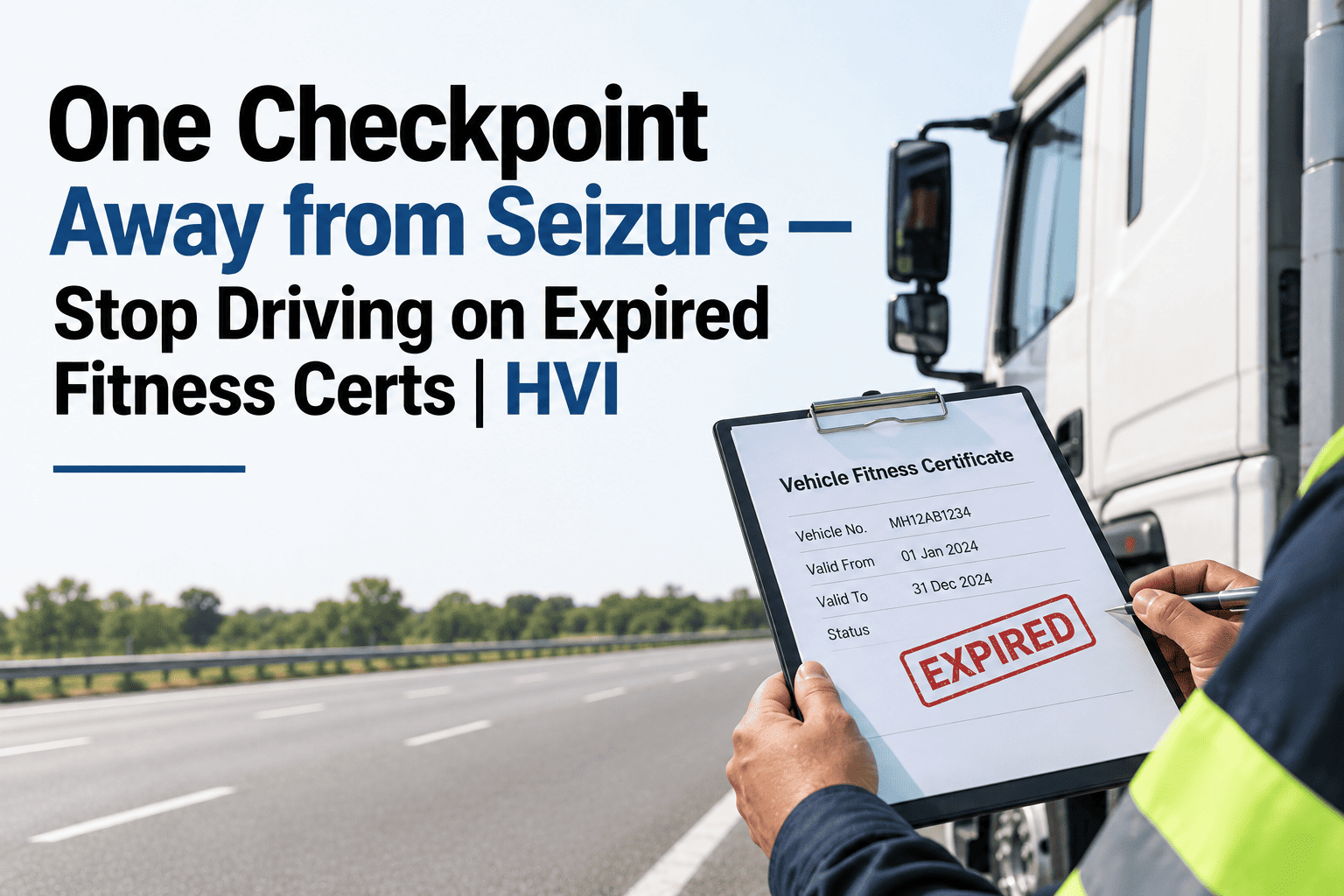
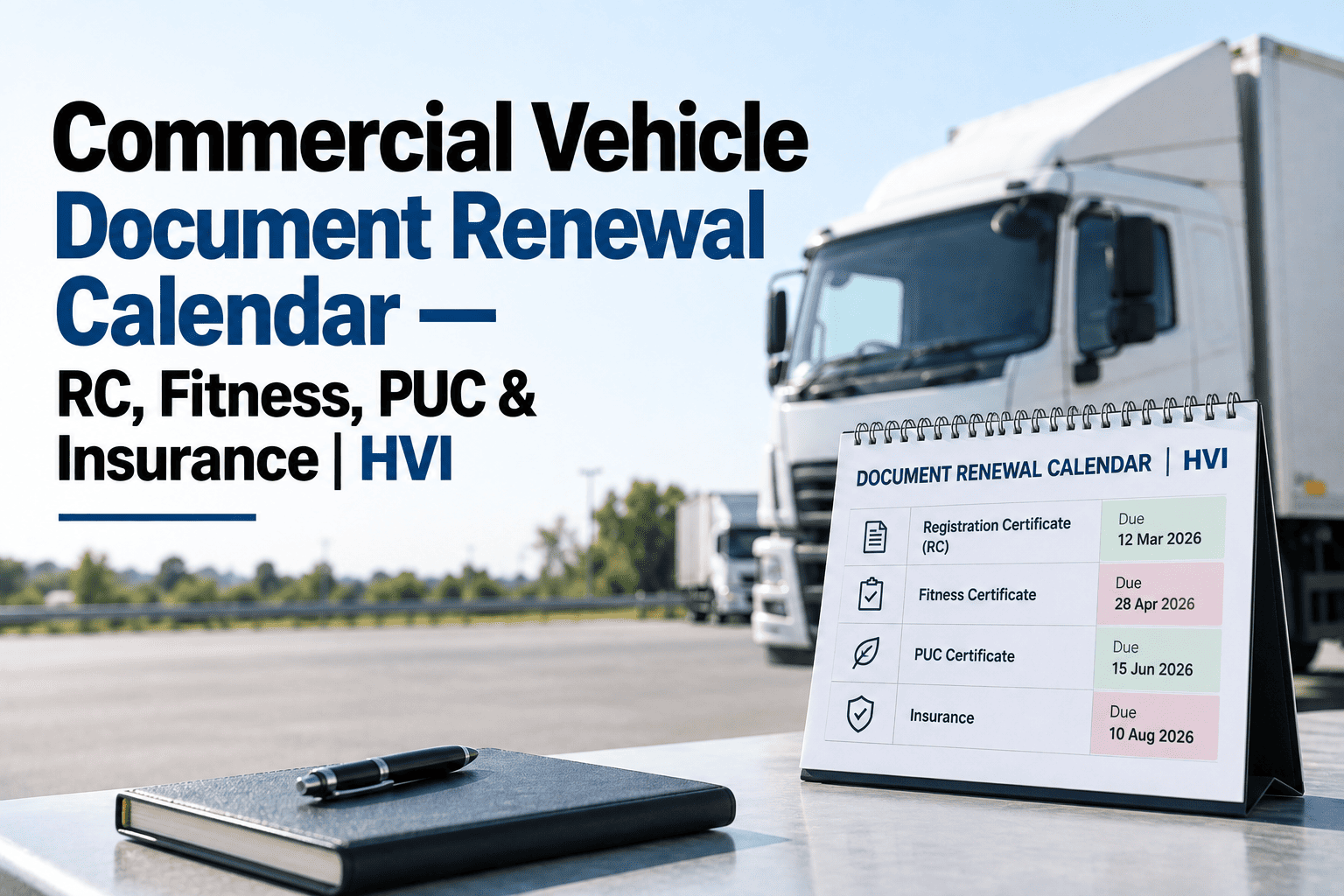
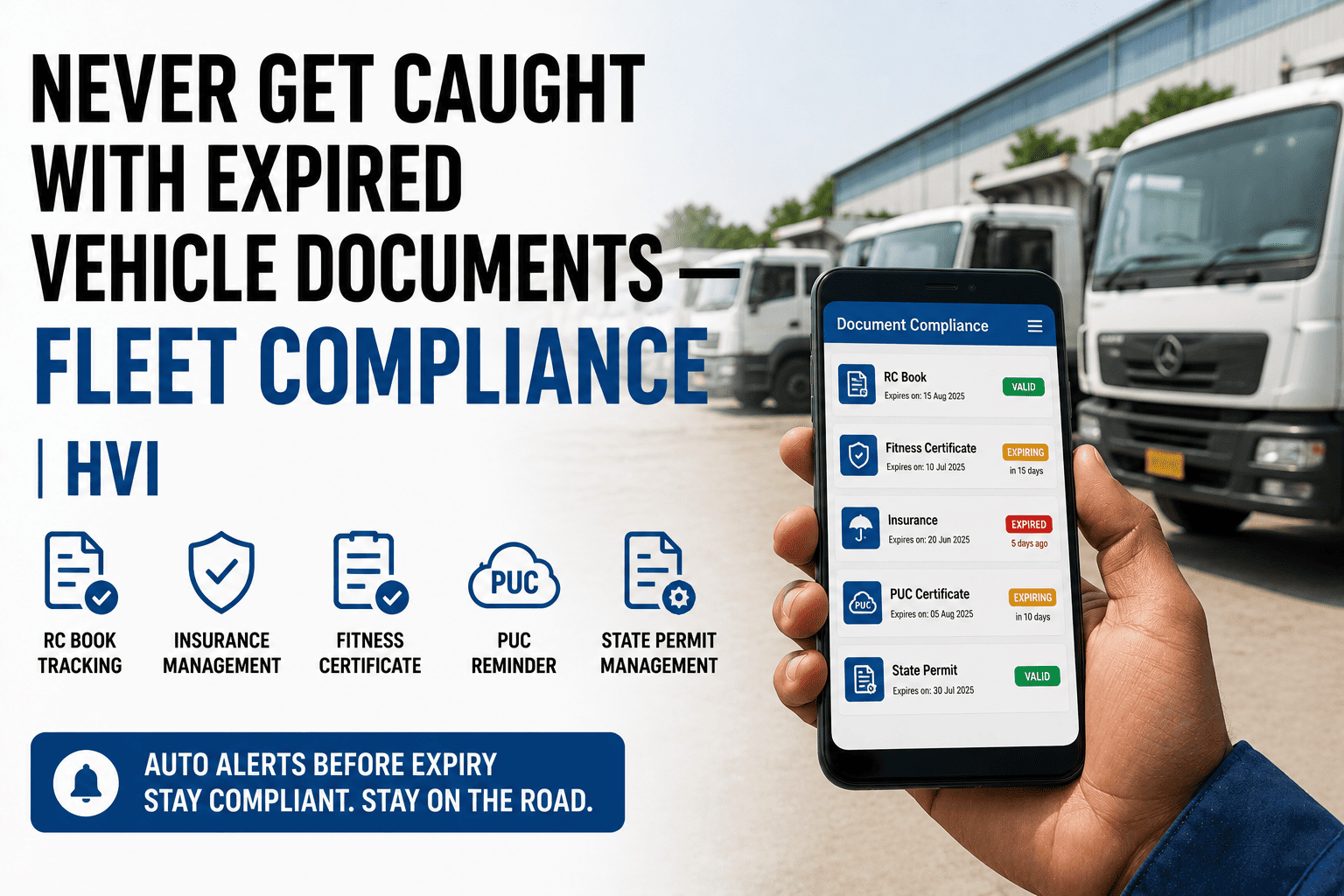
A fleet manager who's never actually read the penalty schedule tends to assume expired documents cost a few hundred rupees and a mild inconvenience — the kind of fine that gets paid and forgotten. The real numbers, since the Motor Vehicles Amendment Act 2019 came into force, are considerably higher, and they compound: a fine for the document itself, a separate exposure if an insurance claim gets rejected because a fitness certificate had lapsed, and a vehicle sitting idle at a checkpoint while someone scrambles to arrange the paperwork. None of this is complicated to avoid — it just requires knowing the actual numbers well before a checkpoint puts them in front of you. Here's the fine structure fleet operators are actually working against, and how HVI keeps every vehicle's documents ahead of these deadlines.
MV Act 2019 Penalties for Fleets Running Expired Documents
A breakdown of the fine structure for expired fitness, insurance, permit, and PUC — and how automated document tracking keeps every vehicle compliant before it matters.
The Fine Structure, Document by Document
| Document | First Offence | Repeat Offence |
|---|---|---|
| Driving Without Insurance | ₹2,000 and/or up to 3 months imprisonment | ₹4,000 and/or up to 3 months imprisonment |
| No Valid PUC Certificate | ₹1,000 | ₹2,000, with possible imprisonment up to 6 months |
| Fitness Certificate Expired | Fine plus impoundment risk | Escalated fine, higher impoundment likelihood |
| Operating Without a Valid Permit | Fine plus operational restriction | Escalated fine, repeat-offence enforcement |
See exactly which of your fleet's vehicles are running any document past its validity window right now.
The Fine Is Rarely the Full Cost
The Checkpoint Fine
The amount specified in the fine schedule itself — the smallest and most predictable part of the total exposure.
Vehicle Impoundment
A vehicle held at a checkpoint stops earning immediately, and the days lost to release procedures often outweigh the fine several times over.
Insurance Claim Rejection
Most insurers treat an expired fitness certificate as grounds to deny a claim, which can leave a fleet covering a full accident or breakdown cost out of pocket.
Repeat-Offence Escalation
A second lapse on the same vehicle or driver typically carries a steeper fine and greater imprisonment exposure than the first.
Why the Penalty Schedule Changed So Much in 2019
The Motor Vehicles Amendment Act 2019 significantly raised fine amounts across most categories of documentation and driving offences, aiming to make non-compliance a genuine deterrent rather than a minor cost of doing business.
Fines rose to match real risk
Previous fine levels were widely seen as too low to change behaviour, so the amendment raised amounts substantially across most violation categories.
Digital documents became explicitly valid
The amendment also recognised electronic copies of RC, insurance, fitness, and permit documents as valid at a checkpoint, removing the excuse of a document left behind.
Enforcement got more consistent
Higher fines came alongside more consistent enforcement expectations across states, making a lapse harder to quietly avoid.
Frequently Asked Questions
Do these penalty amounts apply the same way across every state in India?
The Motor Vehicles Amendment Act 2019 sets a national fine structure, though a small number of states adjusted certain amounts within the range the Act permits, so it's worth checking the specific figures for the states your fleet operates in.
Can a digital copy of a document actually satisfy a checkpoint check?
Yes — the amendment explicitly recognises electronic copies of RC, insurance, fitness certificates, and permits as valid, so a properly stored digital copy is accepted the same as a physical one.
Does an expired document affect an insurance claim even if the accident wasn't related to the document itself?
Many insurers apply a broad reading of policy conditions, treating an expired fitness certificate as grounds for rejection regardless of whether the lapse directly caused the incident, which is why keeping documents current matters even outside of enforcement risk.
Does this integrate with our SAP, Oracle, or Tally fleet records?
Yes — document status and renewal records can sync with these systems, keeping compliance tracking connected to the same asset records your team already manages.
How would we find out which of our own vehicles are currently at risk?
Loading your fleet's document expiry dates into a tracking system gives an immediate view of what's current, upcoming, or already lapsed; sign up free to see where your fleet stands today.
Know the Numbers Before the Checkpoint Does
The penalties under MV Act 2019 are steep enough that a lapsed document is never just a minor inconvenience anymore. Start free and keep every vehicle's compliance status current, or bring your fleet's document records to a 30-minute session with our India team.