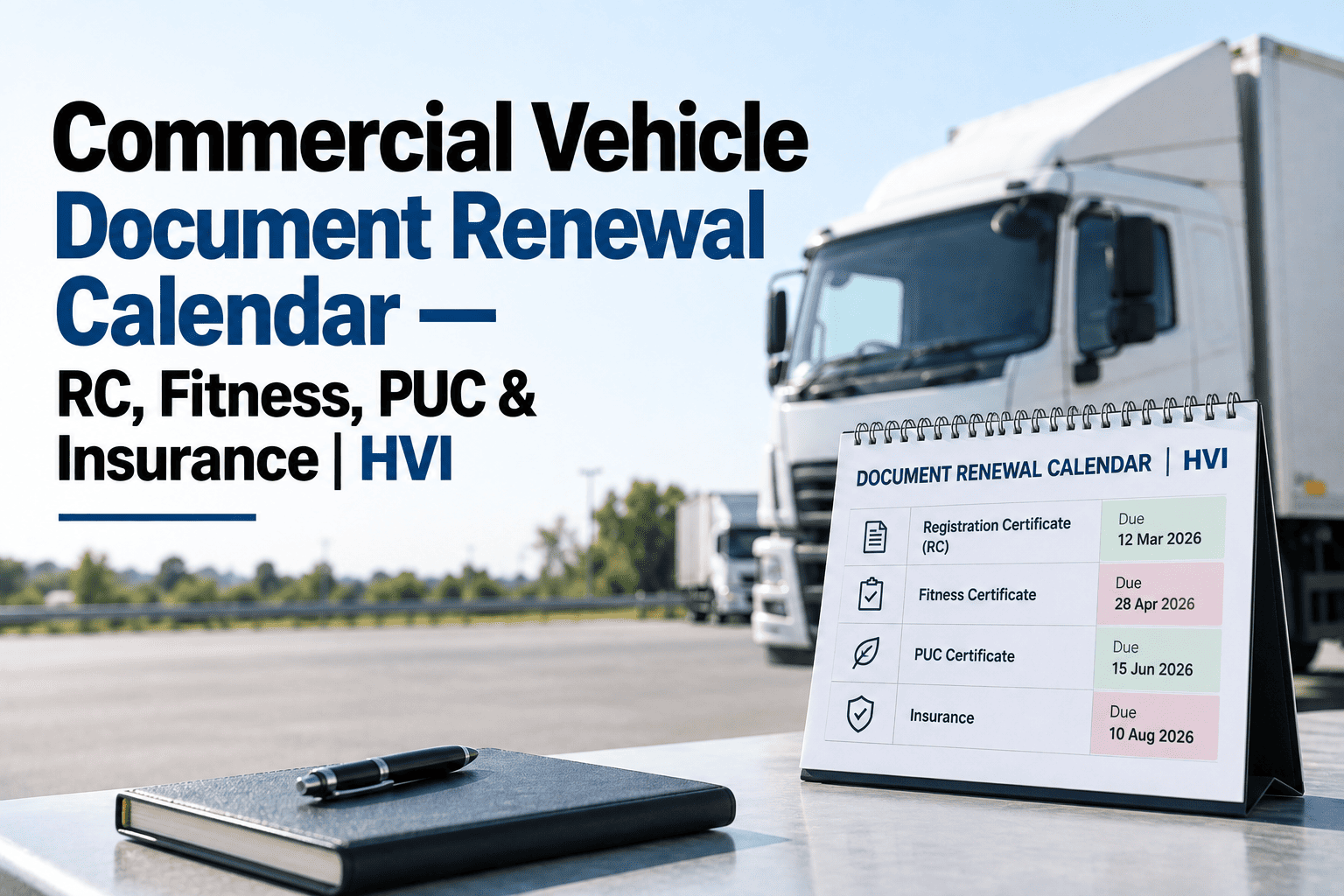
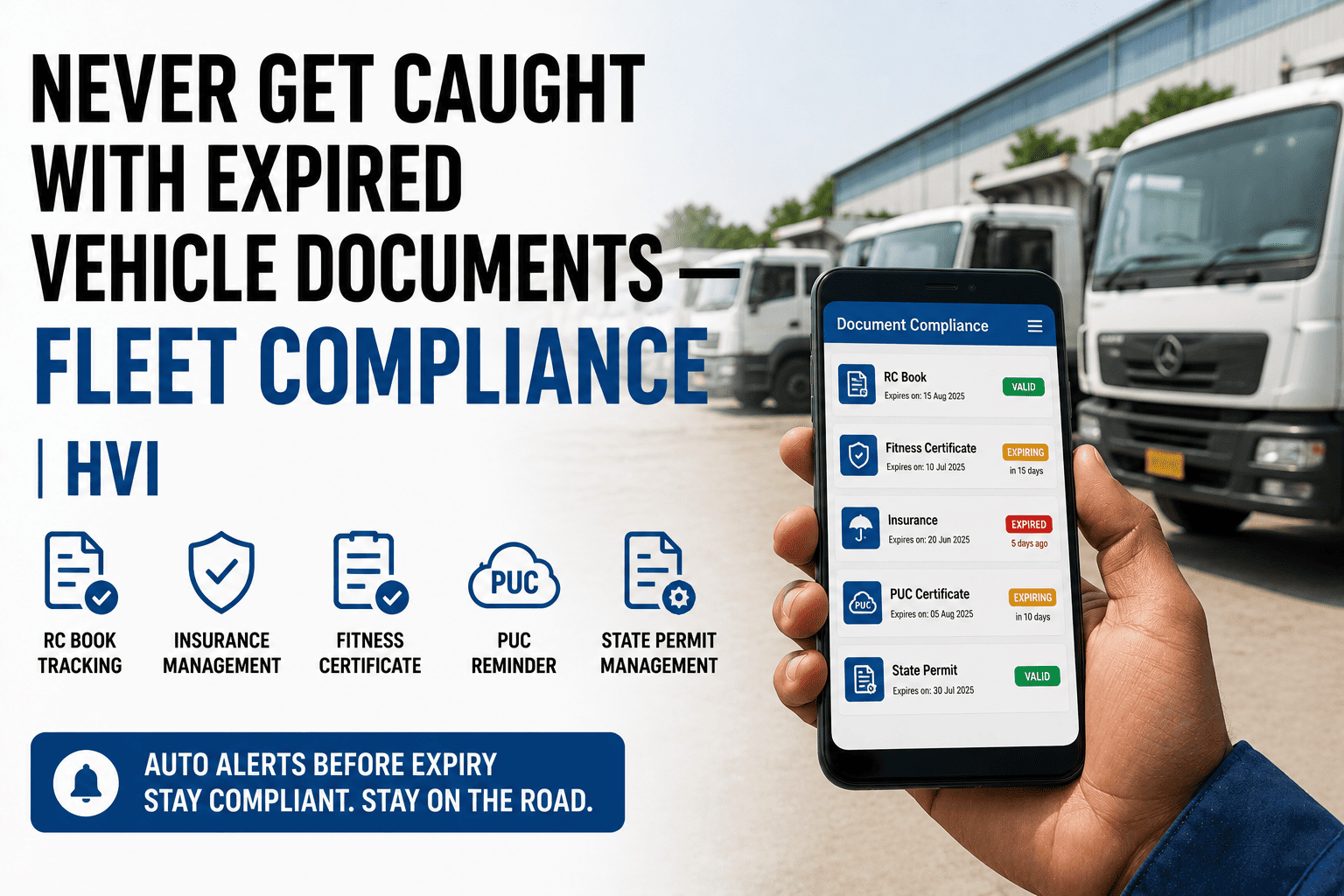
The fitness certificate is the one document a fleet cannot renew from a desk: the vehicle itself must pass a physical examination, which means FC renewal is really a maintenance project wearing a compliance deadline — and fleets that treat it as paperwork keep failing it as an inspection. The stakes have quietly risen too: automated testing stations are replacing visual RTO checks, and their lane sensors measure brake force, headlamp aim, and emissions in numbers that do not negotiate. A failed test costs a retest fee, queue days, and an off-road vehicle; an expired FC costs detention exposure and contested insurance claims. This guide runs the whole cycle the way well-run fleets do, and HVI automates every date and prep task in it — sign up free and put your FC calendar on rails this week.
Vehicle Fitness Certificate Renewal — The Complete Guide
Validity cycles, ATS-era test realities, the prep that passes first time, and the automated calendar that keeps every vehicle's FC current without a single diary entry.
Why Vehicles Actually Fail — Prepare for These Four
Brakes
The classic ATS rejection: total brake force and left-right balance measured on rollers, not judged by a test drive. Prep means measured shoe and lining checks, drum condition, and air-system health — a week before, not the morning of.
Lights & Electricals
Headlamp aim and intensity are instrument-checked, and every lamp, indicator, and horn must simply work. The cheapest failures to prevent and the most embarrassing to fail — one bulb run through the lane twice.
Emissions
Smoke density on the metre, not the eye — a tired injector, choked air filter, or overdue service shows up here first. If the PUC was borderline last cycle, the FC lane will be harder still.
Tyres, Suspension & Structure
Tread depth, visible damage, suspension play, and body condition — the wear items a daily walkaround tracks all year, arriving at the test as evidence of the fleet's habits, good or bad.
The Renewal Week, Worked Backwards
What the ATS Lanes Measure
Exact lane configurations and thresholds follow the current testing rules and your state's rollout — the operating assumption that never fails: the sensors publish numbers, and vehicles maintained on daily inspections and honest PM walk through lanes that surprise everyone else.
Turn Every FC Into a Scheduled Non-Event
Load your fleet's FC dates once, and HVI runs the machine: alerts at your lead times, prep work orders generated against the four failure areas, documents verified, the new certificate filed, and the next clock started. Bring your renewal register to a 30-minute session and our India team sets the whole calendar with you — including the stagger that stops the month-end pileup.
The Economics of Passing First Time
The Fail-First Path
Test failed on a brake reading → retest fee, a fresh slot in the queue, transport to and from the station again, and the vehicle off revenue work for the days between — plus the same repair you would have done anyway, now performed under deadline pressure at rush prices. The failure did not save the repair cost; it added logistics cost on top.
The Pass-First Path
The Day −21 prep order finds the same brake issue in your own workshop → fixed in a planned bay slot, at planned prices, with the vehicle working every day except test day. Same repair, same rupees on parts — and zero retest fees, zero queue days, zero project apologies. Preparation is not an extra cost; it is the cheap sequencing of a cost you pay either way.
Running FCs at Fleet Scale
Stagger the Calendar
Forty vehicles renewing in clusters means whole weeks of thin availability — the dashboard shows the year's FC load by month, so purchases and renewals get planned to spread it.
One Rhythm, Every Site
The same −30/−21/−14/−7 pipeline runs per vehicle across every site, so no site engineer is inventing his own renewal process and no vehicle depends on whose diary it lives in.
History That Compounds
Every test result and prep order stays in the vehicle's file — repeat failure patterns surface, resale buyers see a documented FC history, and audits read a register instead of a shoebox.
Frequently Asked Questions
How long is a fitness certificate valid?
Validity follows the vehicle's age and class under the current rules — new commercial vehicles get a longer initial certificate, with periodic renewal thereafter that becomes effectively annual as the vehicle ages. Track each vehicle's own cycle rather than a fleet-wide assumption, because a mixed-age fleet runs mixed clocks.
Is there a grace period after expiry?
Operate on the assumption that there is none — an expired FC exposes the vehicle to detention and fines and hands insurers a contest on any claim in the gap. The renewal window before expiry exists precisely so the new certificate starts as the old one ends; use it.
What if a vehicle fails the retest too?
Repeated failures usually mean the defect list was patched, not repaired — treat the second prep as a proper work order with measurements, not a hopeful re-run. The vehicle's inspection history typically shows the pattern was visible for months; fixing the pattern is cheaper than renting the lane repeatedly.
We operate across states. Does the FC travel?
The certificate is valid across India, but testing happens where the rules and your registration make it practical, and enforcement everywhere reads the same VAHAN record — so currency matters more than geography, and the record must match the paper; sign up free and keep every vehicle's file audit-ready wherever it works.
How does HVI automate the prep side, not just the reminder?
The expiry alert generates the prep work order from a template built on the four failure areas — tasks, parts, and measurements included — assigns it to the workshop with the deadline chain, and files the test result against the vehicle when done. Reminders alone move dates; work orders move vehicles. See the full pipeline in a 30-minute demo with our India team.
The Lane Will Measure Your Fleet's Habits. Give It Good Ones to Find.
An ATS lane audit reflects your maintenance culture. Daily inspections, timely PM, and a −30-day preparation pipeline help fleets pass first time. Keep FC dates, prep orders, and records in one system. Start free or set up your annual calendar in a 30-minute session.