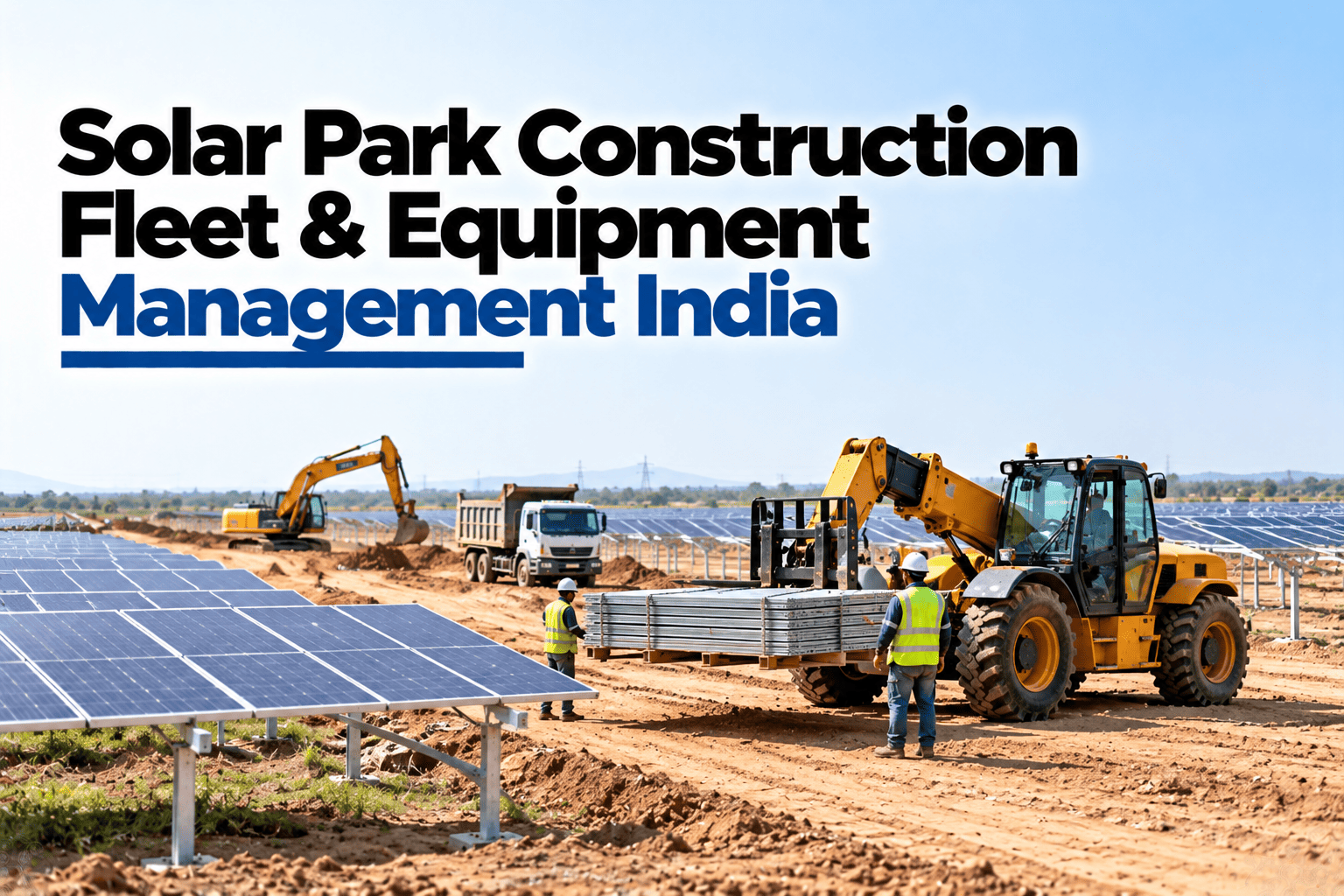
A large solar park can stretch across thousands of acres of open desert or scrubland, with pile drivers, cranes, telehandlers, tractors and water tankers spread over dozens of blocks. Summer heat cooks engines and batteries, fine dust chokes filters within days, and a single breakdown in a far block can stall a whole installation crew. Solar EPC contractors that hit their commissioning dates keep every machine checked, serviced for the conditions and fuelled against records. This guide covers how, and how contractors manage solar park fleets in HVI.
Solar Park Construction Fleet and Equipment Management India
Plan equipment for each stage of the build, adjust maintenance for heat and dust, control fuel across remote blocks and report utilisation clearly to the project team.
Adjust Maintenance for Heat, Dust and Distance
Solar sites in Rajasthan, Gujarat and other dry regions are harder on machines than most construction sites. Standard service intervals are often not enough.
| Condition | What it damages | What to change |
|---|---|---|
| Extreme heat | Cooling systems, batteries, tyres, hydraulic oil | Check coolant daily, test batteries before summer, watch tyre pressure |
| Fine dust | Air filters, radiators, seals, electrical contacts | Shorter air filter intervals, blow out radiators often |
| Loose sand | Tracks, rollers, wheel bearings | Check undercarriage and bearings more often |
| Long site distances | Response time to breakdowns | Mobile service van and spares in each zone |
| Hard ground pockets | Pile driver hammers and masts | Inspect hammer and mast after hard driving |
Pile Drivers: The Machines That Set the Pace
Piling usually decides how fast the whole project moves. A pile driver down for a day can hold up structures and module crews behind it.
Hammer
Check for cracks, loose bolts and oil leaks. Hard ground increases wear.
Mast and leader
Alignment affects pile accuracy. Check guides and straightness daily.
Hydraulics
Inspect hoses and fittings for heat and dust damage every shift.
Positioning system
Where GPS guidance is fitted, confirm calibration before starting each block.
Tracks
Check tension and wear, as sand speeds up undercarriage wear.
Engine
Clean air filters and radiators often in dusty conditions.
See Every Machine Across Every Block
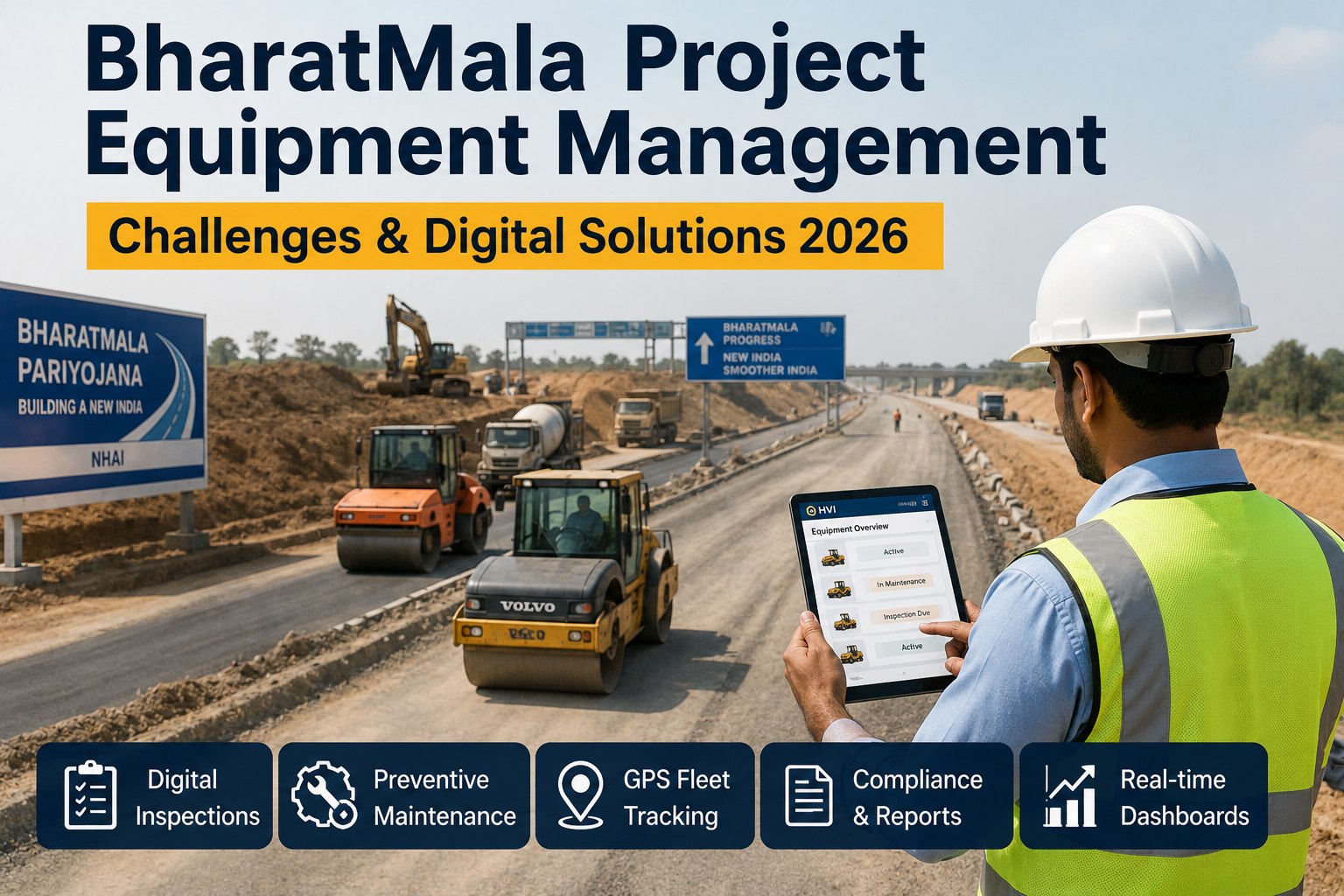
HVI records daily checks, hour meters, fuel issues and breakdowns for every pile driver, telehandler, tractor and tanker, so project managers see the whole site in one view.
Fuel Control on Large, Open Sites
Fuel is often the biggest running cost on a solar site, and remote blocks make it easy to lose. A simple routine keeps it under control.
Issue by machine
Every litre from the bowser is issued against a machine ID.
Record hour meter
Note the hour meter reading at every fill.
Compare litres per hour
Check each machine against similar machines on site.
Follow up gaps
Investigate machines using far more than their peers.
Safety for People and Machines in the Heat
Heat affects operators as much as engines. Combine equipment checks with people safety.
- Plan heavy work for cooler hours where possible
- Drinking water, shade and rest breaks on every block
- Working air conditioning or ventilation in cabs
- Watch for signs of heat stress
- Speed limits on internal site roads
- Clear zones between installers and telehandlers
- Spotters when lifting near module rows
- Fire extinguishers on every machine in dry grass areas
KPIs for Solar Park Fleets
Track these weekly by block and machine type to keep the build on schedule.
A Solar Site Fleet View in HVI
A sample daily view across blocks. Hours, fuel and status for every machine sit together, so problems in far blocks are seen the same day.
| Machine | Block | Hours today | Litres per hour | Status |
|---|---|---|---|---|
| PD-04 pile driver | Block 12 | 9.5 | Normal | Working |
| TH-11 telehandler | Block 7 | 8.0 | Normal | Working |
| TR-23 tractor | Block 15 | 6.5 | 40% above peers | Check fuel use |
| PD-09 pile driver | Block 18 | 1.5 | Not applicable | Hammer fault |
Solar Park Fleet FAQs
What equipment is used to build a solar park?
Typical equipment includes graders, dozers and rollers for site preparation, pile drivers for mounting structure foundations, telehandlers, forklifts and tractors for structures and modules, trenchers and cable trailers for electrical work, and water tankers and site vehicles throughout.
How does heat affect construction equipment on solar sites?
High temperatures strain cooling systems, weaken batteries, raise tyre pressures and thin hydraulic oil. Daily coolant checks, pre-summer battery tests, clean radiators and attention to tyre pressure reduce heat-related breakdowns.
How often should air filters be changed in dusty conditions?
Much more often than the standard interval, guided by the filter restriction indicator and the maker's advice for dusty operation. Teams that record filter changes in HVI can see which machines and blocks need shorter intervals.
How can fuel be controlled across a large solar site?
Issue every litre against a machine ID with an hour meter reading, then compare litres per hour across similar machines. Machines using far more than their peers point to faults, idling or misuse that need follow-up.
How can project managers see the whole fleet on a large site?
Give every machine a record with its block, daily checks, hours, fuel and breakdowns, updated from the field. A single view shows problems in far blocks the same day. Book a demo to see solar fleet tracking in HVI.
Keep Every Block Building, Every Day
Track checks, hours, fuel and repairs for every machine across your solar park in HVI. Fewer heat and dust breakdowns, tighter fuel control and clear reports for the project team.