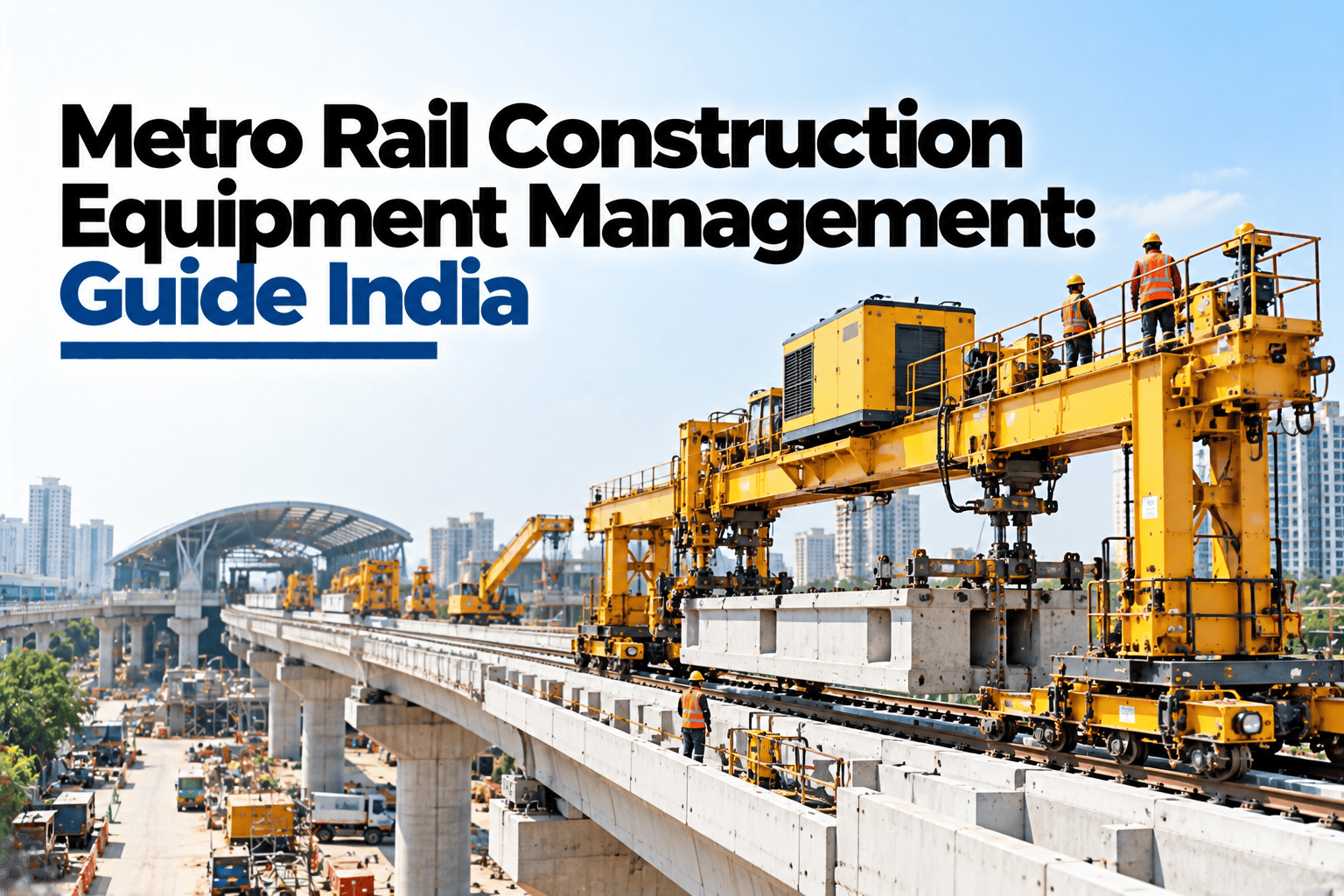
A metro corridor squeezes some of India's heaviest construction equipment into the middle of a busy city. Piling rigs work beside traffic, cranes lift over live roads and launching gantries move huge loads overhead, often at night. With several stretches running at once, it is easy to lose track of which crane has a valid certificate or which gantry is due for inspection. This guide shows how contractors keep control and see every corridor machine in HVI.
Metro Rail Construction Equipment Management: Guide India
Manage piling rigs, cranes, launching gantries, tunnelling support and site vehicles across every stretch, with inspections, lifting certificates and maintenance in one place.
Equipment Groups, Risks and Key Checks
Each group of metro equipment carries its own main risk. Inspections should focus there first.
| Group | Typical equipment | Main risk | Key check |
|---|---|---|---|
| Foundations | Piling rigs, hydraulic grabs | Overturning on weak ground | Ground bearing, mast, ropes, hydraulics |
| Lifting | Crawler, mobile and gantry cranes | Load drop or crane overturn | Test certificate, load limiter, ropes, hooks |
| Viaduct launching | Launching gantries, segment lifters | Structural or launch failure | Structure, winches, limit switches, wind limit |
| Underground | TBM support gantries, locos, muck cars | Collision and fire in tunnels | Brakes, lights, fire systems, ventilation |
| Site vehicles | Transit mixers, trailers, dumpers | Reversing incidents on busy roads | Brakes, reverse alarms, cameras, lights |
Lifting Equipment Certificates and Controls
Lifting equipment must be tested and examined by a competent person at the intervals set by the applicable rules and project requirements. Missing or expired certificates are among the most common audit findings.
Periodic examination
Examined by a competent person at the required interval, with a certificate kept on site.
Load test
After erection, major repair or modification, before the equipment returns to use.
Safe load marking
Safe working load clearly marked on cranes, hooks and lifting gear.
Safety devices
Load limiters, limit switches and anemometers tested and working.
Lifting gear register
Slings, shackles and spreader beams tagged and inspected.
Authorised operators
Operators, riggers and signallers trained and authorised for the equipment.
Before Every Gantry Launch
A launching gantry moving to the next span is one of the highest-risk operations on the corridor. Follow the approved method statement and complete these checks every time.
Structure
Inspect girders, legs, connections and supports for damage.
Mechanical
Check winches, wire ropes, hydraulics and brakes.
Controls
Test limit switches, alarms and emergency stops.
Conditions
Confirm wind speed is within limits and the area below is cleared.
Permit
Get the launch permit signed before any movement.
Never Let a Lifting Certificate Expire Unnoticed
HVI tracks every crane, gantry and lifting gear certificate with reminders, and keeps pre-use checks and launch inspections with photos for every stretch of the corridor.
Working Safely in a Busy City
Metro sites share space with traffic, pedestrians and homes. Equipment controls must account for that.
Good lighting on machines and work zones, and fatigue checks for operators on night shifts.
Barricades, signage and trained marshals where equipment enters or leaves the site.
Exclusion zones under lifts and safe walkways separated from machines.
Banksmen, reverse alarms and cameras for all heavy vehicles.
Preventive Maintenance Across Several Stretches
When equipment is spread across packages, PM slips easily. A few habits keep it on track.
One Corridor View in HVI
A sample view for a project team. Every machine on every stretch shows its certificate, last inspection and status.
| Asset | Stretch | Certificate | Last inspection | Status |
|---|---|---|---|---|
| LG-02 launching gantry | Viaduct, package 2 | Valid | Before last launch | Cleared |
| CC-07 crawler crane | Station 4 | Expires in 9 days | Today | Book examination |
| PR-03 piling rig | Foundations, package 1 | Not applicable | Hydraulic leak found | Stopped |
| TM-21 transit mixer | Station 2 | Not applicable | Today | Working |
Metro Construction Equipment FAQs
What equipment is used in metro rail construction?
Common equipment includes piling rigs and hydraulic grabs for foundations, crawler, mobile and gantry cranes for lifting, launching gantries for viaduct spans, TBM support equipment for tunnels, and site vehicles such as transit mixers, trailers and dumpers.
How often must lifting equipment be examined?
Lifting equipment must be examined and tested by a competent person at the intervals set by the applicable construction safety rules and the project's own requirements, and after erection or major repair. Keep certificates on site and track expiry dates for every item.
What checks are needed before launching a gantry?
Typical checks cover the structure, winches and wire ropes, hydraulics and brakes, limit switches and emergency stops, wind speed and a cleared area below. All should follow the approved method statement, with a launch permit signed before any movement.
How can contractors track equipment across several stretches?
Give every machine one record with its stretch, certificates, inspections, defects and PM, updated from the field. Teams that track corridor equipment in HVI see every stretch in one view instead of chasing site registers.
What equipment records do metro clients and auditors ask for?
Usually lifting certificates, pre-use inspections, maintenance history, operator authorisations, launch permits and incident records. Requirements vary by project, so confirm them at mobilisation. Book a demo to see metro project equipment tracking in HVI.
Every Machine on the Corridor, in One View
Track certificates, pre-use checks, launch inspections and PM for every crane, gantry, rig and vehicle across all stretches in HVI. Safer lifts, fewer audit gaps and work that stays on schedule.