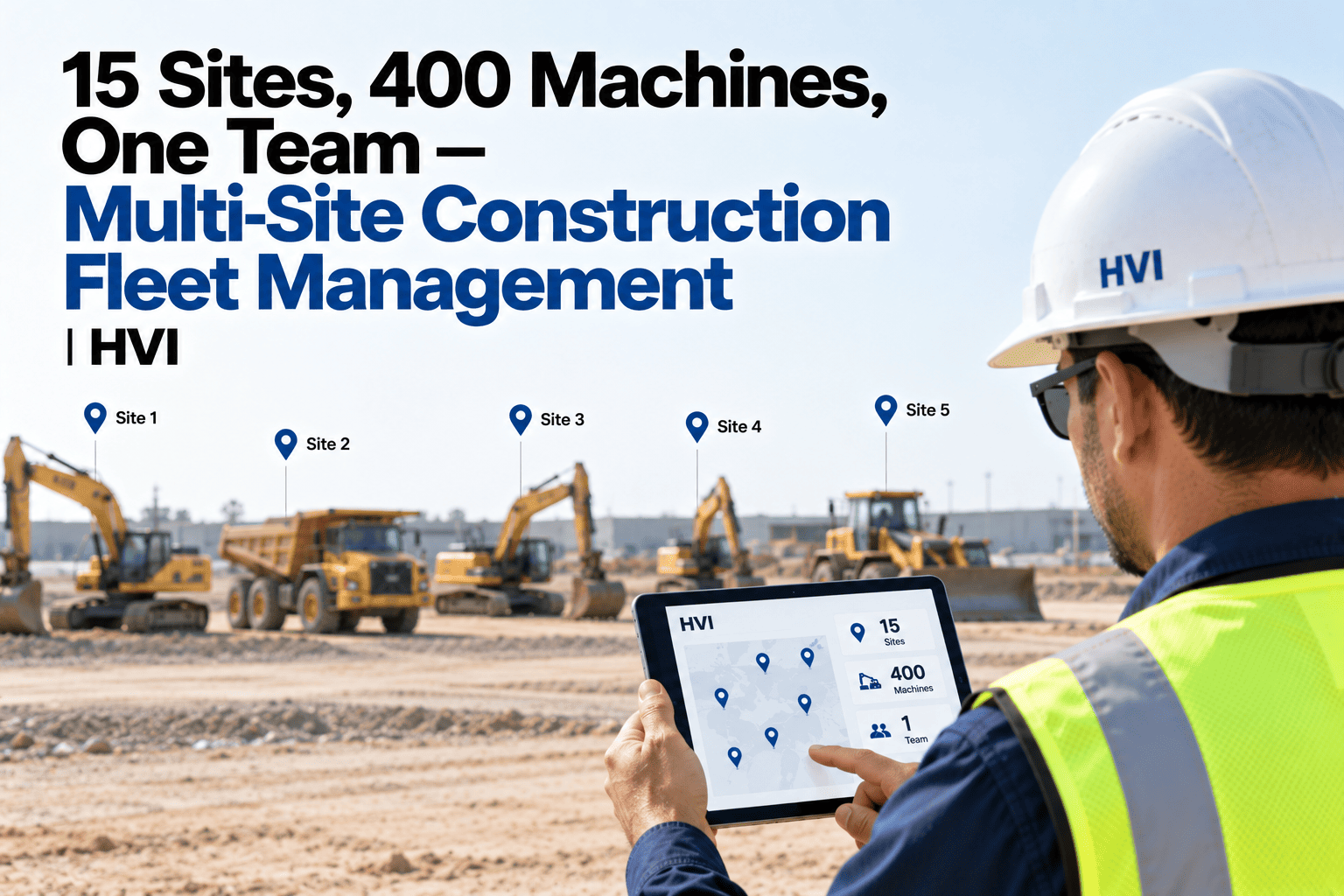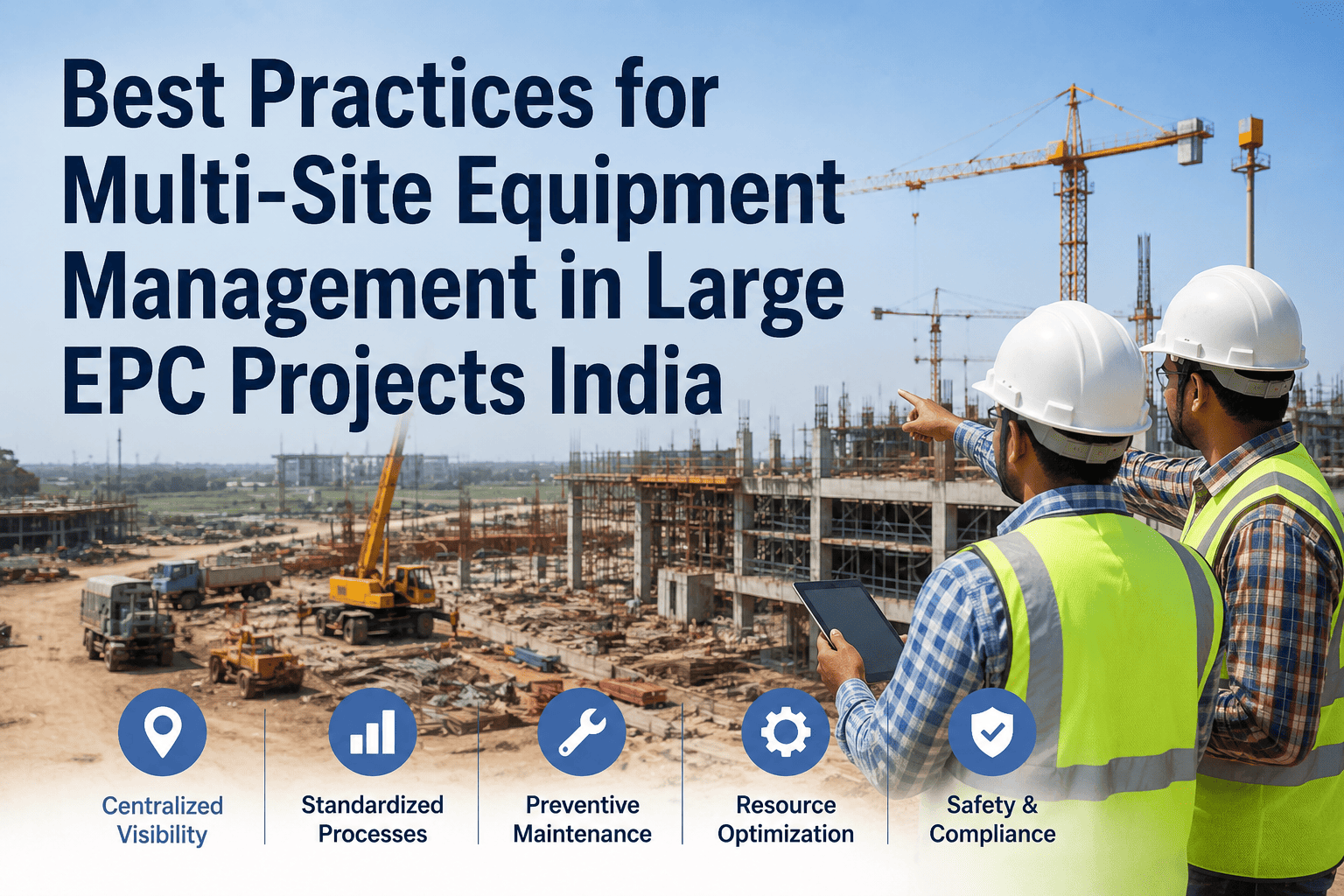
Running one construction site well is hard. Running twelve, twenty, or fifty at once — spread across five or six states, each with its own JCBs, cranes, generators, and tippers — is a different problem altogether. A loader sits idle in one state while a backlog of preventive maintenance quietly piles up in another, and a compliance document expires before anyone at head office even knows it existed. For large EPC contractors running highway, metro, and pipeline packages in parallel, equipment visibility doesn't break because site teams are careless — it breaks because the systems they rely on were never built to work across locations. This guide lays out what separates contractors who run 30+ sites smoothly from the ones drowning in spreadsheets, and how HVI closes that gap.
The Multi-Site Reality for Large EPC Contractors in India
Large EPC contractors rarely run one project at a time. National highway packages, metro corridors, and pipeline contracts are typically awarded and executed in parallel — often across several states at once. That scale is exactly what makes equipment management hard.
Why Multi-Site Equipment Management Breaks Down
The same four problems show up at almost every large EPC contractor once they cross eight to ten active sites. None of them are about effort — they are about systems that were never designed to work across locations.
Visibility Gaps Between Head Office and Site
A loader idles in one state while a backlog of preventive maintenance builds up in another, and nobody at head office sees either until the monthly report lands — weeks too late to act on.
Inconsistent Inspection & Reporting Formats
Each site supervisor keeps progress and inspection records their own way — different photo formats, different paper registers, different levels of detail — making it impossible to compare sites or spot a pattern early.
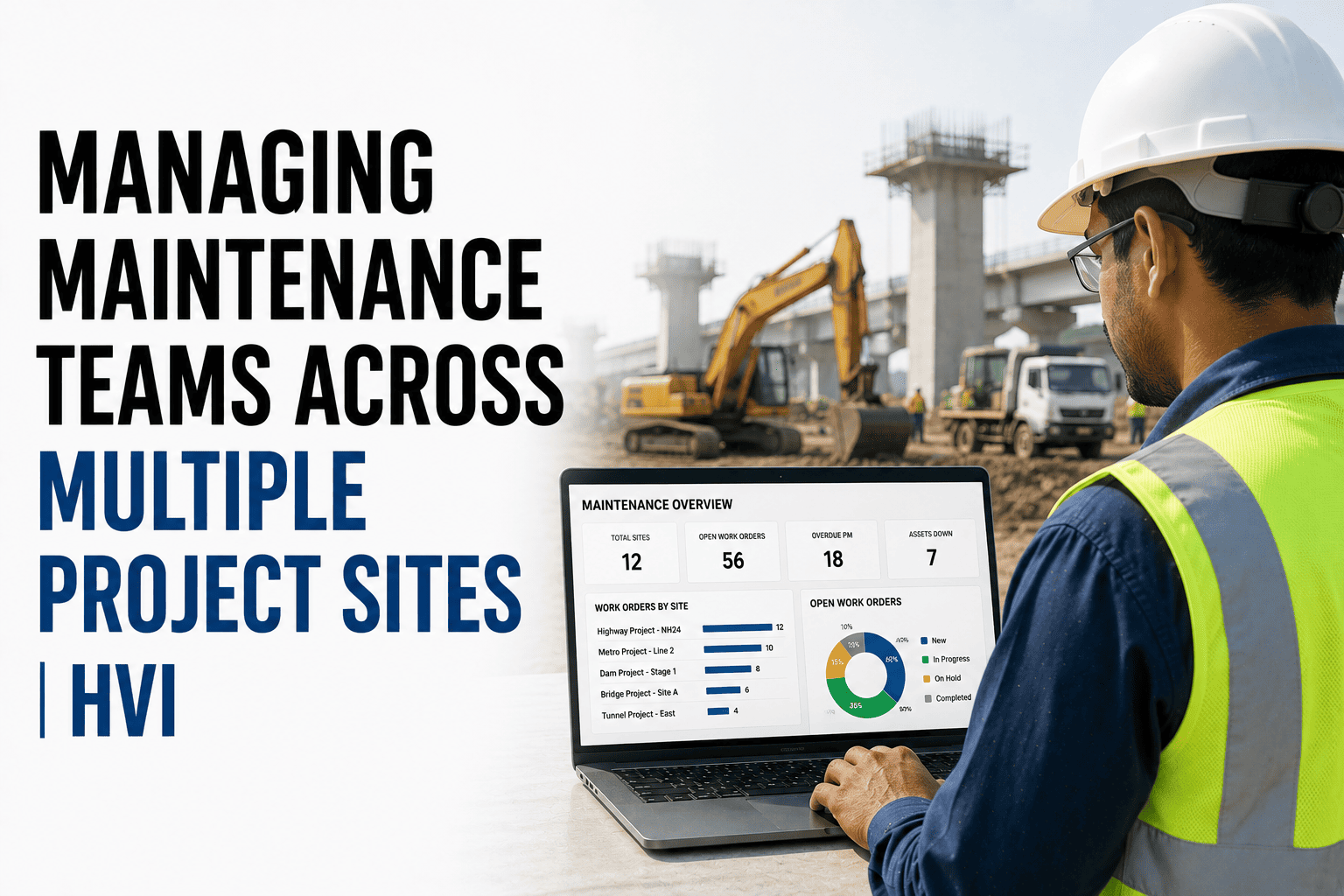
Maintenance Scheduling Collides With Site Priorities
Preventive maintenance gets pushed back because a site is chasing a milestone deadline, and by the time the machine is finally pulled in for service, a scheduled visit has become an unscheduled breakdown.
Compliance Tracking Fragments Across States
Fitness certificates, PUC, insurance, and BOCW labour registers follow different state RTO and labour department timelines, and one missed renewal on a single site can stall an entire RA bill submission.
See Every Site, Every Machine, on One Screen
HVI gives EPC head offices and project directors one live view across every active site — without changing how site teams already work on the ground.
7 Best Practices Top EPC Contractors Follow
Contractors who manage twenty, thirty, or even fifty sites smoothly don't do it with more staff. They fix these seven things once, centrally, instead of solving them separately at every site.
Build One Central Asset Registry
Every JCB, excavator, crane, and tipper gets a single digital record regardless of which site it currently sits on, so equipment can be tracked, reassigned, or audited from anywhere in the portfolio.
Standardize Inspection Checklists by Machine Type
A JCB 3DX is inspected the same way whether it's on a highway package in one state or a metro site in another, so defects are reported consistently and severity ratings actually mean the same thing everywhere.
Centralize Compliance Tracking, Not Just Storage
Fitness, PUC, insurance, and BOCW documents live in one system with automatic expiry alerts, instead of sitting in individual site folders that only get checked once an auditor shows up.
Trigger Preventive Maintenance by Hours, Not Memory
PM schedules run on engine hours and calendar triggers tracked centrally across the fleet, so a machine on a remote site gets flagged for service exactly as reliably as one parked outside head office.
Give Project Directors One Live Dashboard
Instead of compiling site-wise reports into a master spreadsheet every week, project directors see fleet health, DPR completion, and open defects across every site, updated as each shift closes.
Let Site Supervisors Report From Where They Stand
Reporting has to work for the person standing at the site, not just the person reading the report at the end of the week — mobile-first, offline-capable, in the language the site team actually speaks.
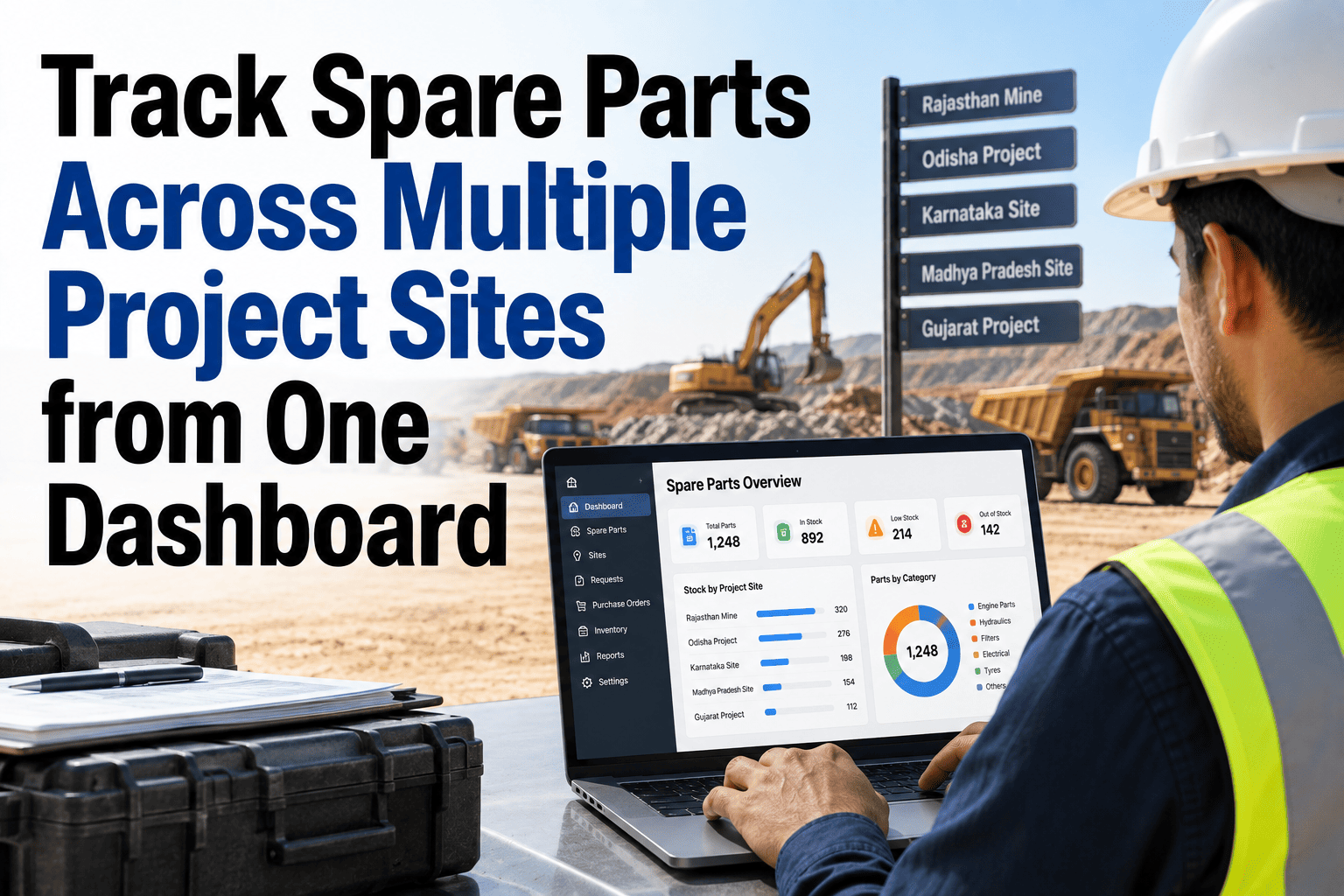
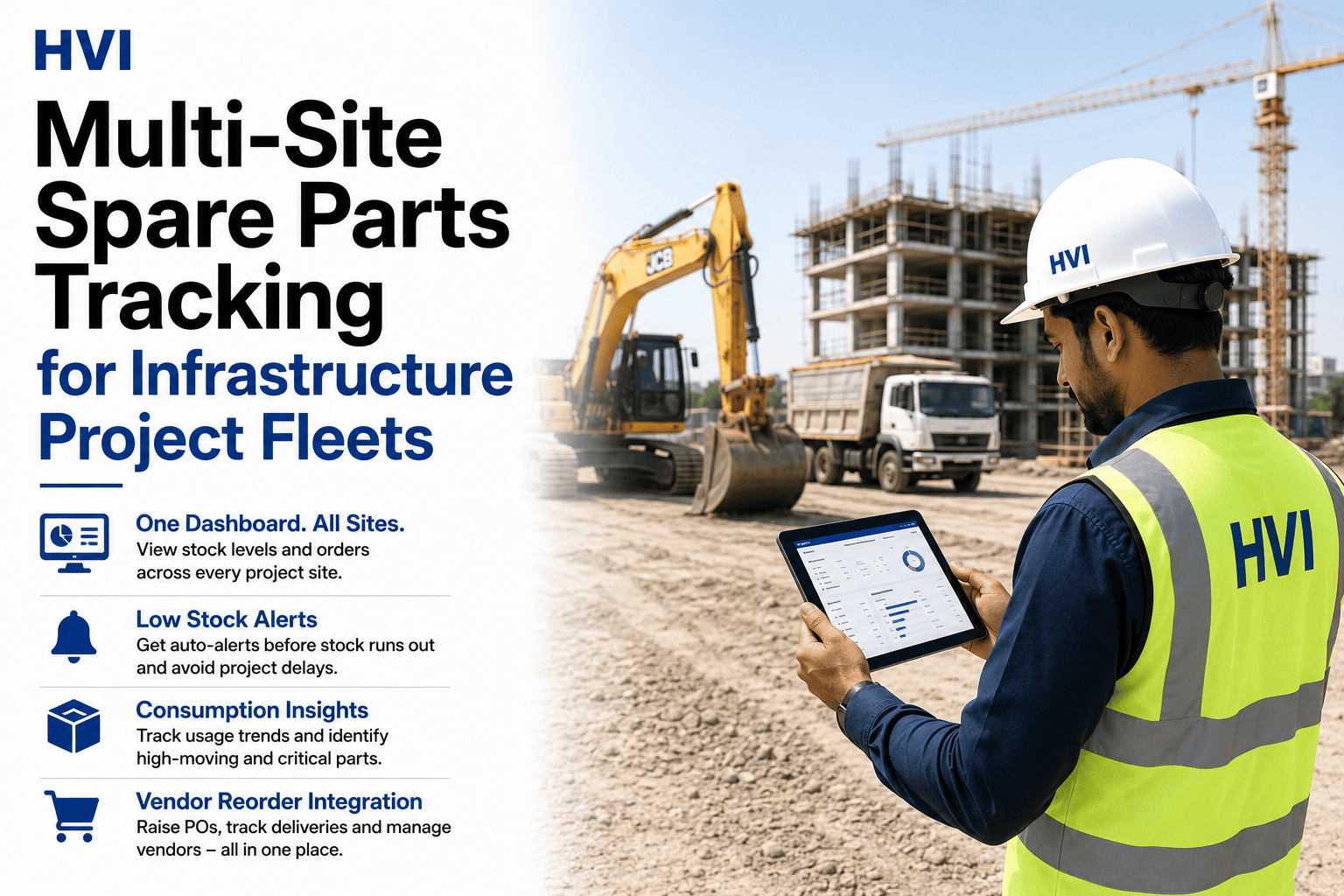
Run Spares & Vendors as a Shared Network
A workshop manager three sites away should be able to see that a spare part sitting idle elsewhere can reach a breakdown faster than raising a fresh purchase order from scratch.
Centralized vs Site-Siloed Equipment Management
The difference between a contractor that scales smoothly past twenty sites and one that strains under its own growth usually comes down to this comparison.
| Factor | Site-Siloed (Spreadsheets & Paper) | Centralized Platform (HVI) |
|---|---|---|
| Equipment visibility | Site-by-site, delayed | Real-time, across all sites |
| Compliance audit readiness | Reactive, last-minute | Always audit-ready |
| Maintenance response time | Days, depends on site reporting | Same-shift alerts |
| Reporting consistency | Varies by supervisor | Standardized across sites |
| New site rollout time | Weeks of manual setup | Typically a few days |
| Spare parts visibility | Isolated to one site | Shared across the fleet |
Categories reflect typical patterns observed across large multi-site EPC operations in India; specific outcomes vary by fleet size and rollout.
What Centralized Visibility Looks Like in Practice
This is the kind of view a project director gets the moment every site reports into one platform — a live multi-site snapshot, not a hypothetical.
Ready to Replace Spreadsheets With One Live View?
Start free on a few machines today, or talk to our team about rolling out across your full multi-site fleet.
At any given time we have machines spread across five or six sites, and head office could never keep up by calling each site manager every evening for an update. Once everything started feeding into one dashboard, that same evening call turned into a five-minute check instead of an hour of chasing people down.
Frequently Asked Questions
01What does "multi-site equipment management" actually mean for an EPC contractor?
02How many sites and machines can a platform like HVI handle at once?
03How does centralizing equipment management improve compliance across different states?
04Will site supervisors and operators need extensive training to adopt this?
05What does it cost to roll out multi-site equipment management on an existing fleet?
Get One Live View Across Every Site You Run
From a single highway package to a fifty-site national portfolio, HVI brings every machine, inspection, compliance record, and maintenance schedule onto one platform — built for the way large Indian EPC contractors actually operate.