Double entry is rarely a decision anyone made. It accumulates because SAP was implemented for finance and procurement, maintenance needed something SAP was never configured to do, and the gap between them got filled by a person retyping. That person is usually competent and usually busy, and the cost of the arrangement is invisible because it appears as somebody's ordinary workload rather than as a line item. Removing it starts with naming exactly where the same fact gets entered twice and deciding which system should own it. You can map that for your own setup in a free 30-minute session.
Stop Typing the Same Fact Into Two Systems
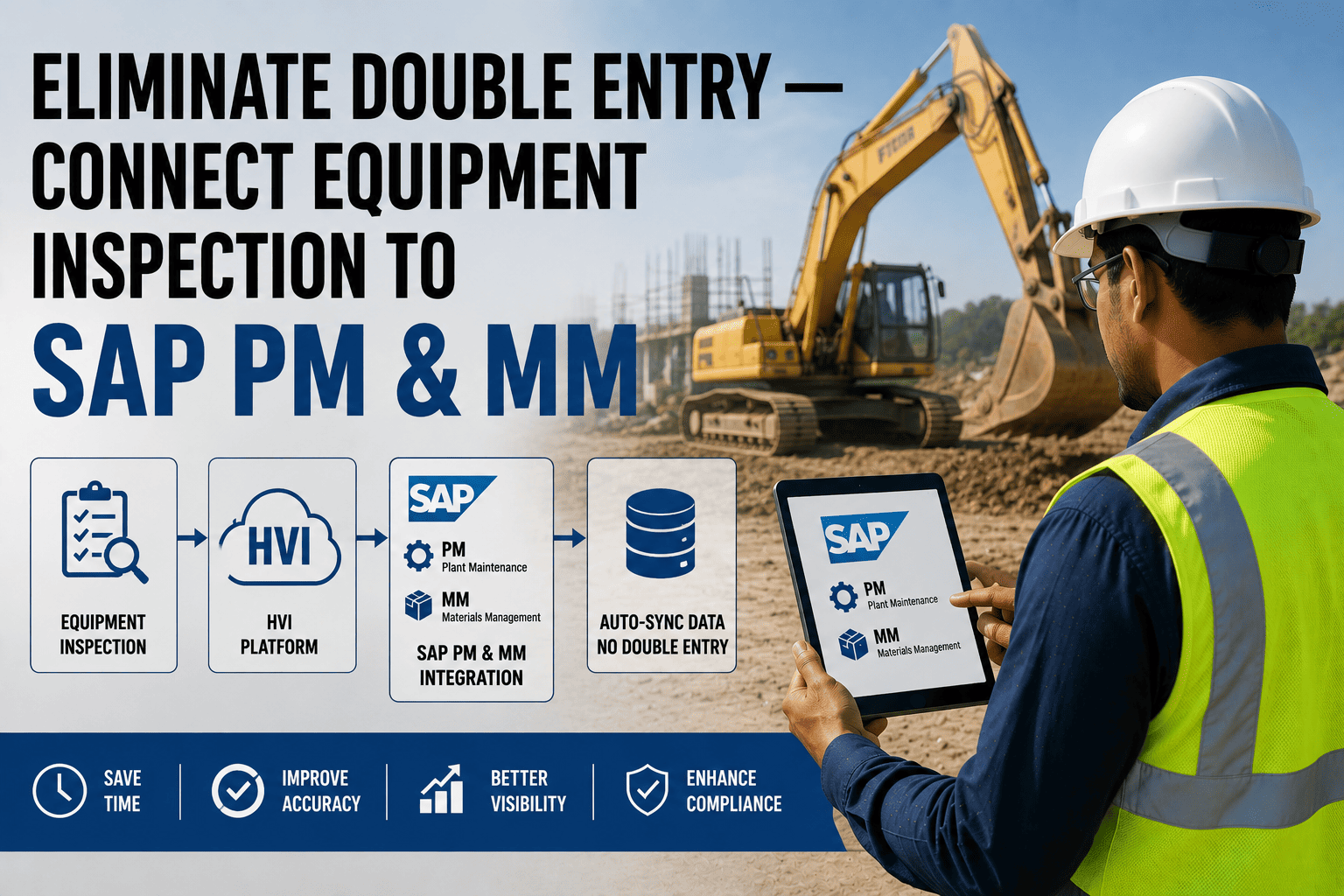
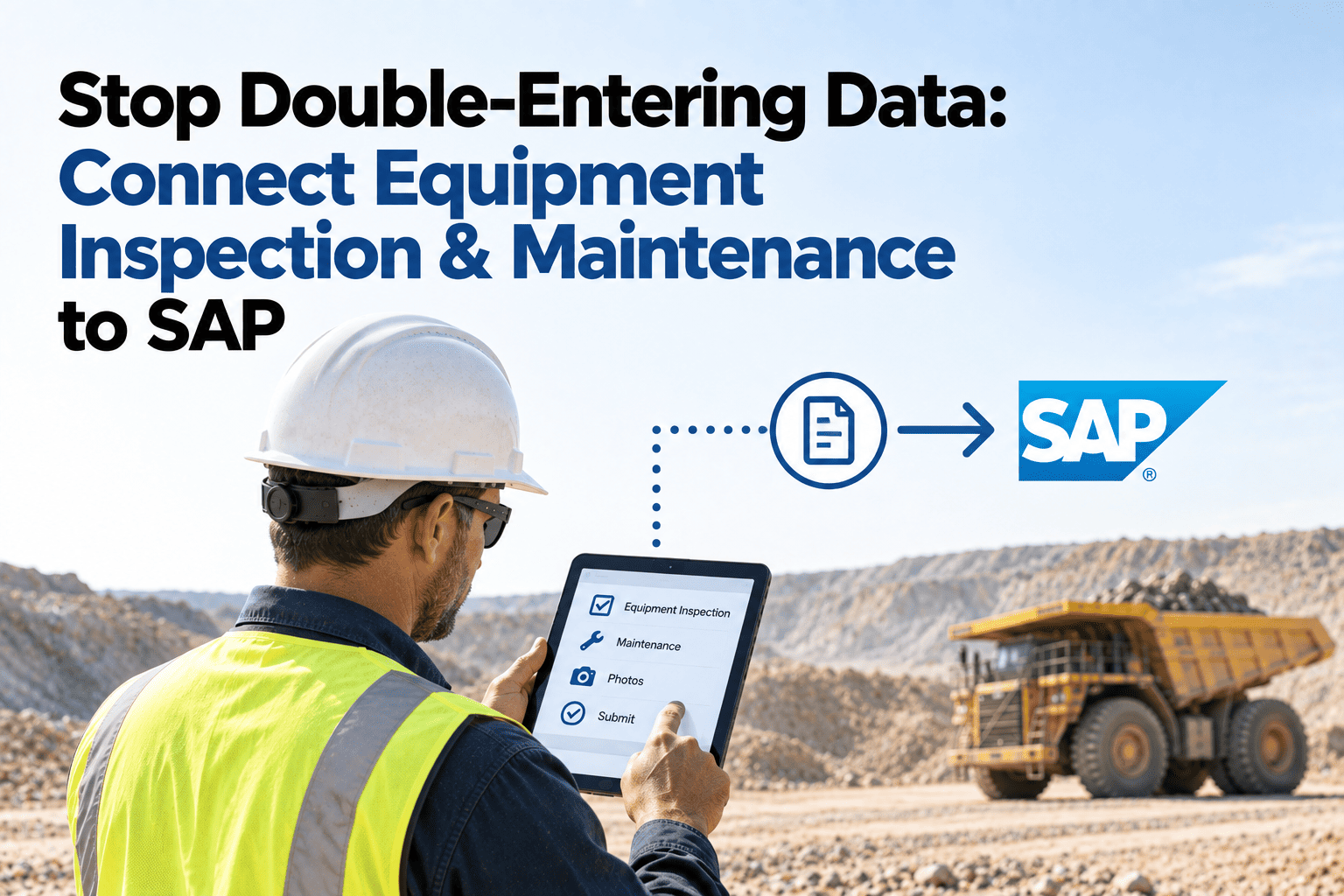
Inspection, work order, parts, and cost data flowing between maintenance and SAP, with each field owned by one system rather than maintained in both.
Where the Same Fact Gets Entered Twice
Worth walking through with the people who actually do the typing, because the list is usually longer than management expects.
Asset master data
Created in SAP for capitalisation, recreated in the maintenance system for operational detail, and the two drift apart the moment a machine is transferred.
Parts requisitions
Raised against a work order by the workshop, then re-entered as a purchase requisition by whoever handles procurement.
Parts consumption
Booked against the job in maintenance and against the stock ledger in SAP, frequently with different quantities and no reconciliation.
Labour hours
Recorded against the work order and again for costing, which is why in-house labour often disappears from maintenance cost figures.
Vendor invoices for external repair
Processed in SAP against a supplier, and separately attributed to a machine in maintenance, if anyone remembers to do it.
Deciding Which System Owns What
The financial asset record, supplier and purchase order data, cost centre structure, stock valuation, and anything feeding statutory accounts. These are already governed there and duplicating them creates reconciliation work rather than removing it.
Inspection records, defect history, meter readings, work order detail, and the operational state of each machine. This data is created at the machine by people who will never open SAP, and forcing it there is how it stops being captured.
Asset identifiers, which both systems need and neither can unilaterally change. Getting this right before integrating is the single highest-value hour of the project.
One owner per field, everything else a copy. The problems start when two systems both believe they are authoritative.
Work Out What Your Integration Should Cover
Tell us how your SAP is configured and we will set out what is worth connecting, what is better left separate, and in what order.
A Sensible Order of Work
First
Reconcile asset identifiers between the two systems. Nothing else can be matched reliably until a machine means the same thing in both.
Second
Get maintenance data captured properly on its own. Integrating incomplete data produces confident-looking figures built on gaps.
Third
Connect one direction only, usually maintenance cost and consumption flowing out to SAP. Simpler to validate than a two-way sync.
Fourth
Add the return flow — supplier references, cost centres, purchase order numbers — once the outbound side is trusted.
Only if needed
Real-time synchronisation. Most fleets find a scheduled transfer adequate, and it costs considerably less to build and maintain.
Frequently Asked Questions
Why not just use SAP PM for maintenance?
Some fleets do, successfully. It tends to struggle where operators need a simple offline mobile capture at the machine, which is a different problem from work order management. If your SAP PM is well configured and being used at the site level, the case for anything else is weaker. We can talk honestly about where the line sits on a call with our team.
Will our SAP team need to be involved?
Yes, for anything beyond a file exchange. Planning that in rather than discovering it mid-project is what keeps the timeline realistic.
What if our asset identifiers do not match at all?
A mapping table handles it, but it is worth fixing the underlying inconsistency rather than maintaining a translation layer indefinitely.
Should inspections flow into SAP?
Usually not in full. Finance has no use for individual checklist items, and pushing them across adds volume without adding value. Cost and consumption are what SAP needs.
How long does this take?
It depends far more on your SAP configuration and identifier consistency than on anything at our end, which is why an early technical conversation is worth more than an estimate. Start with a free trial to see the data first.
One Owner Per Field, One Entry Per Fact
Name every point where the same data is typed twice, decide which system is authoritative for each field, reconcile asset identifiers first, and connect one direction before attempting two.