Most Indian fleet managers still compare purchase price when deciding between two excavators, and that single number hides more than it reveals over a five-year ownership period. Fuel, maintenance, tyres, operator cost, downtime, and resale value all move independently of the sticker price, and a cheaper machine on day one can easily become the more expensive one by year three. Finance teams want a defensible number for the P&L, and site teams want to know which machine actually keeps working. HVI logs the real operating and maintenance data behind that number automatically, so you can see the full picture in a 30-minute walkthrough instead of rebuilding it in Excel every quarter.
The TCO Model Every Construction Fleet Manager Actually Needs
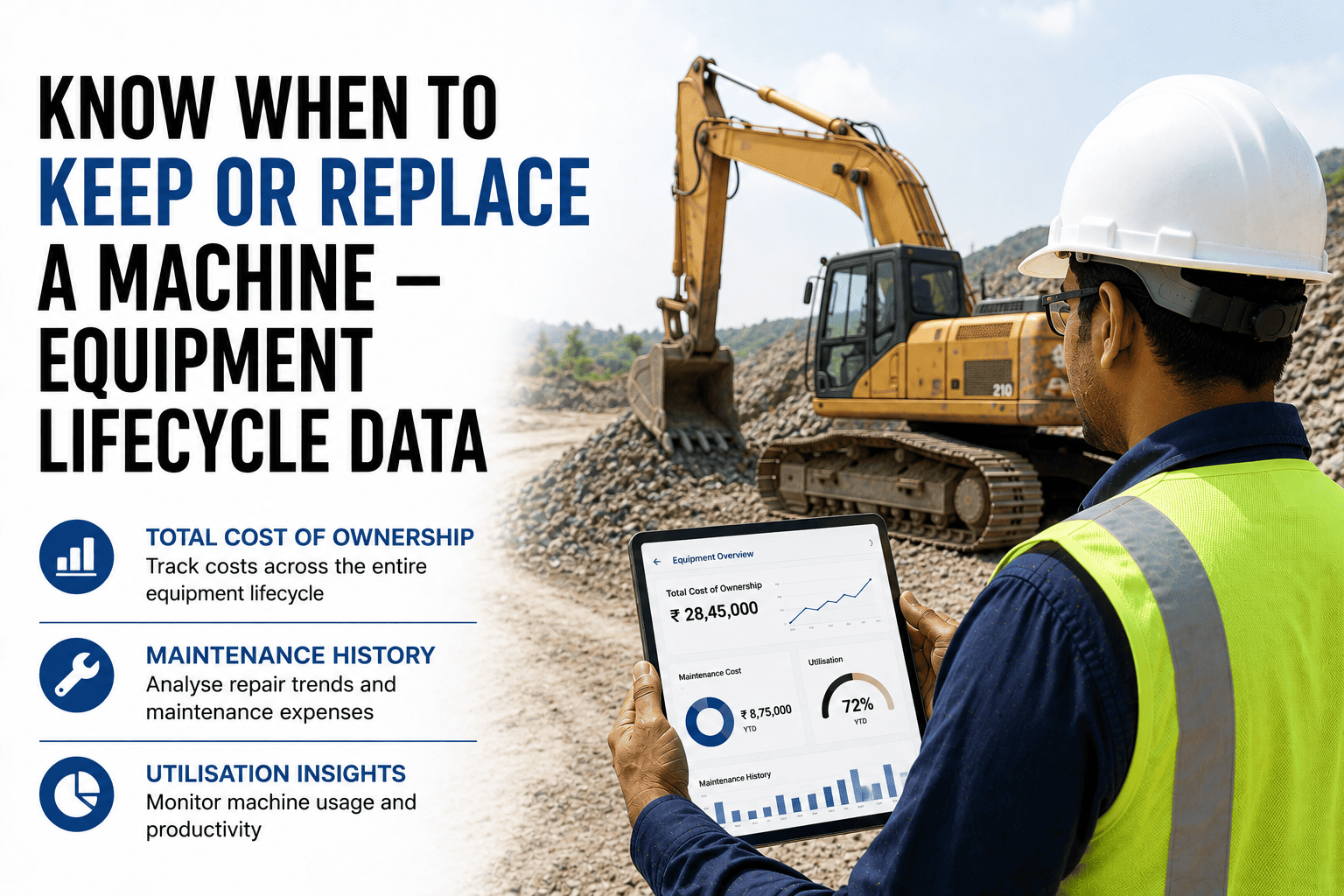
Purchase price, fuel, maintenance, tyres, operator cost, downtime, and residual value all feed into one number per machine. HVI tracks each of these automatically from your fleet's real data, so the TCO model updates itself instead of living in a spreadsheet someone forgets to refresh.
What Actually Makes Up a 5-Year Fleet TCO
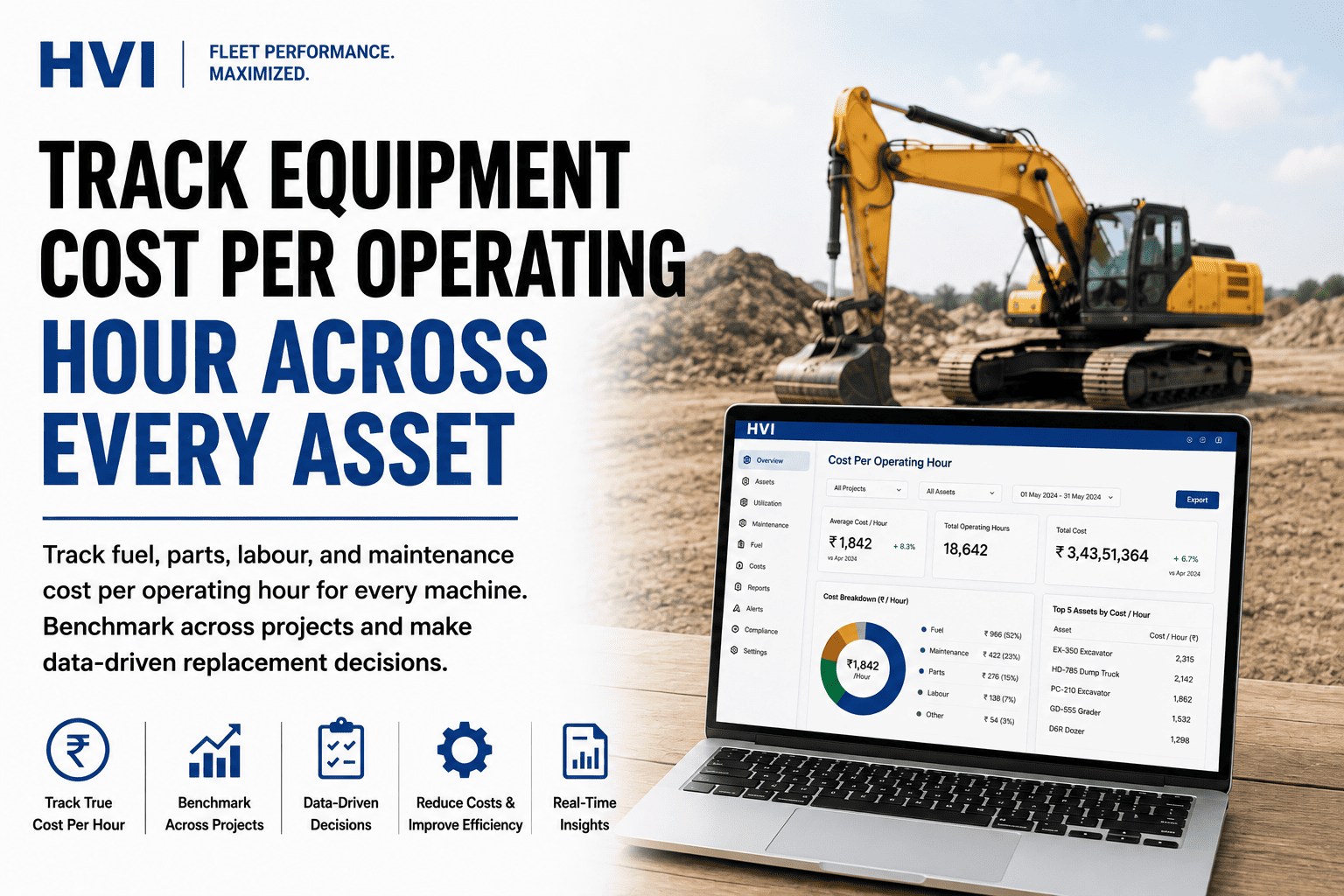
A typical Indian construction fleet's five-year cost per machine splits roughly like this, based on the categories that show up most in operator P&Ls.
Residual value at resale is treated as a credit against this total, which is why tracking condition and service history matters as much as tracking spend.
Worked Example: A 5-Year JCB Excavator
Purchase & Finance
Largest single line, spread across the EMI or lease term.
Fuel
Tracked against operating hours, not just litres purchased.
Scheduled & Unscheduled Maintenance
Climbs sharply after year three without meter-based PM.
Operator Cost
Steady, but downtime still draws this cost with no output.
Tyres & Undercarriage
Driven by TKPH tracking and terrain, not just calendar age.
Downtime
The cost most fleets underestimate until it is logged directly.
Residual Value
Offsets the total, higher with a clean, documented service history.
The Workflows That Actually Move Your TCO Number
Inspection-to-Work-Order Automation
A failed inspection point turns into a work order automatically, so small issues get fixed before they become the next unscheduled repair line.
Meter-Based PM Scheduling
Service intervals trigger off actual engine hours or kilometres, not a calendar guess, keeping the maintenance curve flatter for longer.
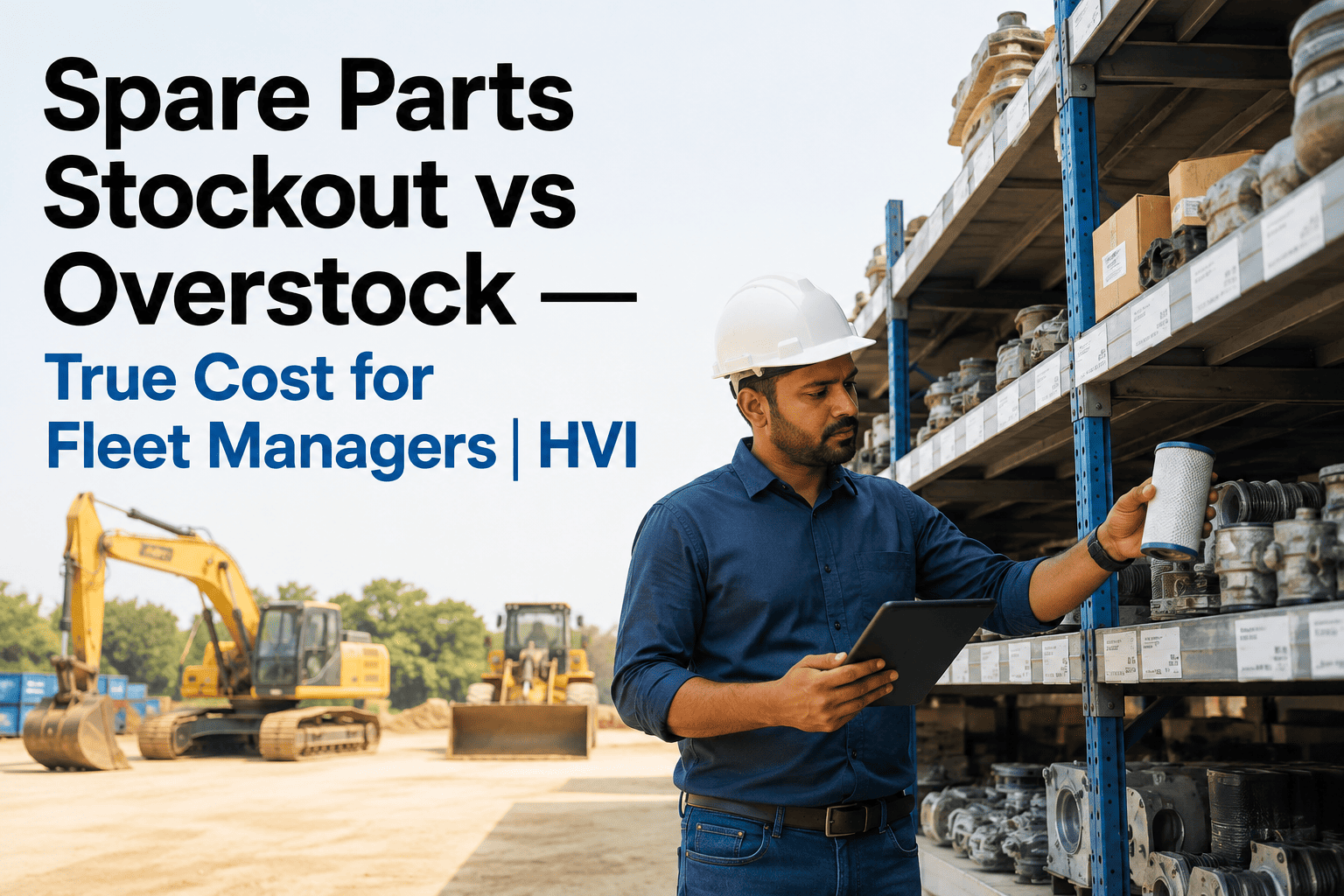
Spare Parts Reorder Points
Common wear parts reorder before stockouts force a machine to sit idle waiting on a part that should already be on the shelf.
Fuel Reconciliation
Fuel logged against hours and routes flags the leakage that quietly inflates the fuel share of your TCO every month.
Tyre TKPH Tracking
Load and terrain-based tyre wear tracking extends tyre life instead of replacing on a fixed schedule that ignores actual conditions.
DGMS & Factories Act Documentation
Compliance records build automatically alongside maintenance history, so audit prep stops being a separate scramble every cycle.
Build Your Fleet's Real TCO Model, Not a Rough Estimate
See purchase, fuel, maintenance, tyres, operator, and downtime cost pulled together per machine in a session with our India team.
Why Purchase Price Alone Misleads Every Time
A machine's purchase price is a single data point on day one. Its TCO is the number that actually shows up in your P&L every month for the next five years, and it is the number that should drive the next buying decision, not the one on the quotation.
Frequently Asked Questions
Does HVI calculate TCO automatically, or do we still build the model ourselves?
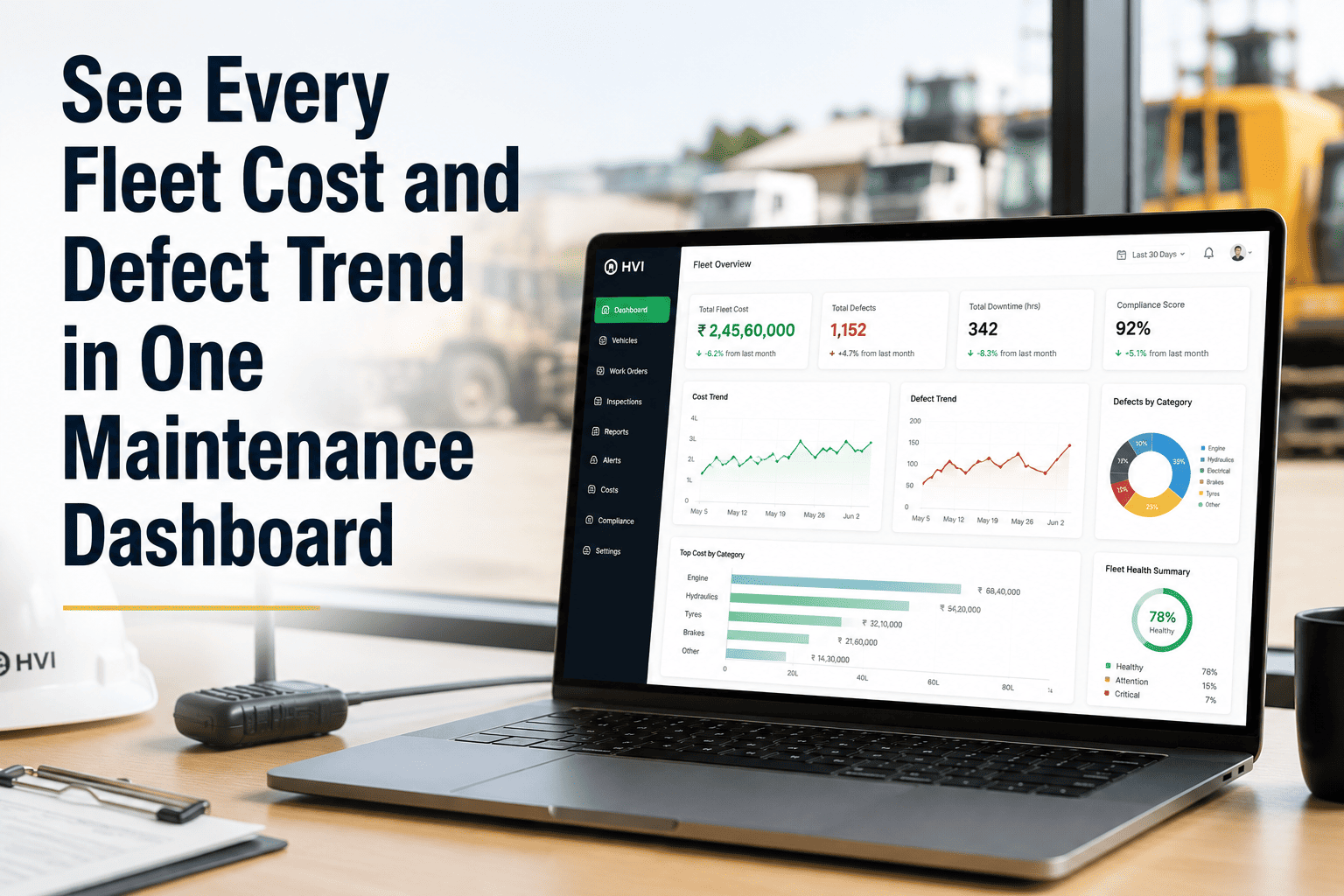
HVI logs the underlying data — maintenance cost, downtime, fuel, and tyre wear — against each machine, so the TCO components are already tracked. You can see this mapped to your own fleet on a call with our team.
Which equipment brands does this work with?
Fleets running JCB, Tata Hitachi, BEML, Komatsu, Volvo, and SANY equipment across multi-site projects all use the same tracking model, machine by machine.
How does meter-based PM scheduling differ from a fixed calendar schedule?
Meter-based scheduling triggers service off actual engine hours or kilometres run, so a heavily used machine gets serviced sooner and a lightly used one is not over-serviced on a fixed date.
Can this handle multi-site projects with different reporting needs?
Yes. Site engineers, maintenance heads, and finance teams can all work from the same underlying data, with reporting views suited to each role.
How soon can we see a TCO view for our fleet?
Most teams see an initial cost picture within days of connecting their machines, and it becomes more accurate as more maintenance and fuel data logs in. Start with a free trial to see your own numbers.
Move From Reactive Spend to a Planned TCO Model
Give finance and site teams one shared cost picture per machine, built from real inspection, maintenance, and fuel data.