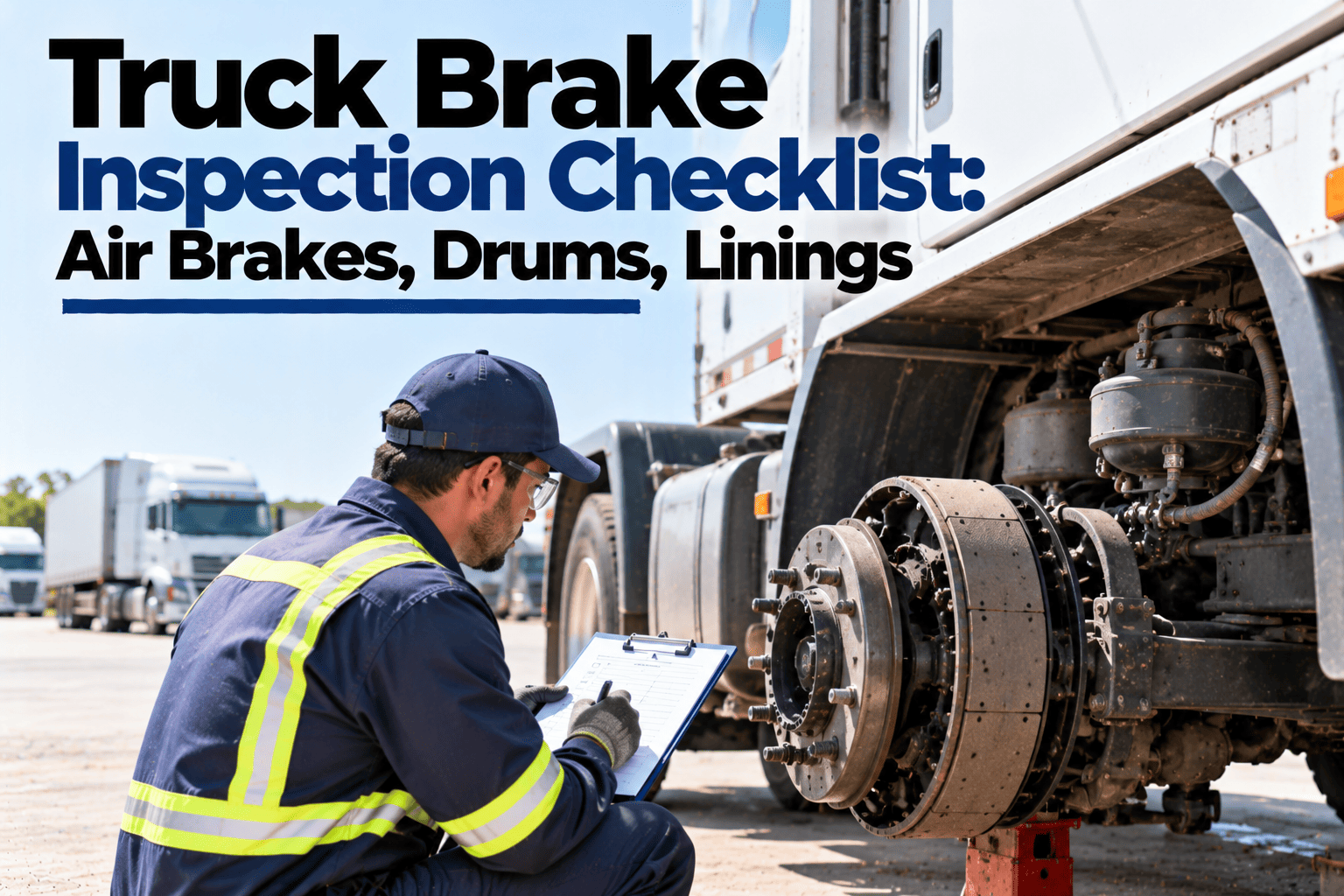
Almost every heavy truck and bus in India stops on air. When the system is healthy, a light press of the pedal brings 30 or 40 tonnes to a controlled halt. When it is neglected, water builds up in the tanks, valves stick, linings wear thin and the driver may only find out on a steep descent. Most air brake failures give warning signs long before they become dangerous. This guide explains how the system works, what to check on each part and how fleets track brake inspections and repairs in HVI.
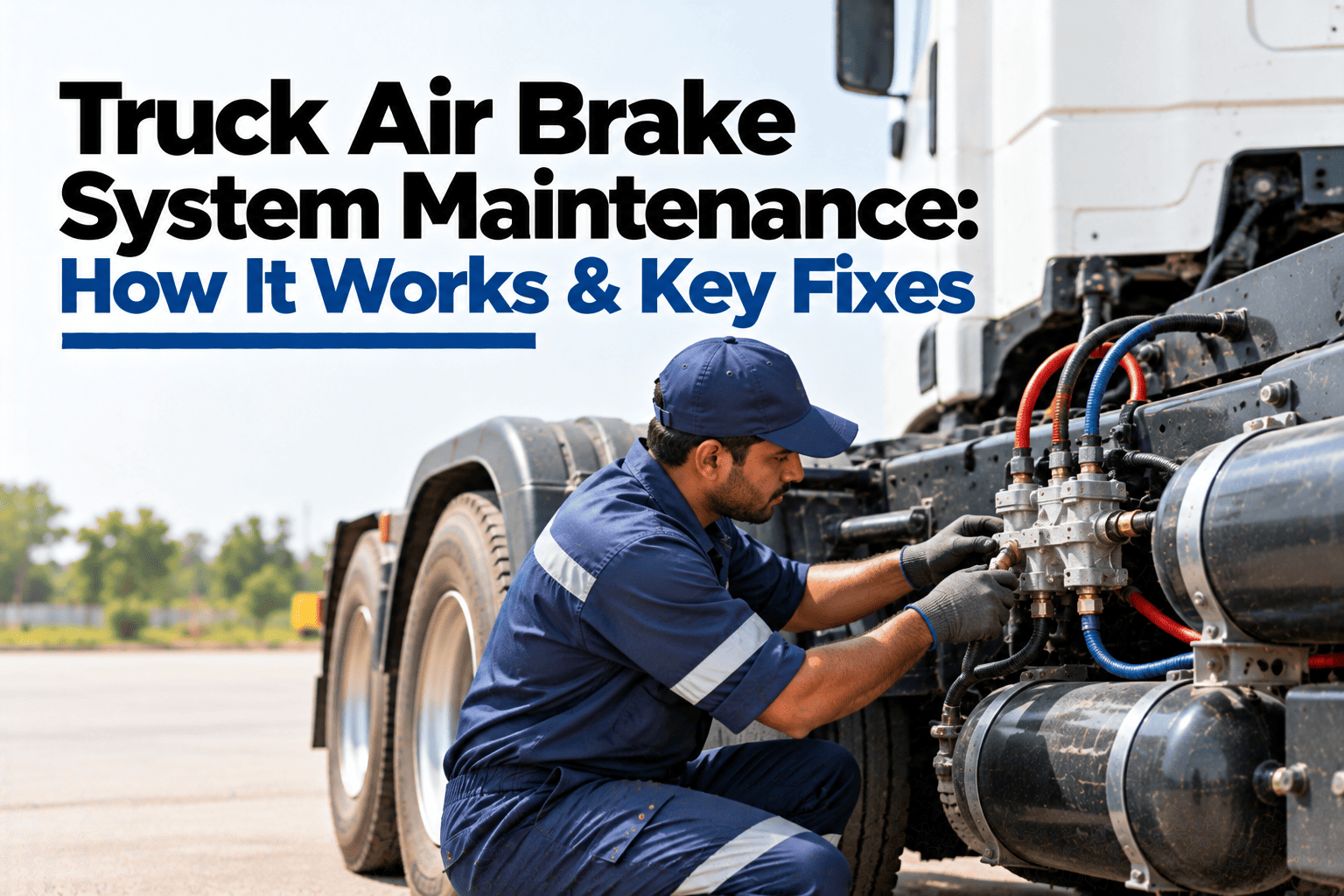
Truck Air Brake System Maintenance: How It Works and Key Fixes
Follow the air from compressor to brake drum, learn what fails at each stage and set up checks that keep every vehicle stopping safely.
How an Air Brake Works, Simply
Understanding the basics helps drivers and mechanics spot what is wrong when something feels different.
Make air
The engine-driven compressor pumps air, and the governor stops it at the set pressure.
Clean and store
The air dryer removes moisture, and tanks store the compressed air.
Send the signal
Pressing the pedal opens the foot valve, and relay valves send air to each wheel.
Apply the brake
Chambers push the slack adjuster, which turns the cam and presses linings onto the drum.
Parking and emergency braking use spring brakes, which apply when air pressure is released. That is why a big air loss can lock the wheels.
What Goes Wrong at Each Part
Most air brake problems trace back to a few parts. Check them at every service and whenever the driver reports a change.
| Part | What goes wrong | What to check |
|---|---|---|
| Compressor | Slow build-up, oil carry-over into the lines | Build-up time, oil in tanks, drive and mounting |
| Governor | Wrong cut-in or cut-out pressure | Pressures against the maker's settings |
| Air dryer | Saturated cartridge lets water through | Purge working, cartridge replaced on time |
| Air tanks | Water, oil and rust collect inside | Drain daily if manual, check auto drains |
| Valves | Sticking or leaking from dirt and moisture | Leaks, response and smooth release |
| Brake chambers | Diaphragm leaks, broken springs | Leaks, mountings and push rod travel |
| Slack adjusters | Out of adjustment or seized | Push rod stroke, greasing and free movement |
| Drums and linings | Worn linings, cracked or heat-damaged drums | Lining thickness, drum cracks and scoring |
The Driver's Daily Air Brake Check
A few minutes before the first trip catches most air brake faults. Follow the vehicle maker's procedure for the exact steps and limits.
Never Let a Brake Fault Go Unreported
HVI gives drivers a daily air brake checklist on their phone, raises a repair job for every failed item and keeps a brake history for every truck and bus.
Common Air Brake Problems and Likely Causes
When a driver reports one of these, start with the most likely causes listed.
Slow pressure build-up
Worn compressor, leaks, or a faulty governor or dryer.
Truck pulls to one side
Uneven adjustment, contaminated linings or a sticking chamber.
Brakes fade on descents
Overheated drums, worn linings or poor adjustment.
Brakes drag or stay on
Seized slack adjuster, sticking valve or weak return spring.
Water in the tanks
Saturated dryer cartridge or drains not working.
Low air warning while driving
A major leak or compressor fault. Stop safely and inspect.
Linings, Drums and Adjustment
These parts do the actual stopping. Small changes in them make a big difference to stopping distance.
- Measure lining thickness at every service
- Replace linings across a full axle, not one wheel
- Check push rod stroke to confirm adjustment
- Grease slack adjusters and cam shafts
- Linings at or below the maker's wear limit
- Cracks running across the drum surface
- Oil or grease on the linings
- Broken return springs or loose anchor pins
Many newer trucks and buses also have ABS. Keep the ABS warning lamp, wheel sensors and wiring in working order and repair faults promptly.
Brake Status Across the Fleet in HVI
A sample view. The last brake inspection, lining condition and leak check sit together for every vehicle.
| Vehicle | Last brake inspection | Lining condition | Air leak check | Status |
|---|---|---|---|---|
| TRK-05 | 6 days ago | Good | Passed | Safe |
| BUS-14 | 3 days ago | Near limit, rear axle | Passed | Plan replacement |
| TIP-09 | Today | Good | Leak at chamber | Repair before use |
Truck Air Brake FAQs
How does a truck air brake system work?
A compressor makes compressed air, which is dried and stored in tanks. When the driver presses the pedal, valves send air to brake chambers at each wheel. The chambers push slack adjusters that turn a cam and press the brake linings against the drums.
Why is water in air brake tanks dangerous?
Water causes rust inside tanks and valves, makes valves stick and can freeze in cold areas. It usually means the air dryer cartridge is saturated or drains are not working. Drain tanks as required and replace the dryer cartridge on schedule.
What causes brake fade on trucks?
Brake fade happens when drums and linings overheat, usually on long descents with heavy loads, and lose grip. Worn linings and poor adjustment make it worse. Using engine braking and keeping brakes well adjusted reduces the risk.
How often should truck brakes be inspected?
Drivers should check air pressure, warnings, leaks and the parking brake every day, with a detailed brake inspection at each service as the maker recommends. Teams that log brake checks in HVI see which vehicles are due.
How can a fleet keep track of brake repairs?
Record every brake inspection, lining change, chamber or valve repair and drum replacement against the vehicle. A clear history shows repeat problems and helps plan replacements before linings reach their limit. Book a demo to see brake tracking in HVI.
Every Vehicle Stopping Safely, Every Day
Run daily air brake checks, fix leaks and worn linings before they become dangerous and keep a complete brake history for every truck and bus in HVI.