Brakes are among the most important safety systems on any truck or bus, and Indian conditions work them hard: heavy loads, long ghat descents and stop-start city traffic. Brake problems rarely appear all at once. A lining wears faster on one wheel, a slack adjuster drifts out of range or a small air leak slowly grows, until one day the vehicle pulls, fades or will not stop in time. A regular inspection routine with recorded readings shows these trends early. This checklist covers what to check and how often, and shows how fleets record every brake check in HVI.
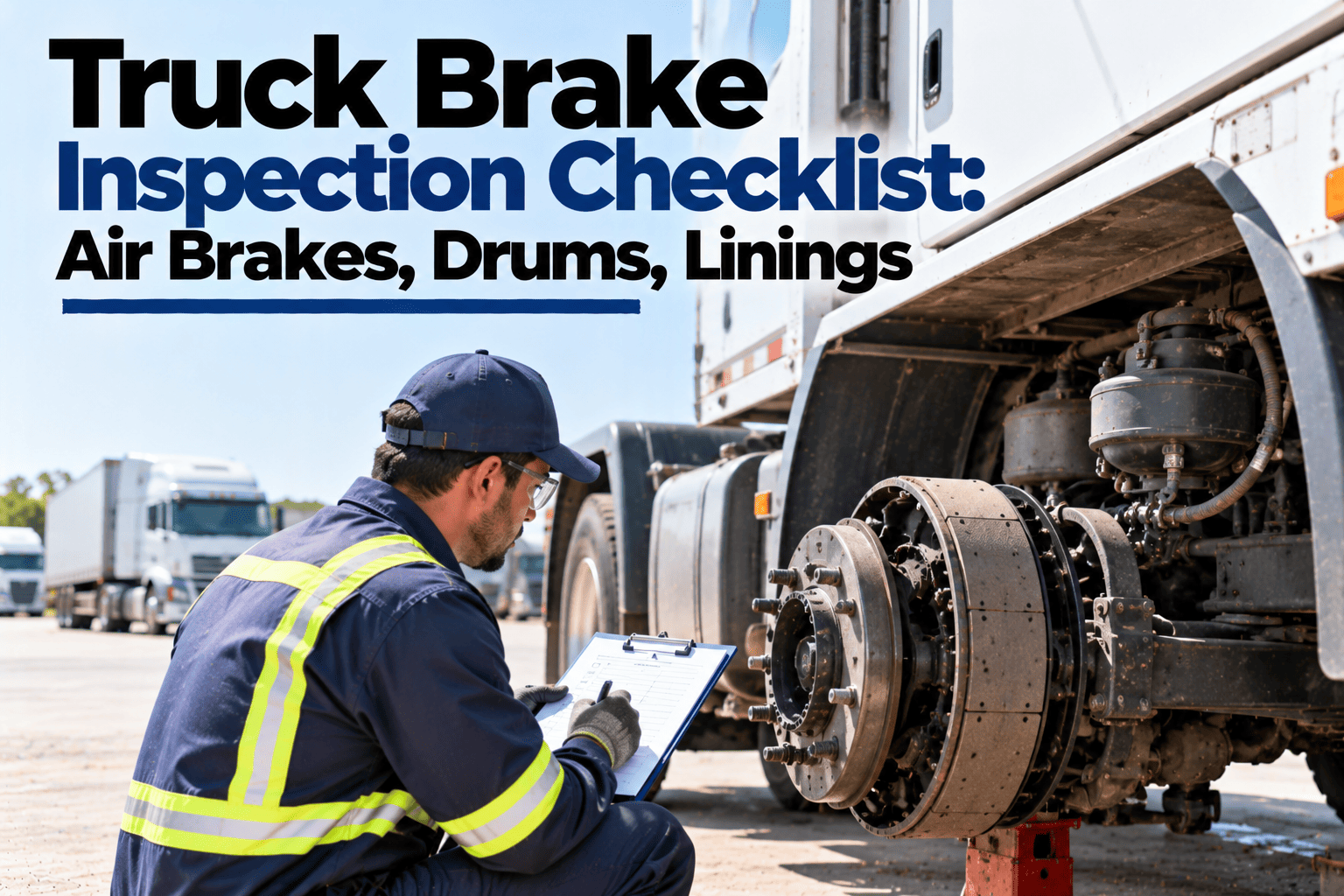
Truck Brake Inspection Checklist: Air Brakes, Drums, Linings
Compressor and governor, air tanks, valves, brake chambers, slack adjusters, drums, linings and ABS, with inspection frequency and replacement signs.
Daily Driver Brake Checks
The driver should complete these before the first trip. Do not drive if the air system or brakes fail any check.
How Often to Inspect
Shorten these intervals for tippers, hilly routes and heavily loaded vehicles. Always follow the vehicle maker's schedule.
| Interval | Who | What is checked |
|---|---|---|
| Daily | Driver | Air build-up, warnings, leaks, parking brake, tank draining |
| Weekly | Mechanic | Pushrod stroke, visible lining, hoses, chamber mountings |
| Every service | Workshop | Drums, linings, slack adjusters, S-cams, compressor and governor |
| Periodic | Workshop | Valves, air dryer, ABS sensors, full brake performance test |
Wheel-End Inspection Guide
Each wheel end must be checked and its readings recorded. Use the maker's limits for every measurement.
| Part | What to check | Replace or repair if |
|---|---|---|
| Brake linings | Thickness, cracks and contamination | Below maker's minimum, oily or cracked |
| Brake drums | Cracks, scoring and inside diameter | Cracked or worn beyond the limit |
| Slack adjusters | Pushrod stroke and operation | Stroke outside the maker's range |
| Brake chambers | Mountings, diaphragm leaks and pushrod | Leaking, loose or damaged |
| S-cam and bushes | Play and lubrication | Excessive play or seized cam |
| ABS sensors | Wiring and sensor position | Warning light or damaged wiring |
Every Brake Reading Recorded, Every Trend Visible
HVI records daily brake checks, lining readings and pushrod strokes for every wheel position, so uneven wear and overdue brake work show up before they become a failure on the road.
Warning Signs Drivers Should Report
Drivers notice brake problems first. Make it easy for them to report these straight away.
Pulling to one side
Uneven braking between wheels.
Check: adjusters and linings on that axleLonger stopping
Brakes need more pedal than usual.
Check: pushrod stroke and lining wearHot or smoking drum
One wheel much hotter than others.
Check: sticking brake or seized S-camSlow air build-up
Pressure takes longer to reach normal.
Check: compressor, governor and leaksChock the wheels and follow the maker's procedure before working on brakes. Spring brake chambers hold a powerful spring, so never open one, and cage it before removal as instructed. Automatic slack adjusters that need frequent manual adjustment point to a fault that must be found, not just reset.
Brake Status in HVI
A sample view across a fleet, showing the lowest lining reading and open brake defects.
| Vehicle | Type | Lowest lining | Open defect | Status |
|---|---|---|---|---|
| TR-104 | Haulage truck | 58% | None | In service |
| TP-212 | Tipper | 22%, rear right | Uneven wear on drive axle 2 | Book brake job |
| BS-031 | Staff bus | 40% | Air leak at front chamber | Off road |
Truck Brake Inspection FAQs
What should a driver check on air brakes every day?
Air pressure build-up, the low pressure warning, leaks with the brakes applied, the parking brake, air tank draining, the ABS warning light, a low-speed brake test and air lines.
How often should truck brakes be inspected?
Daily by the driver, weekly by a mechanic and in full at every service, with shorter intervals for tippers, hilly routes and heavy loads, following the maker's schedule.
When should brake linings be replaced?
When they reach the maker's minimum thickness, or earlier if they are cracked or contaminated with oil or grease. Replace linings across an axle together to keep braking even.
Why does a truck pull to one side when braking?
Usually because one wheel brakes harder than the other, from a badly adjusted slack adjuster, worn or oily linings or a sticking brake. Teams that record readings in HVI can spot uneven wear early.
Can brake inspections be recorded digitally?
Yes. Daily checks, lining readings and pushrod strokes can be recorded for each wheel with photos, building a full brake history. Book a demo to see brake records in HVI.
Brakes You Can Trust on Every Trip
Check air brakes daily, inspect wheel ends on schedule, record every reading and act on uneven wear in HVI. Safer stops, fewer brake failures and longer brake life.