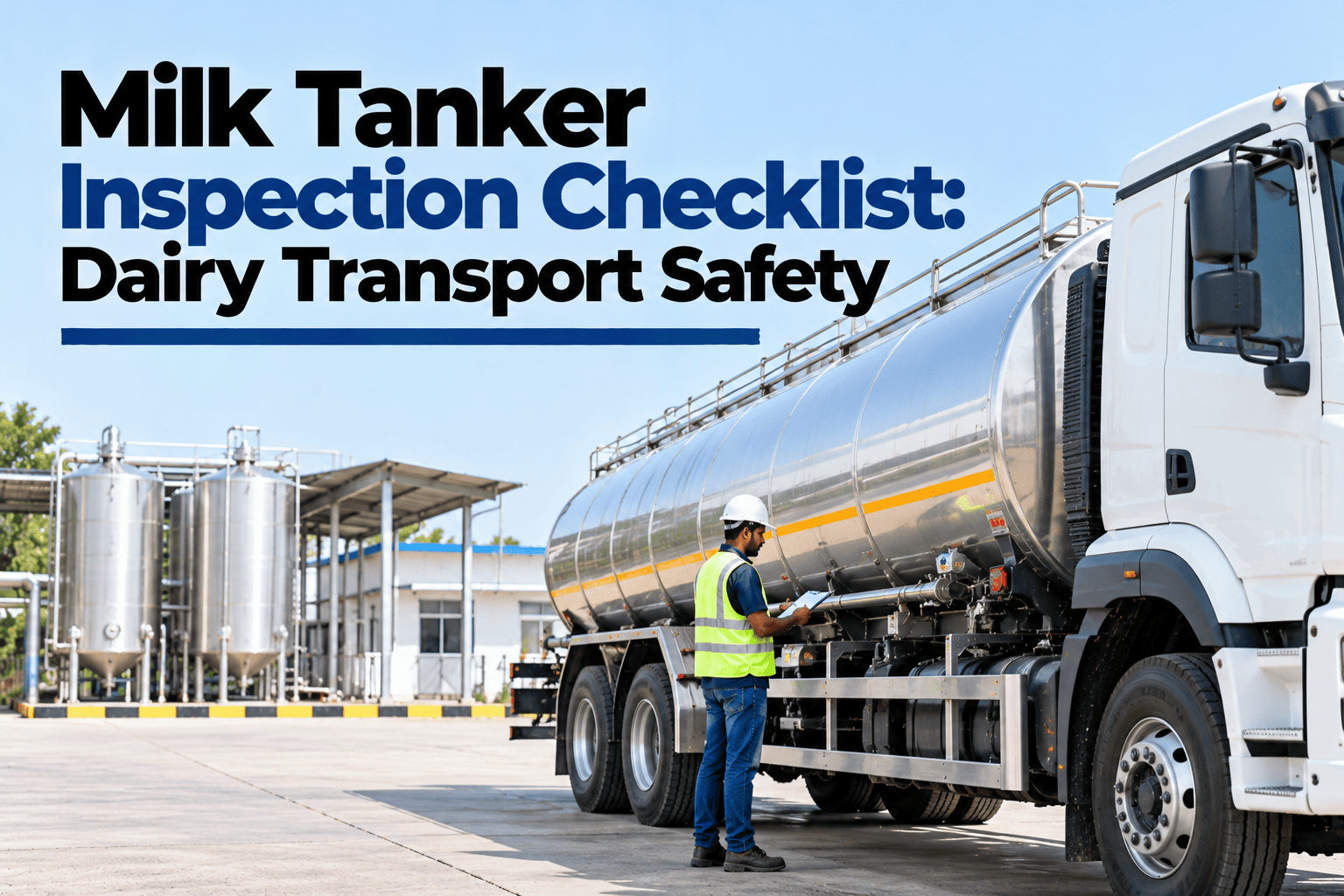
A milk tanker carries a product that spoils fast and is checked closely at every step. If the tank warms up, a seal leaks or cleaning was skipped, a full load can be rejected at the plant and a whole route's collection lost. The truck itself also has to run reliably on early-morning village routes, often on poor roads. That means a milk tanker needs two kinds of checks every day: hygiene checks on the tank and mechanical checks on the vehicle. This checklist covers both, and shows how dairies keep tanker inspection and cleaning records in HVI.
Milk Tanker Inspection Checklist: Dairy Transport Safety
Tank insulation and temperature, valves, seals and manholes, cleaning records, plus brakes, tyres and lights, checked before every trip.
The Daily Checklist
Complete both parts before the tanker leaves for its route. Report any defect before loading milk.
- Tank cleaned and cleaning record signed
- No milk residue or smell inside the tank
- Manhole gaskets clean and undamaged
- Outlet valves clean and closing fully
- Hoses and couplings capped and clean
- Tamper seals ready for fitting after loading
- Engine oil, coolant and fuel levels
- Brakes, air pressure and parking brake
- Tyres, wheel nuts and spare
- Lights, indicators, horn and wipers
- Tracking device and temperature display working
- Vehicle and driver documents in the cab
Tank Components to Inspect
The tank is a food-contact surface and an insulated container. Both jobs depend on these parts.
| Component | What to check | Why it matters |
|---|---|---|
| Tank shell and insulation | Dents, damaged cladding, wet insulation | Damaged insulation lets milk warm up |
| Manholes and gaskets | Seal condition, clamps and locks | Leaks let in dust and warm air |
| Outlet valves | Smooth operation, full shut-off, cleanliness | Dirty valves contaminate milk |
| Pump and hoses | Seals, couplings and storage caps | Open hoses collect dirt |
| Compartment dividers | Welds and seals between compartments | Keeps different milk grades apart |
| Temperature sensor | Reading against a reference thermometer | Wrong readings hide warming milk |
Cleaning Every Tanker After Every Trip
Many dairies use a clean-in-place routine. Follow your plant's approved procedure, chemicals and temperatures.
Pre-rinse
Rinse out milk residue straight after unloading.
Detergent wash
Circulate cleaning solution as specified.
Rinse and sanitise
Rinse, then sanitise as your plant requires.
Record and seal
Sign the cleaning record and close the tank.
Only food-grade lubricants should be used on valves, seals and fittings that can come into contact with milk.
Inspection and Cleaning Records Ready for Every Audit
HVI records daily tanker checks, cleaning sign-offs and defects with photos for every tanker, so records are ready for dairy audits and quality checks.
Why Milk Warms Up in Transit
When milk arrives warmer than it left, one of these is usually the cause.
Damaged insulation
Dents or wet insulation let heat in.
Leaking manholes
Worn gaskets let warm air enter.
Long waits
Delays at collection points or the plant.
Breakdowns on route
A stopped tanker in the sun warms fast.
Milk Tanker Status in HVI
A sample morning view across a dairy's tanker fleet.
| Tanker | Route | Cleaning record | Daily check | Status |
|---|---|---|---|---|
| MT-03 | Route 7, north villages | Signed | Passed | Ready to load |
| MT-06 | Route 2, river belt | Signed | Manhole gasket worn | Replace gasket today |
| MT-09 | Route 4, highway | Missing | Passed | Clean before loading |
Milk Tanker Inspection FAQs
What should be checked on a milk tanker every day?
The cleaning record, tank interior, manhole gaskets, valves, hoses and seals for hygiene, plus engine fluids, brakes, tyres, lights, the tracking device and the temperature display for the vehicle.
How often should a milk tanker be cleaned?
After every trip, as soon as possible after unloading, using your dairy's approved cleaning procedure. Each cleaning should be recorded before the tanker is loaded again.
Why does milk arrive warmer than it was loaded?
Common causes are damaged or wet insulation, leaking manhole gaskets, long waits at collection points and breakdowns on route. Checking insulation and seals daily helps prevent it.
What records should a dairy keep for each tanker?
Daily inspections, cleaning records, temperature readings, seal numbers and maintenance history. Teams that keep records in HVI have them ready for audits.
Can tanker checks be done on a phone?
Yes. Drivers and plant staff complete hygiene and vehicle checks with photos, and the dairy sees which tankers are ready to load. Book a demo to see milk tanker checklists in HVI.
Cold, Clean Milk on Every Route
Check every milk tanker for hygiene and safety, record every cleaning and track every defect in HVI. Fewer rejected loads, reliable routes and records ready for every audit.