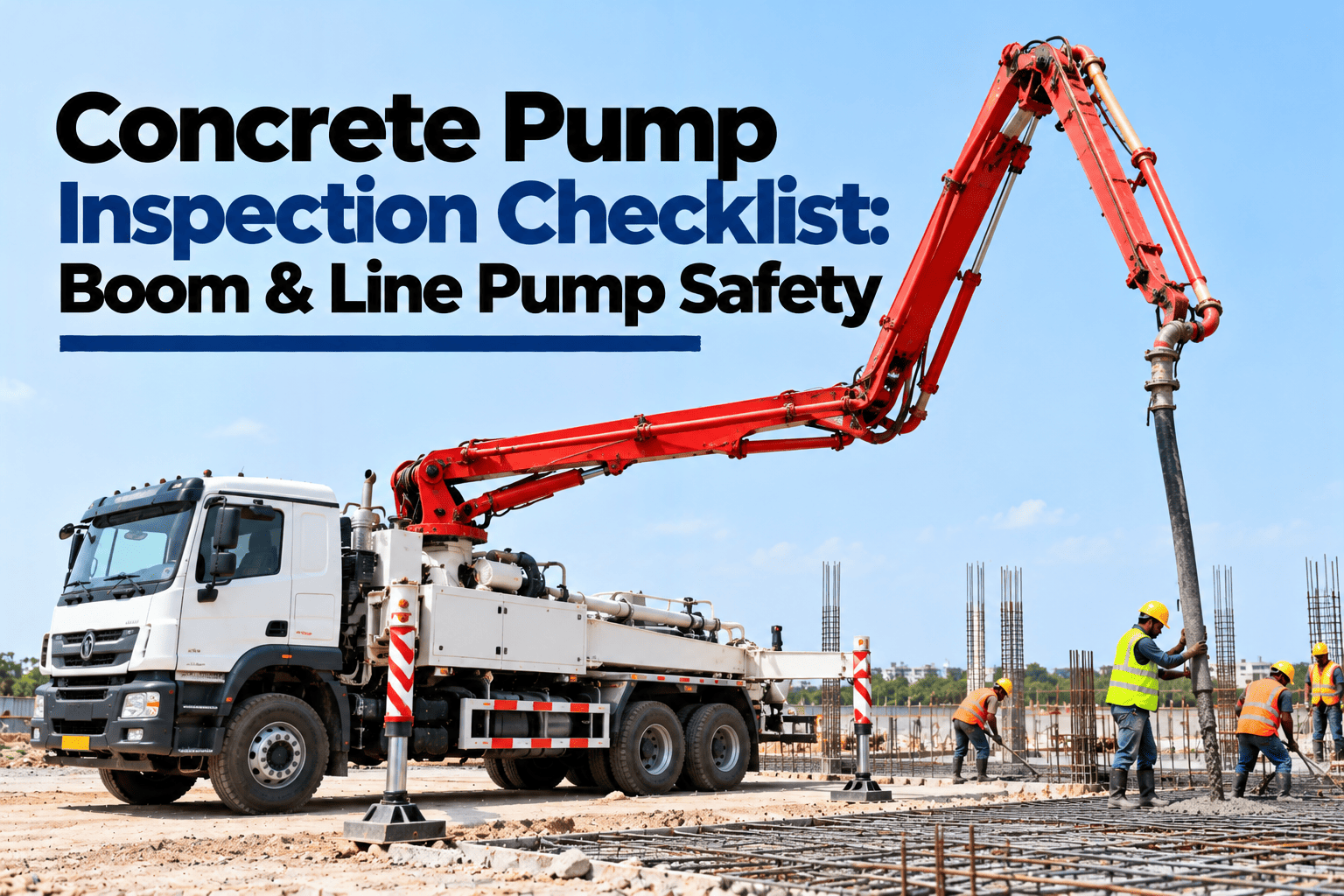
A concrete pump pushes heavy, abrasive concrete through steel pipe at high pressure, hour after hour. When a wear part fails or a clamp lets go, the result can be a blocked line, a burst pipe or a hose whipping across a crowded slab. Many of these problems start in the pump unit, at the hopper, S-valve and wear plate. This checklist covers boom and line pumps from hopper to hose, and shows how contractors record every pump inspection in HVI.
Concrete Pump Inspection Checklist: Boom and Line Pump Safety
Hopper and agitator, S-valve and wear plate, pipelines and clamps, outriggers, hydraulics, remote controls and cleaning, checked before every pour.
Pre-Pour Checklist
The operator should complete these before every pour. Do not pump if any safety item fails.
Pump Unit Wear Parts
These parts wear with every cubic metre pumped. Check them regularly and follow the pump maker's wear limits.
| Part | What to check | Signs it needs attention |
|---|---|---|
| Wear plate and cutting ring | Gap between them, grooves and wear | Loss of pressure, concrete leaking back |
| S-valve | Body wear, seals and swing action | Slow or rough switching, leaks |
| Delivery pistons | Piston seals and water box condition | Cement or grout in the water box |
| Delivery cylinders | Bore wear and scoring | Falling output, rough strokes |
| Hopper and agitator | Shell, paddles and seals | Concrete build-up, worn paddles |
| Outlet and reducer | Wall thickness and clamp faces | Thin spots, damaged clamp collars |
Concrete or grout in the water box is an early sign that the delivery piston seals are wearing. Change the water and investigate before the problem grows.
Preventing Blockages
Blockages waste concrete, stop the pour and create pressure hazards when the line is cleared.
Prime the line
Lubricate the pipeline before concrete as specified.
Check the mix
Reject concrete that is too stiff or segregated.
Keep it moving
Avoid long stops with concrete in the line.
Watch the pressure
Rising pressure is an early warning.
Pressure Safety
A concrete line holds dangerous pressure even after the pump has stopped.
Never open a clamp, remove a pipe or reach into the hopper while the line may be under pressure. Release pressure by reversing the pump as the maker instructs, stop the pump and isolate it first. Keep people clear of the end hose when starting to pump and when clearing blockages.
Every Pump Checked Before Every Pour
HVI gives pump operators this checklist on their phone, records wear part changes and defects with photos and keeps a full history for each concrete pump.
Cleaning After Every Pour
Concrete left in the pump or line sets hard and causes the next day's blockage.
Clean the pipeline
Push out concrete with a cleaning ball as instructed.
Wash the hopper
Remove all concrete from hopper and agitator.
Flush the S-valve
Clear the valve and outlet area.
Clean the clamps
Remove concrete from clamps and couplings.
Concrete Pump Status in HVI
A sample view across a pumping fleet, showing each pump's check and open defects.
| Pump | Type | Pre-pour check | Open defect | Status |
|---|---|---|---|---|
| CP-01 | Boom pump | Passed | None | Ready to pump |
| CP-03 | Line pump | Passed | Grout in the water box | Check piston seals |
| CP-04 | Boom pump | Failed | Hopper grille missing | Do not pump |
Concrete Pump Inspection FAQs
What should be checked on a concrete pump before each pour?
The hopper grille and agitator, water box, hydraulic oil and leaks, every pipeline clamp, the end hose and safety rope, the remote control and emergency stop, and outriggers or pipeline supports.
Why is there concrete in the water box?
Cement or grout in the water box usually means the delivery piston seals are wearing. Change the water and have the pistons checked before output falls or damage spreads.
What causes concrete pump blockages?
Common causes are poor priming, concrete that is too stiff or segregated, long stops with concrete in the line, and worn wear parts. Watching the pressure helps spot a blockage forming.
When should the wear plate and cutting ring be changed?
When wear exceeds the pump maker's limits or the gap between them causes pressure loss. Teams that log wear parts in HVI can plan changes before they fail.
Can concrete pump checks be done on a phone?
Yes. Operators complete the pre-pour checklist with photos, and the fleet manager sees which pumps are ready. Book a demo to see concrete pump checklists in HVI.
Fewer Blockages, Safer Pours
Check every concrete pump before each pour, track wear parts, clean thoroughly and record every defect in HVI. Smoother pumping, fewer bursts and safer crews.