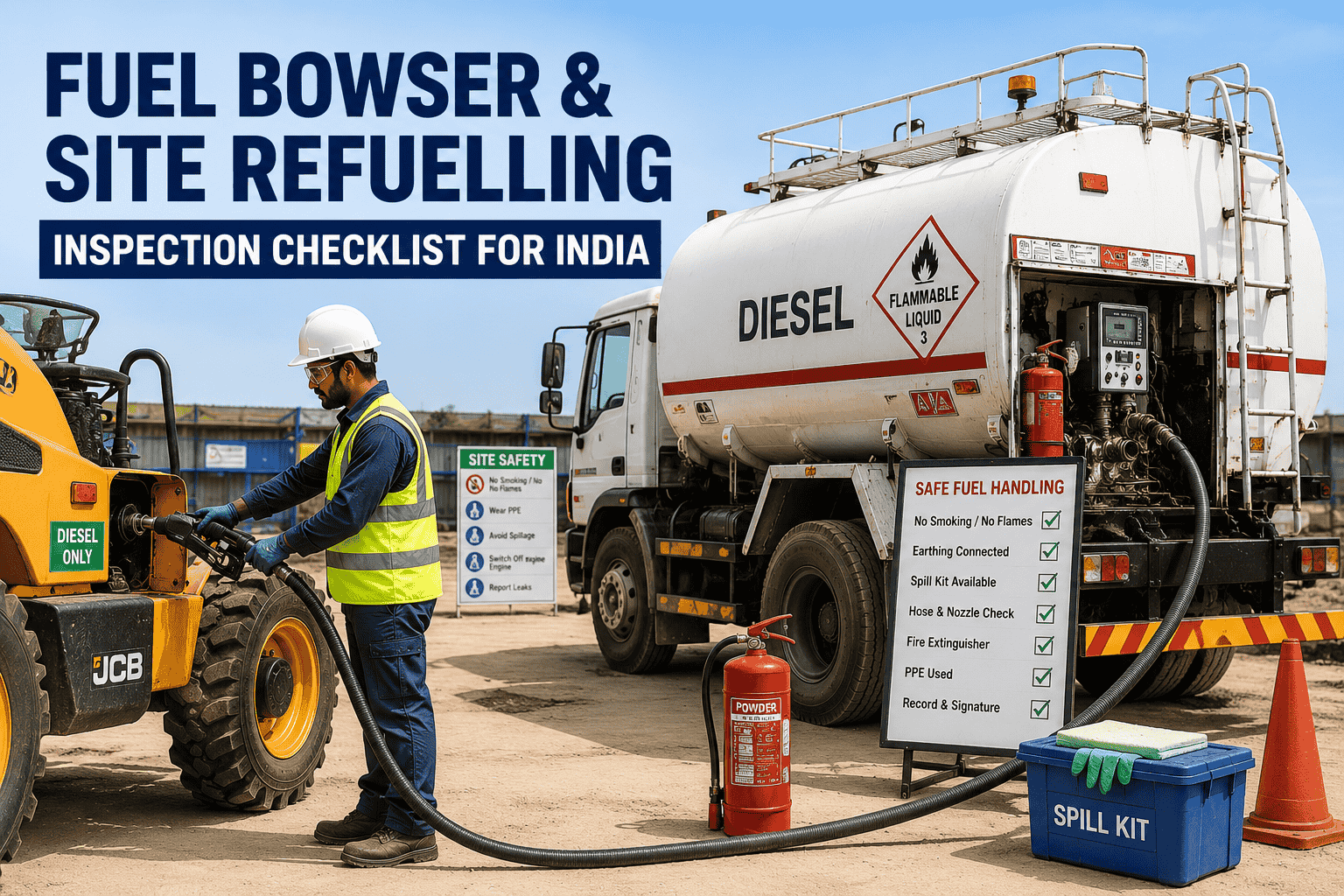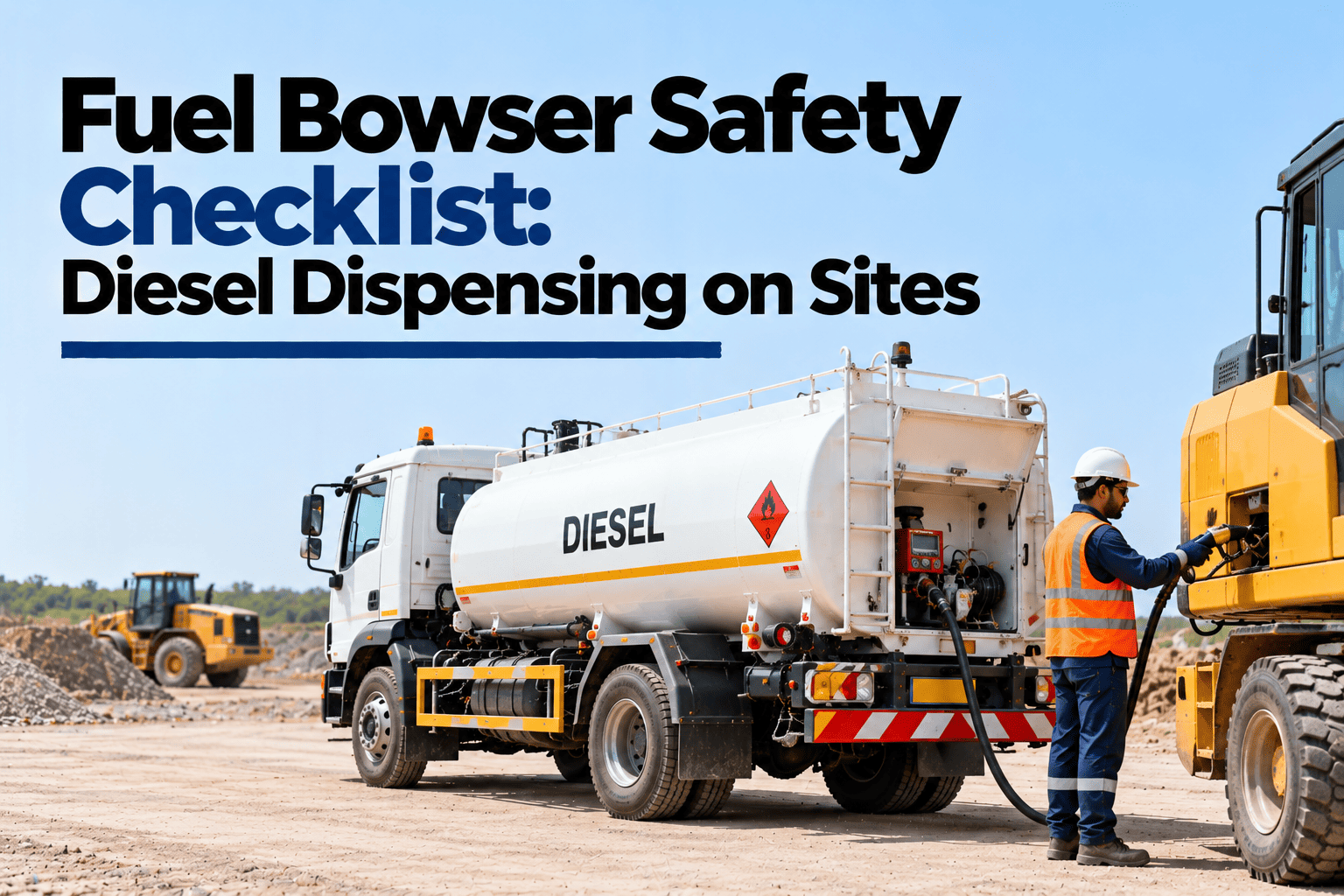
On a large construction or mining site, the fuel bowser carries thousands of litres of diesel from machine to machine every day. That makes it a major fire risk, and an easy place for fuel to go missing. A leaking hose, a missing earth lead or a faulty meter can mean a fire, a spill or lakhs lost unnoticed. A daily check, a clear issue log and a simple stock reconciliation keep every litre safe and counted. This checklist covers all three, and shows how sites link bowser issues to machines in HVI.
Fuel Bowser Safety Checklist: Diesel Dispensing on Sites
Tank and vents, pump and meter, hoses and nozzles, earthing and static discharge, fire safety, issue logs and licence requirements.
Daily Pre-Use Checklist
The bowser driver or operator should complete these before the first issue of the day. Do not dispense if any safety item fails.
Component Inspection Guide
Inspect these regularly alongside the daily check. Follow the bowser maker's manual and your approval conditions.
| Component | What to check | Warning signs |
|---|---|---|
| Tank and baffles | Shell, welds, mountings and manhole seal | Seepage, corrosion, loose mountings |
| Vents and flame arrestor | Clear passage, mesh intact | Blocked or damaged mesh |
| Pump | Seals, drive and flow rate | Leaks, noise, slow flow |
| Meter | Accuracy against a measured volume, seal | Readings drifting, broken seal |
| Hose and reel | Hose condition, couplings, reel spring | Cracks, leaks, hose left on the ground |
| Earthing | Lead, clamp and continuity | Broken lead, corroded clamp |
| Vehicle | Brakes, tyres, lights and exhaust | Exhaust leaks near the tank, worn tyres |
Fire and Static Safety
Diesel is less volatile than petrol, but spills, hot exhausts and static sparks can still start fires.
No smoking or naked flames within the area set by your site rules. Connect the earthing lead before dispensing, stop the machine being refuelled and follow your refuelling procedure. Never leave the nozzle unattended, and clean up spills straight away with the spill kit.
- Park the bowser on level ground
- Place warning signs and keep people clear
- Connect the earthing lead
- Keep a fire extinguisher within reach
- Stay with the nozzle at all times
- Avoid overfilling the machine tank
- Rewind the hose, never leave it on the ground
- Record the issue straight away
Every Litre Linked to a Machine
HVI records bowser checks and fuel issues against each machine and its hour meter, so unusual fuel use and stock gaps stand out straight away.
Keeping an Accurate Issue Log
A complete log for every fill is the most reliable way to know where fuel really goes.
Machine ID
Record which machine was filled.
Hour or km reading
Note the meter at the time of filling.
Litres issued
Take the figure from the bowser meter.
Sign-off
Operator and bowser driver both confirm.
Licences and Approvals
Storing and dispensing diesel on site can need approvals under petroleum rules administered by PESO and local authorities. Requirements depend on the quantity, the type of bowser and how it is used.
Check approvals
Confirm what your bowser and site storage need.
Keep copies on site
Approvals and certificates ready for inspection.
Track renewals
Set reminders before documents expire.
Train drivers
Only trained staff should operate the bowser.
Fuel Use by Machine in HVI
A sample weekly view. Comparing litres per hour across similar machines shows where to look first.
| Machine | Hours worked | Litres issued | Litres per hour | Status |
|---|---|---|---|---|
| EX-02 excavator | 54 h | 1,080 L | 20.0 | Normal |
| EX-05 excavator | 52 h | 1,196 L | 23.0 | Check idling |
| EX-07 excavator | 38 h | 1,140 L | 30.0 | Investigate |
Fuel Bowser Safety FAQs
What should be checked on a fuel bowser every day?
Leaks from the tank and pipework, vents and flame arrestor, hose and nozzle, earthing lead, meter and seal, fire extinguishers, spill kit and warning signs, plus the vehicle's brakes, tyres and lights.
Why does a fuel bowser need earthing?
Fuel flowing through hoses can build up static electricity. Connecting the earthing lead before dispensing lets the charge drain safely and reduces the risk of a spark.
Does a diesel bowser need a PESO licence?
Approvals under petroleum rules may be needed depending on the quantity stored, the bowser type and its use. Check current requirements with PESO and local authorities before operating.
How do I reconcile bowser fuel stock?
Add fuel received to the opening stock, subtract fuel issued, and compare the result with a dip reading. Teams that log issues in HVI can spot gaps quickly.
How can I tell if fuel is being misused?
Compare litres per hour across similar machines and look for unusually high figures, issues without hour readings or stock gaps. Book a demo to see fuel tracking in HVI.
Safe Fuelling, Every Litre Counted
Check fuel bowsers every day, dispense safely, log every issue against its machine and reconcile stock in HVI. Fewer fire risks and far less fuel going missing.