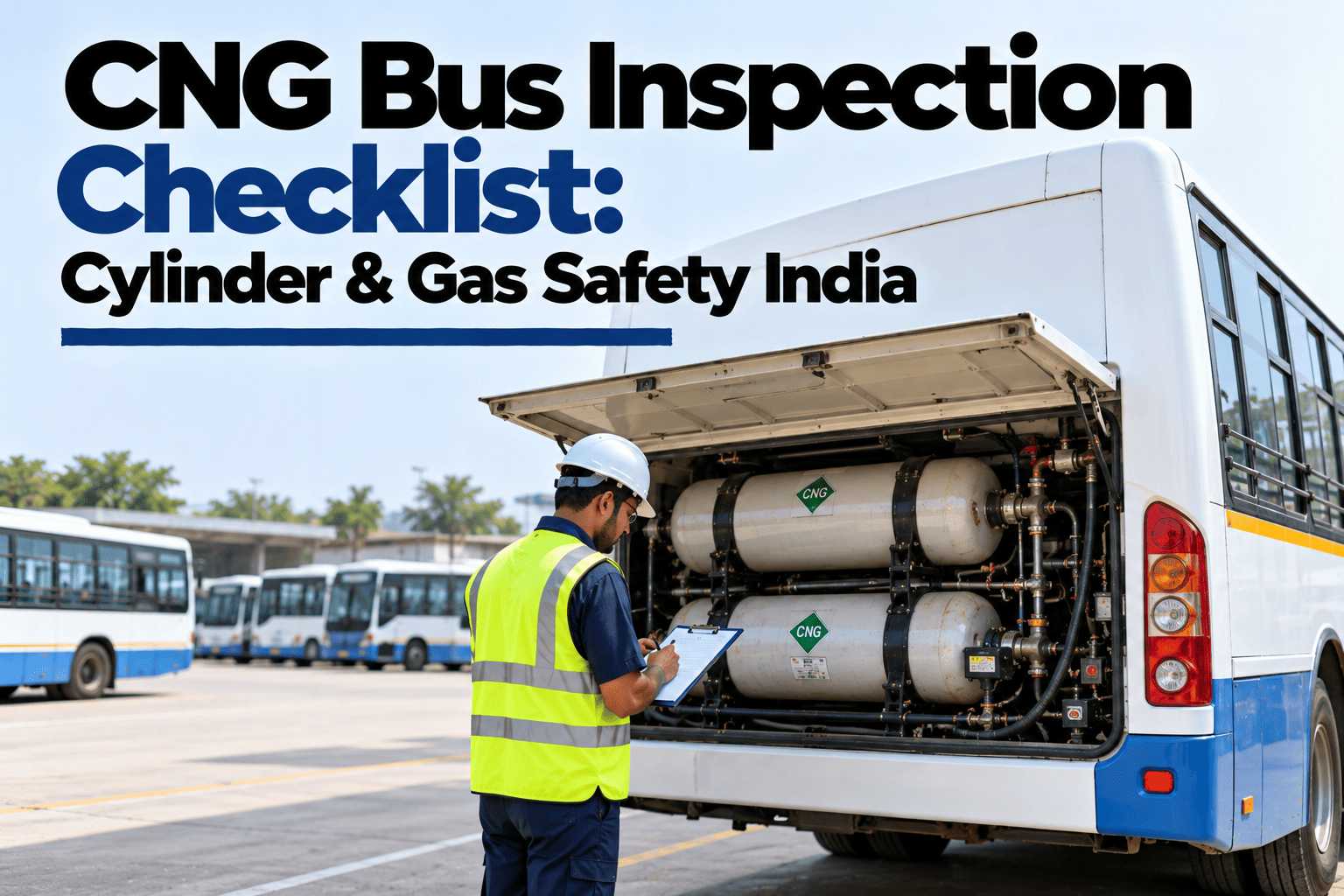
Many Indian city buses, school buses and light trucks now run on CNG, which is cleaner and cheaper than diesel but stored at very high pressure. A loose fitting, a chafed high-pressure line or a cylinder past its test date can turn into a fire hazard with passengers on board. Many of these risks can be found early with simple daily checks and careful records of every cylinder's testing. This checklist covers what drivers, mechanics and depot staff should look at, and shows how operators keep CNG cylinder records in HVI.
CNG Bus Inspection Checklist: Cylinder and Gas Safety India
Cylinders and mounting, valves, regulators, high-pressure lines, leak detection, cylinder testing records and depot fire safety.
Daily Driver Checks
Drivers should complete these before taking the bus out. Report any gas smell or damage straight away.
CNG System Inspection Guide
Trained mechanics should inspect these regularly. Follow the vehicle maker's manual and applicable gas cylinder rules.
| Component | What to check | Take off road if |
|---|---|---|
| Cylinders | Surface damage, corrosion, test date marking | Dents, cuts, heavy corrosion or test overdue |
| Cylinder brackets | Straps, mountings and rubber pads | Loose, cracked or missing straps |
| Cylinder valves | Operation, leaks and protective cover | Leaking or damaged valve |
| Pressure relief devices | Condition and vent lines | Damaged or blocked device or vent |
| High-pressure lines | Routing, clamps and chafing | Chafed, kinked or leaking line |
| Regulator and filters | Leaks, mounting and filter condition | Leaks or unstable pressure |
| Filling receptacle | Seal, dust cap and check valve | Leaks after filling |
Checking for Leaks Safely
CNG leaks are often small and silent. Check every joint carefully during each inspection.
Ventilated area
Park outdoors, away from ignition sources.
Use a detector
Use a gas detector or leak test solution.
Check every joint
Valves, fittings, regulator and receptacle.
Record and repair
Log the result and fix any leak at once.
Never look for a leak with a flame. If gas is smelt on the road, stop safely, switch off the engine, get passengers off and away from the bus, keep everyone away from ignition sources and call for help. Do not restart until the leak has been found and repaired.
Every Cylinder Tracked, Every Check Recorded
HVI stores each CNG cylinder's test dates and certificates, reminds you before tests fall due and records daily checks and leak tests with photos for every bus.
Depot Fire Safety
A depot holds many CNG buses close together, so its layout and routines matter as much as each bus.
Ventilation
Keep workshops and parking well ventilated, as CNG rises.
No ignition sources
Control hot work and smoking near buses.
Fire equipment
Extinguishers and hydrants checked and accessible.
Trained staff
Drivers and mechanics know the gas emergency plan.
CNG Fleet Status in HVI
A sample depot view, combining cylinder test status with the latest checks.
| Bus | Route | Cylinder test | Last leak check | Status |
|---|---|---|---|---|
| Bus 12 | Route 41 | Valid, 14 months left | No leaks | On route |
| Bus 21 | Route 7 | Due in 3 weeks | No leaks | Book cylinder test |
| Bus 27 | Route 15 | Overdue | Not checked | Off road |
CNG Bus Inspection FAQs
What should be checked on a CNG bus every day?
Drivers should check for any gas smell or hissing, damage around the cylinders, the gas pressure gauge, fire extinguishers, warning lights, brakes, tyres, lights and emergency exits before leaving the depot.
How often do CNG cylinders need testing?
CNG cylinders must be periodically tested at the intervals set under the Gas Cylinders Rules and by the testing station. Check the test date marked on each cylinder and its certificate, and never run a bus with an overdue cylinder.
How should CNG leaks be detected?
Use a gas detector or a leak test solution on every joint, valve and fitting, in a well-ventilated area away from ignition sources. Never use a flame to look for a leak.
What should a driver do if they smell gas?
Stop safely, switch off the engine, get passengers off and away, keep ignition sources away and call for help. Teams that record incidents in HVI can track repeat problems.
Can CNG cylinder records be kept digitally?
Yes. Each cylinder's test dates and certificates can be stored against the bus, with reminders before tests fall due. Book a demo to see CNG fleet records in HVI.
Safe CNG Buses on Every Route
Run daily CNG checks, test for leaks safely, track every cylinder's test date and keep depot fire safety tight with HVI. Safer passengers and records ready for every audit.