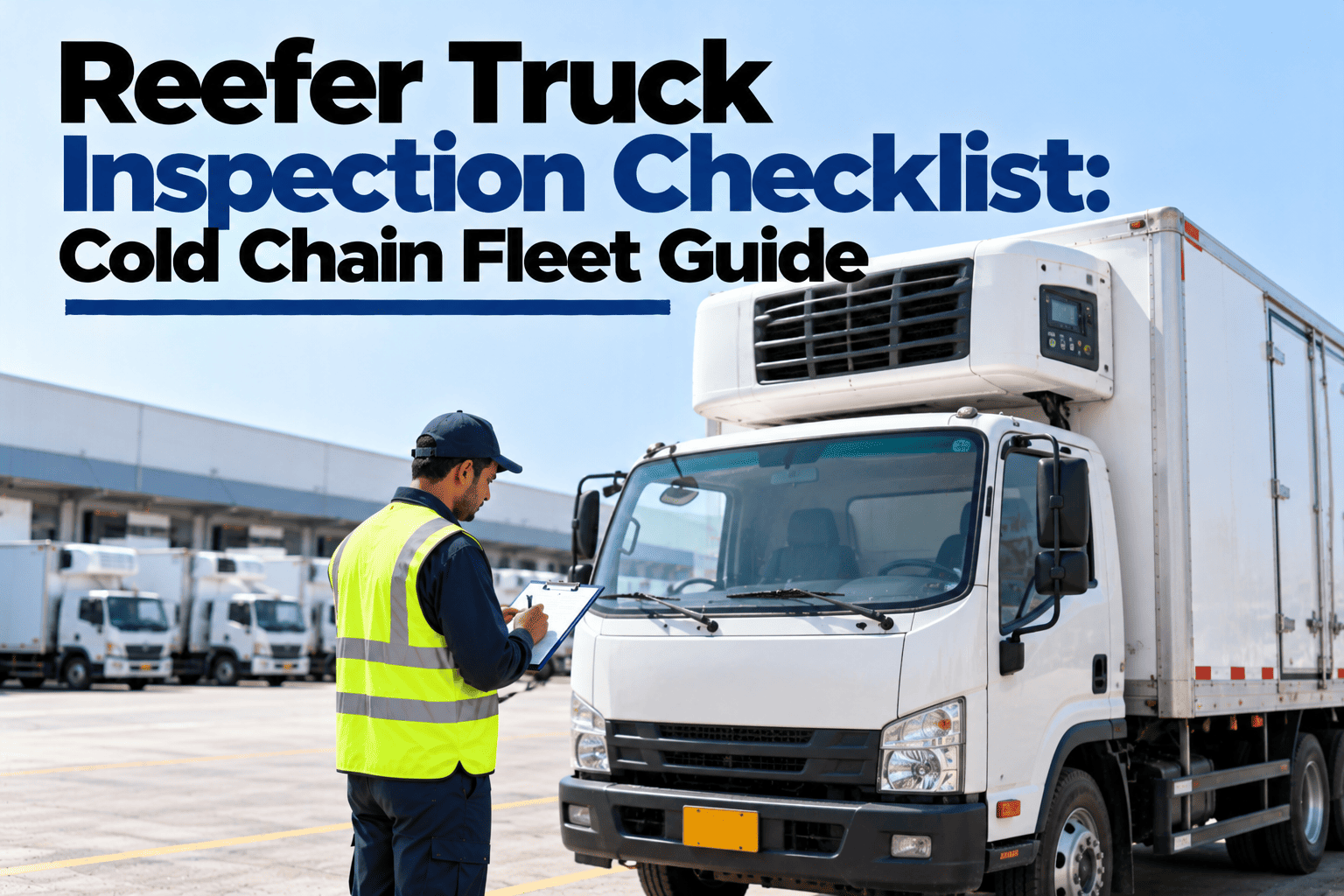
In cold chain logistics, the refrigeration unit is the reason the truck exists. If it fails on the highway, frozen food or medicines can be ruined within hours. Many temperature problems start before the truck even leaves: a body that was not pre-cooled, a torn door seal or a reefer running low on fuel. A careful pre-trip inspection and a complete temperature record protect both the load and the contract. This checklist covers them for food and pharma fleets, and shows how operators store every trip's reefer checks in HVI.
Reefer Truck Inspection Checklist: Cold Chain Fleet Guide
Refrigeration unit, pre-cooling, temperature logs and data loggers, door seals and insulation, reefer fuel and alarms, plus standard vehicle checks.
Pre-Trip Checklist
Complete both parts before loading. Do not load if the reefer cannot reach and hold the set temperature.
- Reefer starts and runs without alarms
- Set point matches the load instructions
- Reefer fuel tank filled
- Condenser and evaporator coils clean
- Door seals and hinges in good condition
- Body walls, floor and drains undamaged
- Data logger working and set for the trip
- Engine oil, coolant and fuel levels
- Brakes and parking brake
- Tyres, wheel nuts and spare
- Lights, indicators and horn
- Battery and charging system
- Tracking device working
- Vehicle and trip documents on board
Pre-Cooling and Loading
A reefer is built to hold temperature, not to cool warm product. Get the body and the load right before the doors close.
Pre-cool the body
Run the reefer until the body reaches the set point.
Check the product
Confirm the load is already at the right temperature.
Load quickly
Keep air gaps for circulation and close doors fast.
Start the log
Start the data logger and record the start reading.
Loading warm product into a reefer is a common cause of out-of-range temperatures, even when the unit itself is working perfectly.
Refrigeration Unit Inspection Guide
Follow the reefer maker's service schedule. These are the parts that often cause temperature problems.
| Part | What to check | Warning signs |
|---|---|---|
| Condenser coil | Dust, leaves and bent fins | Unit struggles in hot weather |
| Evaporator coil | Ice build-up and cleanliness | Weak airflow inside the body |
| Belts and fans | Tension, wear and fan blades | Noise, slow cooling |
| Defrost system | Defrost cycles and drains | Ice blocks coils, water on the floor |
| Reefer engine | Oil, fuel and filters | Hard starting, shutdowns |
| Controller and alarms | Set point, sensors and alarm codes | Wrong readings, repeated alarms |
| Data logger | Battery, calibration and download | Gaps in the record |
Every Reefer Trip Checked and Recorded
HVI gives drivers a pre-trip reefer checklist on their phone, stores temperature readings and defects with photos, and keeps every trip's record ready for customer audits.
Why Loads Go Out of Range
Many temperature excursions trace back to a handful of avoidable causes.
Long door openings
Warm air rushes in at every stop.
Fix: plan stops, use strip curtainsWorn door seals
Cold air leaks out all trip.
Fix: check and replace sealsBlocked airflow
Cargo packed against the evaporator.
Fix: leave gaps for air to circulateReefer runs out of fuel
The unit stops mid-trip.
Fix: fill the reefer tank every tripReefer Fleet Status in HVI
A sample view across a cold chain fleet.
| Truck | Load | Pre-trip check | Temperature record | Status |
|---|---|---|---|---|
| RF-02 | Frozen food | Passed | In range all trip | Delivered |
| RF-05 | Vaccines | Passed | Short excursion at a stop | Review with customer |
| RF-07 | Dairy | Door seal torn | Not started | Do not load |
Reefer Truck Inspection FAQs
What should be checked on a reefer truck before each trip?
The reefer unit and alarms, set point, reefer fuel, coils, door seals, body condition and data logger, plus the truck's fluids, brakes, tyres, lights, battery, tracking device and documents.
Why should a reefer body be pre-cooled?
A warm body draws heat into the load as soon as it is loaded. Pre-cooling brings the body to the set point first, so the reefer only has to hold the temperature.
Can a reefer cool down warm product?
Reefers are designed to hold temperature, not to bring warm product down quickly. Product should be at the right temperature before it is loaded.
How long should temperature records be kept?
Keep them as long as your customers and quality rules require, which is often longer for pharma than for food. Teams that store records in HVI can find any trip quickly.
Can reefer checks be done on a phone?
Yes. Drivers complete the pre-trip checklist and record start temperatures with photos, and managers see which trucks are ready to load. Book a demo to see reefer checklists in HVI.
Cold All the Way, Every Trip
Check every reefer before loading, pre-cool properly, keep complete temperature records and track every defect in HVI. Fewer spoiled loads and stronger customer trust.