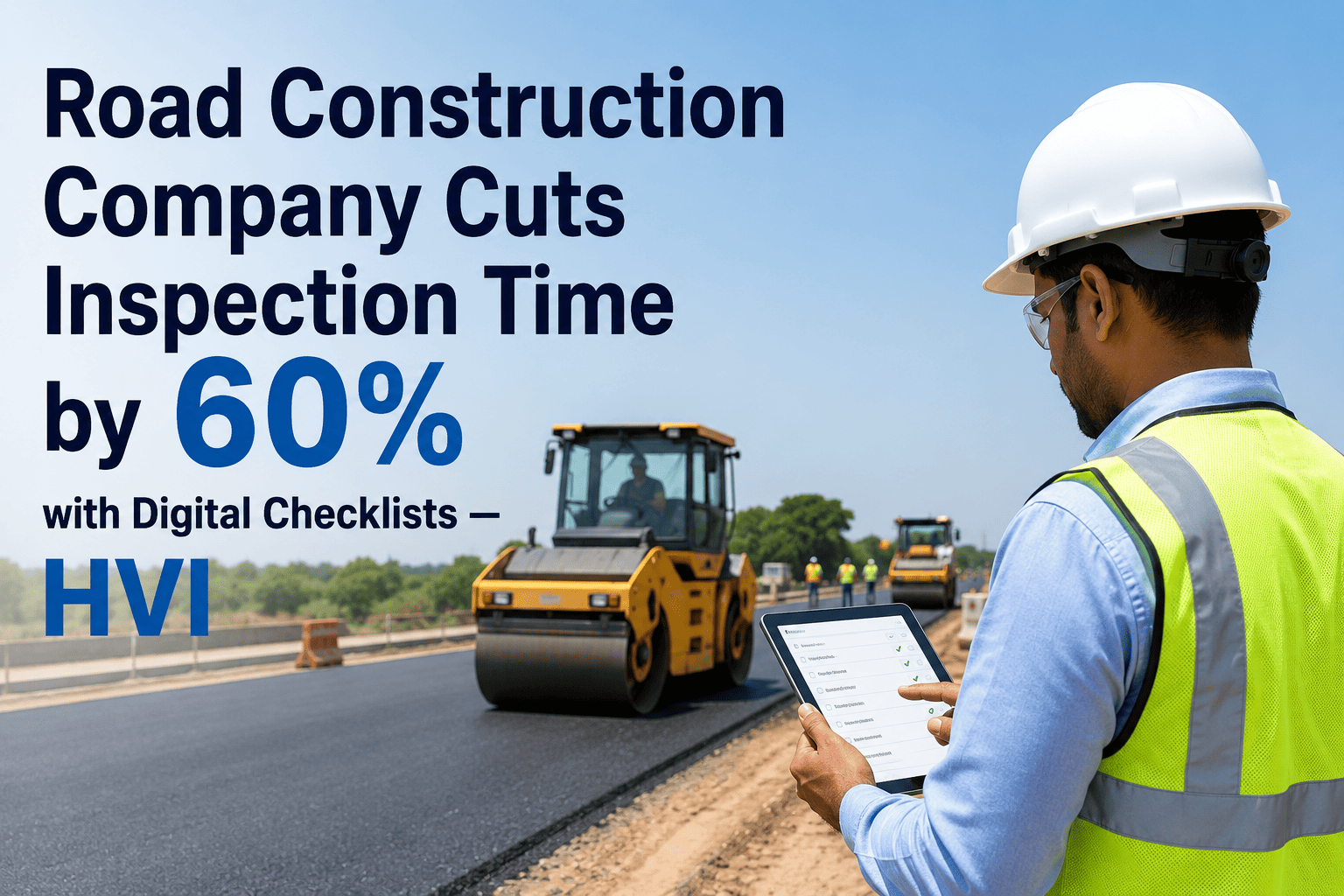
Every fleet manager who has faced a surprise roadside inspection or a DOT audit knows the sinking feeling of digging through a filing cabinet for a specific driver's pre-trip DVIR from four months ago, hoping the ink has not smudged and the signature is legible. Paper checklists feel safe because they have been the default for decades, but the reality is that they quietly break compliance every single week through missing signatures, unreadable handwriting, defects that never reach the workshop and inspection records that vanish before they ever hit a filing cabinet. This guide breaks down exactly where paper fails, what it costs when audits go wrong and what modern fleets are switching to instead, and if you want to see digital inspections running on your own asset list you can start a free trial in minutes.
Why Paper Inspection Checklists Keep Failing And What Actually Works
A structured look at the five failure modes of clipboard inspections, the true audit cost, and the digital workflow that turns 4-hour audit prep into a 60-second export.
The Uncomfortable Truth About Clipboard Inspections
Regulators do not care how busy your team is, how remote your project sites are or how experienced your drivers are. They care about one thing during an audit: can you produce a complete, signed, timestamped inspection record for the exact vehicle, on the exact date, showing that any defect noted was actioned and cleared. Paper checklists fail this test not because drivers are careless, but because the process itself has no enforcement mechanism at any step. A driver can submit a blank form, a fleet manager can miss a defect, a mechanic can forget to sign the repair certification, and none of it triggers an alert until an auditor asks a question you cannot answer.
The 5 Systemic Failure Modes Of Paper Inspections
Every fleet that runs paper DVIR eventually hits at least three of these. Most hit all five within a year.
Defects That Take 12 To 36 Hours To Reach Maintenance
On a paper workflow the driver writes the defect in the pre-trip form, hands it to the shift supervisor at end of day, someone drops the stack on the workshop desk the next morning and a mechanic finally reads it. During that window the vehicle typically completes another full operational day with a documented safety defect still active. Brake fade, steering play and tyre separation do not wait for morning paper reviews.
Completion Rates That Drop Under Real Dispatch Pressure
Paper DVIR completion in the field averages just 71 to 78 percent under real dispatch pressure. Drivers running late, night shift crews without supervision, and remote site postings are the common gaps. Mobile digital apps with offline capability consistently push completion above 95 percent within two weeks of rollout, because the app blocks the vehicle from being marked as dispatch-ready until the checklist is complete.
Audit Retrieval That Takes Days Instead Of Minutes
When an inspector asks for 90 days of DVIR records on a specific vehicle, paper fleets average 4.2 hours of hunting through binders and filing cabinets. In multi-depot operations that stretches to 1 to 3 days, and if a single form is missing the whole record is considered non-compliant. Digital fleets export the same package in under 60 seconds directly from the dashboard, formatted for regulator submission.
The Certification Chain That Breaks Silently
A compliant inspection requires three signatures — driver, mechanic and next driver acknowledgement. On paper, missing signatures and wrong-copy sign-offs are the single most common finding during audits. There is no system prompt, no locked field and no reminder. The form goes into a filing cabinet with a blank line and no one notices until the auditor points at it three months later.
Handwriting And Photos That Auditors Cannot Read
Even complete paper forms fail audits when handwriting is unreadable, the defect description is vague or there is no photo of the actual damage. Digital inspections force typed entries, categorised defect selection and mandatory photos with timestamp and GPS location, producing a defensible record that stands up to both auditors and litigation.
What Paper Actually Costs You Per Audit Event
Non-compliance is not just about fines. Every failure mode above cascades into real financial exposure across four categories.
Tow charges, delivery delay penalties, driver hours lost and downstream CSA score impact for a single out-of-service violation.
Per-item fines from missing signatures, incomplete DVIRs and unresolved defect certifications during an audit.
Typical insurance rate increase following a poor safety audit result, compounding on every renewal cycle.
Hours spent assembling records manually from paper archives across depots, workshops and driver files.
Paper Vs Digital: A Line-By-Line Reality Check
This is the comparison every fleet operations lead should run before their next audit cycle.
| Compliance Dimension | Paper Checklist | Digital Inspection App |
|---|---|---|
| Completion rate | 71 to 78 percent | 95 to 99 percent |
| Defect to workshop time | 12 to 36 hours | Under 3 minutes |
| Audit record retrieval | 4 hours to 3 days | Under 60 seconds |
| Missing signature risk | Common | Blocked by mandatory field |
| Legibility | Handwriting dependent | Typed with photo attachments |
| Defect photos | Rarely present | Timestamped and GPS tagged |
| Real-time visibility | None until forms are collected | Live dashboard for managers |
| Storage and retention | Filing cabinets, prone to loss | Permanent tamper-evident cloud |
| Work order creation | Manual, often skipped | Auto-generated from defect |
| Offline site handling | Same as online | Offline mode with auto sync |
See How Fast Your Current Audit Prep Time Drops
Book a 30 minute walkthrough with our team using a live inspection scenario on your own fleet. Watch a driver submit a defect, an auto-work order fire, and an audit-ready export generate — all in under two minutes.
What A Modern Digital Inspection Workflow Looks Like
Instead of a form on a clipboard, the entire cycle happens on a mobile app that enforces every compliance step automatically.
Driver Login And Auto-Populated Fields
Driver logs into the mobile app with PIN or biometric. Name, licence number, vehicle number and depot auto-populate. No handwriting, no missing IDs, no wrong-copy confusion.
Structured Checklist With Mandatory Fields
Component-by-component checklist tailored to the asset type. Each section requires either a pass, a defect note or a photo. The submit button stays locked until all mandatory items are completed.
Photo Capture With Timestamp And GPS
Every defect flagged forces a photo attachment. The image is stamped with time, date and GPS coordinates that cannot be altered later, producing a defensible record for both audit and any downstream litigation.
Instant Work Order Generation
Safety-critical defects auto-generate a work order and push a notification to the workshop supervisor and fleet manager within seconds. The asset is locked from dispatch until a certified mechanic signs off.
Offline Mode For Remote Sites
On highway, mining and transmission line projects the app runs fully offline. Inspections, photos and timestamps are stored locally and auto-sync to the cloud the moment the device regains signal, with no driver action required.
One-Click Audit Export
When an inspector asks for 90 days of records on any specific vehicle, the fleet manager exports a formatted PDF from the dashboard in under a minute. Every signature, every defect, every photo and every repair certification is included.
What Fleets Actually Gain After Switching
Digital inspection ROI is measurable, and it shows up in the first 60 to 90 days across five distinct areas.
40 Percent More Defects Caught
Fleets with digital inspections identify roughly 40 percent more defects internally before they escalate into breakdowns or roadside violations.
Audit Prep In Seconds
Producing 90 days of DVIR records for any asset drops from 4.2 hours to under a minute, freeing operations staff for real fleet work.
Closed-Loop Defect Tracking
Every flagged defect is traced from driver report to workshop signoff, so no safety-critical issue slips through the workflow silently.
Fewer Roadside Violations
Enforced completion, photo-verified defects and workshop signoff loops meaningfully reduce out-of-service events and their downstream financial impact.
Higher Driver Accountability
Every inspection is timestamped and GPS tagged, so shortcuts are visible on the dashboard within seconds and coachable within the same shift.
Insurance Renewal Leverage
A clean digital audit trail with defensible defect handling and driver behaviour scoring pulls insurance premiums down at renewal instead of pushing them up.
A Realistic Rollout Timeline
Digital inspection deployment is not a 6 month IT project. Most fleets are fully live within two weeks.
Configure Assets
Fleet list uploaded to the platform. Custom inspection checklists mapped per asset class — tippers, cranes, transit mixers, DGs and light vehicles.
Driver Training
20 minute walkthrough per shift. Drivers log in, complete one live inspection and submit a test defect. Most adopt the app faster than expected.
Parallel Run
Both paper and digital run side by side for one week to catch edge cases and confirm all defect and workshop notification flows are working.
Paper Retired
Paper checklists officially retired. Dashboard becomes the single source of compliance truth for management, workshop and any incoming audit.
Frequently Asked Questions
Turn Every Inspection Into An Audit-Ready Record
HVI powers digital inspections for heavy vehicle and infrastructure fleets across India, replacing paper checklists with photo-verified DVIRs, automatic work orders, offline mobile capture and one-click audit exports. Start a free trial or book a 30 minute demo to see it running on your own fleet data.