In many Indian truck and bus fleets, the clutch is replaced far more often than the engine is ever opened. Each clutch job means a lifted gearbox, a day or more off the road and a bill that keeps repeating. The surprising part is how much of that wear is decided in the cab, by how a driver starts, climbs and shifts. Good maintenance catches the mechanical faults, and good habits stop the rest. This guide covers clutch wear signs, booster checks, gearbox and driveline care, and how fleets track clutch life per vehicle and driver in HVI.
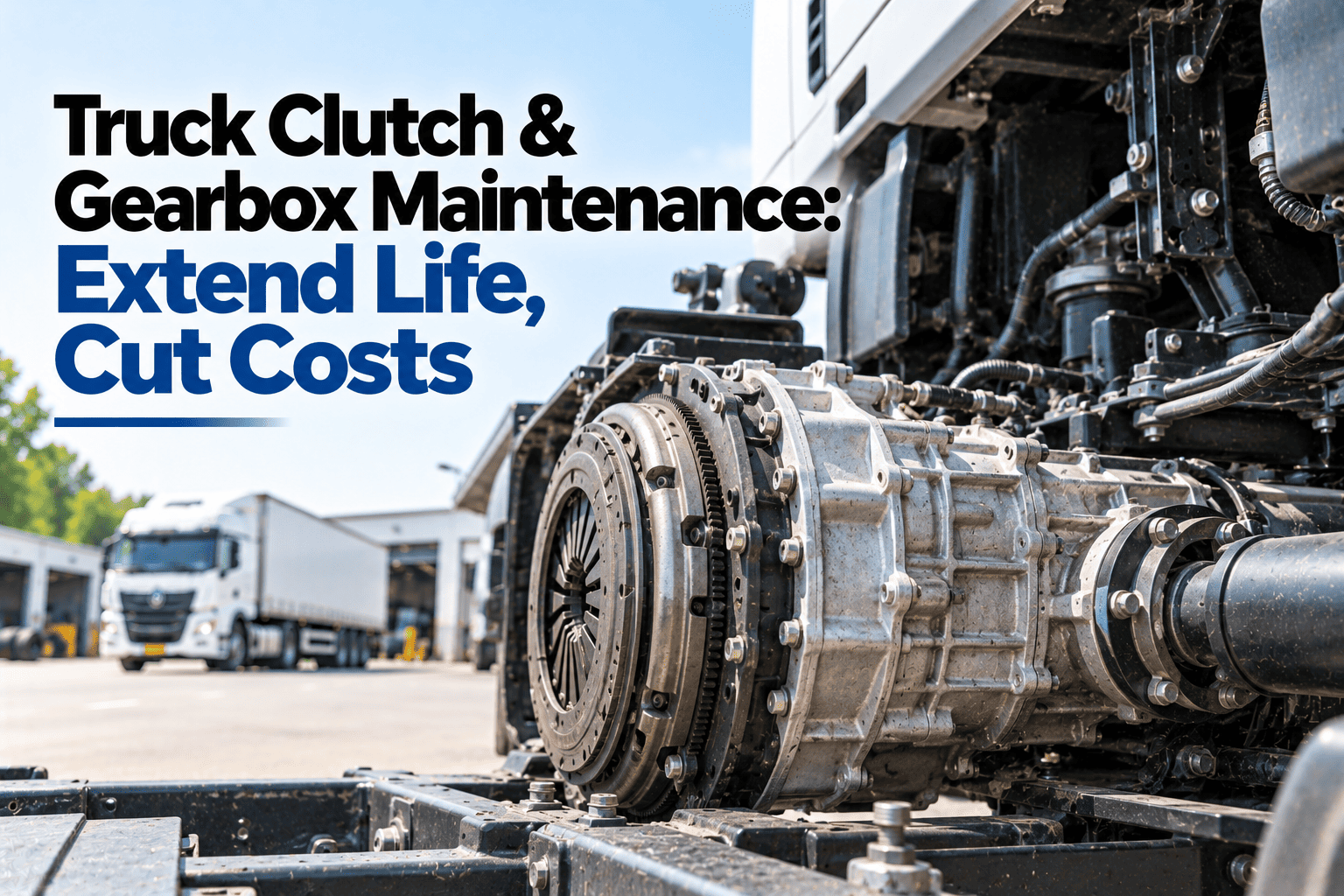
Truck Clutch and Gearbox Maintenance: Extend Life, Cut Costs
Spot clutch and gearbox wear early, keep boosters and drivelines healthy, and change the driver habits that turn a long-life part into a regular expense.
Clutch Wear Signs and What They Point To
Each symptom points to a different part. Matching the sign to the part saves the workshop from replacing the whole kit when only one piece has failed.
Slipping
Engine revs rise but speed does not, especially on climbs with a load.
Dragging
Gears grind or are hard to select even with the pedal fully down.
Judder on take-off
The truck shakes as the clutch engages from a standstill.
Noise when pressed
A whirring or squealing sound when the pedal goes down.
Heavy pedal
The pedal needs much more effort than usual.
Burning smell
A sharp smell after hill starts or heavy manoeuvring.
Clutch Booster and Hydraulic Check in Five Steps
Most Indian trucks use an air-assisted clutch booster. A small leak or air in the line can make the clutch drag or slip long before the plate is worn.
Fluid level
Check the clutch reservoir and top up with the specified fluid.
Leaks
Look for fluid at the master cylinder, pipes and booster.
Air supply
Listen for air leaks at the booster with the system charged.
Free play
Measure pedal free play and adjust if the clutch is not self-adjusting.
Bleed
Bleed the system if the pedal feels spongy or gears drag.
Gearbox Warning Signs and First Checks
Gearbox overhauls are expensive and slow. Most start as a small sign that someone noticed but nobody recorded.
| What the driver notices | Likely cause | First check |
|---|---|---|
| Grinding when changing gear | Worn synchros or clutch dragging | Clutch release and gearbox oil level |
| Jumps out of gear | Worn selector parts, gear teeth or mountings | Engine and gearbox mountings, then internal inspection |
| Whine that changes with speed | Worn bearings or low oil | Oil level and condition |
| Oil on the gearbox casing | Seal leak, often from a blocked breather | Clean the breather, then the seals |
| Stiff or vague gear lever | Worn shift linkage or cables | Linkage bushes and adjustment |
Record Every Clutch Job and See Which Trucks Repeat
HVI logs each clutch and gearbox repair with odometer, driver and parts, so you can see clutch life per vehicle and spot the patterns behind early failures.
Driveline Inspection Checklist
The propeller shaft carries every bit of torque the clutch and gearbox deliver. A worn joint here can damage both.
Propeller shaft
Universal joints
Centre bearing and mounts
Swap These Six Driver Habits
Driver training is the cheapest clutch maintenance there is. Each swap below protects the clutch, the gearbox or both.
Think in Clutch Cost per Kilometre
Comparing clutch cost per kilometre shows the real effect of driving style and maintenance. The figures below are an illustrative example, not market prices.
Same job, same price, double the cost per kilometre. Truck B needs a closer look at driver habits and booster health.
Track Clutch Life by Vehicle and Driver in HVI
A sample fleet view. When clutch life is recorded against the main driver, coaching can be targeted where it matters.
| Vehicle | Main driver | Km on last clutch | Clutch jobs in 2 years | Flag |
|---|---|---|---|---|
| TRK-14 | Driver A | 85,000 | 1 | Normal |
| TIP-06 | Driver B | 38,000 | 3 | Coach driver, check booster |
| BUS-11 | Driver C | 52,000 | 2 | Review route and habits |
| TRK-19 | Driver D | 91,000 | 1 | Normal |
Clutch and Gearbox FAQs
How do I know if my truck clutch is wearing out?
The most common sign is slipping, where engine revs rise without the truck speeding up, especially on loaded climbs. A higher engagement point, a burning smell, judder on take-off and difficulty selecting gears are other warnings. Checking free play and the booster first can rule out cheaper causes.
What does riding the clutch do?
Resting a foot on the pedal keeps the clutch partly disengaged, so the plate slips and the release bearing spins all the time. Both wear out much faster and the plate can overheat. It is one of the most common reasons for early clutch replacement in fleets.
How often should gearbox oil be changed?
Follow the interval in the vehicle maker's service schedule, which depends on the gearbox model and duty. Check the oil level and look for leaks at regular services, and clean the breather so seals are not pushed out by pressure. Teams that schedule gearbox services in HVI get reminders before each one is due.
Do AMT trucks still need clutch maintenance?
Yes. Automated manual transmissions still use a clutch, but the system controls it, which often removes driver abuse. They still need clutch wear checks, actuator and air supply checks, and software updates as the maker advises. Wear data from the system can help plan replacement in advance.
How can a fleet reduce clutch replacement costs?
Train drivers to avoid riding and slipping the clutch, keep boosters and hydraulics in good order and record every clutch job with odometer and driver. That record shows which vehicles and drivers need attention. Book a demo to see clutch tracking in HVI.
Make Every Clutch Last Longer
Track clutch and gearbox jobs by vehicle and driver, catch booster and driveline faults early and coach the habits that wear clutches out. Fewer lifted gearboxes, fewer days off the road and a lower cost per kilometre.