Electrical faults are the problems Indian workshops dread most. A truck that will not start one morning but runs fine the next, lights that flicker, a warning lamp that comes and goes: these can take days to trace. BS-VI trucks and buses add sensors, wiring and control units, so there are more places for faults to hide. Most problems still come back to a few basics: the battery, charging, earth connections and damaged wiring. This guide gives a simple order to check them, and shows how fleets record electrical repairs in HVI to catch repeat faults.
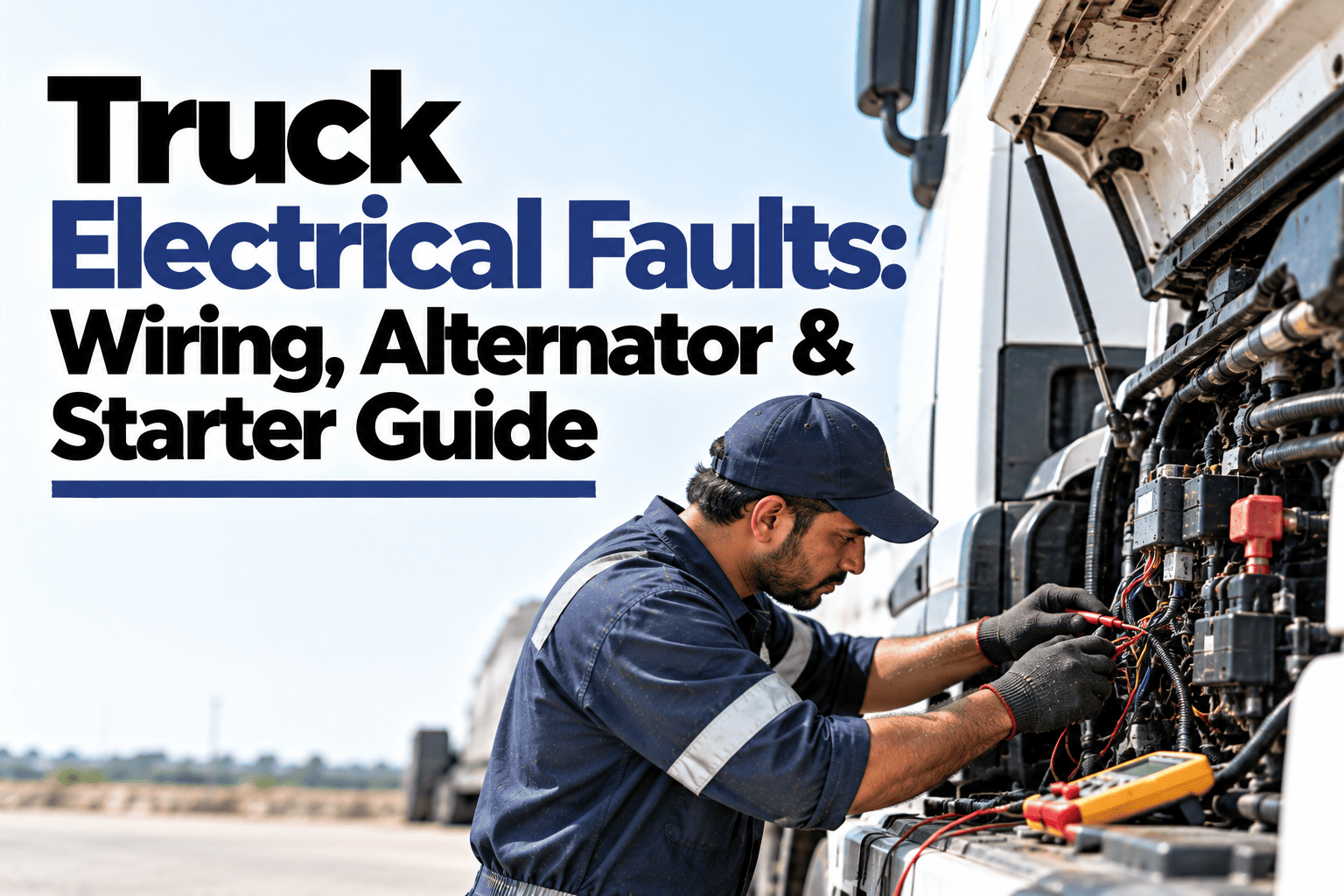
Truck Electrical Faults: Wiring, Alternator and Starter Guide
Understand how the electrical system fits together, check faults in the right order and fix the cause so the same problem does not keep coming back.
A Simple Order for Finding Electrical Faults
Checking in the same order every time finds most faults quickly and stops parts being replaced on a guess.
Battery
Check voltage, charge and terminal condition.
Charging
Measure charging voltage with the engine running.
Fuses and relays
Look for blown fuses and faulty relays.
Earth points
Clean and tighten earth straps and connections.
Wiring and codes
Inspect the harness and read any fault codes.
Eight Common Electrical Faults
These faults cause many of the electrical breakdowns on Indian trucks, buses and machines.
Alternator not charging
Loose belt, worn brushes or a failed regulator. The battery slowly runs down.
Starter failure
Worn starter, faulty solenoid or poor cable connections.
Battery drain
A component or added accessory draws current when parked.
Poor earthing
Corroded or loose earth points cause strange, intermittent faults.
Harness chafing
Wiring rubbing on the chassis wears through and shorts out.
Rodent damage
Rats chew wiring in parked vehicles, especially in yards.
Blown fuses and shorts
A fuse that keeps blowing points to a short circuit, not a bad fuse.
Sensor and network wiring
On BS-VI vehicles, damaged sensor or network wiring triggers fault codes.
Symptoms and First Checks
Use the symptom the driver reports to decide where to start.
| Symptom | Likely cause | First check |
|---|---|---|
| Battery flat every morning | Parasitic drain or charging fault | Charging voltage and current draw when parked |
| Lights dim at idle | Weak alternator or slipping belt | Belt tension and charging output |
| Click but no crank | Starter solenoid or poor connection | Battery terminals and starter cables |
| Same fuse keeps blowing | Short circuit in that circuit | Wiring for chafing or damage |
| Warning lamps come and go | Loose connector or bad earth | Earth points and connectors |
| Fault codes for sensors | Sensor or its wiring | Connector and wiring before the sensor |
Stop Chasing the Same Electrical Fault
HVI records every electrical complaint, cause and repair against the vehicle, so repeat faults stand out and the real cause gets found and fixed.
Electrical Fire Risk
Many vehicle fires start in the wiring. Small shortcuts in electrical work create a real fire risk.
Never bypass a fuse or fit a higher-rated fuse to stop it blowing. That removes the protection and can start a fire. Find the short circuit instead, keep cables clamped away from hot and moving parts, and carry a working fire extinguisher on every vehicle.
Preventing Electrical Faults
A few habits prevent many of the faults that are hardest to trace later.
- Clean and tighten battery terminals and earth points
- Check belt tension and charging voltage at service
- Clamp wiring away from sharp edges and heat
- Seal connectors before the monsoon
- Unauthorised add-on wiring for accessories
- Taping over damaged wires instead of repairing them
- Pressure washing connectors and control units
- Leaving vehicles parked for long periods without rodent protection
Repeat Electrical Faults in HVI
A sample 90-day view. Vehicles with the same complaint again and again need a deeper look, not another quick fix.
| Vehicle | Complaint | Times in 90 days | Last fix | Status |
|---|---|---|---|---|
| TRK-02 | Headlight failure | 1 | Bulb replaced | Fixed |
| BUS-07 | Battery flat in the morning | 3 | Battery recharged | Test for drain |
| TIP-12 | Fuse blowing, wipers | 4 | Fuse replaced | Find short circuit |
Truck Electrical Fault FAQs
Why does my truck battery keep going flat?
The usual causes are an alternator that is not charging properly or something drawing current while the truck is parked, such as an added accessory or a faulty component. Check charging voltage with the engine running, then test for current draw with everything switched off.
How do I know if the alternator is faulty?
Signs include a battery that runs down, lights that dim at idle and a charging warning lamp. Measure the voltage at the battery with the engine running and compare it with the maker's value, after checking belt tension.
Why do electrical faults come and go?
Intermittent faults are often caused by loose connectors, corroded earth points or wiring that only shorts when the vehicle moves or vibrates. Checking earth points and connectors first saves a lot of time.
Is it safe to fit a bigger fuse if one keeps blowing?
No. A fuse that keeps blowing is warning of a short circuit. Fitting a bigger fuse removes the protection and can start a fire. Find and repair the fault. Teams that log electrical repairs in HVI can see when the same fuse keeps failing.
How can a fleet reduce repeat electrical faults?
Record every electrical complaint with its cause and fix, look for repeats by vehicle and circuit, and fix the root cause rather than the symptom. Book a demo to see electrical fault tracking in HVI.
Find Electrical Faults Faster, Fix Them for Good
Check faults in the right order, keep wiring and earths in good shape and track every electrical repair in HVI. Fewer flat batteries, fewer mystery faults and safer vehicles.