Walk into any equipment yard in India and ask what keeps machines off the job. The answers are nearly always the same: a hydraulic leak, an engine running hot, an electrical fault, clogged filters, worn tracks or a bucket ground down to nothing. Most breakdowns come from a short list of repeat problems, and most of them give clear early signs. Knowing those signs and fixing the cause, not just the symptom, cuts downtime sharply. This guide covers the 12 most common problems and how teams log problems and track lasting fixes in HVI.
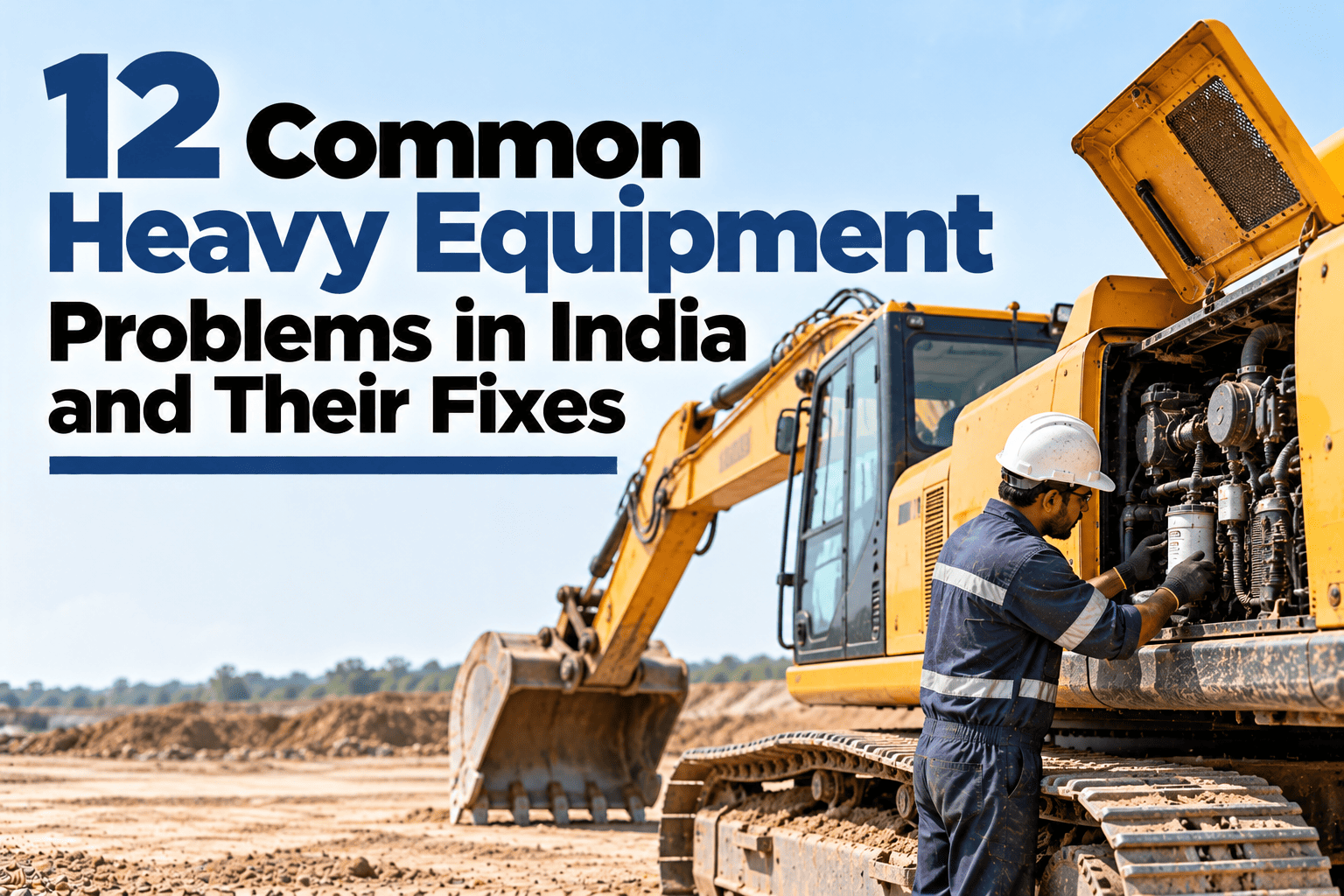
12 Common Heavy Equipment Problems in India and Their Fixes
How to spot the most frequent problems early, what to check first and how to fix them so they do not come back.
The 12 Problems, How to Spot Them and How to Fix Them
Each card shows the early signs and the fix that deals with the cause. For complex faults, follow the maker's service manual or call a trained technician.
Hydraulic leaks
Spot itOil on hoses, fittings or the ground, falling oil level
Fix itReplace chafed hoses, tighten fittings, change worn seals and route hoses away from rubbing points
Slow or weak hydraulics
Spot itBoom or bucket moves slowly or lacks force
Fix itCheck oil level and filters, look for internal leaks and have pump and relief pressures tested
Hydraulic oil overheating
Spot itHigh oil temperature warning, sluggish response in the afternoon
Fix itClean the oil cooler, use the correct oil grade and check for relief valves blowing off
Engine overheating
Spot itTemperature gauge rising, coolant loss, steam
Fix itBlow out radiator fins, top up correct coolant, check fan belt, hoses and thermostat
Black smoke and low power
Spot itDark exhaust under load, machine struggles on hard digging
Fix itReplace a clogged air filter, check intake hoses and have injectors and turbo inspected
Hard starting
Spot itLong cranking, especially in the morning
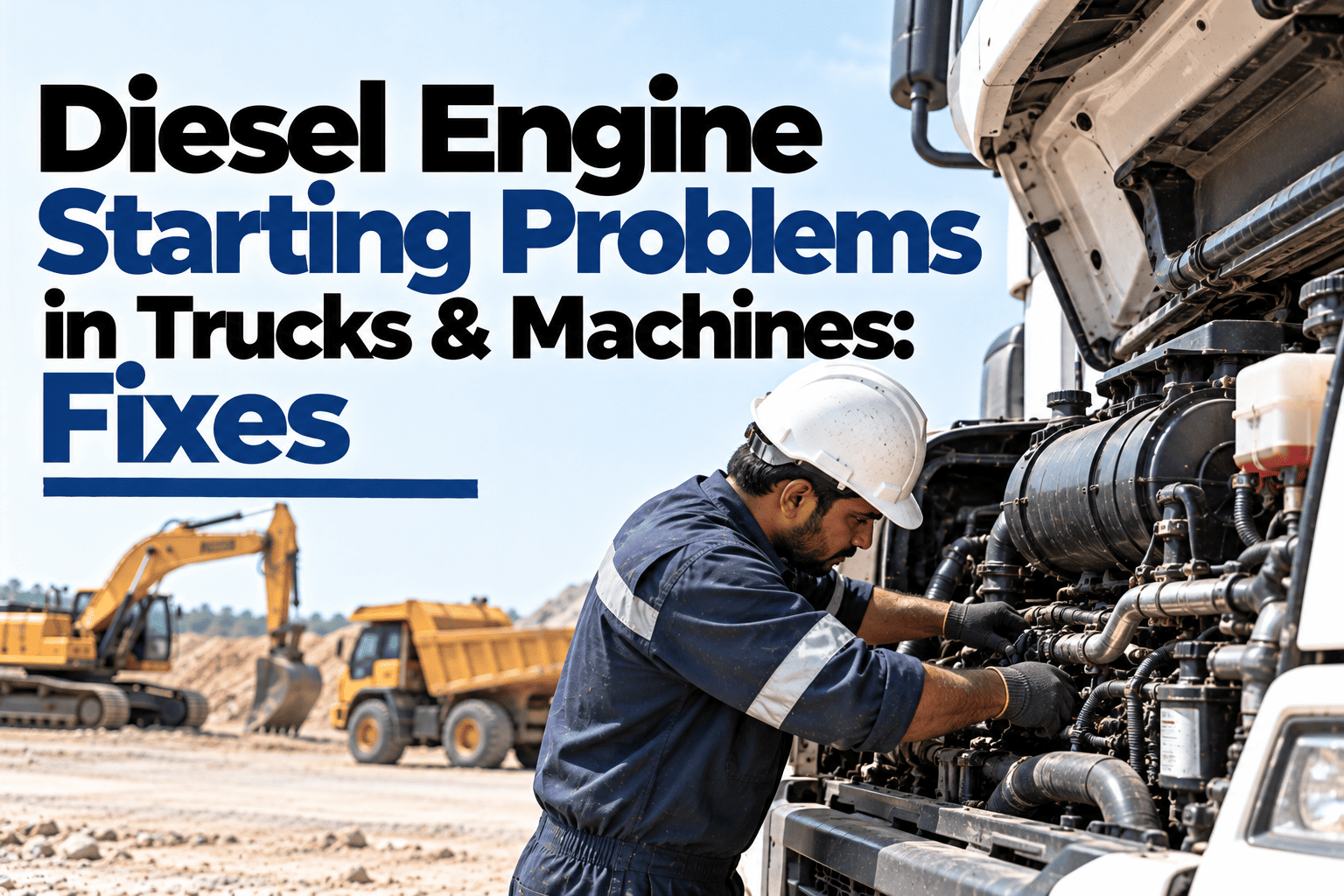
Fix itTest the battery and starter, bleed air from fuel lines and check fuel filters
Fuel contamination
Spot itWater in the separator, blocked filters, rough running
Fix itDrain the water separator daily, use clean storage and filtered refuelling
Electrical and sensor faults
Spot itWarning lamps, fault codes, functions cutting out
Fix itRead the fault code, clean and seal connectors, repair chafed wiring and replace faulty sensors
Battery drain
Spot itFlat battery after the machine stands overnight
Fix itCheck charging voltage, look for accessories left on and test for current leaks
Track and undercarriage wear
Spot itTrack sag, worn rollers, oil on idlers
Fix itSet track tension to the manual, clean packed mud and limit travel on hard ground
Bucket and teeth wear
Spot itBlunt or missing teeth, thin cutting edge, slower digging
Fix itReplace teeth before the adapters wear and add wear plates in abrasive work
Operator misuse
Spot itRepeated damage, broken pins, skipped daily checks
Fix itTrain operators, make daily checks a habit and link repeat damage to the machine's records
Stop Fixing the Same Problem Twice
HVI lets operators report problems with photos, turns them into repair jobs and shows whether the same fault comes back on the same machine.
Fix on Site or Send to the Workshop?
Not every fault needs a workshop, and not every fault should be patched in the field. Use this rough guide.
- Cleaning radiators and filters
- Topping up fluids and greasing
- Replacing a single hose or bucket teeth
- Cleaning connectors and changing fuses
- Pump, valve or cylinder repairs needing clean conditions
- Engine internal work and injector repairs
- Undercarriage component replacement
- Repeat faults that need proper diagnosis
Making Fixes Last
A repair that only treats the symptom brings the machine back in a week. These steps turn quick fixes into lasting ones.
Log it
Record the problem, machine, hours and photos.
Find the cause
Ask why it happened, not just what broke.
Fix properly
Use correct parts and the maker's method.
Check again
Re-inspect after a few days of work.
Review repeats
Look at repeat faults every month.
Tracking Whether Fixes Hold in HVI
A sample 90-day view. Machines where the same problem keeps returning stand out straight away.
| Machine | Problem | Times fixed in 90 days | Since last fix | Status |
|---|---|---|---|---|
| EX-04 excavator | Hydraulic hose leak | 1 | No return | Fix holding |
| WL-02 wheel loader | Engine overheating | 2 | Returned after 3 weeks | Find root cause |
| EX-09 excavator | Sensor fault code | 4 | Returned after 5 days | Send to workshop |
Heavy Equipment Problems FAQs
What are the most common heavy equipment problems?
On Indian sites the most frequent are hydraulic leaks and slow hydraulics, engine and hydraulic overheating, black smoke and low power, hard starting, fuel contamination, electrical faults, battery drain, track and bucket wear, and damage from operator misuse.
Why does my excavator overheat in summer?
Dust-clogged radiators and oil coolers are the usual cause, along with low coolant, a slipping fan belt or a faulty thermostat. Cleaning the cooling pack often and checking coolant daily prevents most summer overheating.
What causes black smoke from an excavator?
A clogged air filter is the most common cause, followed by leaking intake hoses, worn injectors or turbo problems. Start with the air filter and intake, then have the fuel system and turbo checked if the smoke continues.
How can I stop the same fault coming back?
Log every problem, find the root cause rather than treating the symptom, fix it properly and re-inspect after a few days of work. Teams that record repairs in HVI can see repeat faults by machine.
Can operators report problems from the site?
Yes. A phone-based checklist lets operators report problems with photos as soon as they notice them, so repairs can be planned before a small fault becomes a breakdown. Book a demo to see problem reporting in HVI.
Fewer Repeat Problems, More Working Hours
Spot problems early, fix the cause and track whether each fix holds for every machine in HVI. Less downtime, lower repair bills and a fleet that keeps working.