Volvo machines arrive with more built-in monitoring than most equipment on an Indian site, which creates a question that does not come up with older or simpler fleets: what does the manufacturer's own system handle, and what still needs to sit somewhere else? The answer matters because doing both badly is easy. A fleet that relies entirely on the OEM portal loses sight of every machine that is not a Volvo, and one that ignores it entirely throws away data it is already paying for. Getting the division of labour right is most of the work. You can map it for your own fleet in a free 30-minute session.
Volvo CE Servicing, and Where OEM Telematics Fits
The hour-based interval structure, what a manufacturer's monitoring system does well, and what a mixed fleet still needs alongside it.
On sources. The intervals below describe the standard structure. Exact task lists, fluid specifications, capacities and part numbers vary by model, variant and serial range across excavators, wheel loaders, haulers and road machines, and are revised over time — your machine's operator manual and your authorised dealer remain the authoritative sources. HVI is an independent maintenance platform, not affiliated with or endorsed by Volvo Construction Equipment or AB Volvo. Product names are used descriptively.
The Interval Structure
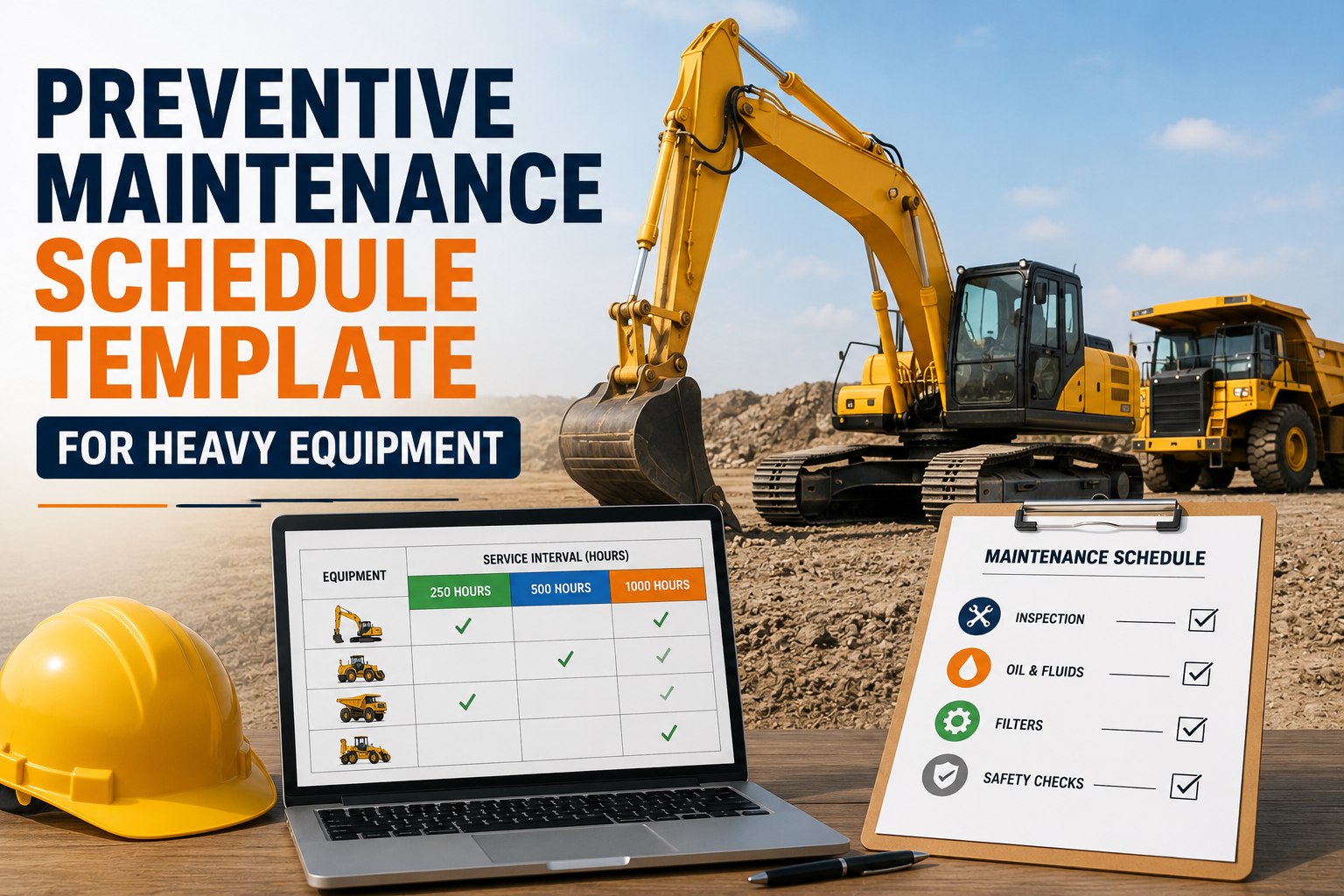
Daily, before start
Fluid levels, leaks, air restriction indicator, tyres or undercarriage, bucket and attachment condition, cab and safety items, and the hour reading recorded.
500 hours
Typically engine oil and filter, fuel and air filtration attention, greasing, and inspection of the systems that accumulate wear fastest.
1000 hours
Adds hydraulic filtration, transmission and axle attention, cooling system checks, and inspection requiring measurement rather than a look.
2000 hours and beyond
Larger fluid changes, component-level assessment, and the condition findings that inform rebuild or replacement planning.
Each tier includes everything below it. Severe duty, heavy dust or high load factor may put your machines on the manual's shortened guidance rather than the standard figures.
What Each System Is Actually Good At
The overlap is smaller than it looks. One reports what the machine knows; the other records what people did about it.
One Operational View Across the Whole Fleet
Inspections, defects, work orders and cost in one place, whatever brand the machine is and whether or not it reports anything itself.
The Mixed Fleet Problem
Almost no Indian infrastructure fleet is single-brand. A site running Volvo excavators will also have tippers from someone else, a couple of older machines with no telematics at all, and hired-in equipment whose data belongs to the hire company. Each manufacturer's portal covers its own machines and nothing else.
That leaves a maintenance head with several portals, several logins, several definitions of what counts as overdue, and no single answer to simple questions like which machines are due this month or what this site has cost in repairs. The gaps are not in any one system; they are between them.
The practical arrangement is to let each OEM system do what it does best on its own machines, and keep one operational layer above them all where inspections, defects, work orders and cost live for every asset regardless of badge. That way the machine data enriches the record rather than fragmenting it.
Frequently Asked Questions
If we already have OEM telematics, do we need anything else?
If your fleet is entirely one brand, entirely connected, and your only need is machine data, possibly not. In practice most fleets are mixed and also need inspections, work orders and cost history, none of which telematics provides. You can work out which applies to you on a call with our team.
Can OEM data feed into HVI?
It depends on what your provider exposes and under what terms, which varies and is worth confirming for your specific agreement rather than assuming either way.
Which system should trigger the service?
Whichever one your workshop actually works from, and only one of them. Two systems both raising services for the same machine produces duplicate work and arguments about which is right.
Where do I get the exact task list for my model?
From the operator manual for that model and serial range, or your authorised dealer. Contents differ across the range even where interval numbers match.
What about machines with no telematics at all?
Meter readings captured during the daily inspection do the same job for scheduling purposes, which is how mixed fleets keep one consistent schedule. Start with a free trial.
Let the Machine Report, Let the System Record
Use OEM telematics for what the machine knows about itself, keep inspections, defects, work orders and cost in one layer covering every brand and every unconnected machine, and make sure only one of them triggers the service.