On a railway project, the most valuable resource is not the machine but the traffic block. A tamper that fails thirty minutes into a four-hour block can waste the whole window and push the project behind schedule. India's rail upgrades and freight corridors depend on track machines working first time, every time. That needs disciplined checks before every block and planned maintenance between them. This guide covers both, and how contractors manage track machine records in HVI.
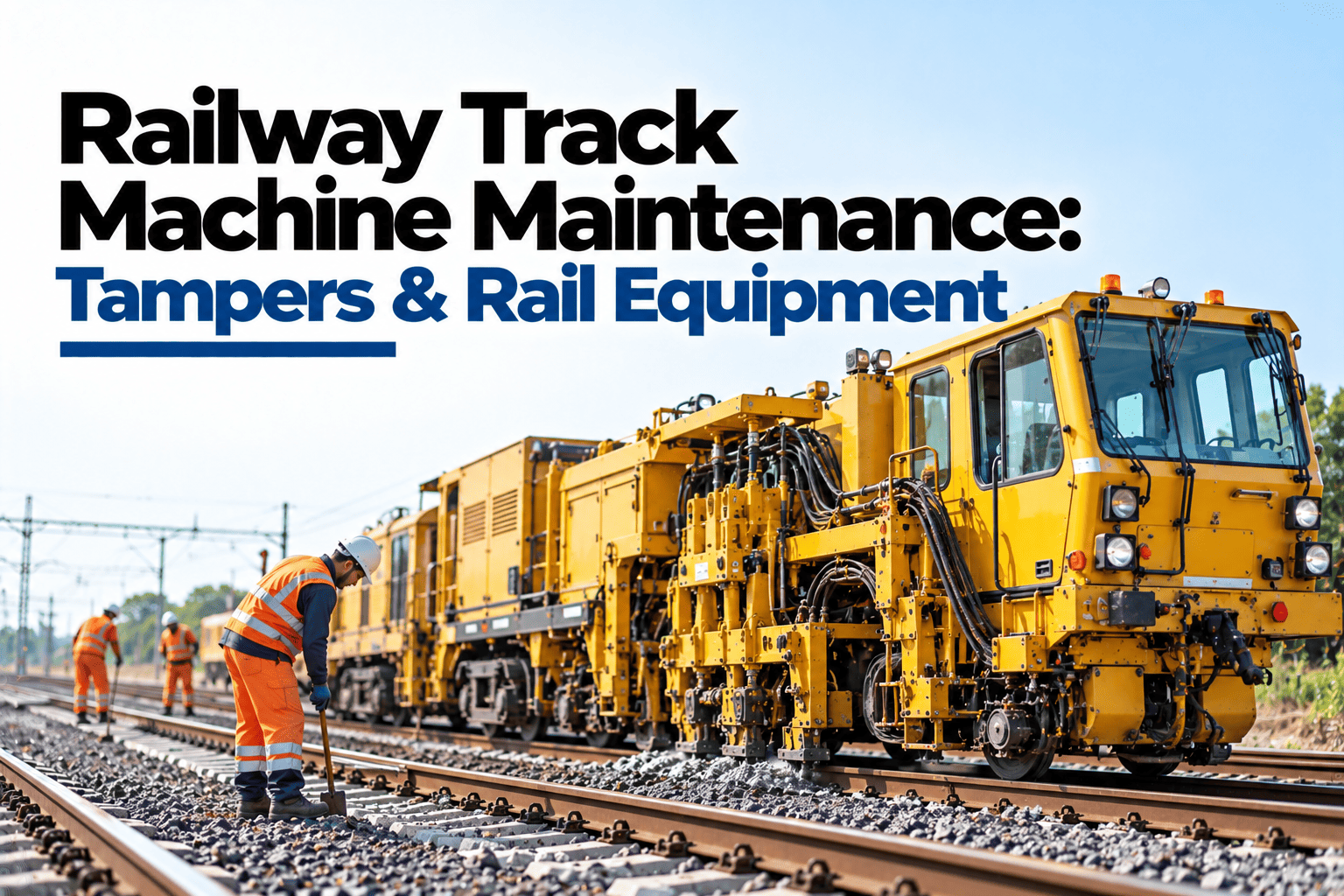
Railway Track Machine Maintenance: Tampers and Rail Equipment
Protect every traffic block with pre-block checks, keep workheads, hydraulics and measuring systems in shape, and hold the records railway clients expect.
Track Machines and Their Critical Systems
Each machine type has the systems that decide whether it finishes the block. Focus maintenance there first.
Tamping machines
Tamping units and tines, hydraulics, lifting and lining system, measuring system.
Ballast regulators
Ploughs, wings, brooms, conveyors and hydraulic controls.
Dynamic track stabilisers
Vibration units, load system, bearings and control electronics.
Ballast cleaning machines
Excavating chain, screens, conveyors and spoil handling.
Rail cranes and rail-road vehicles
Rail guide wheels, outriggers, load limiter, brakes and couplings.
Rail grinders and welding units
Grinding heads, dust and spark control, generators and fire safety.
Pre-Block Checklist
Run these checks before the machine leaves the siding. A fault found here costs minutes. The same fault found in the block costs the block.
Maintenance Between Blocks
Use the maker's schedule as the base. Engine hours and work done, such as sleepers tamped, help set the intervals.
| System | After every block | Weekly | Periodic by hours or work |
|---|---|---|---|
| Engine | Leaks, levels, warning lamps | Belts, air filter indicator | Oil and filter changes |
| Hydraulics | Leaks and hose damage | Oil level and cleanliness | Filters and oil sample |
| Tamping units | Tine wear and damage | Bearings and guides | Tine replacement and overhaul |
| Measuring system | Function check | Sensors cleaned | Calibration as required |
| Travel and brakes | Brake test | Wheels and axle boxes | Brake overhaul and wheel profiles |
| Electrical | Lights and controls | Cables and connectors | Control system checks |
Never Lose a Traffic Block to a Missed Check
HVI gives operators a pre-block checklist for each machine, with photos, and tracks defects, PM and engine hours so every block starts with a fit machine.
Four Systems That Cause Most Block Failures
Most failures in the block trace back to the same few systems. Give them extra attention.
Hydraulic contamination
Dust and water get in through worn seals and dirty top-ups. Use clean oil handling and regular samples.
Worn tamping tines
Worn tines give poor tamping and can break. Measure wear and replace in sets.
Measuring system drift
Out-of-calibration sensors give wrong geometry. Calibrate on schedule and after any repair.
Electrical faults
Loose connectors and damaged cables stop controls. Check them after every block.
Records Railway Clients Expect From Contractors
Railway organisations and project clients often review machine records before and during contracts. Keep these ready for every machine.
- Pre-block checklists with dates and signatures
- Maintenance and repair history
- Calibration records for measuring systems
- Defects raised and closed
- Operator training and authorisation
- Block utilisation and work completed
- Failures in block and their causes
- Safety incidents and actions taken
Requirements differ between railway zones, corridor projects and contracts. Confirm what your client needs at the start of each contract.
KPIs for Track Machine Fleets
Review these after every week of work and compare machines doing similar jobs.
Track Machine Status in HVI
A sample evening view before the next day's blocks. Each machine shows its last check, open defects and readiness.
| Machine | Last pre-block check | Open defects | Next PM | Tomorrow's block |
|---|---|---|---|---|
| TMP-01 | Today, passed | 0 | In 60 h | Ready |
| BRM-02 | Today, passed | 1 broom worn | In 15 h | Ready after broom change |
| DTS-01 | Today, failed | Hydraulic leak | In 90 h | Not ready |
| RRC-03 | Today, passed | 0 | In 120 h | Ready |
Track Machine Maintenance FAQs
What are the main railway track machines?
The common ones are tamping machines, which pack ballast under sleepers and correct track geometry, ballast regulators, dynamic track stabilisers, ballast cleaning machines, rail cranes and rail-road vehicles, and rail grinding and welding units. Each needs its own inspection and maintenance plan.
Why are pre-block checks so important?
Traffic blocks are short and hard to get, so a machine that fails inside the block can waste the whole window and delay the project. Checking fluids, hydraulics, brakes, workheads and measuring systems before leaving the siding catches most faults when they are still quick to fix.
How often should tamping tines be replaced?
It depends on ballast type, track conditions and work done. Measure tine wear regularly against the maker's limits and replace them in sets when they reach the limit. Worn tines reduce tamping quality and are more likely to break.
What records should track machine contractors keep?
Pre-block checklists, maintenance history, calibration records, defect logs, operator authorisations, block utilisation and incident records. Teams that keep these in HVI can share them with railway clients quickly when asked.
How can contractors reduce failures during traffic blocks?
Run thorough pre-block checks, keep PM on schedule by engine hours and work done, watch hydraulics, tines, measuring systems and electrics closely, and record every failure cause. Book a demo to see track machine tracking in HVI.
Every Machine Ready, Every Block Used
Run pre-block checks with photos, track PM by engine hours and work done, and keep calibration and defect records ready for railway clients in HVI. Fewer failures in block and more track completed on time.