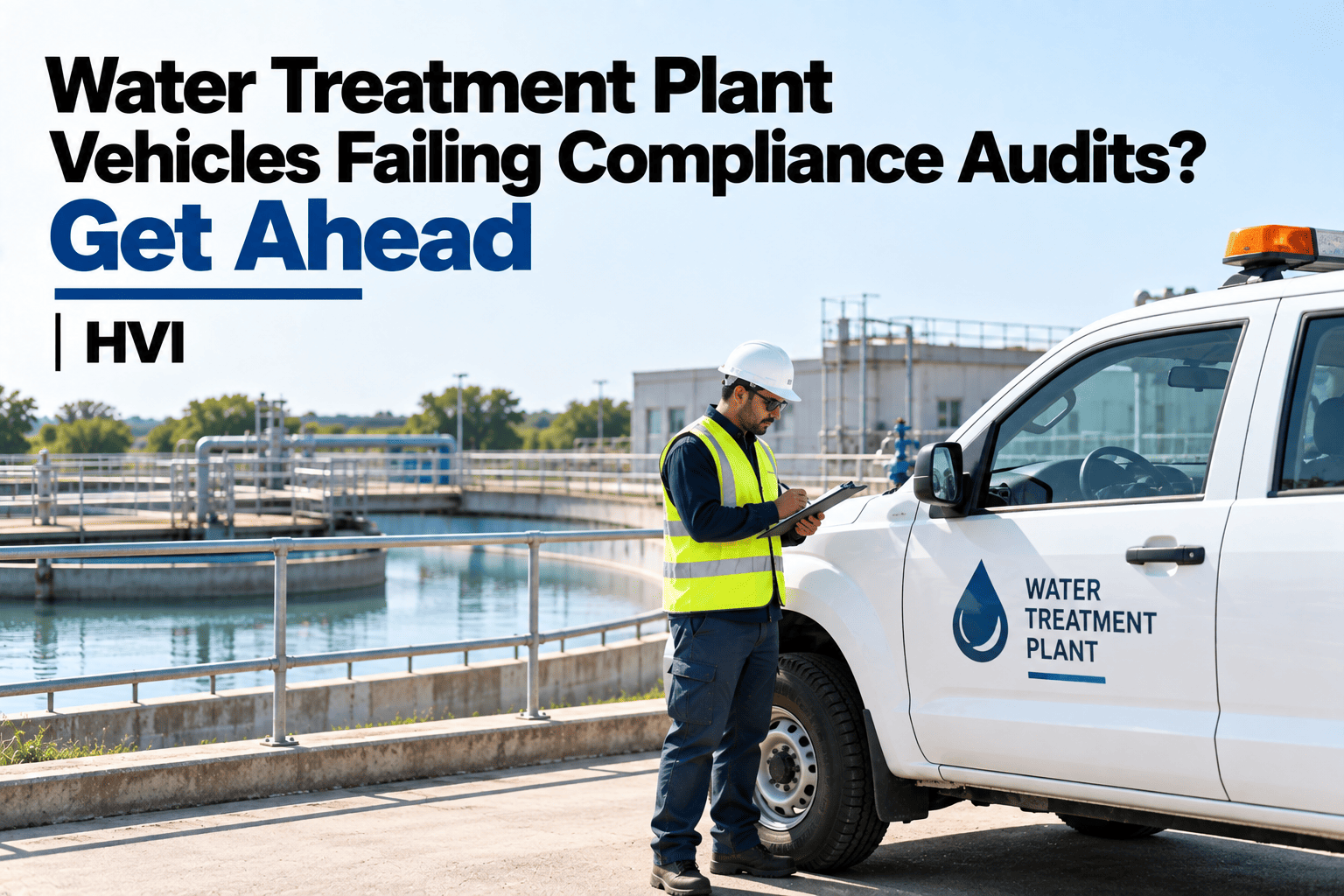
Water and sewage treatment plants run a mixed fleet that rarely gets the same maintenance attention as a construction site — tankers, sludge trucks, excavators, and general maintenance vehicles all move between the plant and the field, often maintained by whoever is available rather than a dedicated fleet team. When a compliance audit lands, plant managers scramble to pull together fitness certificates, inspection logs, and service records scattered across different registers, and a single missing document can turn a routine review into a formal non-compliance notice. HVI tracks every one of these vehicles against the same inspection and compliance workflow used across Indian infrastructure projects, so the next audit finds a system already in place rather than one built the week before. See it applied to your own plant fleet in a free 30-minute session.
Get Ahead of Water Treatment Plant Compliance Audits
Inspection and document compliance management for tankers, sludge trucks, excavators, and maintenance vehicles at water and sewage treatment plants, tracked in one system instead of scattered registers.
Where Treatment Plant Audits Usually Fail
Scattered Vehicle Records
Tankers and sludge trucks maintained by different teams end up with inspection records in different places.
No Dedicated Fleet Owner
Vehicles get attention only when something breaks, with no one tracking compliance on a schedule.
Manual Audit Prep
Someone spends days before every audit pulling documents together instead of exporting them in minutes.
Inconsistent Inspection Standards
Different vehicle types get checked against different, informal standards from site to site.
One Inspection Workflow for the Whole Plant Fleet
Tank integrity, valve, and pump checks logged before every dispatch.
Hydraulic and containment checks tracked alongside routine service history.
The same HEMM inspection standard used on construction sites, applied at the plant.
General plant vehicles brought into the same compliance and inspection record.
Fuel, load, and run-hour checks logged alongside the rest of the plant fleet's records.
Hydraulic and undercarriage checks for on-site digging and maintenance work, tracked per machine.
Walk Into Your Next Audit Already Prepared
Bring every tanker, sludge truck, excavator, and maintenance vehicle onto one compliance record.
An audit does not fail because a vehicle was unsafe. It fails because nobody could produce the record proving it was checked, and that record should already exist long before the auditor asks for it.
Frequently Asked Questions
Can this cover vehicles maintained by different contractors at the same plant?
Yes. Vehicles can be tracked under one plant-wide record regardless of which contractor or internal team actually maintains them day to day. You can review this setup on a call with our team.
What can we export ahead of an audit?
Inspection records, service history, and compliance documents can be exported per vehicle or across the fleet, formatted for exactly what an audit typically asks for.
Does this apply the same inspection standard used for construction equipment?
Yes. Excavators and similar HEMM at a treatment plant follow the same inspection standard used across Indian construction and mining sites.
Can plant staff complete inspections without special training?
Yes. Checklists are written in plain language with pass or fail options, so existing plant staff can complete them without additional certification.
How quickly can our plant fleet be set up?
Most plant fleets have their first vehicles tracked within hours of setup. Start with a free trial to load your vehicle list.
Stop Scrambling Before Every Compliance Audit
Give every plant vehicle a standing inspection and compliance record, ready whenever the auditor arrives. Tankers, sludge trucks, excavators, and general maintenance vehicles all sit on the same record, so an audit finds a system already in place instead of a last-minute pull of documents from three different offices.