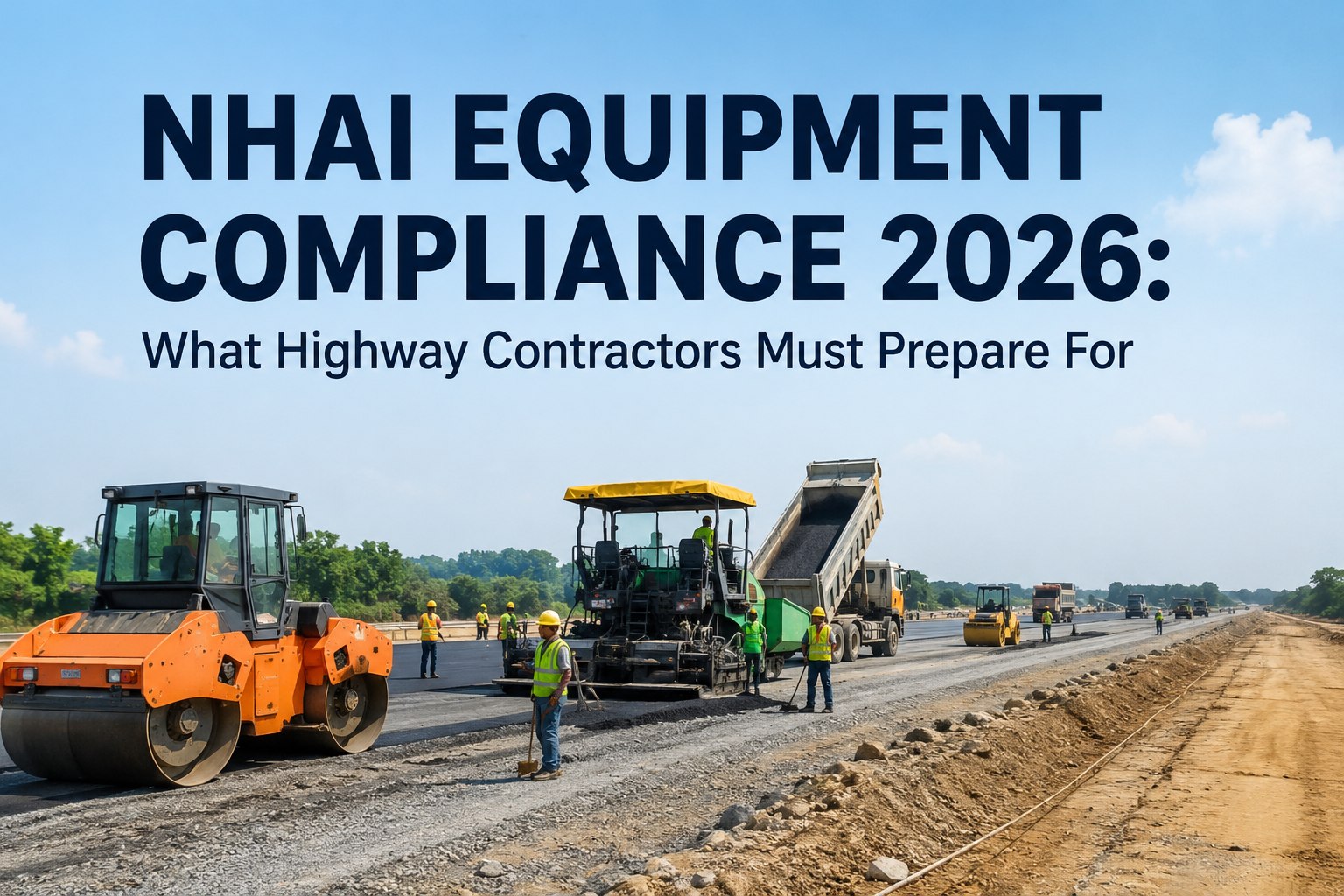
A road contractor's fleet is not forty machines — it is a handful of trains and spreads that work or stop together: the paving train, the earthwork spread, the plant cluster, and the road-legal tipper fleet feeding them all. That synchronisation is where the money leaks: one roller down mid-run does not cost a roller's downtime, it costs the laying day, the mix already batched, and a QA observation the file carries forever. Paper checklists and WhatsApp groups cannot manage units that fail together across fifty kilometres of ROW with dead zones between the camps. HVI manages it that way and works offline through all of it: linked pre-starts per train, chainage-tagged defects, PM planned into non-paving windows, and the deployment and condition records the Authority Engineer expects — sign up free and put your package on it this week.
Fleet Inspection & Compliance for Road Construction Contractors
Manage the fleet the way the work actually runs — by train and spread, not by machine list — with daily checks, chainage-tagged defects, and contract-ready records across the whole package.
The Four Units That Actually Do the Work
The Paving Train
Paver, tandem rollers, and PTR running as one organism — linked pre-starts show a single Ready status, because a train with one failed machine is a stopped train, and a stopped train is a cooling mat.
The Earthwork Spread
Excavators, graders, compactors, and their tipper cycle building the formation ahead of the paving calendar — where a grader's worn cutting edge quietly becomes next month's level rework.
The Plant Cluster
Hot mix plant, WMM plant, and their loaders — assets in the system with fire-up checklists, calibration records, and PM windows, because a plant stoppage stops every train it feeds.
The Road-Legal Fleet
Tippers, tankers, and bitumen sprayers on public ROW — daily walkarounds plus full document files on expiry ladders, because a checkpost detention breaks the same delivery cycle a breakdown would.
What One Machine Down Actually Stops
| Machine Down | What Stops With It | The Real Cost |
|---|---|---|
| Paver | The whole train, plus the batch already mixed at the plant | A lost laying day and mix written off — the most expensive breakdown on the package |
| One tandem roller | Compaction behind the paver | Mat quality risk mid-run — a QA observation that outlives the repair |
| Hot mix plant | Every train and tipper it feeds | The day's entire paving programme, plus staged crews standing |
| Three tippers together | The plant-to-paver rhythm | The paver pausing between loads — cold joints by another route |
| Grader | Formation levels ahead of the calendar | Rework discovered a layer later, at a layer's price |
This is why road fleets justify daily inspection faster than almost any other: the failure never costs one machine's downtime — it costs whatever that machine's unit was synchronised with, and paving days are the most synchronised hours in construction.
Put Your First Train on the System This Week
One paver, two rollers, the plant, and their tipper group — checklists tuned to your machines in an afternoon, operators trained in one toolbox talk, offline across the package's dead zones from day one. Bring your equipment deployment schedule to a 30-minute session and our India team maps the full rollout against it.
PM Lives in the Non-Paving Windows
The Night Workshop
Post-run checklists at 6 PM feed the night crew's job list — screed wear, drum damage, tyre cuts fixed while the train sleeps, so tomorrow opens Ready instead of surprised.
The Monsoon Programme
The season that stops laying is the season that catches up on majors — the system schedules the deep work into the wet window, so the dry season buys machines at their best.
Moves as Service Windows
Every chainage shift and plant relocation is hours of machine idle time — the PM calendar sees the moves coming and books the services into them instead of into paving days.
Contract-Ready, Whenever the Question Comes
Review formats vary by contract and authority — the register holds the evidence continuously so any format fills in minutes, and the monthly progress meeting stops opening with a records hunt.
Frequently Asked Questions
We run three packages in two states. One system?
Yes — each package is a site with its own trains, plants, and registers, rolled up to a company dashboard where cross-package comparisons finally become possible: cost per machine class, availability per train, and which package's discipline is slipping.
Do plant calibration records live in the system too?
Yes — weigher and batching calibration certificates attach to the plant's asset file with their own renewal ladders, alongside its checklists and PM, so the record the QA engineer asks for is two taps from the same screen the operator uses.
Does night-shift work get captured properly?
Fully — the night workshop closes its jobs in the app with parts and hours, and the morning supervisor opens the day seeing exactly what was fixed, what waits, and what the train's status is before mix is ordered.
Half the fleet is hired. Does that change anything?
Only the owner field — attached machines carry the same daily checks and files, their history settles hire bills and breakdown-replacement claims with evidence, and many contractors make joining the system a condition of hire; sign up free and onboard owned and hired together.
We're mid-package. How fast can this start?
One train and the plant in week one, then group by group down the package — operators learn their single screen in one toolbox talk, in Hindi or English. See a package-shaped rollout in a 30-minute demo with our India team.
The Train Is the Unit. Manage It Like One.
Every laying day bets the schedule on synchronised machines — put the package on one platform and the laying days stop being gambles. Start free and put your first train on the system this week, or bring your package details to a 30-minute session and leave with the rollout mapped.