On many Indian sites the backhoe loader is the default machine for everything, even when a wheel loader would move material faster and cheaper. On other sites a big wheel loader sits idle for hours because the real work was digging trenches. Both machines load material, but they are built for different jobs. Choosing well comes down to what you load, how much, how far you travel and whether you also need to dig. This guide compares the two side by side, and shows how fleets use HVI utilisation data to get the fleet mix right.
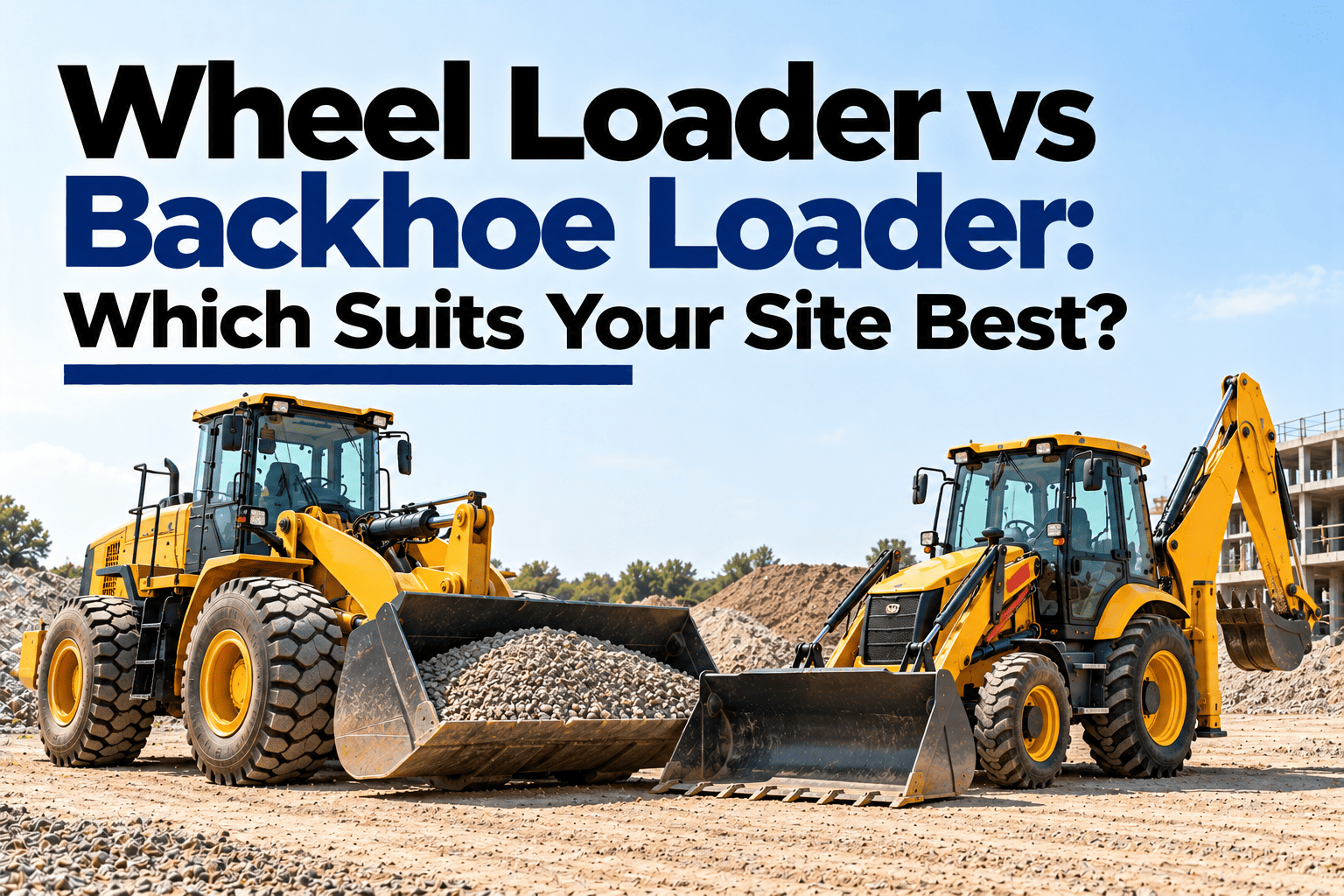
Wheel Loader vs Backhoe Loader: Which Suits Your Site Best?
Compare loading capacity, versatility, fuel use, operating cost and maintenance, with examples from crusher yards, RMC plants, road projects and ports.
- Large bucket and quick cycles
- Stockpiles, crushers and plants
- Cannot dig below ground level
- Digs trenches and pits
- Smaller loader bucket
- Moves easily between small jobs
Head-to-Head Comparison
These are general differences between the two machine types. Exact figures depend on the size and model you compare.
| Factor | Wheel loader | Backhoe loader |
|---|---|---|
| Loading speed | Much higher, with a bigger bucket | Lower, with a smaller loader bucket |
| Digging | Not designed to dig below ground | Digs trenches, pits and foundations |
| Versatility | Mainly loading and moving material | Digging, loading, levelling and more |
| Fuel use per hour | Usually higher on larger models | Usually lower |
| Cost per tonne loaded | Often lower on high volumes | Often higher on high volumes |
| Moving between sites | Larger models may need transport | Can usually travel short distances on road |
| Best suited to | Fixed sites with large, steady volumes | Mixed work across many small jobs |
Which Machine Fits Which Site
The right choice depends mostly on the work. These examples show how Indian sites usually decide.
Crusher yards
Feeding crushers and loading tippers from stockpiles all day.
RMC plants
Moving aggregates and sand to feed bins continuously.
Ports and yards
Handling bulk cargo such as coal, ore and fertiliser.
Road projects
Loaders at material yards, backhoes for drains and culverts.
Municipal and village work
Drains, pipelines and small jobs spread across an area.
Building sites
Foundations, trenches and site clearing in tight spaces.
Cost per Tonne Loaded
On high-volume loading, the machine with the higher hourly cost can still be cheaper per tonne. The figures below are illustrative only.
In this example the wheel loader costs almost twice as much per hour but is 25% cheaper per tonne. If the work also needs digging, the backhoe's versatility may still make it the better choice.
See What Your Machines Actually Spend Their Time On
HVI records hours worked and idle time for every loader and backhoe, and supervisors can note the main task, so you can see whether each machine is doing the work it suits best.
Maintenance Differences
Both machines need daily checks and regular servicing, but their biggest maintenance costs come from different places.
- Large tyres are a major cost, so watch pressure and cuts
- Transmission and axles work hard in loading cycles
- Bucket edges and teeth wear on abrasive material
- Radiators clog quickly in dusty crusher yards
- Many pins and bushes that need regular greasing
- Backhoe hydraulics and hoses work hard when digging
- Stabilisers and swing system take heavy loads
- Road travel adds tyre and brake wear
Signs Your Fleet Mix Needs Changing
Your own utilisation data often shows when the wrong machine is doing the work.
Backhoes mostly loading
If backhoes spend most hours loading tippers at one place, a wheel loader may do it cheaper.
Wheel loader often idle
If a wheel loader waits for work, the volume may not justify it at that site.
Tippers queuing
Trucks waiting to be loaded point to a slow loading machine.
Hiring for digging
Regular hire of backhoes for trenching may mean owning one pays.
Loader and Backhoe Utilisation in HVI
A sample monthly view. Hours, idle time and the main task noted by supervisors show where machines are well matched to the work.
| Machine | Site | Hours worked | Idle hours | Main task |
|---|---|---|---|---|
| WL-02 wheel loader | Crusher yard | 238 h | 22 h | Feeding crusher |
| BHL-05 backhoe | Crusher yard | 212 h | 18 h | Loading tippers |
| BHL-07 backhoe | Road project | 196 h | 34 h | Drains and culverts |
| WL-04 wheel loader | Small site | 96 h | 124 h | Occasional loading |
Here BHL-05 spends its time loading at a crusher, a wheel loader job, while WL-04 sits idle at a small site. Swapping them would suit both sites better.
Wheel Loader vs Backhoe Loader FAQs
What is the main difference between a wheel loader and a backhoe loader?
A wheel loader is built mainly to load and move material quickly with a large bucket. A backhoe loader has a smaller loader bucket at the front and a digging arm at the back, so it can dig trenches and pits as well as load, making it more versatile but slower at loading.
Is a wheel loader cheaper to run than a backhoe?
Per hour, a larger wheel loader usually costs more to run. Per tonne loaded on high volumes, it is often cheaper because it moves so much more material each hour. The answer depends on your volumes and whether you also need digging.
Which machine is better for a crusher or RMC plant?
A wheel loader usually suits crusher yards and RMC plants better, because the work is steady, high-volume loading from stockpiles at one location. A backhoe is better where digging and frequent moves between small jobs are needed.
How do I know if my fleet has the wrong mix of machines?
Look at what each machine spends its hours doing. Backhoes mostly loading at one place, idle wheel loaders or tippers queuing are common signs. Teams that record utilisation in HVI can spot these patterns quickly.
Can HVI track both wheel loaders and backhoes together?
Yes. Each machine has its own checklists and service schedule, while hours, idle time, services and repairs all sit in one view. Book a demo to see loader and backhoe tracking in HVI.
Put the Right Machine on the Right Job
Track hours, idle time, tasks and maintenance for every wheel loader and backhoe in HVI, and use real data to cut cost per tonne and get your fleet mix right.