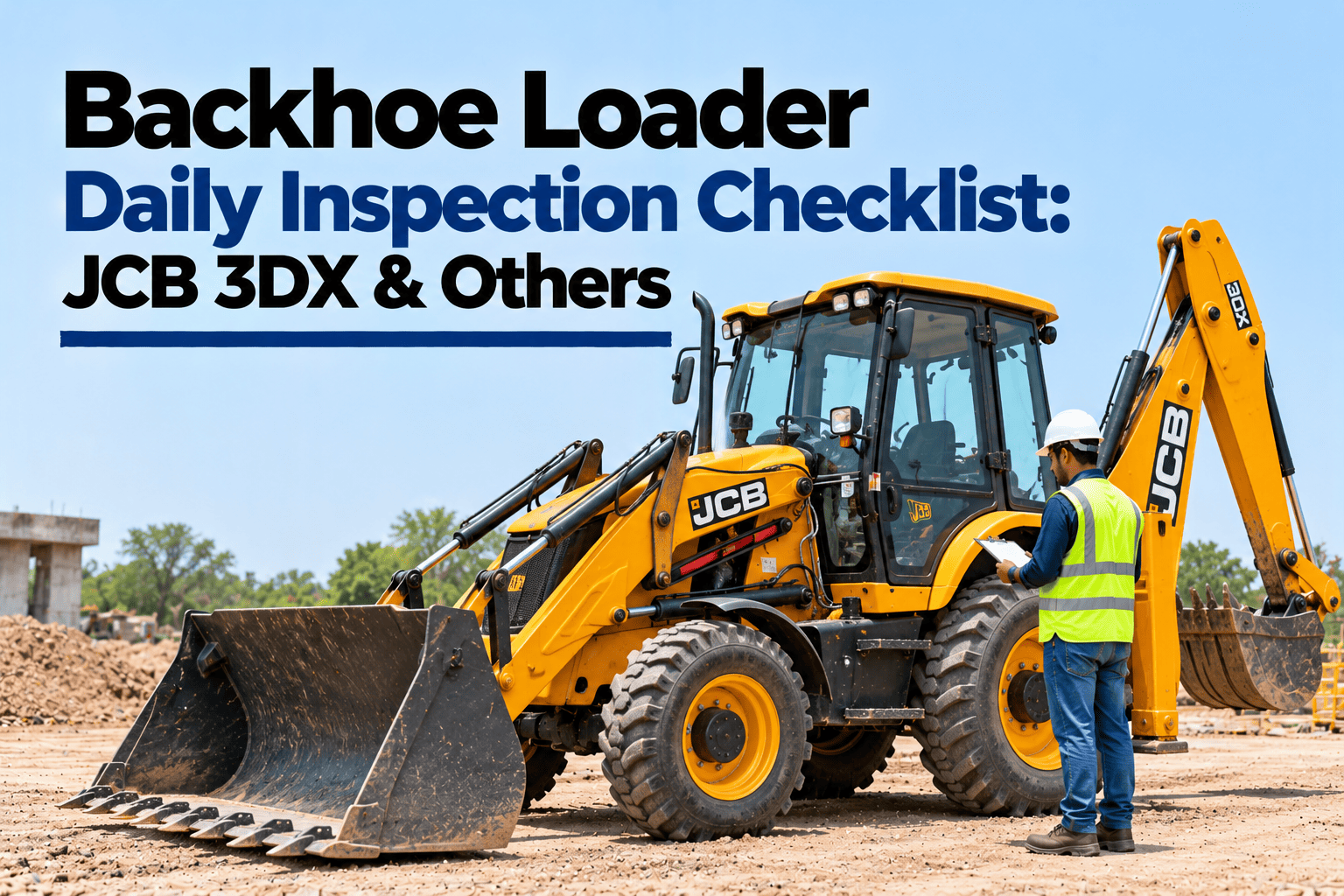
Backhoe loaders such as the JCB 3DX are among the most familiar machines on Indian sites, digging trenches in the morning and loading trucks in the afternoon. Many run two shifts, so a fault seen by one operator can go unreported to the next. A short daily inspection, done the same way at every shift change, catches loose teeth, leaking hoses and weak brakes before they turn into breakdowns or accidents. This checklist covers the whole machine from loader to backhoe, and shows how fleets turn defects into work orders in HVI.
Backhoe Loader Daily Inspection Checklist: JCB 3DX and Others
Engine fluids, hydraulic hoses, loader and backhoe arms, bucket and teeth, stabilisers, brakes, tyres, lights, horn and seat belt, checked at every shift.
The Daily Checklist, Front to Rear
Walk around the machine in the same order every shift. Report any defect before starting work.
- Loader arms, pins and bushes
- Bucket, cutting edge and teeth
- Front tyres and wheel nuts
- Loader cylinders free of leaks
- Engine oil and coolant levels
- Hydraulic oil level
- Fuel level and no leaks
- Air filter indicator
- Boom, dipper and pins
- Backhoe bucket and teeth
- Stabiliser legs and pads
- Rear tyres and wheel nuts
- Seat belt latches
- Brakes and parking brake
- Horn, lights and reverse alarm
- Mirrors and glass clean
Daily Fluids and Greasing
Backhoe pins and bushes wear fast without grease. Follow the greasing chart in your machine's manual.
| Item | What to do | Why it matters |
|---|---|---|
| Engine oil | Check level with the machine on level ground | Low oil damages the engine quickly |
| Hydraulic oil | Check level with arms in the stated position | Low oil causes slow, weak hydraulics |
| Coolant | Check level when the engine is cool | Prevents overheating in hot weather |
| Loader pins | Grease as the chart specifies | Stops pin and bush wear |
| Backhoe pins | Grease as the chart specifies, often daily | These pins work hardest |
| Swing and stabiliser pins | Grease as the chart specifies | Keeps swing smooth and legs reliable |
Go or No-Go Decisions
Some defects mean the machine must not work until fixed. Others can be planned for repair.
- Brakes or parking brake not holding
- Major hydraulic leak or burst hose
- Seat belt damaged or missing
- Stabiliser not holding the machine
- Worn or loose bucket teeth
- Minor weep at a hose fitting
- Worn pins or bushes with slight play
- Cracked mirror or faulty work light
Every Defect Turned Into a Work Order
HVI gives backhoe operators this checklist on their phone at every shift, records defects with photos and turns them into work orders, so nothing is lost between shifts.
Safe Operating Habits
A sound machine still needs safe habits. These four habits are especially important on busy sites.
Belt on
Wear the seat belt whenever the machine moves.
Stabilisers down
Lower stabilisers before digging with the backhoe.
Clear the swing
Keep people out of the backhoe swing area.
Park safely
Lower both buckets to the ground when parked.
Backhoe Fleet Status in HVI
A sample view at shift change across a contractor's backhoes.
| Machine | Site | Shift check | Open work order | Status |
|---|---|---|---|---|
| BH-03 | Pipeline project | Passed, night shift | None | Working |
| BH-06 | Housing site | Passed, day shift | Rear bucket teeth worn | Repair planned |
| BH-09 | Road widening | Failed, day shift | Parking brake not holding | Do not operate |
Backhoe Loader Daily Check FAQs
What should be checked on a backhoe loader every day?
Engine, hydraulic and coolant levels, fuel and leaks, loader and backhoe arms and pins, both buckets and teeth, stabilisers, tyres, brakes, seat belt, horn, lights and reverse alarm, plus greasing as the chart requires.
How often should backhoe pins be greased?
Follow the greasing chart in the machine's manual. Many backhoe pins need greasing every day or every shift, especially in dusty or wet conditions.
Why is a shift handover check important?
When operators change between shifts, a defect found by one may not reach the next. A recorded handover check makes sure every fault is reported and dealt with.
Which defects should stop a backhoe from working?
Brakes not holding, a major hydraulic leak, a damaged seat belt or a stabiliser that will not hold. Teams that run checks in HVI see these before work starts.
Can backhoe checks be done on a phone?
Yes. Operators complete the checklist with photos at each shift, and defects become work orders for the mechanic. Book a demo to see backhoe checklists in HVI.
Every Shift, Every Backhoe, Checked
Run a daily backhoe check at every shift change, grease on schedule and turn every defect into a work order in HVI. Fewer breakdowns, safer operators and nothing missed between shifts.