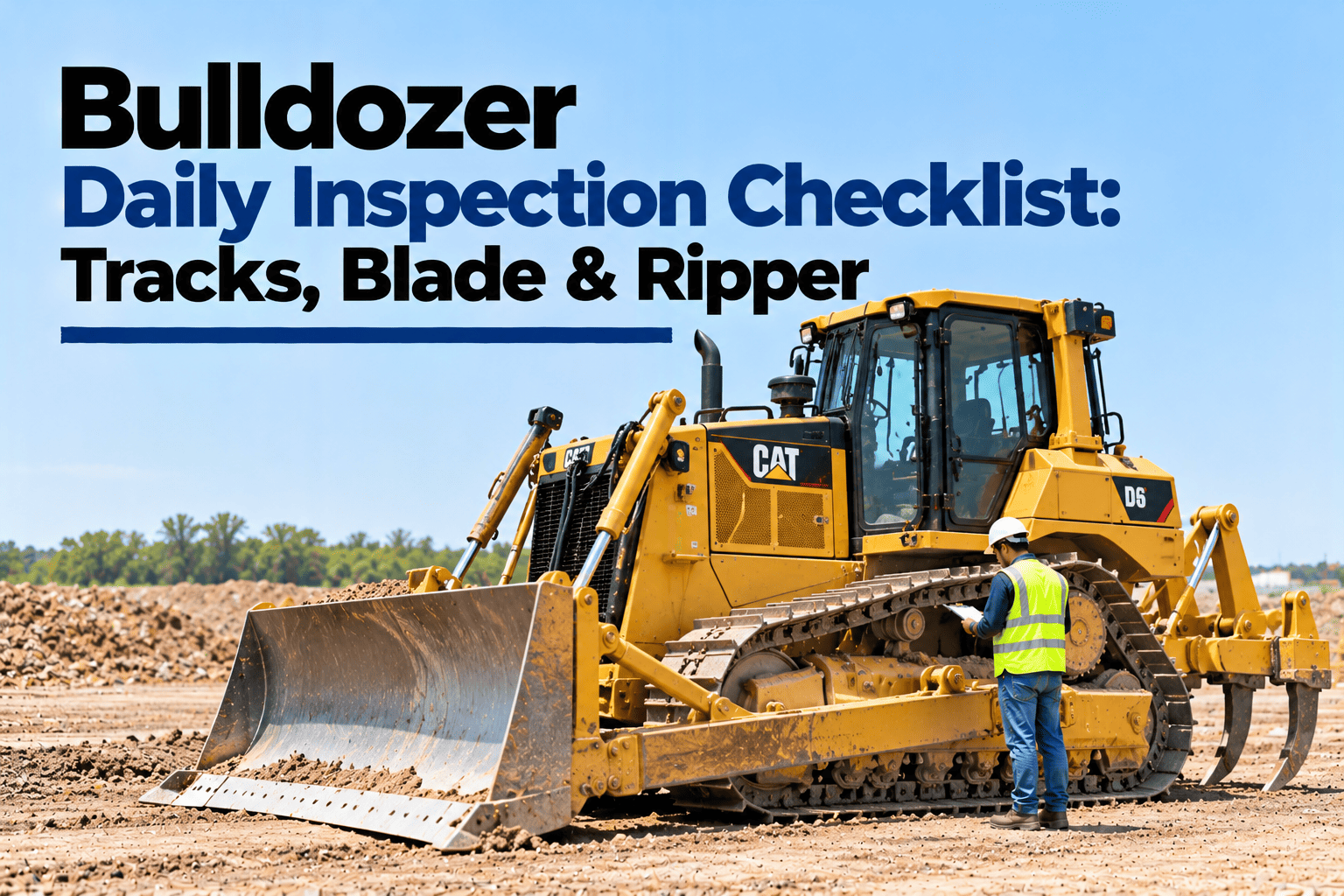
A bulldozer works where conditions are hardest: pushing rock on mine benches, cutting earth on dam and highway projects, and ripping hard ground in heat and dust. The undercarriage alone can account for a large share of a dozer's running cost, and a blocked radiator can overheat the engine in a single shift. A short daily inspection, done before the first push, is the first line of defence. This checklist covers it from tracks to ROPS, and shows how sites record dozer checks with photos in HVI.
Bulldozer Daily Inspection Checklist: Tracks, Blade and Ripper
Tracks and rollers, blade and cutting edges, ripper, hydraulics, engine and radiator, ROPS, seat belt and backup alarm, checked before every shift.
The Daily Checklist by Area
Complete these with the blade and ripper lowered and the engine off. Report any defect before starting work.
Undercarriage
- Track tension and sag
- Loose or missing shoe bolts
- Rollers and idlers turning, no leaks
Blade
- Cutting edges and end bits
- Push arms, trunnions and pins
- Tilt and lift cylinders free of leaks
Ripper
- Shank and tip condition
- Pins and retainers secure
- Ripper cylinders free of leaks
Engine and cooling
- Oil, coolant and fuel levels
- Radiator fins clear of dust
- Air filter indicator
Hydraulics
- Hydraulic oil level
- Hoses free of rubbing and cracks
- No leaks under the machine
Cab and safety
- ROPS undamaged, seat belt latches
- Backup alarm, horn and lights
- Fire extinguisher in the cab
Reading the Undercarriage
The undercarriage wears every hour the dozer moves. These daily signs help plan repairs before parts fail.
| Part | What to check | Warning signs |
|---|---|---|
| Track tension | Sag between carrier roller and idler | Too tight or too loose against the maker's figure |
| Track shoes | Bolts, grousers and cracks | Loose bolts, cracked or bent shoes |
| Track rollers | Turning freely, seals | Oil leaks, flat spots, rollers not turning |
| Carrier rollers | Turning freely | Seized or worn rollers |
| Sprocket | Tooth shape | Hooked or sharp teeth |
| Front idler | Tread and seals | Leaks, uneven wear |
Packed mud and rock in the undercarriage speed up wear and can throw a track. Clean it out at the end of each shift.
Keeping the Engine Cool in Dust and Heat
Dust-clogged radiators are a common cause of dozer overheating on Indian sites in summer.
Look daily
Check radiator and cooler fins for dust.
Clean safely
Blow out fins with the engine off and cool.
Check the fan
Look for damaged blades and loose belts.
Watch the gauge
Stop and investigate any rising temperature.
Every Dozer Checked Before the First Push
HVI gives dozer operators this checklist on their phone, records defects with photos and alerts the mechanic, so undercarriage and cooling problems are fixed early.
Operating Safely
Dozers work on slopes, edges and loose ground, so safe habits matter as much as a sound machine.
Always wear the seat belt and never operate with a damaged ROPS. Lower the blade and ripper to the ground before leaving the seat, keep people well clear of the working area, and stay within the maker's slope limits, especially near bench edges.
- Brakes or steering not responding
- ROPS damaged or seat belt faulty
- Backup alarm not working
- Major hydraulic or fuel leak
- Worn cutting edges or end bits
- Loose shoe bolts on a few shoes
- Minor weep at a roller seal
- Worn ripper tip
Dozer Fleet Status in HVI
A sample morning view across a mine or project.
| Dozer | Location | Daily check | Open defect | Status |
|---|---|---|---|---|
| DZ-01 | Overburden dump | Passed | None | Working |
| DZ-03 | Haul road | Passed | Cutting edge worn | Repair planned |
| DZ-05 | Bench 4 | Failed | Backup alarm not working | Do not operate |
Bulldozer Daily Inspection FAQs
What should be checked on a bulldozer every day?
Track tension, shoes, rollers and idlers, the blade and cutting edges, ripper, hydraulic hoses and oil, engine fluids, radiator fins, ROPS, seat belt, backup alarm, horn, lights and the fire extinguisher.
How do I check dozer track tension?
Measure the sag of the track between the carrier roller and the idler with the machine on level ground, and compare it with the figure in the maker's manual. Adjust if it is too tight or too loose.
Why does a dozer overheat?
On dusty sites common causes are dust-clogged radiator and cooler fins, low coolant, loose fan belts or a damaged fan. Clean the fins daily in dusty conditions.
How can undercarriage wear be reduced?
Keep track tension correct, clean out packed material daily, avoid needless high-speed reversing and spinning, and fix loose shoe bolts early. Teams that log checks in HVI spot wear trends sooner.
Can dozer checks be done on a phone?
Yes. Operators complete the daily checklist with photos and the mechanic is alerted to any defect. Book a demo to see dozer checklists in HVI.
Tough Machines Still Need Daily Care
Check every dozer before work, look after the undercarriage and cooling, and track every defect in HVI. Fewer breakdowns, lower undercarriage costs and safer operators.