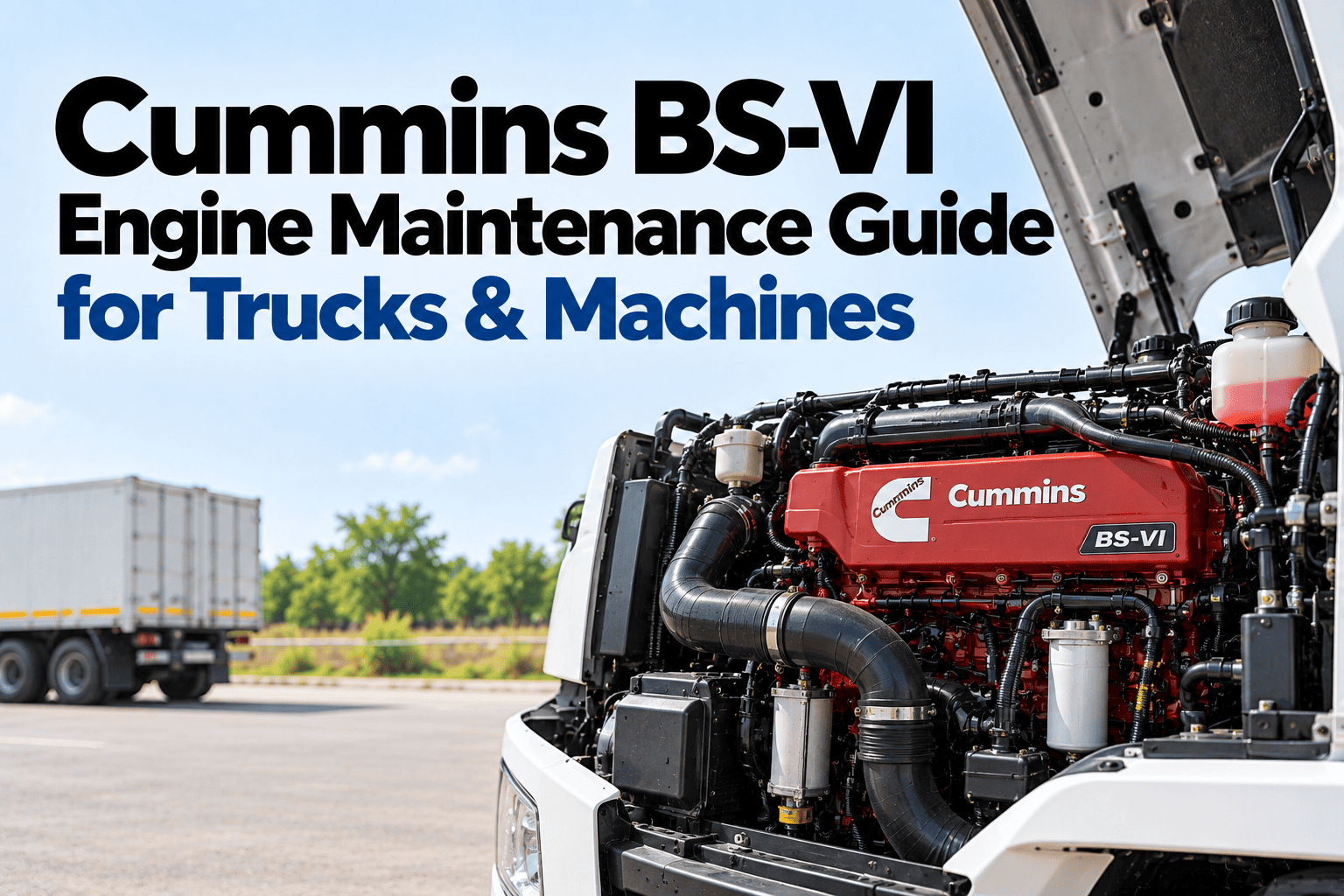
Cummins engines pull a large share of India's trucks, buses, excavators and gensets, and most of them have been reliable for decades. BS-VI changed the routine. The engine now feeds an after-treatment system that depends on clean diesel exhaust fluid, the right low-ash oil and sensors that can put a vehicle into derate when ignored. This guide covers filters, DEF, SCR, turbo and cooling checks, and shows how fleets schedule every Cummins service in HVI.
Cummins BS-VI Engine Maintenance Guide for Trucks and Machines
A BS-VI Cummins engine is two systems in one: the engine that makes power and the after-treatment that cleans the exhaust. Miss a service on either and the truck slows down, the excavator derates or the genset trips. Here is the full routine, from the oil sump to the tailpipe.
The exhaust path on a BS-VI Cummins engine. Every box here has its own maintenance task.
What Changed When Cummins Engines Moved From BS-IV to BS-VI
Workshops that service BS-VI engines the BS-IV way see more derates, more sensor faults and shorter after-treatment life. These are the differences that change the service routine.
Six Zones Every Cummins Service Must Cover
Whether it is an ISBe in a truck, a QSB in an excavator or a genset engine, the same six zones decide how long it lasts.
Lubrication
Change oil and filter at the interval set by your duty cycle. Use the grade in the operation and maintenance manual and check the level every day.
Skip it: bearing and turbo damageFuel system
Drain the water separator daily and replace fuel filters on schedule. BS-VI common rail injectors do not forgive water or dirt in the fuel.
Skip it: injector and pump failureAir intake
Replace the air filter when the restriction indicator says so, and check every hose clamp. On dusty Indian sites this comes far sooner than the calendar.
Skip it: dust wear and power lossCooling
Check coolant level and concentration, clean radiator fins and inspect belts and hoses. Summer heat and blocked radiators cause most overheating stops.
Skip it: overheating and head gasket damageTurbocharger
Look for oil at the inlet and outlet, listen for whine and check boost pipes for leaks. Let the engine idle for a few minutes after a hard run before shutdown.
Skip it: seal failure and oil burningAfter-treatment
Keep DEF clean and topped up, replace the DEF filter on schedule, watch soot load and never cut short an active regeneration.
Skip it: derate and costly SCR repairsCummins BS-VI Service Interval Matrix
Exact kilometre and hour values depend on the engine model and duty cycle, so take them from the Cummins operation and maintenance manual for each unit. This matrix shows what happens at each level.
| Item | Daily | Every oil change | Every second oil change | Yearly or as per manual |
|---|---|---|---|---|
| Engine oil level and leaks | Check | Replace | Replace | Replace |
| Oil filter | No action | Replace | Replace | Replace |
| Fuel water separator | Drain | Replace | Replace | Replace |
| Fuel filter | No action | Inspect | Replace | Replace |
| Air filter and intake hoses | Check indicator | Inspect | Replace if due | Replace |
| Coolant level and radiator | Check | Test strength | Clean fins | Service |
| Belts and tensioner | Look | Inspect | Inspect | Replace if worn |
| Turbo and boost pipes | No action | Inspect | Check shaft play | Full check |
| DEF level and tank cap | Check | Check | Check | Clean tank |
| DEF filter | No action | No action | Inspect | Replace |
| Fault codes and soot load | Watch dash | Scan | Scan | Full diagnosis |
Stop Tracking Cummins Service Dates in a Notebook
HVI reminds your workshop before every oil change, filter change and DEF service, using kilometres for trucks and hours for machines and gensets.
DEF: The Fluid Behind Many BS-VI Derates
Diesel exhaust fluid is simple, but small mistakes in buying and storing it lead to quality faults, crystal build-up in the doser and engine derate.
Do
- Buy sealed packs or bulk DEF from trusted suppliers
- Store drums indoors, away from direct sun
- Use clean funnels kept only for DEF
- Wipe the cap area before opening the tank
Do not
- Top up with water or loose urea fertiliser solution
- Reuse oil or coolant containers for DEF
- Pour DEF into the diesel tank by mistake
- Ignore a DEF quality warning on the dash
Warning Signs Decoder
Drivers and operators notice problems before the workshop does. Train them to report these signs, and give your mechanic a starting point.
Vehicle loses power and the after-treatment lamp is on
Likely causeDerate from a DEF, NOx sensor or SCR fault
First checkRead fault codes, then check DEF level and quality
Frequent regeneration or a high soot warning
Likely causeLong idling, short trips or wrong oil grade
First checkReview duty cycle and confirm low-ash oil is in use
White crystals around the doser or DEF lines
Likely causePoor DEF quality or a weak dosing spray
First checkInspect doser, DEF filter and supply lines
Blue smoke or oil at the turbo outlet
Likely causeTurbo seal wear or a blocked oil drain line
First checkCheck shaft play and the turbo oil return
Temperature gauge climbing on long climbs
Likely causeBlocked radiator fins, low coolant or slipping belt
First checkClean the radiator and test coolant strength
Hard starting and rough idle
Likely causeWater in fuel or a clogged fuel filter
First checkDrain the separator and replace the fuel filter
One Engine Brand, Three Ways to Count Service
Mixed fleets often run Cummins engines in very different jobs. The service logic stays the same, but the trigger changes.
Trucks and buses
Counted in kilometresHighway duty allows longer oil drains, while city and tipper duty with frequent stops needs shorter ones. Long idling at loading points adds soot load.
Excavators and loaders
Counted in engine hoursQSB engines in construction machines work in heavy dust and heat. Air filter and radiator cleaning often decide the real service interval.
Diesel gensets
Counted in run hours and monthsStandby sets may run few hours but still need time-based oil, coolant and battery service. Newer CPCB IV+ sets add after-treatment checks.
How HVI Schedules Cummins Services Across a Mixed Fleet
Each engine gets its own service plan, counted the right way. The fleet view shows how close every unit is to its next service. This is a sample view.
Daily checks by phone
Drivers log oil, coolant, DEF and dash warnings with photos before the first trip.
Reminders before due
The workshop sees upcoming services early enough to order genuine filters.
Full service history
Every job, part and fault code stays on record for warranty claims and resale.
Cummins BS-VI Maintenance FAQs
How often should a Cummins BS-VI engine be serviced?
There is no single number for every Cummins engine. The oil change interval depends on the model and the duty cycle, so a highway truck can go longer than a tipper or a machine working in dust. Take the interval from the operation and maintenance manual and then set it per unit in HVI so reminders follow real usage.
Which engine oil should I use in a Cummins BS-VI engine?
Use a low-ash oil that meets Cummins CES 20086, which corresponds to API CK-4, in the viscosity your manual recommends. High-ash older oils leave deposits in the DPF and catalyst that cannot be burnt off. Always record the oil grade used at each service so you can prove it during a warranty claim.
Why does my Cummins BS-VI truck go into derate?
Derate is the engine protecting the emission system. The most common reasons are low or poor-quality DEF, a faulty NOx sensor, a blocked DEF doser or high soot load. Read the fault codes before replacing any part, because guessing often means changing sensors that were not the problem.
Can I add water to DEF if it runs low?
No. DEF must stay at 32.5 percent urea, and any water changes the mix and triggers a quality fault. Tap water also carries minerals that damage the SCR catalyst over time. Keep sealed DEF stock with each vehicle or at each site so drivers are never tempted to improvise.
How do I manage Cummins services for trucks, machines and gensets together?
Each type needs its own trigger: kilometres for trucks, engine hours for machines and run hours plus months for gensets. A fleet tool that handles all three in one list saves the workshop from juggling separate registers. Book a demo to see a mixed Cummins fleet set up in HVI.
Keep Every Cummins Engine Out of Derate and On the Job
Bring daily checks, oil and filter changes, DEF care and fault history for every truck, machine and genset into one place. Your drivers report problems early, your workshop plans ahead and your engines keep earning.