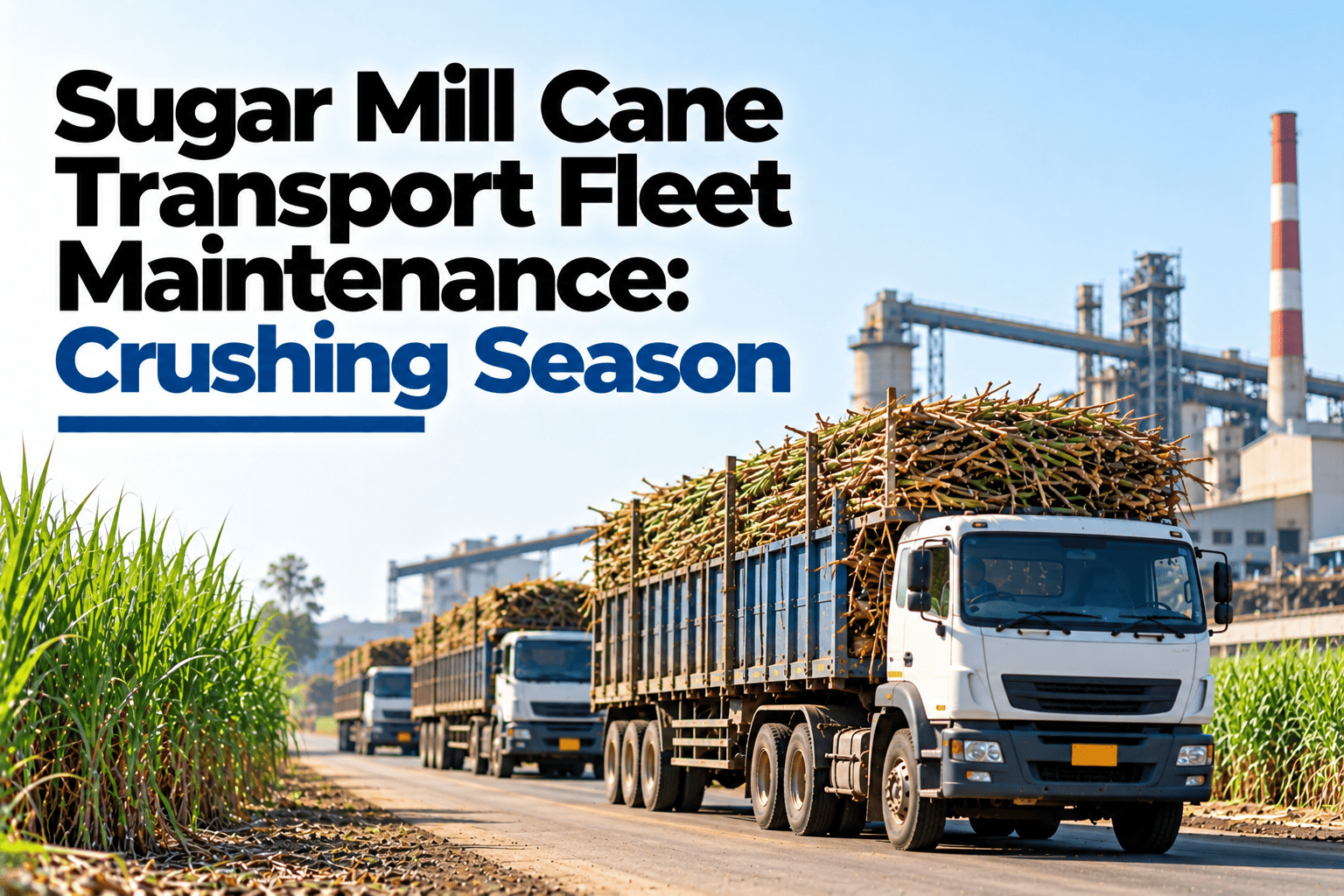
For a sugar mill, the crushing season is a race against time. Cane loses sucrose soon after it is cut, so every hour a tractor stands broken in a field or a trolley waits with a flat tyre costs recovery and money. Hundreds of tractors, trolleys, trucks and cane yard machines, many owned by contractors and farmers, must run day and night for months. The mills that keep cane flowing are the ones that prepare in the off-season and control breakdowns in season. This guide covers both, and how mills track every cane vehicle in HVI.
Sugar Mill Cane Transport Fleet Maintenance: Crushing Season
Use the off-season to overhaul, inspect every vehicle before crushing starts, keep trolleys safe on the road and cut breakdown delays once cane starts moving.
The Cane Transport Fleet and Where It Fails
Each type of vehicle in the cane chain has its own weak points. Knowing them tells you where to focus effort.
Tractors
Clutch, hydraulics, front axle and tyres under heavy pulling in soft fields.
Trolleys
Hitch, pins, axles, wheel bearings, brakes and reflectors.
Cane trucks
Springs, tyres, brakes and body under long hours and heavy loads.
Cane yard machines
Loaders, grab cranes and unloaders: hydraulics, wire ropes and structure.
Harvesters
Cutting blades, choppers, hydraulics and filters in dusty conditions.
Off-Season Overhaul Priorities
The off-season is when major work is cheapest and causes no lost crushing. Use last season's breakdown records to choose what to overhaul.
| Vehicle | Overhaul focus | Why it matters in season |
|---|---|---|
| Tractors | Clutch, hydraulic lift, cooling system, front axle | Field pulling wears these first |
| Trolleys | Axles, bearings, hitch and pins, floor and sides, brakes | A trolley failure can block a road or field exit |
| Cane trucks | Springs, brakes, tyres, body and tipping gear | Long hours on rough roads stress suspension |
| Cane yard machines | Hydraulics, wire ropes, slewing gear and structure | A yard stoppage halts unloading for the whole mill |
| Harvesters | Blades, choppers, conveyors, hydraulics, filters | Harvest delays leave cut cane waiting |
Pre-Season Vehicle Inspection
Every vehicle, whether owned by the mill or a contractor, should pass a documented inspection before it is allowed to carry cane.
Pass Every Cane Vehicle Before Crushing Starts
HVI lets mill staff inspect mill and contractor vehicles on a phone, with photos, and keeps a clear list of who is cleared to carry cane and who still needs repairs.
Tractor-Trolley Road Safety
Cane trolleys move slowly, often at night, on roads shared with fast traffic. A common and serious crash is a faster vehicle hitting an unlit or unmarked trolley from behind.
- Reflective tape on the rear and sides of every trolley
- Red reflectors and working tail lights at the back
- Clean reflectors regularly, as mud hides them
- Avoid parking trolleys on the road at night
- Do not overload or stack cane too high
- Secure the load so cane cannot fall on the road
- Check hitch pin and safety chain before each trip
- Keep to safe speeds, especially on slopes and turns
Reflective marking and lighting requirements apply under motor vehicle rules, and many states run special drives during the crushing season. Check the current rules in your state.
In-Season Breakdown Control
Once crushing starts, the goal is to keep cane arriving at a steady rate. Speed of response matters as much as the repair.
Gate check
Quick daily check of tyres, lights and hitch at the yard gate.
Report fast
Drivers report breakdowns with location straight away.
Mobile repair
Service vans with common spares cover field areas.
Standby units
Spare tractors and trolleys replace long repairs.
Learn
Record causes to plan the next off-season overhaul.
KPIs That Show the Cane Chain Is Healthy
Track these daily in season and compare with previous seasons.
Cane Fleet Readiness in HVI
A sample pre-season view. Mill and contractor vehicles are tracked together, so the cane office knows exactly who is cleared to start.
| Vehicle | Owner | Pre-season check | Reflectors | Status |
|---|---|---|---|---|
| TR-0142 | Mill | Passed | Fitted | Cleared |
| TT-2318 | Contractor | Brakes weak | Missing at rear | Not cleared |
| CT-0907 | Contractor | Passed | Needs cleaning | Clean and recheck |
| LD-0003 | Mill | Passed | Not applicable | Cleared |
Sugar Mill Fleet FAQs
When should a sugar mill start preparing its cane transport fleet?
Start overhauls soon after the previous season ends, while breakdown causes are fresh, and finish pre-season inspections a few weeks before crushing begins. This leaves time to repair any vehicle that fails inspection before cane starts moving.
Should contractor tractors and trolleys be inspected by the mill?
Yes. A large share of cane often moves on contractor and farmer vehicles, and a breakdown or crash involving them still delays the mill. Inspecting them before issuing passes keeps standards consistent and protects everyone on the road.
Why are reflectors so important on cane trolleys?
Cane trolleys travel slowly and often at night, so faster vehicles can come up behind them without seeing them. Reflective tape, red reflectors and working tail lights make trolleys visible in time to avoid a crash. Clean them regularly, as mud quickly covers them.
How can a mill reduce cane supply delays from breakdowns?
Check vehicles daily at the gate, have mobile repair vans with common spares, keep standby tractors and trolleys, and record every breakdown cause. Teams that log breakdowns in HVI can plan next off-season's overhauls from real data.
How can a mill track hundreds of cane vehicles?
Give every vehicle a record with its owner, inspection results, defects and repairs, and update it at the gate and in the field. A digital system shows who is cleared and which vehicles keep failing. Book a demo to see cane fleet tracking in HVI.
Keep Cane Flowing All Season
Overhaul in the off-season, clear every mill and contractor vehicle before crushing and track breakdowns and repairs in HVI. Steady cane supply, safer trolleys on the road and better recovery for the mill.