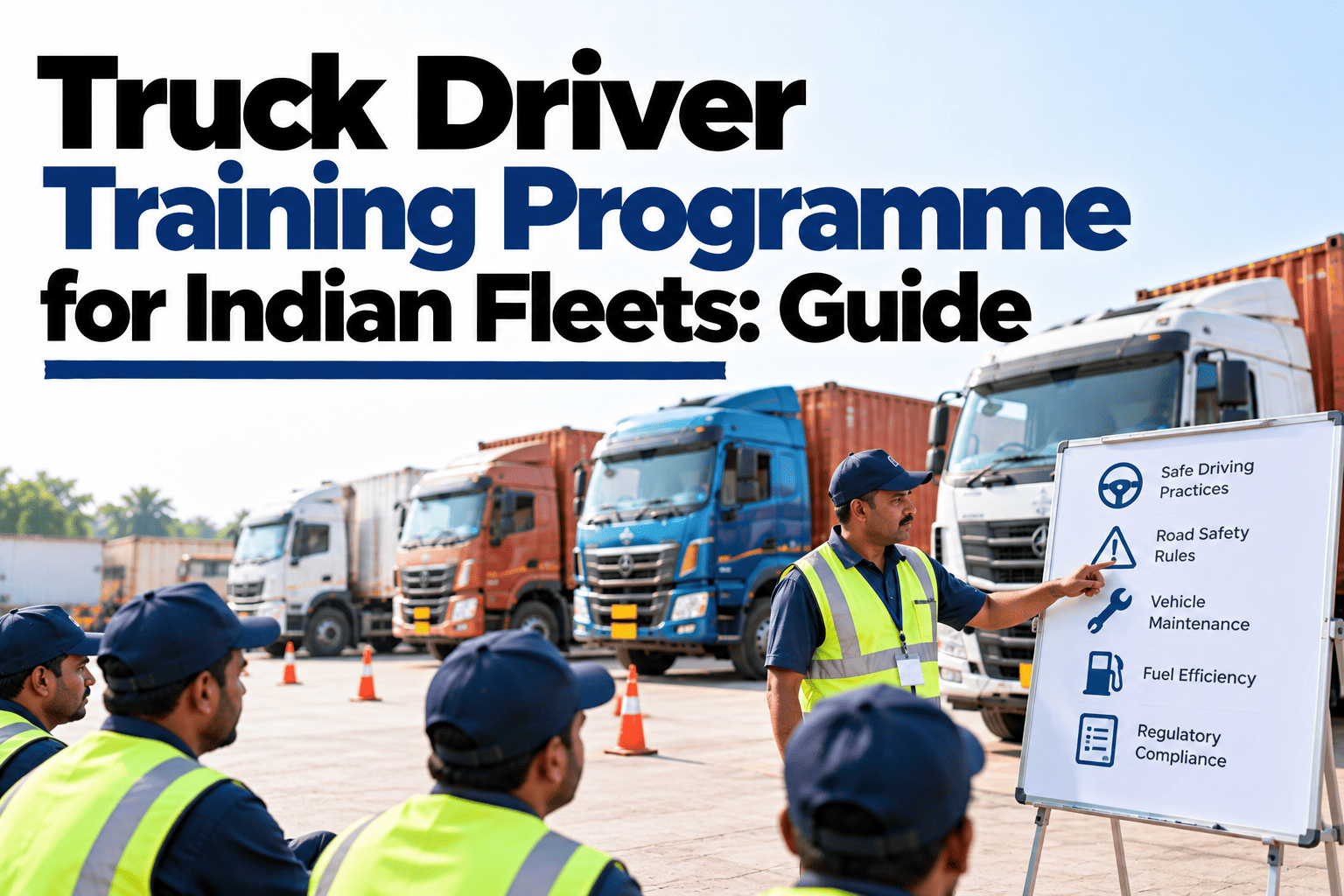
A well-trained driver is one of the best investments a fleet can make. Good drivers use less fuel, are gentler on clutches, brakes and tyres, spot problems during daily checks and are less likely to be involved in an accident. Yet many Indian fleets hand over the keys with little more than a short test drive. A simple, structured training programme changes that, and it does not need to be expensive or complicated. This guide shows how to build one, measure its results and how fleets track every driver's training in HVI.
Truck Driver Training Programme for Indian Fleets: Guide
Induction, defensive driving, daily vehicle checks, fuel-efficient driving and refresher training, plus how to measure whether it is working.
Six Core Training Modules
These modules cover the skills that matter most for safety, cost and vehicle care. Mix classroom, practical and on-road formats.
Company rules and safety
Policies, documents, rest rules and what to do in an emergency.
Daily vehicle checks
Tyres, brakes, lights, fluids and how to report defects.
Defensive driving
Safe following distance, hazard awareness and speed control.
Fuel-efficient driving
Smooth driving, correct gears and less idling.
Load safety
Securing loads, weight limits and safe tipping or unloading.
Accident and breakdown response
What to do, who to call and how to stay safe on the roadside.
Day-One Induction Checklist
A good first day sets expectations. Cover these before a new driver takes a loaded trip.
Fuel-Efficient Driving Habits to Teach
Fuel is the biggest running cost, and driving style makes a real difference to it.
- Accelerate smoothly and anticipate traffic
- Use the right gear for the engine's best range
- Keep a steady speed on highways
- Use engine braking on descents
- Long idling at stops and during loading
- Harsh braking and sudden acceleration
- Riding the clutch
- Over-speeding, which wastes fuel and raises risk
Keep Every Driver's Record in One Place
HVI records each driver's training, licence expiry and daily inspection history together, so you can see who needs a refresher and how training improves results.
Measuring Whether Training Works
Compare these measures for each driver before and after training. Real numbers show which sessions pay off.
| Measure | What it shows | Where the data comes from |
|---|---|---|
| Fuel efficiency | Effect of eco-driving training | Fuel records and odometer readings |
| Daily checks completed | Whether vehicle check habits stick | Inspection records |
| Defects reported early | How well drivers spot problems | Defect reports |
| Vehicle damage cost | Care of the vehicle | Repair records |
| Accidents and incidents | Effect of defensive driving training | Incident records |
Making Training Stick
Training only helps if drivers use it every day. These approaches work well for Indian fleets.
Keep it short
Short sessions in the driver's own language.
Show, then do
Practical demonstrations on real vehicles.
Coach with data
Use real fuel and check records in coaching.
Recognise good drivers
Reward safe, efficient driving publicly.
Driver Training Records in HVI
A sample view. Training sits alongside inspection habits and licence dates, so gaps are easy to spot.
| Driver | Last training | Daily checks done | Licence valid until | Status |
|---|---|---|---|---|
| Driver A | Refresher, last month | 98% | 2029 | Up to date |
| Driver B | Induction, 5 months ago | 84% | 2027 | Refresher due |
| Driver C | None recorded | 61% | Expires in 3 weeks | Train and renew licence |
Driver Training FAQs
What should a truck driver training programme include?
A practical programme covers induction, company rules and safety, daily vehicle checks, defensive driving, fuel-efficient driving, load safety and accident and breakdown response, followed by regular refresher sessions.
How often should drivers get refresher training?
Many fleets hold short refresher sessions every few months and a full skills reassessment once a year. Drivers involved in incidents or showing poor results may need coaching sooner.
Does driver training really save fuel?
Smooth driving, correct gear use, steady speeds and less idling usually reduce fuel use. Measure each driver's fuel efficiency before and after training to see the actual effect in your fleet.
Where can drivers get formal training in India?
Institutes of Driving Training and Research and accredited driving schools offer formal courses, and many vehicle makers run driver programmes. In-house training then builds on these with your own vehicles and routes.
How can I track training for all my drivers?
Record each session, licence date and inspection history for every driver in one system and set reminders for refreshers. Teams that keep driver records in HVI see gaps at a glance. Book a demo to see how.
Better Drivers, Lower Costs, Safer Roads
Build a simple training programme, measure the results and track every driver's training, licence and inspection habits in HVI. Less fuel, less damage and fewer accidents.