The machines in Indian workshops have changed faster than the people who fix them. A modern excavator or BS-VI truck has electronic controls, sensors, high-pressure fuel systems and complex hydraulics, and a mechanic who only knows engines and spanners struggles to diagnose it. Good mechanics are also hard to find and easy to lose. Fleets that build their own skilled team, and keep its knowledge in the company, fix machines faster and spend less on repeat repairs. This guide explains how, and how workshops capture repair knowledge in HVI.
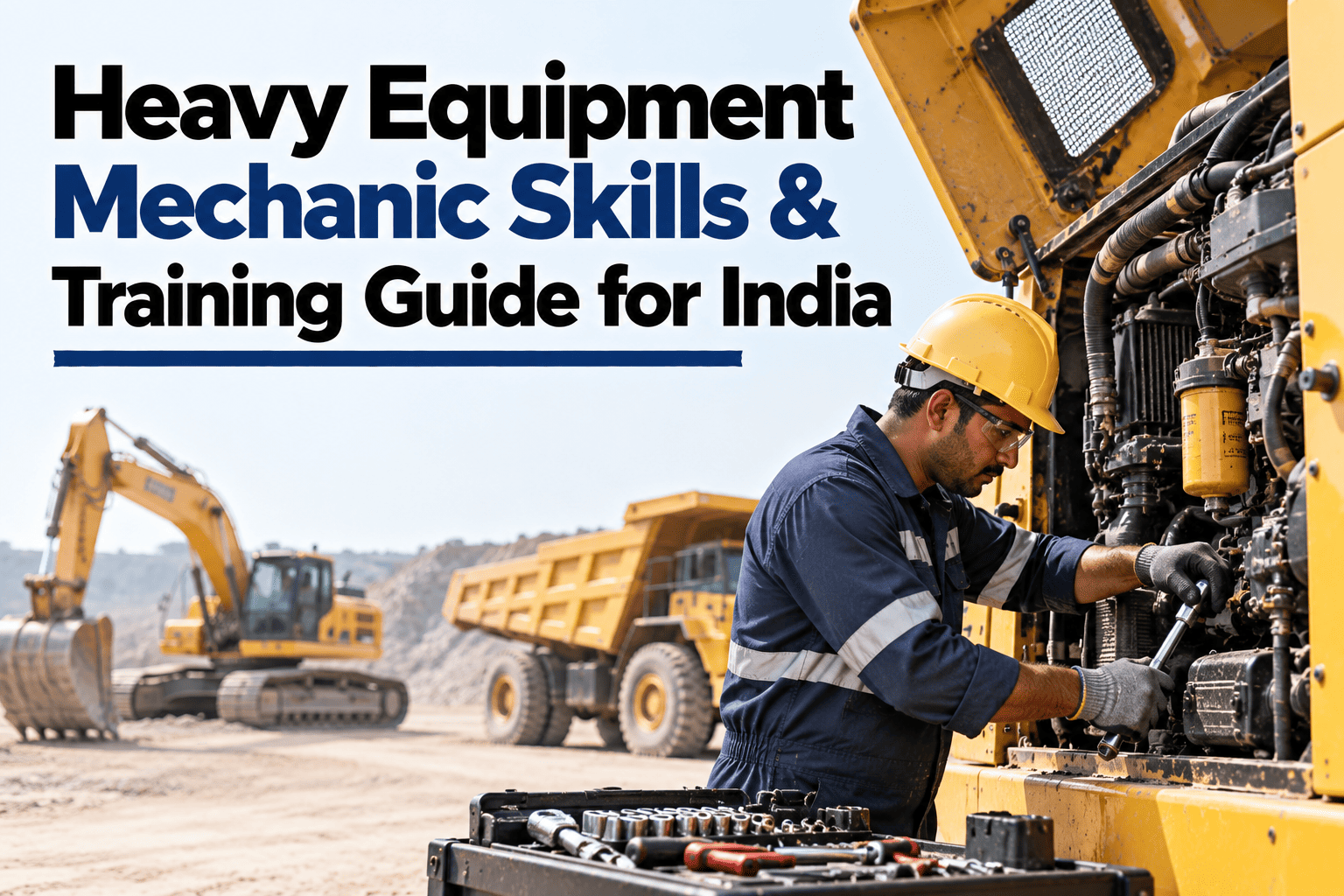
Heavy Equipment Mechanic Skills and Training Guide for India
The core skills a modern mechanic team needs, training routes, tools, career paths and how to measure workshop productivity.
Core Skills a Mechanic Team Needs
No single mechanic needs to master everything, but the team as a whole should cover all of these.
Engines and drivelines
Servicing, overhauls, clutches, gearboxes and axles.
Hydraulics
Pumps, valves, cylinders, hoses and pressure testing.
Electrical systems
Charging, starting, wiring and reading circuit diagrams.
Electronics and diagnostics
Fault codes, sensors and diagnostic software.
Undercarriage and wear parts
Measuring wear, tracks, rollers and buckets.
Safety and good practice
Lock-out, safe lifting and working at height.
Training Routes for Mechanics
Strong teams combine formal training with structured learning on the job.
| Route | What it gives | Best for |
|---|---|---|
| ITI diesel mechanic courses | A solid base in engines and basic systems | New entrants starting their careers |
| Maker technician courses | Brand-specific training on systems and diagnostics | Teams working on that brand's machines |
| On-the-job mentoring | Practical skills from senior technicians | Every mechanic, every week |
| Short specialist courses | Focused skills such as hydraulics or electronics | Filling specific gaps in the team |
| Apprenticeships | Structured learning while working | Building a steady pipeline of young mechanics |
A Simple Skills Matrix
Mapping each mechanic's level against key skills shows gaps and who can train whom.
| Mechanic | Engines | Hydraulics | Electrical | Diagnostics |
|---|---|---|---|---|
| Mechanic A | Expert | Expert | Skilled | Skilled |
| Mechanic B | Skilled | Learning | Expert | Skilled |
| Mechanic C | Skilled | Skilled | Learning | Learning |
Here Mechanic A can mentor others on hydraulics, and Mechanic B on electrical work. Diagnostics is the weakest area for the team.
Keep Repair Knowledge in the Company
HVI records every job card with the fault, cause, fix, parts and mechanic, so solutions are easy to find next time and knowledge stays even when people move on.
Tools a Modern Workshop Needs
Skills need the right tools. Diagnostic tools matter more every year.
- Torque wrenches and quality hand tools
- Hydraulic pressure gauges and test kits
- Lifting equipment and stands
- Hose crimping and cleaning equipment
- Digital multimeter and test leads
- Diagnostic scanners for your machine brands
- Laptop with maker software where needed
- Oil sampling kits for condition checks
A Clear Career Path
Mechanics stay longer when they can see where their skills will take them.
Helper
Learns basics while assisting on jobs.
Mechanic
Handles routine services and repairs.
Senior technician
Diagnoses complex faults and mentors others.
Workshop supervisor
Plans work, quality and team training.
Mechanic Productivity in HVI
A sample monthly view. Repeat repairs show where more training or support is needed.
| Mechanic | Jobs completed | Repeat repairs | Average job time | Status |
|---|---|---|---|---|
| Mechanic A | 46 | 1 | On standard | Strong |
| Mechanic B | 39 | 3 | Slightly over | Hydraulics training |
| Mechanic C | 28 | 6 | Well over | Mentor support needed |
Mechanic Skills and Training FAQs
What skills does a heavy equipment mechanic need today?
Beyond engines and drivelines, modern mechanics need hydraulics, electrical and electronics knowledge, diagnostic software skills and an understanding of BS-VI after-treatment systems, along with strong safety habits.
Is an ITI diesel mechanic course enough?
It gives a good foundation, but most mechanics also need maker-specific training, practical mentoring and short courses in hydraulics and electronics to work confidently on modern machines.
How do I measure mechanic productivity?
Track jobs completed, time per job against a standard and, most importantly, repeat repairs. A low repeat rate shows a mechanic is finding and fixing the real cause the first time.
How can I keep good mechanics?
Offer a clear career path, pay by skill level, invest in training and good tools, and recognise strong work. Teams that record jobs in HVI can see who is performing well.
How do I stop knowledge leaving when a mechanic quits?
Record every job with the fault, cause, fix and parts used, so solutions are searchable for the whole team. Book a demo to see job card history in HVI.
Build a Workshop Team That Fixes It Right First Time
Train mechanics in modern skills, give them the right tools and a clear career path, and keep every repair's knowledge in HVI. Faster fixes, fewer repeat repairs and machines back at work sooner.