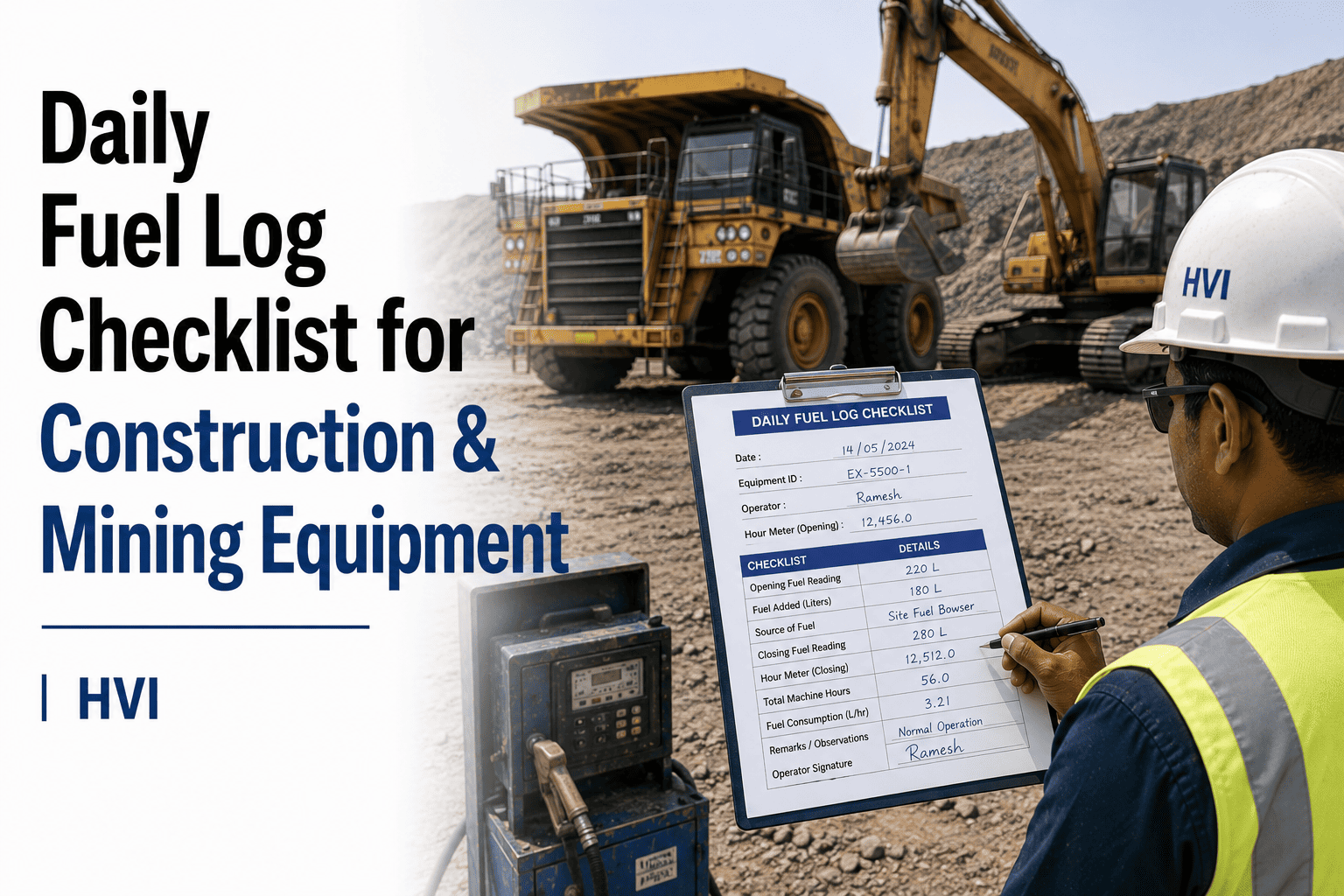
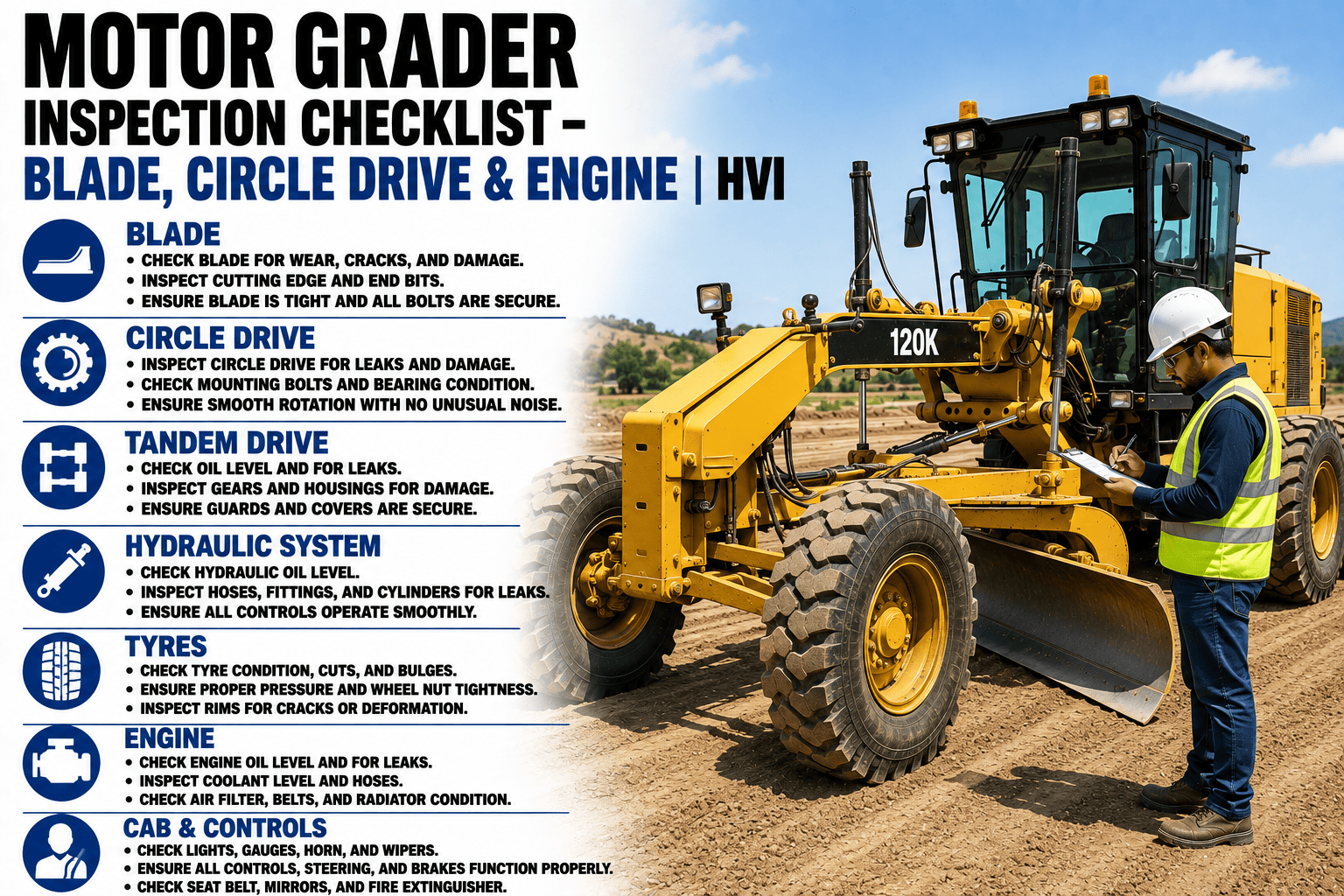
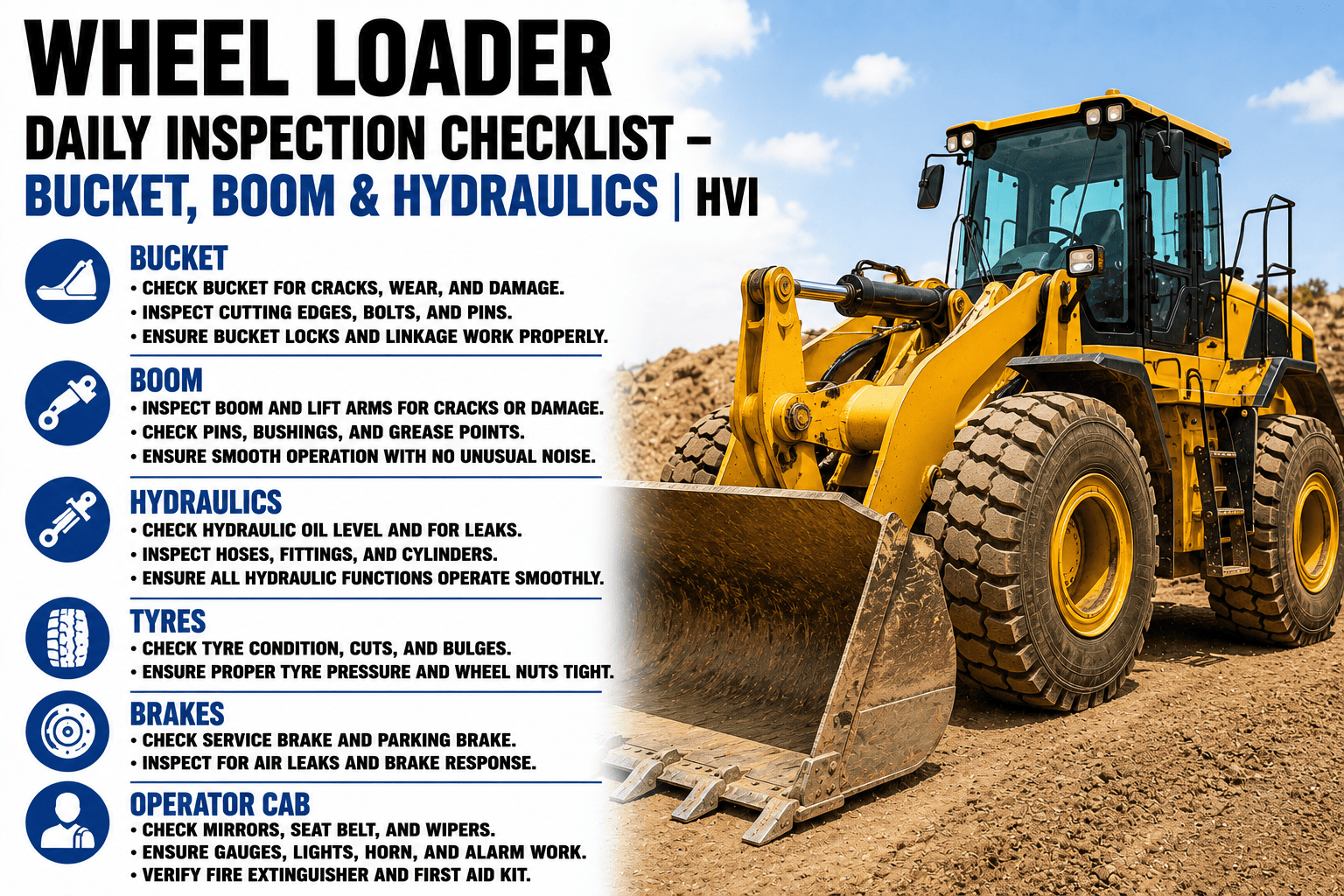
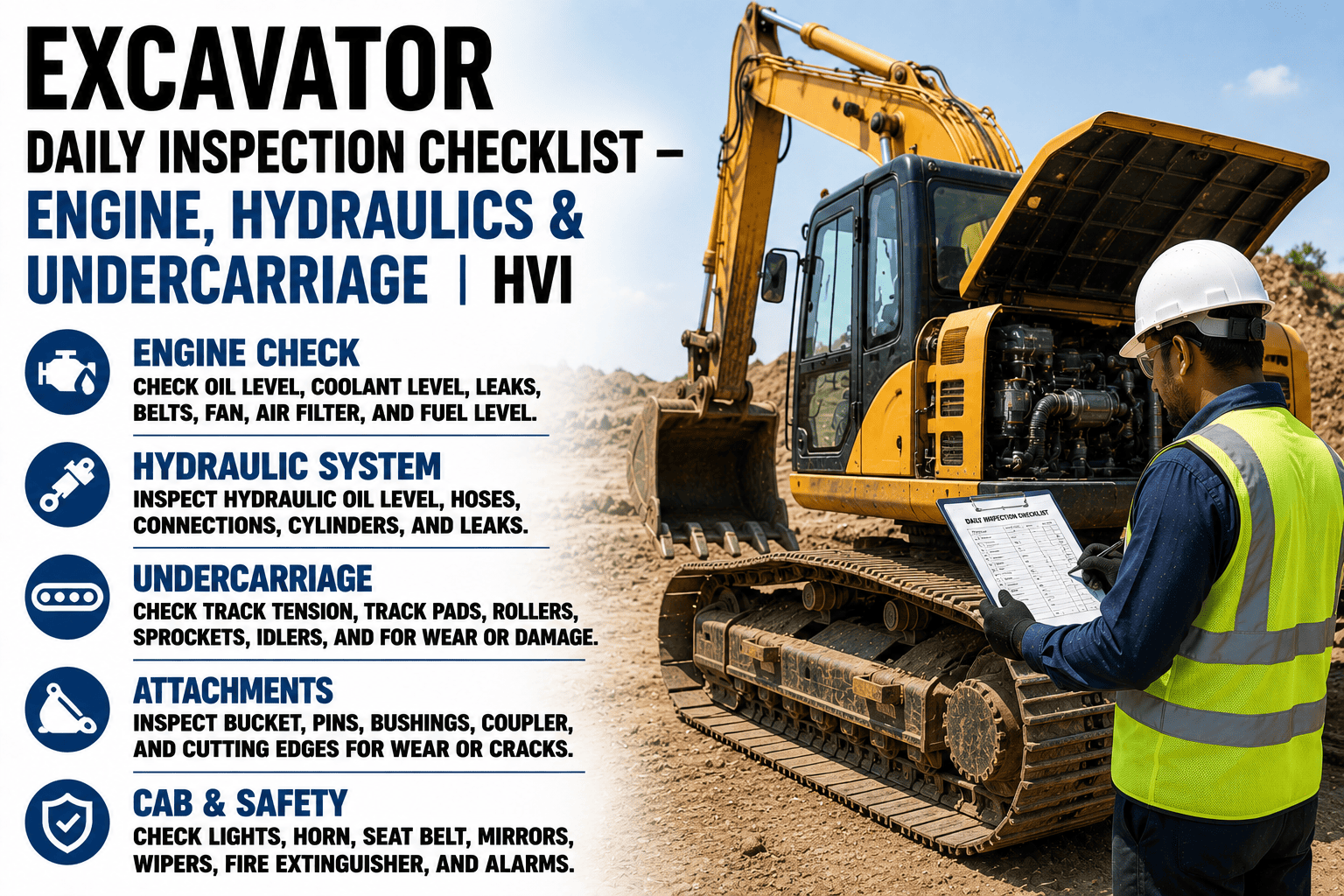
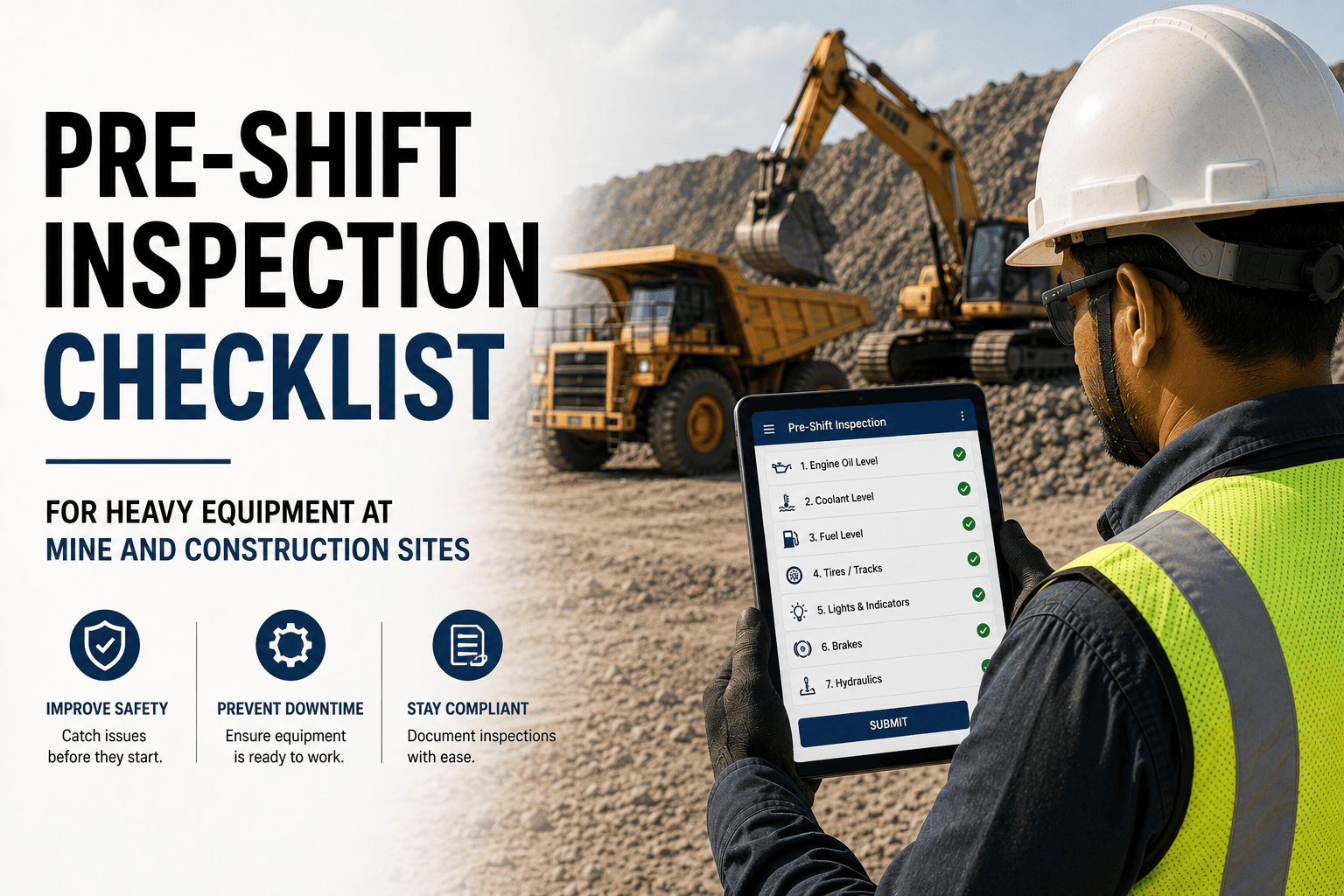
A tyre that fails between scheduled services almost always showed a sign first — a tread depth creeping toward the limit, a pressure reading drifting low, a sidewall bulge nobody measured because the walk-around was visual only. A monthly inspection built around five specific measurements, not a general glance, is what turns "the tyres looked fine" into a record that actually catches a problem while it's still cheap to fix. This checklist covers excavators, loaders, dump trucks, and commercial vehicles alike, with the same five checks adapted to each. Here's the full list, and how HVI auto-generates a work order the moment a critical item fails instead of waiting for the next inspection to catch it.
Monthly Tyre Inspection Checklist for Heavy Equipment Fleets
Tread wear, pressure, sidewall condition, rim seating, and rotation log — the five measurements a monthly tyre inspection actually needs, for excavators through commercial vehicles.
The Checklist
Five checks per tyre, in this order, with a pass or fail on each and a photo where the item calls for one.
1
Tread depth
Measured at multiple points across the tread, not estimated by eye — the earliest and most reliable indicator of remaining safe life.
2
Inflation pressure
Checked against the specification for that tyre and its current load, since correct pressure varies by duty, not a single fixed number.
3
Sidewall condition
Inspected for cuts, bulges, cracking, or embedded material — damage here often precedes a failure that tread and pressure checks alone would miss.
4
Rim seating and condition
Confirming the bead is properly seated and the rim shows no cracking, corrosion, or damage that could compromise the seal.
5
Rotation log entry
Current position and hours since last rotation recorded against the specific tyre, so a missed interval shows up on the record rather than staying invisible.
See this checklist running as a guided mobile form, with critical failures raising a work order automatically.
What Counts as a Critical Failure
| Item | Escalation Trigger |
|---|---|
| Tread depth | Below the minimum safe threshold for that tyre type |
| Inflation pressure | More than a defined margin below the specified range |
| Sidewall condition | Any visible bulge, deep cut, or exposed cord |
| Rim seating | Any sign of an improperly seated bead or visible rim damage |
Why a Monthly Cadence, Not Just a Daily Glance
Slow changes need a measured baseline
Tread wear and gradual pressure loss develop over weeks, and only a measured monthly reading compared against the last one reveals the trend.
Daily checks catch different problems
A quick daily walk-around is right for catching sudden damage, but it isn't built to measure tread depth or log rotation history consistently.
A fixed cadence makes the record comparable
Inspecting on the same interval every time means this month's reading can be judged against last month's, rather than against an inconsistent schedule.
It's the natural point to update the rotation log
A monthly inspection is a convenient checkpoint to confirm whether a scheduled rotation actually happened on time.
Frequently Asked Questions
Does this checklist apply the same way to excavators and commercial vehicles?
The five checks apply across equipment types, though the specific thresholds for tread depth, pressure range, and rotation interval differ by tyre type and should follow the manufacturer's specification for that vehicle or machine.
What happens when a critical item fails during inspection?
A failed critical item can raise a corrective work order automatically and notify the site engineer, rather than depending on the inspector remembering to escalate it separately afterward.
Can this work at remote sites with limited network coverage?
Yes — inspections are captured on the device first and sync once signal returns, so a remote site doesn't lose a month's tyre inspection record to a dropped connection.
Does this integrate with our SAP, Oracle, or Tally tyre cost tracking?
Yes — inspection results and any resulting work orders can sync with these systems, keeping tyre cost and condition data connected to your existing financial records.
How quickly could this checklist be running across our fleet?
The checklist can be configured and rolled out within a day; sign up free to see the full checklist library, including this one, ready to customise for excavators, dump trucks, and more.
Catch a Tyre Problem While It's Still Cheap to Fix
Five measured checks a month, on a fixed schedule, is the difference between a tyre problem caught early and one that shows up as an unplanned failure mid-shift. Start free and put this checklist to work on your fleet, or bring your current tyre inspection process to a 30-minute session with our India team.