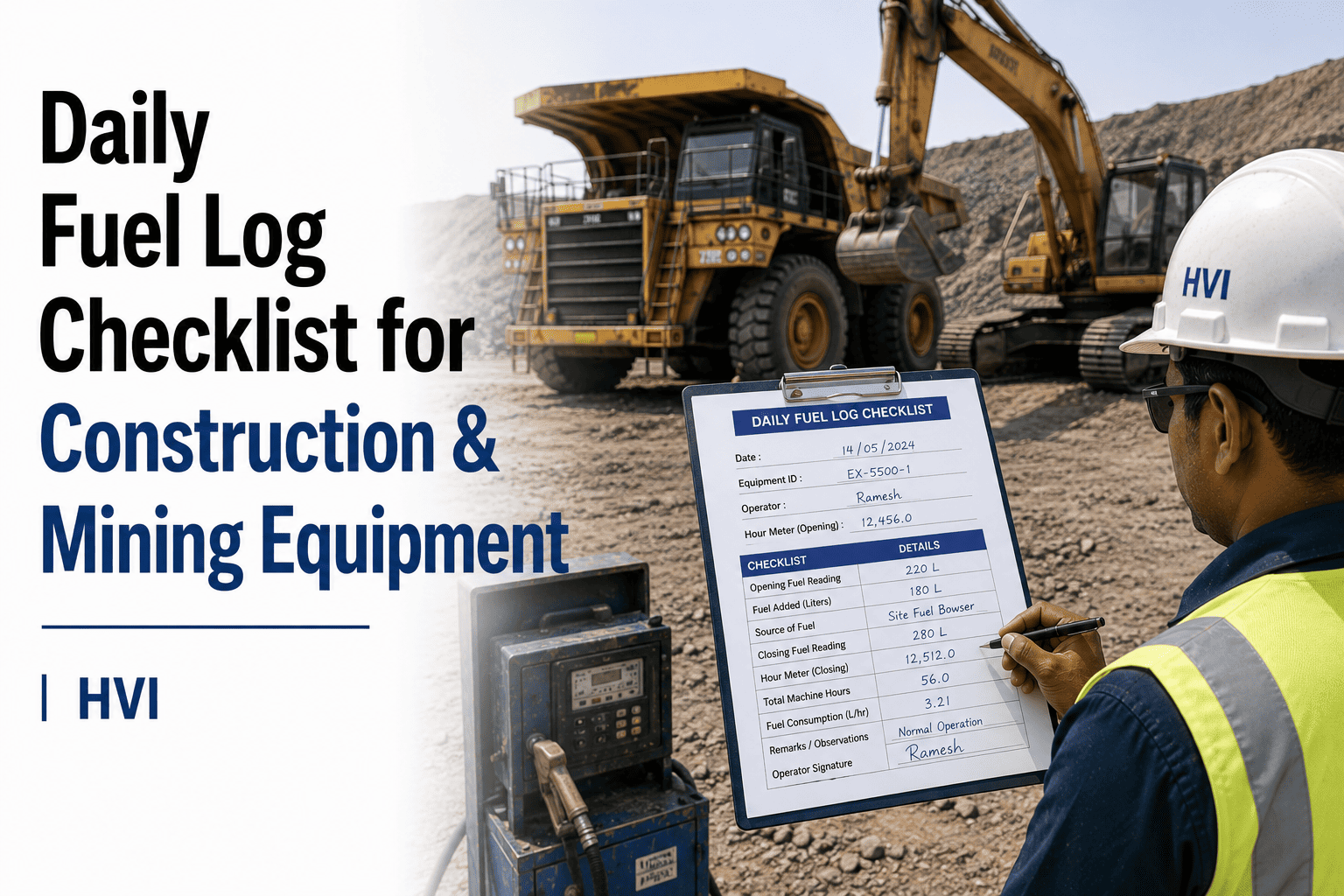
Most fuel logs get filled in after the fact, at the end of a shift, from memory — which means the one piece of information that actually matters, the hour meter reading at the exact moment fuel went in, is usually an estimate rather than a fact. A checklist built around three checkpoints instead of one form fixes this: what gets confirmed before the fill starts, what gets recorded during it, and what gets verified after. Splitting it this way makes each step small enough that an operator can genuinely do it in the field, rather than reconstructing a whole day's fuel activity from memory back at the yard. Here's that three-checkpoint structure, and how HVI turns each checkpoint into a guided mobile step instead of a paper form filled in later.
Daily Fuel Log Checklist for Construction & Mining Equipment
A three-checkpoint fuel log — before, during, and after every fill — built so each step happens in the field, not reconstructed from memory at day's end.
Checkpoint One: Before the Fill
Confirmed the moment fuel is requested, before a single litre is dispensed.
Equipment ID and operator name
The specific asset and the person requesting fuel on its behalf, so the fill is tied to a name from the outset. That early attribution means there's never a gap where fuel left the shelf without a clear record of who it was for.
Hour meter reading, with photo
A timestamped photo of the meter taken before dispensing starts — the single fact everything else on this checklist depends on. Capturing it as a photo, rather than a typed number, removes any question later about whether the reading was accurate.
Visual check of tank and cap
Confirming the fuel cap is present and secured, and there's no visible sign of tampering or leakage before adding fuel. This quick check catches an issue with the tank itself before any new fuel goes in on top of it.
Checkpoint Two: During the Fill
Recorded as the fuel is actually being dispensed, not after the fact.
Litres dispensed
Read directly off the dispenser meter, not estimated from a drum level or a tank gauge, wherever a metered source is available. A direct meter reading removes the guesswork that a visual estimate would otherwise introduce into the record.
Fuel source
Site bulk tank, mobile bowser, or third-party vendor, so a discrepancy can later be traced back to where the fuel actually came from. Knowing the source in advance saves time if that trace is ever needed.
Supervisor present, if required
For high-value fills or overnight stock, a second person confirming the dispensed volume in real time closes off the easiest opportunity for a false entry. That second confirmation is a low-cost step for the highest-risk fills specifically.
See this three-checkpoint flow running as a guided mobile form, with each step timestamped automatically.
Checkpoint Three: After the Fill
Closed out before the operator moves on to the next task.
Tank level after fill, where applicable
For bulk site tanks, an after-reading lets the fill be cross-checked against how much the source tank actually dropped. That cross-check is what catches a mismatch between what was logged and what actually left the tank.
Anomaly flag
A quick pass or fail on anything unusual noticed during the fill — a smell, a discoloured tank, a reading that doesn't match expectations. Flagging it in the moment means the concern is recorded while it's still fresh, not reconstructed later.
Supervisor sign-off
A named supervisor confirming the completed entry, closing the loop between what happened and who verified it happened. That final confirmation is what makes the entire three-checkpoint record something the fleet can actually stand behind.
Why Splitting the Checklist This Way Matters
The critical reading happens at the right moment
A before-fill meter reading captured in the field can't be estimated later, because the checklist won't let the operator move to checkpoint two without it. That built-in requirement is what makes the reading a fact rather than a best guess.
Each step is small enough to actually complete
Three short checkpoints spread across a natural break in the task are easier to comply with consistently than one long form filled in at the end of a shift. Splitting the work this way is what keeps compliance high even on a busy day.
A discrepancy can be traced to a specific step
If the after-fill tank level doesn't match the dispensed volume, the gap is narrowed to checkpoint two specifically, rather than the whole day being in question. That narrowing is what turns a vague discrepancy into something specific enough to investigate.
Sign-off closes the loop, not just the form
A supervisor confirming after the fact, rather than co-signing a blank form in advance, means the sign-off actually verifies something happened. That distinction is what gives the sign-off real meaning rather than being a formality.
Frequently Asked Questions
Does splitting the checklist into three steps slow down refuelling?
Each checkpoint takes seconds on a mobile form with photo prompts and dropdowns, so the total time added is minimal compared to the reconciliation time saved when a discrepancy needs tracing later.
What happens if the before-fill photo is missed?
A required field can block progression to the next checkpoint until it's completed, which is the main advantage of a digital flow over a paper form that can simply be left blank.
Does this work at remote sites with unreliable network coverage?
Yes — each checkpoint is captured on the device first and syncs once signal returns, so a remote mine bench or highway stretch doesn't lose a fill record to a dropped connection.
Can this feed into our SAP, Oracle, or Tally fuel cost reconciliation?
Yes — completed fuel logs can sync with these systems, so the three-checkpoint record feeds directly into the same fuel expense figures your finance team reconciles.
How quickly could this checklist be running on our own fleet?
The three-checkpoint flow can be configured and rolled out within a day; sign up free to see the full checklist library, including this one, ready to customise.
Capture the Fact, Not the Estimate
A fuel log built around three checkpoints in the field beats a single form filled in from memory, every time. Start free and put this checklist to work on your next fill, or bring your current fuel log format to a 30-minute session with our India team.