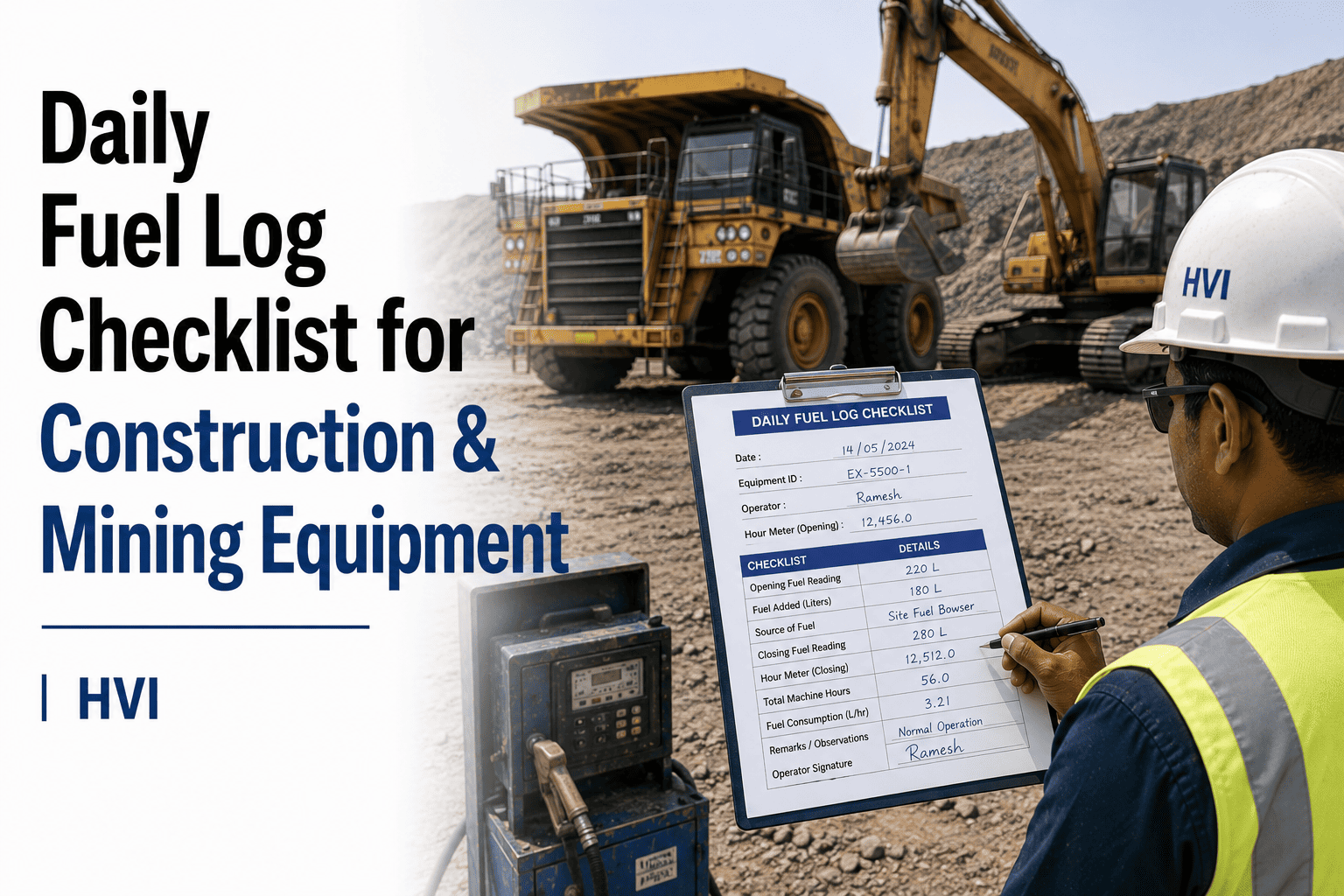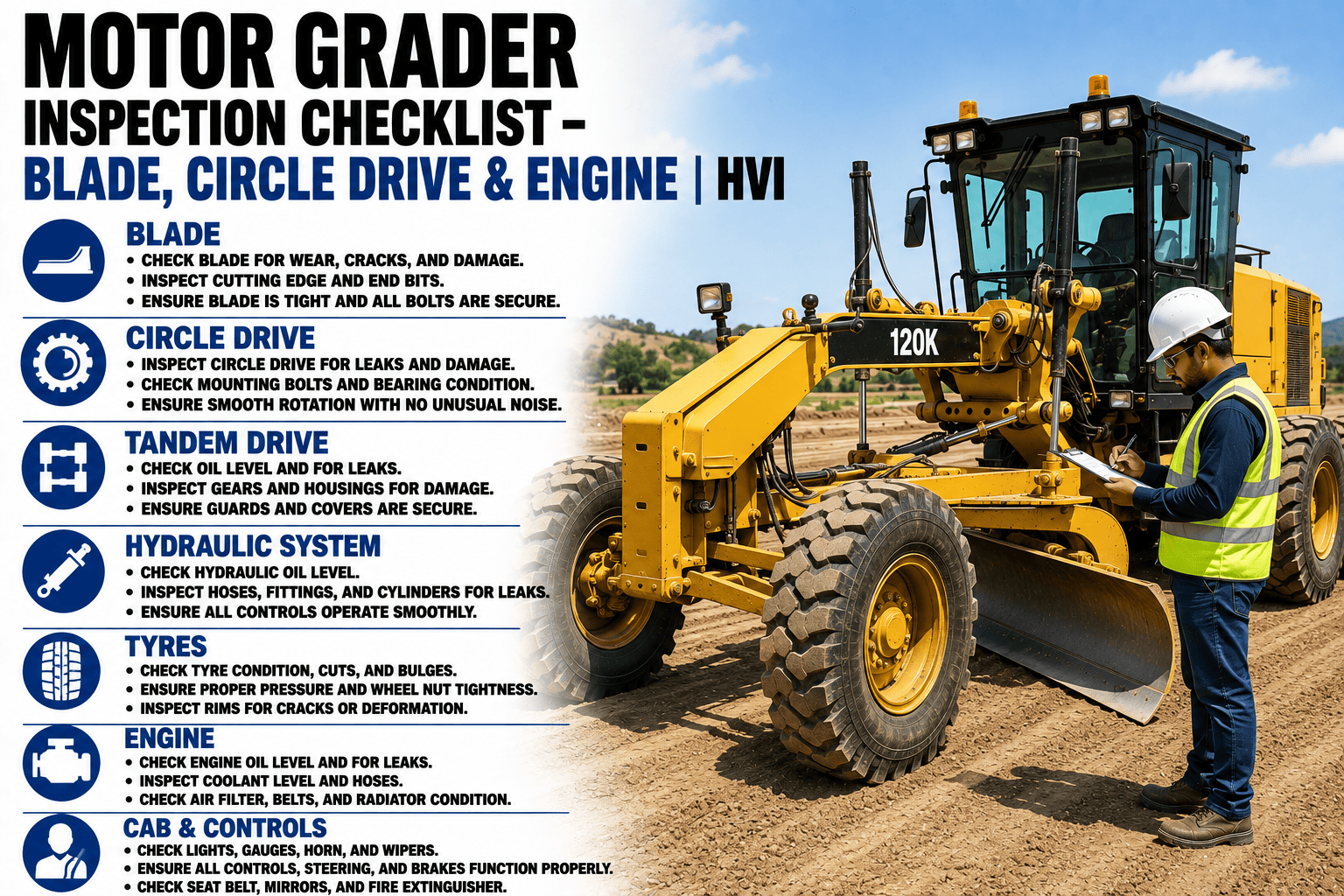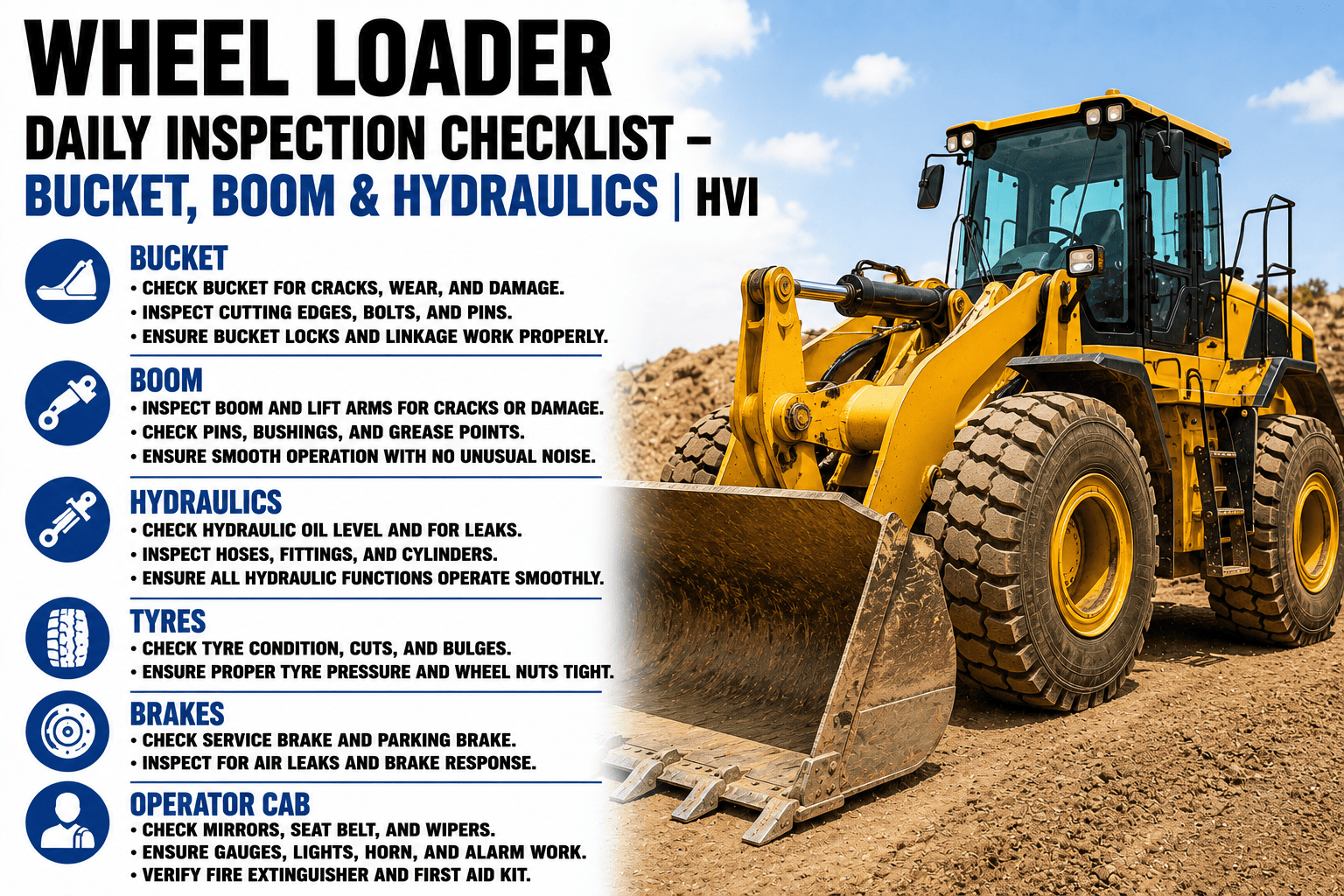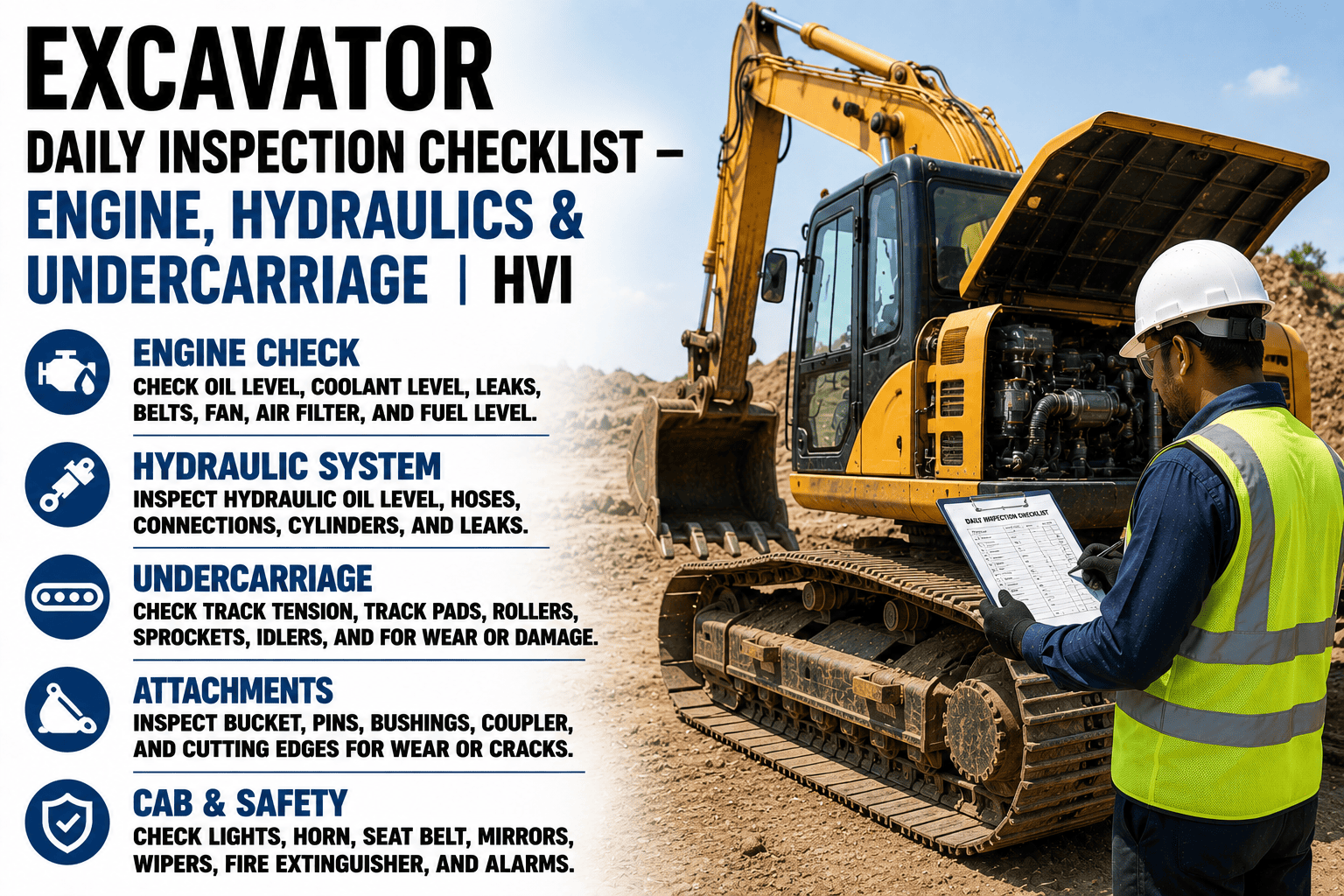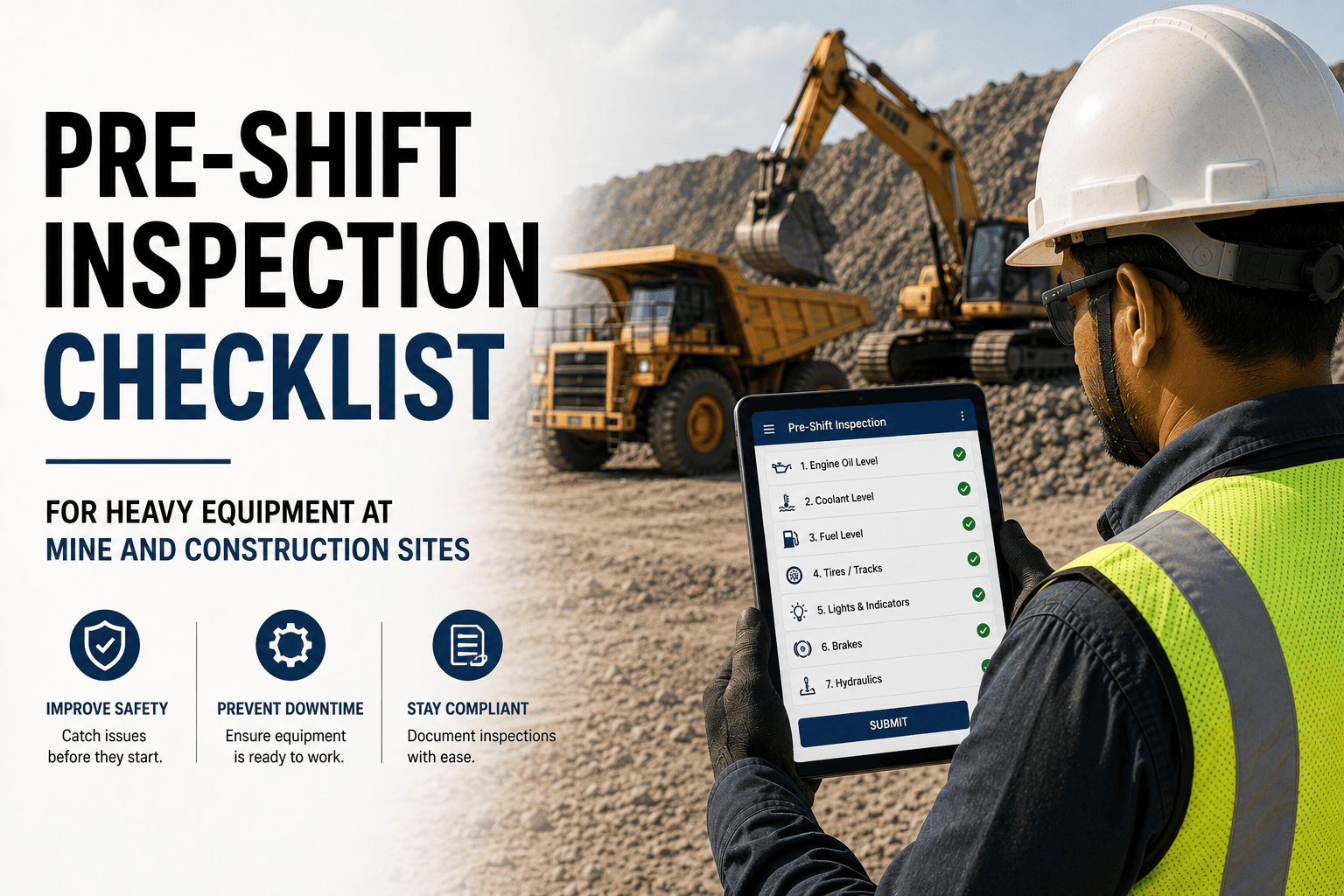
The right pre-shift inspection checklist is the single cheapest safety and uptime tool available to any Indian mining or construction site — and the wrong one is the reason your dumper drops out mid shift with a defect that was there in the morning. This is a working pre-shift inspection checklist for heavy equipment at mine and construction sites, mapped to the specific failure modes Indian sites actually see: monsoon-related electrical faults in Odisha and Chhattisgarh, dust ingress in Rajasthan open-cast pits, hydraulic hose damage from rocky terrain, and undercarriage wear typical of opencast conditions. It is DGMS aligned, editable for your exact asset model, and available as a downloadable PDF, Excel template or live mobile form inside HVI, and you can start a free trial to run this checklist on real assets from tomorrow.
Pre-Shift Inspection Checklist For Heavy Equipment At Mine & Construction Sites
Every check point Indian supervisors and operators need to run before every shift — engineered for monsoon faults, dust ingress, hydraulic damage and undercarriage wear on real opencast and highway sites. Editable for your specific machines.
What This Checklist Actually Covers
This is a working pre-shift check for HEMM and heavy vehicles at Indian sites — designed around the specific failure modes seen on opencast coal, iron ore and highway construction sites. It sits across 8 inspection sections, each covering 3 to 6 critical checks, with a 5-minute total run time for a trained operator. Every check point has a "why it matters" note so new operators and supervisors understand the risk being managed, not just the box being ticked.
Failure Modes That Indian Sites Face
A generic global checklist misses the failure modes that actually break down HEMM in India. These five conditions define what the pre-shift check must catch, and are the reason this checklist was built the way it is.
Electrical Faults
4 to 5 months of continuous humidity plus flash flooding cause corrosion on battery terminals, starter motors, alternators and cabin control connectors — the single biggest cause of monsoon breakdowns on Indian sites.
Dust Ingress
Rajasthan and Andhra opencast operations generate extreme dust that clogs air filters, wears cylinder liners and damages hydraulic seals. Daily filter check and cabin pressurisation matter more here than global manuals suggest.
Hydraulic Hose Damage
Rocky highway alignment and iron ore mining sites cause hose chafing and cuts that are invisible unless inspected daily. A single hose failure on a shift can strand a shovel or excavator for 6 to 8 hours.
Track & Pin Wear
Opencast conditions accelerate undercarriage wear 2 to 3 times faster than most manufacturer specs assume. Daily inspection of track tension, roller condition and shoe wear pays back in months of extended component life.
Lighting & Reverse Alarms
Many Indian sites operate 24 hour rotations. Working headlights, cabin lights and reverse alarms are non-negotiable safety devices that must be checked before every shift change — especially handover between day and night crews.
Statutory Documentation
DGMS and Mines Act audits require documented pre-shift checks for every deployment of HEMM. A missing or unsigned check on a specific machine on a specific date can trigger a compliance notice or fine.
The Complete Pre-Shift Checklist · 8 Sections
Each section below is scoped for a typical dumper or excavator, and can be edited for tippers, loaders, cranes or drill rigs. Total run time: 5 to 7 minutes per asset.
Engine And Fluids
First-look checks before the machine is started. Catches leaks, low fluid levels and monsoon-related corrosion that would otherwise become mid-shift breakdowns.
Electrical System
Critical during monsoon and at sites with heavy dust. Corroded terminals, weak batteries and damaged wiring are the single largest cause of unplanned shift-loss on Indian HEMM.
Hydraulic System
Hydraulic issues account for the highest single repair cost on excavators, shovels and dozers. A cut hose caught before start saves 6 to 8 hours of downtime and expensive emergency callouts.
Brake System
Non-negotiable safety check. A brake failure on a loaded dumper descending a haul road is one of the most dangerous events on any Indian mining site. Any failed item locks the asset from dispatch.
Tyres And Undercarriage
Tyres are typically 15 to 20 percent of operating cost on Indian HEMM. Undercarriage on dozers and excavators wears fastest at opencast sites. Both need daily attention to catch damage early.
Safety Devices
DGMS statutory checks. Every one of these items is a mandatory safety device. Missing or non-functional items must lock the asset from dispatch until fixed and re-inspected by a mechanic.
Cabin And Operator Controls
Operator visibility, comfort and ergonomics directly affect fatigue and reaction time. Especially critical for night shift and long duration hauls where fatigue is the largest safety risk.
Documentation And Sign-Off
Statutory closure of the pre-shift inspection. Every check must be signed by the operator with time and machine details, and any defect must trigger a corrective work order before the machine leaves the parking bay.
Run This Checklist On Every Operator's Phone Tomorrow
The full 8-section pre-shift checklist ships pre-loaded inside HVI. Start a free trial, load your fleet in the first hour, and have operators completing signed digital pre-shifts by the next shift.
Three Formats. One Checklist.
The same pre-shift inspection framework, packaged three ways so you can run it on paper, on Excel or on mobile depending on site maturity.
PDF Printable
A4 printable pre-shift form with all 8 sections and 40 plus check items. Print, staple, hand out to operators. Best as a bridge for teams still transitioning from clipboard to digital.
Excel Template
Editable spreadsheet version with drop-downs, formulas and per-asset tabs. Good for smaller fleets or offline sites doing periodic analysis in Excel with limited IT infrastructure.
Mobile Form In HVI
Full digital pre-shift with photo capture, GPS timestamp, offline mode, auto work orders and DGMS ready compliance export. This is where the real ROI compounds.
6 Practical Tips For Making Pre-Shift Checks Stick
The checklist itself is half the battle. Getting operators, supervisors and workshops to run it consistently is the other half. These are field-tested tips from fleets that have made pre-shift a habit, not a chore.
Time-Box It To 5 Minutes
If the checklist takes longer than 5 minutes, operators start shortcutting. Trim any item that does not directly relate to safety or shift readiness.
Make It The First Action Of The Shift
Machine cannot leave the parking bay until pre-shift is submitted. Site supervisor enforces this once, then it becomes cultural.
Reward, Do Not Punish, Defect Reporting
Operators who report defects are protecting the shift. Never blame them for the defect itself. A pat on the back at handover works better than any policy document.
Close The Loop Publicly
Post the defect that was caught and the work order that fixed it on the site notice board or WhatsApp group. Operators see their reports actually driving repairs.
Update Quarterly
Review the checklist every quarter based on the last 3 months of asset history. Add checks for repeated failures. Retire checks that never surface anything.
Give Operators A Voice
The best pre-shift updates come from operators who know each machine intimately. Run a 15 minute checklist review with senior operators once a quarter.
Frequently Asked Questions
Run This Checklist On Every Shift, On Every Asset, From Tomorrow
HVI ships with this 8 section pre-shift checklist pre-loaded and fully editable, mapped to DGMS and adapted for Indian site conditions. Start a free trial to load your fleet and run signed pre-shifts by the next shift, or block 30 minutes with our team to walk through the checklist on your specific asset mix.