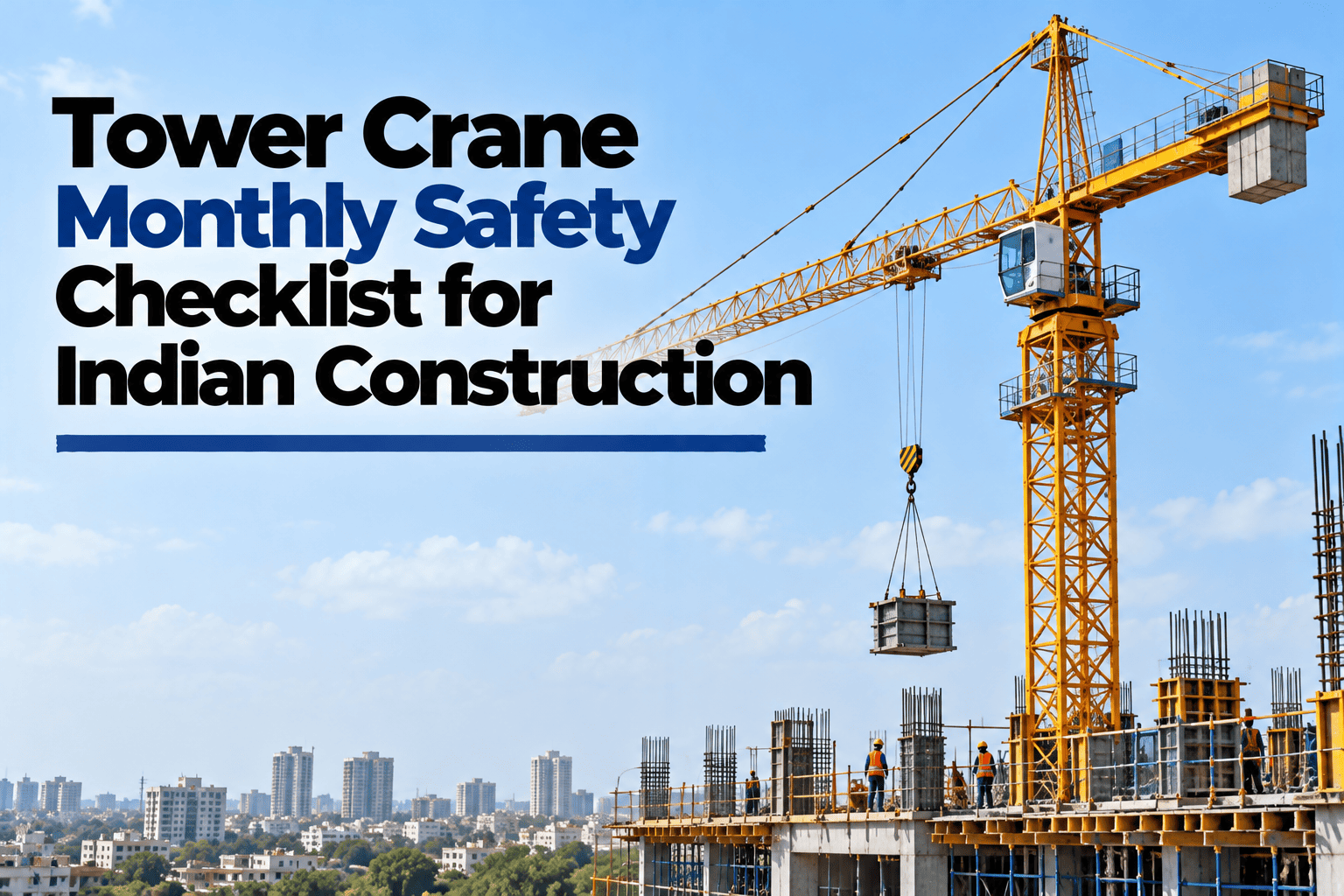
A tower crane stands over a city site for months, lifting steel and formwork above hundreds of workers. Its safety depends on things nobody sees from the ground: tight mast bolts, a healthy slewing ring, a sound hoist rope and limit switches that actually stop the crane. Monthly inspection by a competent person is where slow wear and loosening are found before they cause a collapse or dropped load. This checklist covers that inspection from foundation to jib tip, and shows how contractors keep tower crane records in HVI.
Tower Crane Monthly Safety Checklist for Indian Construction
Foundation and mast bolts, slewing ring, jib and trolley, hoist rope and drum, limit switches, anemometer, electrical panels and climbing equipment.
The Monthly Checklist, Zone by Zone
Carry out the inspection with the crane out of service and safely isolated where required. Follow the manufacturer's manual for torque values and limits.
Jib, trolley and hook
- Jib sections, pins and chords
- Trolley wheels, rope and brake
- Hook, latch and hook block
Counter-jib
- Counterweight blocks secure
- Walkways and handrails sound
- Hoist winch mountings tight
Slewing
- Slewing ring bolts checked
- Slew brake and gear teeth
- Lubrication of ring and pinion
Hoist rope and drum
- Rope against discard criteria
- Even spooling on the drum
- Sheaves, guards and end fixings
Mast
- Mast bolts or pins tight and secured
- No cracks or damaged bracing
- Ties to the building secure, if fitted
Foundation
- Base and anchors free of cracks
- No settlement or water pooling
- Verticality within limits
Electrical
- Panels closed, dry and labelled
- Cables and earthing sound
- Aviation and work lights working
Access
- Ladders, cages and platforms secure
- Rest platforms clear
- Fall arrest points in good order
Safety Devices to Test Every Month
Limit switches and load devices are the crane's last line of defence. Test each one, not just look at it.
| Device | How to test | If it fails |
|---|---|---|
| Hoist limits | Raise and lower to the limits without load | Out of service |
| Trolley limits | Run the trolley in and out to its limits | Out of service |
| Slew limit | Slew to the set limit, where fitted | Out of service |
| Load and moment limiters | Check with test weights as the maker specifies | Out of service |
| Anemometer | Confirm readings and alarm setting | Repair before use in wind |
| Emergency stop | Press and confirm all motion stops | Out of service |
Wind and Weather
Wind is one of the biggest risks to a tower crane. Know the limits for your crane and act on them.
Stop lifting when wind reaches the limit set by the manufacturer. When leaving the crane out of service, release the slew brake so the jib can turn freely with the wind, as the maker instructs. Never disable a limit switch, load limiter or anemometer alarm.
- Watch the anemometer during every lift
- Avoid large panels and sheets in gusty wind
- Stop work at the maker's wind limit
- Stop in lightning or very poor visibility
- Raise the hook and park the trolley as instructed
- Set the jib free to slew with the wind
- Switch off and lock the main supply
- Check the crane after any storm
Every Inspection and Certificate in One Place
HVI records monthly tower crane inspections with photos and the inspector's name, tracks load test certificates and climbing records, and flags overdue checks across every site.
Before and After Every Climb
Climbing adds mast sections as the building rises. It is one of the highest-risk tower crane operations.
Plan
Follow the maker's climbing procedure and weather limits.
Balance
Balance the crane as instructed before climbing.
Fix the section
Fit and secure every bolt or pin of the new section.
Re-check
Inspect and test before lifting resumes.
Records to Keep for Every Tower Crane
Good records protect your crew and make audits and client inspections straightforward.
Erection report
Who erected it, the configuration and checks done.
Monthly inspections
Findings, photos and the competent person's name.
Certificates
Load tests and third-party examinations.
Climbing and repairs
Each climb, rope change and repair.
Tower Crane Status in HVI
A sample view across city sites, showing inspection and certificate status for each crane.
| Crane | Site | Monthly inspection | Load test certificate | Status |
|---|---|---|---|---|
| TC-01 | Residential tower A | Done 6 days ago | Valid | In service |
| TC-03 | Office block B | Due in 4 days | Expires next month | Plan renewal |
| TC-05 | Hospital project C | Trolley limit failed | Valid | Out of service |
Tower Crane Inspection FAQs
What should a tower crane monthly inspection include?
The jib, trolley and hook, counter-jib and weights, slewing ring, hoist rope and drum, mast bolts and ties, foundation, electrical panels, access ladders and a test of every limit switch and safety device.
Why are mast bolts checked so carefully?
Mast bolts or pins hold the tower together. Vibration and loading can loosen them over time, so they are checked and tightened to the manufacturer's values at set intervals.
What should be done with a tower crane in high wind?
Stop lifting at the manufacturer's wind limit. When out of service, follow the maker's instructions, which usually include letting the jib slew freely with the wind and isolating the power.
Who can inspect a tower crane?
A competent person carries out the monthly inspection, and periodic thorough examinations and load tests are often done by third parties. Teams that track certificates in HVI get reminders before they expire.
Can tower crane inspections be recorded digitally?
Yes. Monthly inspections, device tests, climbs and certificates can all be recorded with photos for each crane. Book a demo to see tower crane records in HVI.
Safer Skylines Start With Monthly Checks
Inspect tower cranes every month, test every safety device, record every climb and keep certificates up to date in HVI. Fewer incidents and confident lifting on every city site.