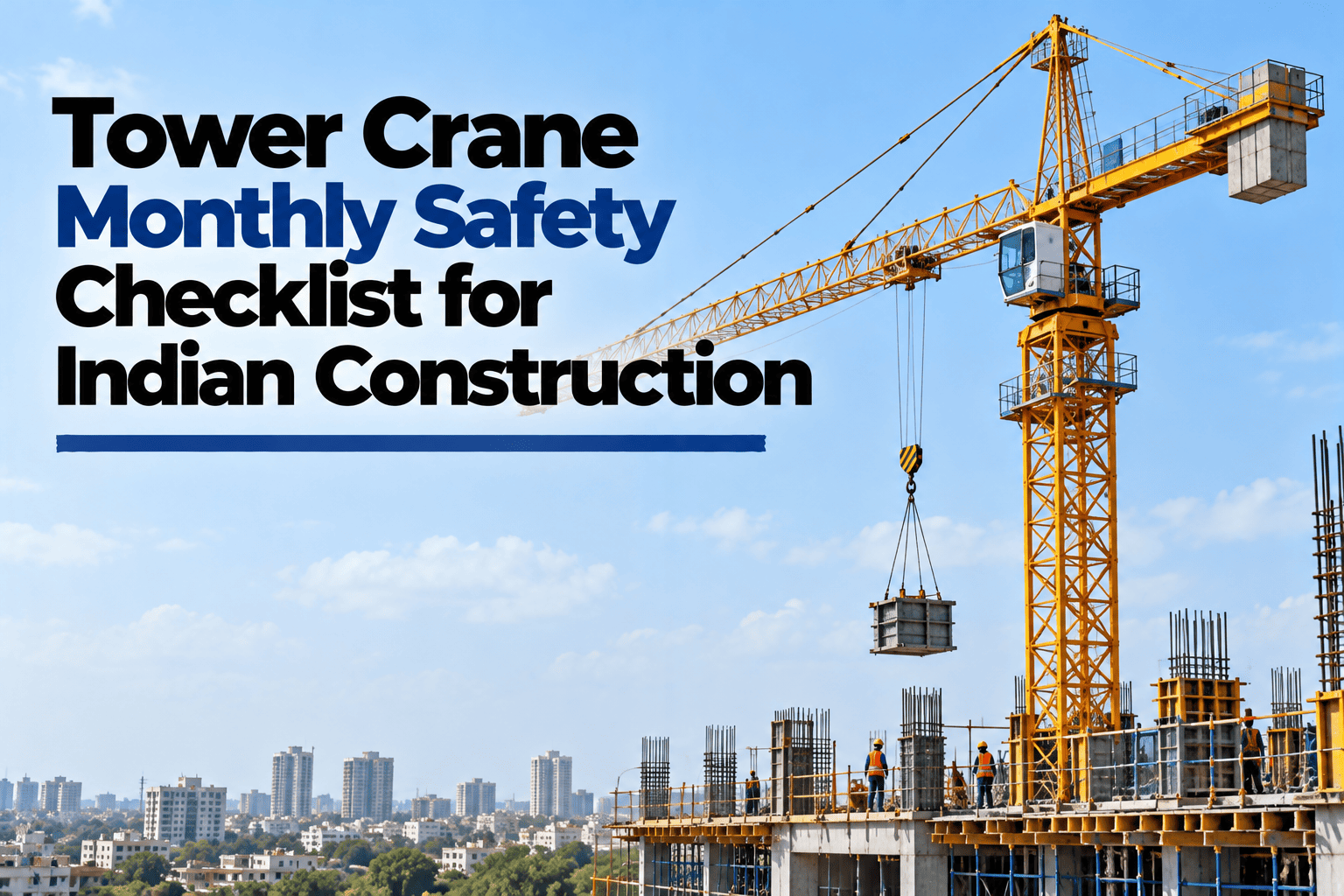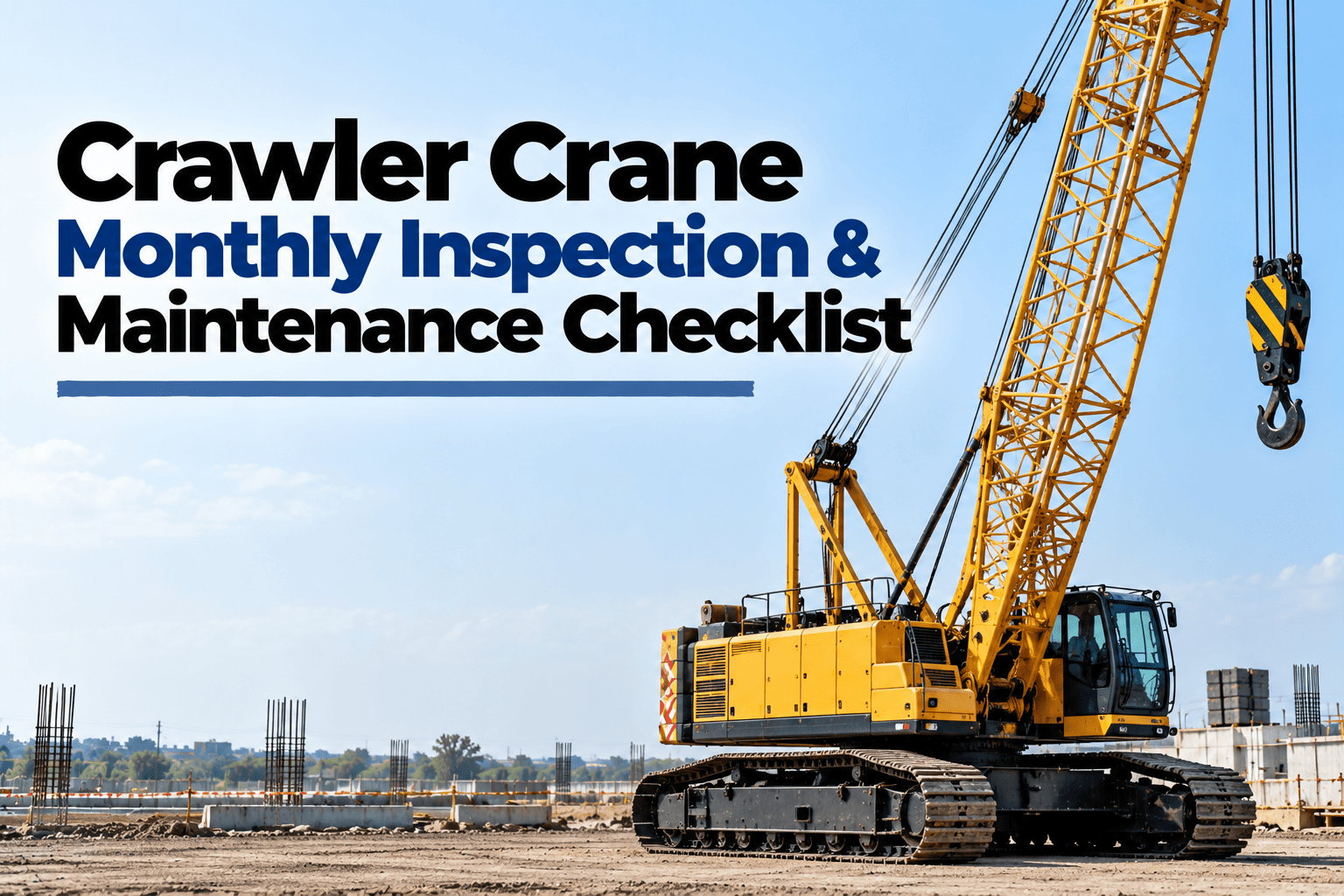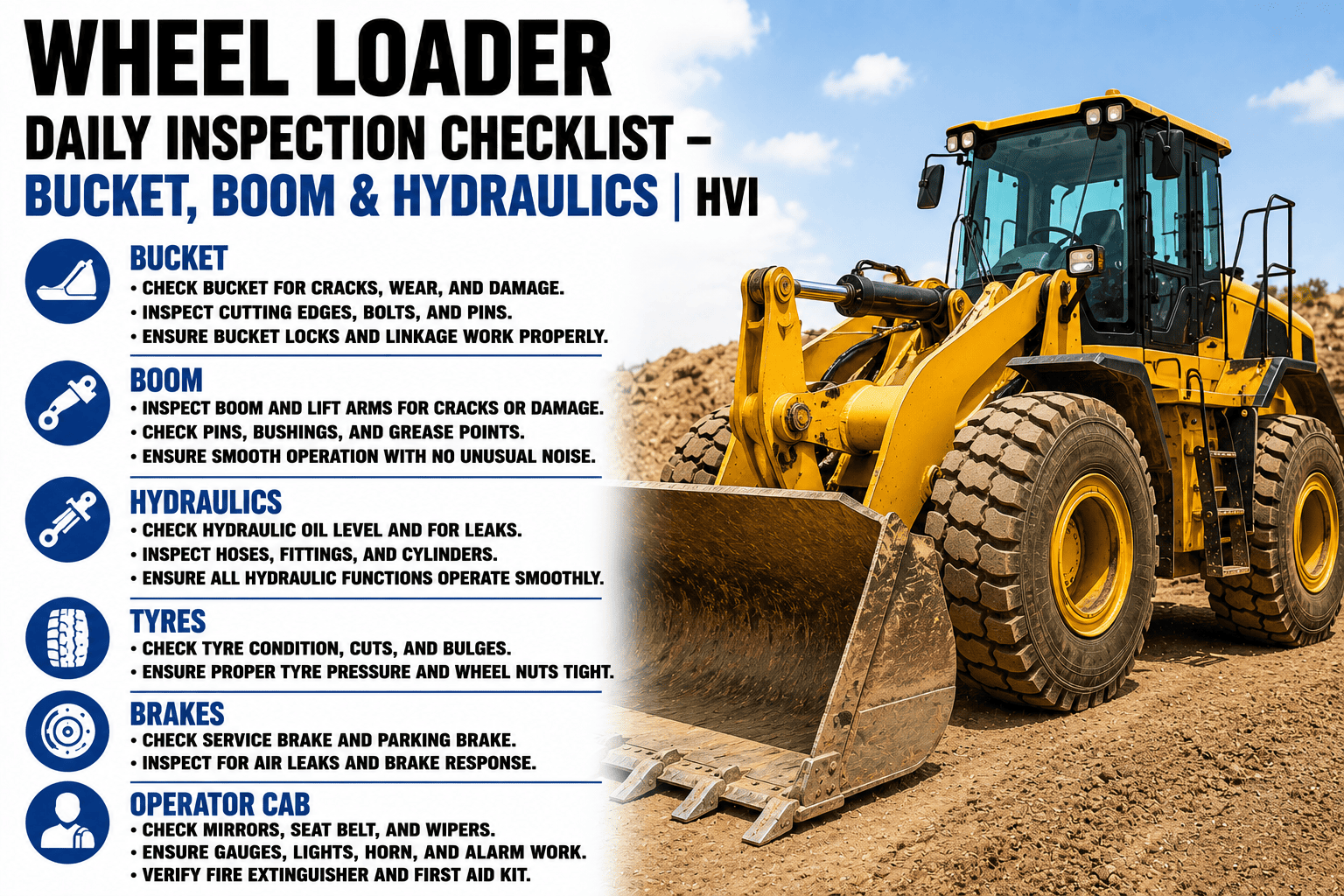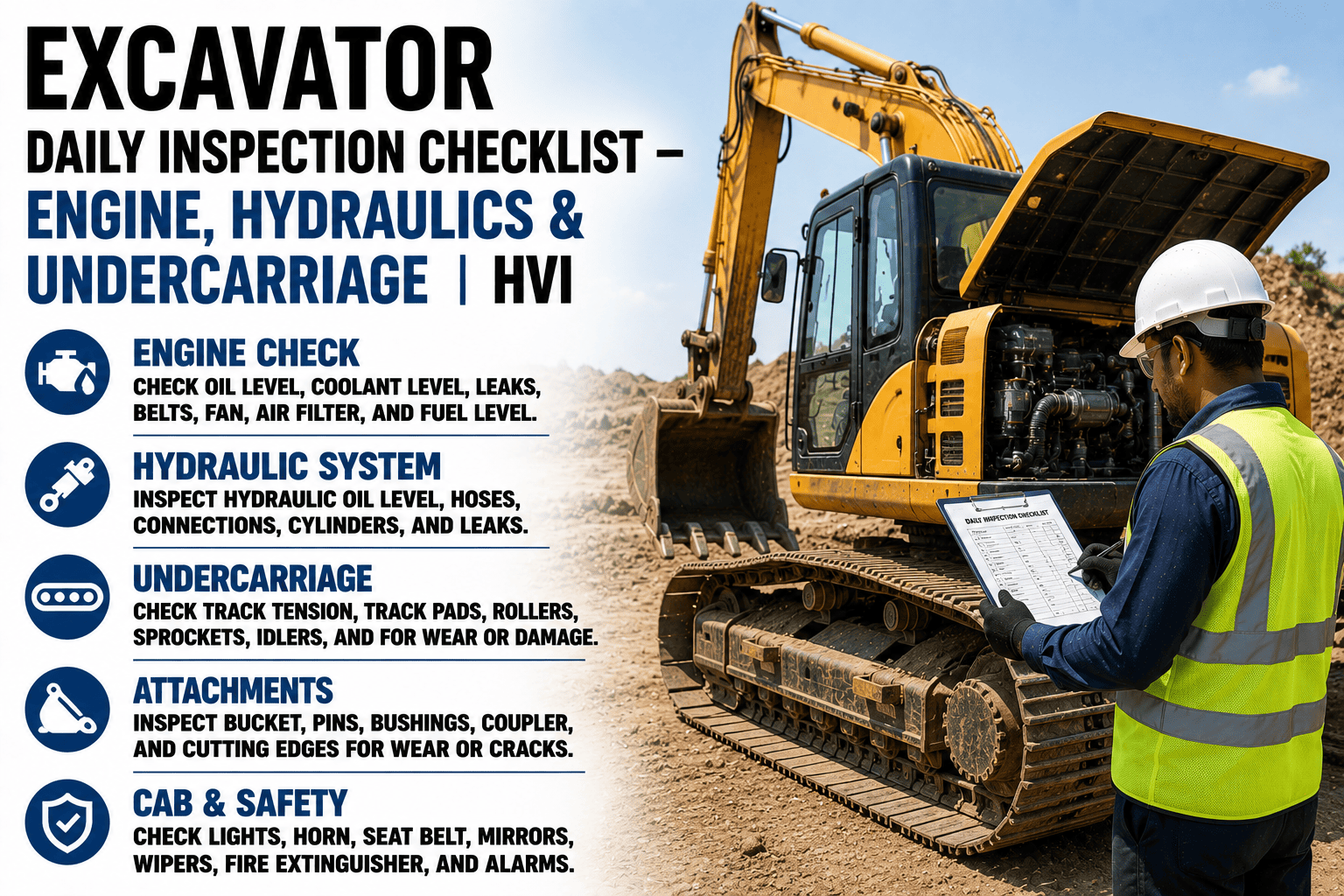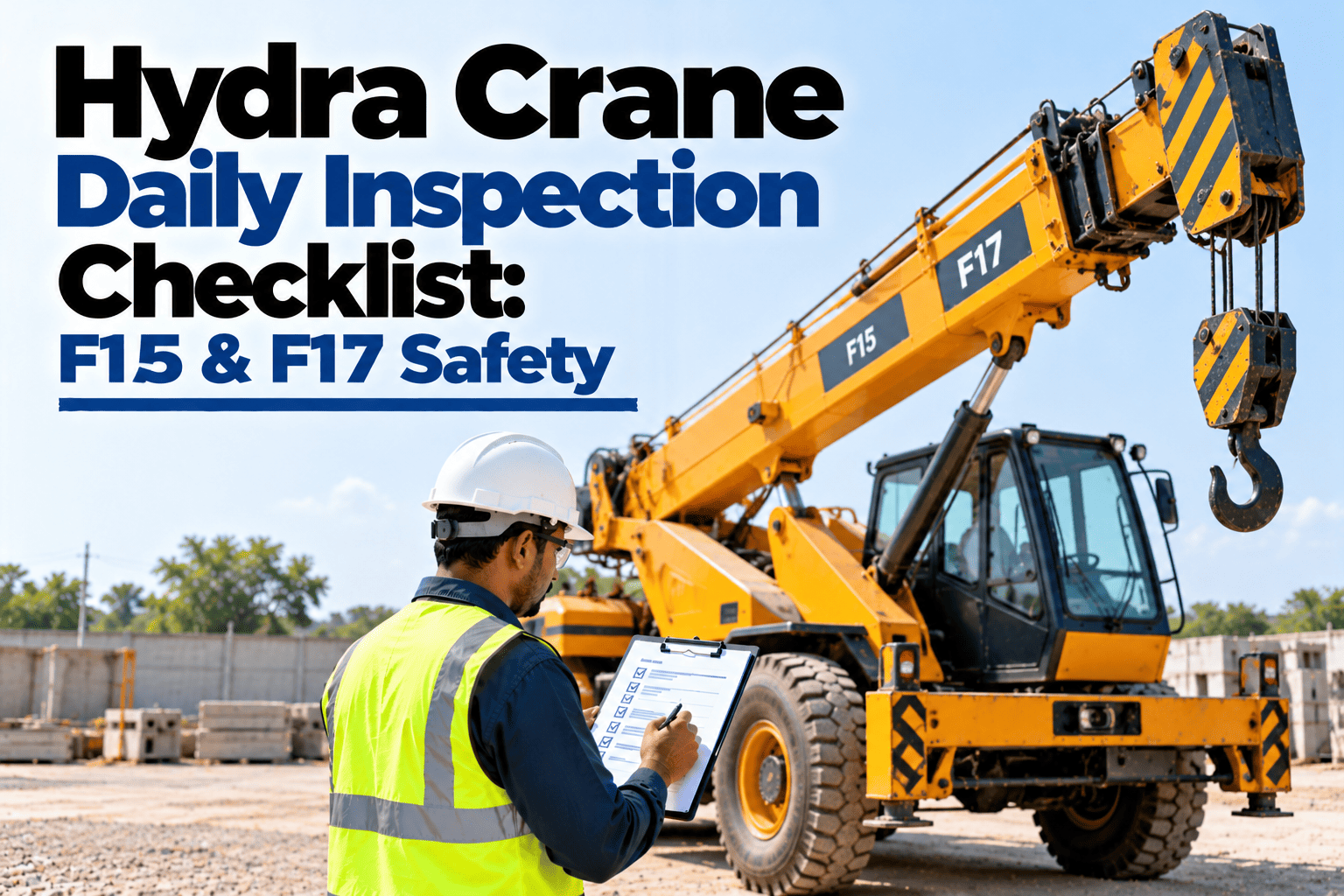
Hydra cranes are everywhere on Indian sites, lifting steel, pipes and machinery and carrying loads from one spot to another. That pick-and-carry work is exactly what makes them risky: a worn wire rope, a faulty limit switch or a soft tyre can tip a loaded crane in seconds. Many lifting incidents trace back to checks that were skipped or rushed at the start of a shift. A short daily inspection, done by the operator before any lift, catches those faults while they are still easy to fix. This checklist covers it, and shows how sites store crane checks with photos in HVI.
Hydra Crane Daily Inspection Checklist: F15 and F17 Safety
Boom and pins, hook and latch, wire rope, limit switches, safe load indicator, hydraulics, brakes, tyres, horn and lights, checked before every shift.
The Daily Checklist
Do the first set with the engine off and the boom lowered, then start the engine and test every function before lifting.
- Boom sections, pins and welds for cracks
- Hook, safety latch and swivel
- Wire rope for kinks, broken wires or crushing
- Hydraulic hoses and cylinders for leaks
- Tyres for pressure, cuts and wear
- Engine oil, coolant and hydraulic oil levels
- Boom up, down, telescope and slew move smoothly
- Hoist up and down without jerks
- Over-hoist limit switch stops the hook
- Safe load indicator working and set correctly
- Service and parking brakes hold
- Horn, lights, reverse alarm and beacon
Critical Parts and When to Reject Them
If any of these reject signs are found, the crane must not lift until the part is repaired or replaced.
| Part | What to check | Reject if |
|---|---|---|
| Wire rope | Full visible length and end fittings | Broken wires, kinks, birdcaging or heavy corrosion |
| Hook | Throat, shank and safety latch | Cracks, opening up, twisting or missing latch |
| Limit switches | Over-hoist and boom angle cut-outs | Fails to stop motion when tested |
| Safe load indicator | Display, alarm and settings | Not working, bypassed or wrongly set |
| Boom and pins | Welds, sections and retaining clips | Cracks, bends or missing clips |
| Brakes | Service and parking brakes | Fail to hold the crane |
Safe Pick-and-Carry Rules
Moving with a load is where hydra cranes are most likely to tip. These rules keep the crane stable.
Follow the load chart
Check capacity for the boom length and angle, every lift.
Carry the load low
Keep it close to the ground when travelling.
Firm, level ground
Avoid slopes, soft soil and covered trenches.
Travel slowly
No sudden turns or stops with a load.
Clear the area
Keep people out from under and around the load.
Watch overhead lines
Keep safe distance from power lines.
Every Crane Checked Before Every Lift
HVI gives operators this checklist on their phone, stores photos of every defect, alerts the supervisor and keeps a dated record for client audits and third-party inspections.
Tagging Out a Defective Crane
A clear tag-out routine stops anyone using a crane that has failed its check.
Park safely
Lower the boom and switch off.
Tag the crane
Fit a "Do not use" tag on the controls.
Report it
Record the defect with a photo.
Repair and re-check
Remove the tag only after a full re-check.
Beyond the Daily Check
Daily checks work alongside periodic inspections. Intervals depend on applicable rules, your client's requirements and the maker's manual.
Crane Status in HVI
A sample morning view across a site. Only cranes with a passed check and valid certificate are cleared.
| Crane | Operator | Daily check | Load test certificate | Status |
|---|---|---|---|---|
| HC-02 | Operator A | Passed at 7:05 am | Valid | Cleared |
| HC-05 | Operator B | Horn not working | Valid | Supervisor review |
| HC-07 | Operator C | Over-hoist switch failed | Expires in 9 days | Tagged out |
Hydra Crane Inspection FAQs
What should a hydra crane daily checklist include?
The boom, pins and welds, hook and safety latch, wire rope, hydraulic hoses, tyres, fluid levels, all crane functions, the over-hoist limit switch, safe load indicator, brakes, horn, lights and reverse alarm.
When should a wire rope be replaced?
Replace it when you find broken wires beyond the maker's limits, kinks, birdcaging, crushing or heavy corrosion. If in doubt, stop lifting and have a competent person inspect it.
Why do hydra cranes tip over?
Common causes are overloading beyond the load chart, carrying loads too high, travelling on slopes or soft ground and sudden turns. A working safe load indicator and safe pick-and-carry habits reduce the risk.
Is a third-party inspection needed for hydra cranes?
Many sites and clients require periodic third-party inspection and load testing with a certificate. Teams that track certificates in HVI get reminders before they expire.
Can operators complete the crane checklist on a phone?
Yes. Operators tick each item, add photos of defects and the supervisor sees results at once. Book a demo to see hydra crane checklists in HVI.
Safer Lifts Start With a Daily Check
Give every hydra crane operator a clear daily checklist, tag out defective cranes and track certificates in HVI. Fewer incidents, smoother audits and cranes you can trust.