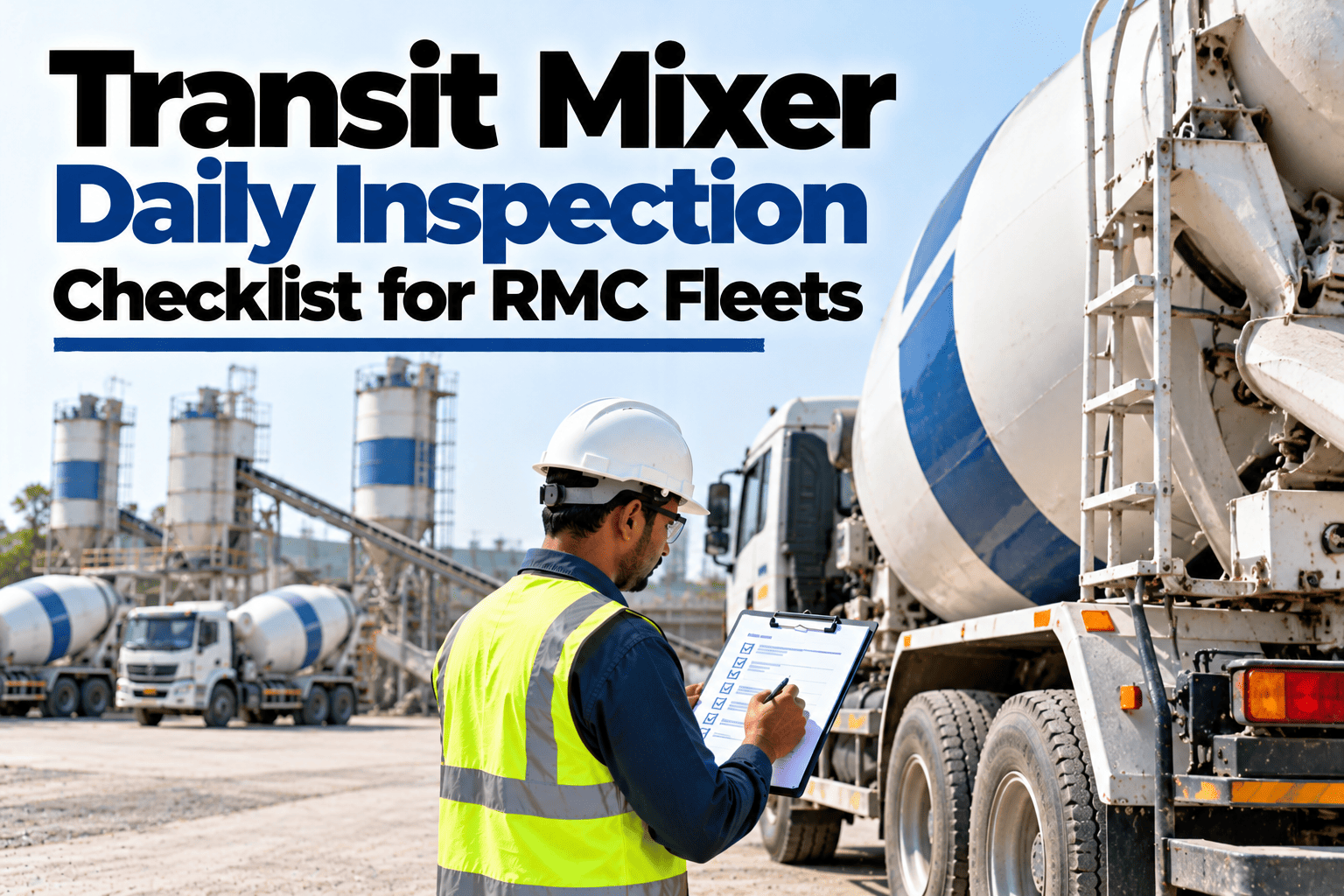
A transit mixer may make five or six concrete trips a day, and every trip depends on the drum turning, the chute working and the truck stopping safely. A weak drum drive or leaking hydraulic hose can leave a full load hardening in the drum, which is one of the costliest breakdowns an RMC fleet can face. A short daily check before the first trip catches many of these problems early. This page gives that checklist, built for Indian RMC fleets and ready to run as a digital check in HVI.
Transit Mixer Daily Inspection Checklist for RMC Fleets
Drum rotation and seals, chute and ladder, water tank and pump, hydraulic lines, brakes, tyres, lights and documents, checked before every working day.
The Pre-Trip Checklist
Mark each item as OK or defect before leaving the plant. Any defect is reported straight away, with a photo where possible.
Drum and Hydraulic System: What to Look For
The drum drive is the heart of a transit mixer. These signs point to trouble ahead.
Jerky rotation
Can mean low hydraulic oil, a worn pump or motor, or air in the system.
Oil on the drum drive
Leaking seals or hoses near the gearbox or motor.
Noise from the rollers
Worn rollers or track wear under the drum.
Hot hydraulic oil
Blocked cooler or overworked system.
Go or No-Go Decisions
Some defects mean the mixer must not take a load. Others can wait for the next service.
- Drum will not rotate properly
- Major hydraulic leak
- Brake or air pressure fault
- Damaged or worn-out tyre
- Minor weeping at a fitting
- Worn chute liner
- Faded reflective tape
- Faulty cab interior light
Run This Check on Every Driver's Phone
HVI turns this checklist into a quick daily phone check with photos, alerts the workshop to defects and shows which mixers are cleared to load.
End-of-Day Drum Wash-Out
Concrete left in the drum hardens and builds up, adding weight and wearing the blades. Wash out every day.
Add water
Fill the drum with water after the last pour.
Rotate
Turn the drum to loosen residue.
Discharge
Empty at the approved wash-out area.
Clean outside
Wash the chute, hopper and fins.
Documents to Carry Every Day
Check these before leaving the plant. Missing papers can stop a mixer at a checkpoint.
Transit Mixer Status in HVI
A sample morning view. Only mixers with a completed check and no critical defect are cleared to load.
| Mixer | Driver | Daily check | Defects | Status |
|---|---|---|---|---|
| TM-03 | Driver A | Done at 6:10 am | None | Cleared to load |
| TM-08 | Driver B | Done at 6:15 am | Chute liner worn | Cleared, fix soon |
| TM-11 | Driver C | Done at 6:20 am | Drum jerky, oil leak | Do not load |
Transit Mixer Checklist FAQs
What should a transit mixer daily checklist include?
Drum rotation and seals, hydraulic oil and hoses, chute and ladder, water tank and pump, brakes and air pressure, tyres and wheel nuts, lights and reverse alarm, engine fluids and the documents carried in the cab.
What happens if the drum stops with concrete inside?
Concrete can start to set in the drum, which may need costly manual removal. That is why checking drum rotation and the hydraulic system before every working day is so important.
How often should the drum be washed out?
At the end of every working day, and between loads when there is a long wait. Regular wash-out prevents build-up that adds weight and wears the mixing blades.
Which defects should stop a transit mixer from loading?
A drum that will not rotate properly, a major hydraulic leak, brake or air pressure faults and damaged tyres. Teams that run checks in HVI see these before loading starts.
Can drivers complete the checklist on a phone?
Yes. Drivers mark each item and add photos of defects, and the plant sees which mixers are cleared to load. Book a demo to see transit mixer checklists in HVI.
Every Mixer Checked, Every Load Delivered
Run daily transit mixer checks on drivers' phones, report defects with photos and clear mixers for loading in HVI. Fewer drum breakdowns, safer trips and on-time concrete.