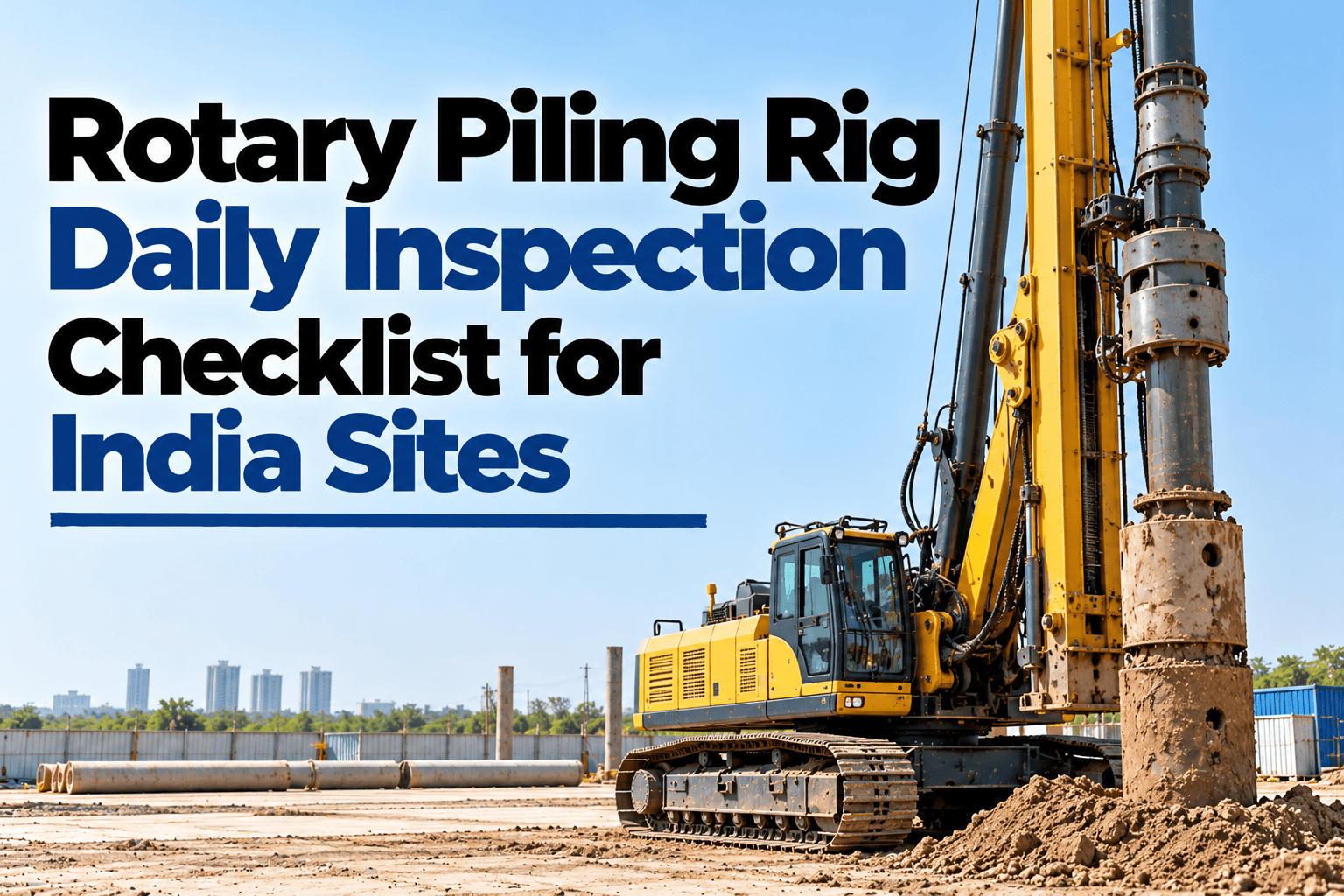
A rotary piling rig is one of the most expensive machines on a foundation job, and one of the least forgiving. If a winch rope, Kelly lock or rotary head fails halfway down a bore, the pile can collapse and the crew may lose days cleaning out and redrilling. A tall mast on soft ground also brings a serious tipping risk. Many of these failures give warning signs that a careful daily inspection will catch. This checklist is built for Indian metro, bridge and building foundation projects, and shows how teams run it as a digital checklist in HVI.
Rotary Piling Rig Daily Inspection Checklist for India Sites
Mast and stability, Kelly bar and locks, winch ropes, rotary head, hydraulics, tracks and safety devices, checked before every shift.
The Daily Checklist by Area
The operator should complete these before the first pile of the shift, with the mast lowered where the maker's procedure requires it.
Mast and stability
- Mast pins and bolts secure
- Inclination display reading correctly
- No cracks at mast joints
Kelly bar
- Lock recesses free of wear and damage
- Swivel turns freely
- Bar sections straight
Winch ropes
- No broken wires or kinks
- Spooling neatly on the drum
- End fittings and wedges secure
Rotary head
- No oil leaks from the gearbox
- Mounting bolts tight
- Drive keys and kelly drive in good condition
Hydraulics
- Oil level and temperature normal
- Hoses free of leaks and rubbing
- Cylinders without weeping seals
Tracks and base
- Track tension correct
- Rollers and sprockets in good order
- No loose shoes or bolts
Safety devices
- Emergency stops working
- Limit switches and alarms tested
- Load and angle warnings active
Engine and cab
- Oil, coolant and fuel levels
- Warning lights clear after start
- Fire extinguisher in the cab
Working Platform and Stability
A piling rig carries a heavy, tall mast on a narrow base. The ground under it matters as much as the machine.
Never operate on a working platform that has not been designed and checked for the rig. Soft spots, filled trenches, standing water or a slope can cause the rig to overturn. Keep people clear of the mast fall zone and stop work if the platform shows ruts, cracks or settlement.
When to Stop and Replace
These signs mean a part must be repaired or replaced before drilling continues. Follow the maker's limits for exact values.
| Part | Stop work if | Why it matters |
|---|---|---|
| Winch rope | Broken wires beyond limits, kinks, crushing or birdcaging | Rope failure can drop the Kelly bar and tools down the bore |
| Kelly locks | Worn or damaged lock recesses or drive keys | Locks can slip under load and lose the bar |
| Kelly swivel | Stiff, noisy or damaged | Rope twists and can fail |
| Rotary head | Heavy oil leak, unusual noise or loose mountings | Head failure stops drilling mid-bore |
| Mast | Cracks, bent sections or loose pins | Structural failure or overturning risk |
Every Rig Checked Before Every Shift
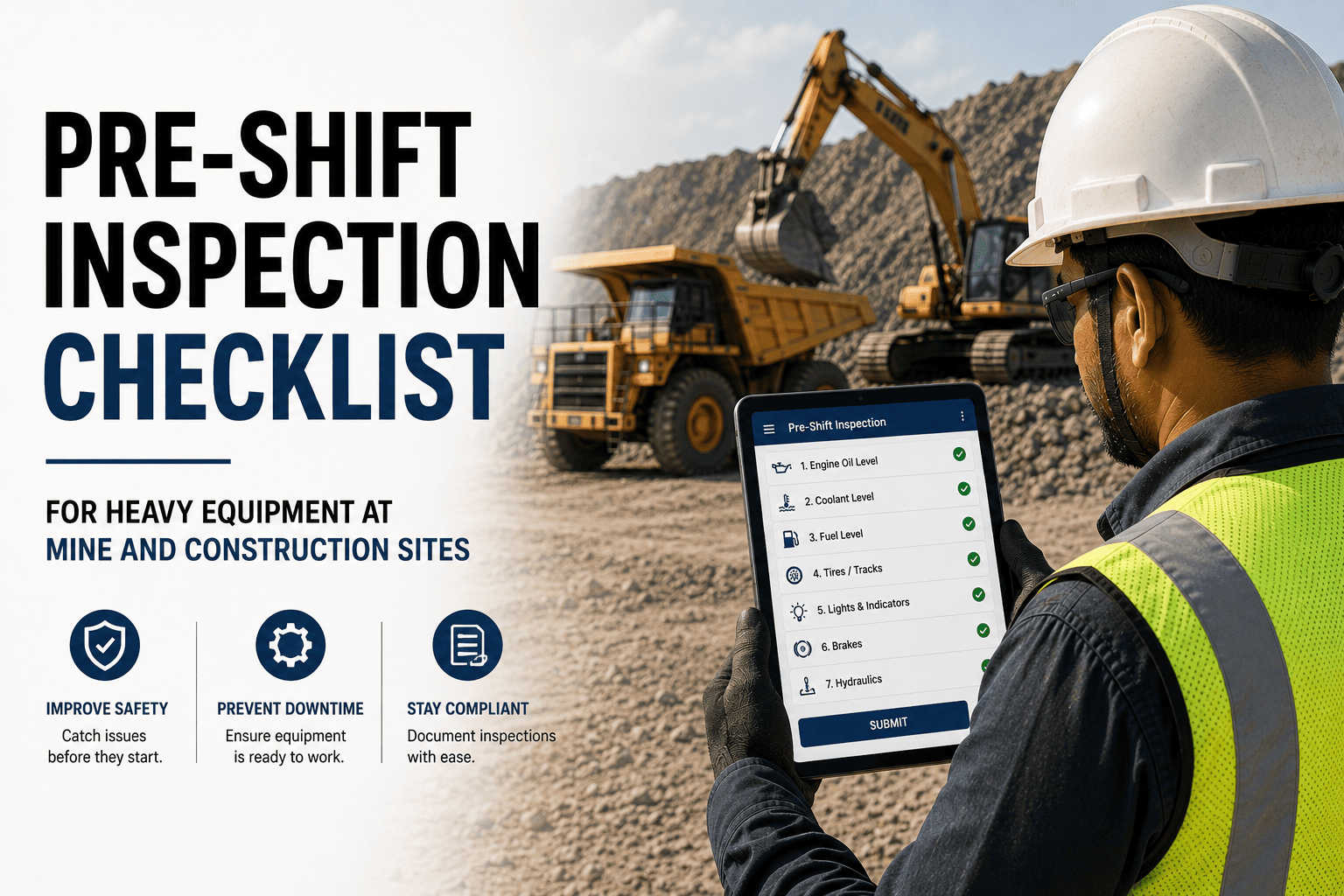
HVI gives rig operators this checklist on their phone, stores photos of defects, alerts the plant team and keeps every inspection on record for client and safety audits.
Before Starting Each Pile
A quick check before each bore reduces the chance of a failure part-way down.
Check the tool
Teeth, flights and bucket in good condition.
Set verticality
Confirm mast angle on the display.
Check the ground
Platform firm at the new position.
Clear the area
No one inside the exclusion zone.
Drilling Tool Checks
Worn tools slow drilling and put extra load on the rotary head and Kelly bar.
Augers
Flights, pilot and teeth for wear and cracks.
Drilling buckets
Base flap, hinge and teeth.
Core barrels
Cutting teeth and barrel body.
Casing
Joints, cutting shoe and drive adaptor.
Piling Rig Status in HVI
A sample view across a project. Each rig shows its daily check, open defects and next service.
| Rig | Project | Daily check | Open defect | Status |
|---|---|---|---|---|
| PR-01 | Metro package A | Passed | None | Drilling |
| PR-02 | Bridge pier site | Passed | Hose weeping on crowd | Fix at shift end |
| PR-04 | Building basement | Failed | Broken wires on main rope | Stopped, replace rope |
Piling Rig Inspection FAQs
What should a piling rig daily checklist include?
The mast and its pins, Kelly bar and locks, main and auxiliary winch ropes, rotary head, hydraulic system, tracks and base, safety devices, engine fluids and the condition of the working platform.
Why are Kelly locks so important?
The locks transfer drilling force through the Kelly bar. Worn lock recesses or keys can slip under load, which can damage the bar or leave tools stuck in the bore.
How do piling rigs overturn?
Much of the overturning risk comes from a weak or uneven working platform, standing water, slopes or moving the rig with the mast raised on poor ground. A designed and checked platform is essential.
When should a winch rope be replaced?
Replace it when broken wires exceed the maker's limits or when you find kinks, crushing, birdcaging or heavy corrosion. Teams that log rope checks in HVI can see wear trends.
Can rig operators complete the checklist on a phone?
Yes. Operators tick each item and add photos of defects, and the plant team sees them straight away. Book a demo to see piling rig checklists in HVI.
Safer Piling, Fewer Lost Bores
Run daily rig checks on operators' phones, stop work on critical defects and track ropes, tools and services in HVI. Fewer mid-bore failures and a safer foundation site.